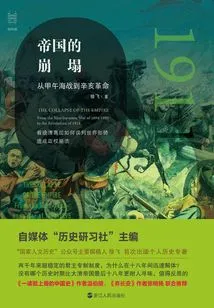
The Collapse of the Empire: from the Sino-japanese War to the Revolution of 1911
by Xu Fei
About This Novel
This book is a new historical work by the young historian Xu Fei. This book will sort out and analyze the various misunderstandings of modernization by many important figures in the self-rescue movement of the late Qing Dynasty, and the historical process in which these misunderstandings pushed the Qing Dynasty towards its demise. No idea is created in a vacuum, and this book will also trace the origins and explore the origins of various misunderstandings. The Opium War opened the door to China, and China, which was closed and backward, suffered constant disasters. From the Sino-Japanese War of 1891 to the Revolution of 1911, the Qing Empire struggled to save itself. At the central level, there were enlightened Westernization leaders like Li Hongzhang and Yi? At the local level, there were pragmatic innovative forces like Zhang Zhidong and Liu Kunyi. Among the people, there were intellectuals like Kang Youwei and Tan Sitong who were passionate about saving the country. However, their various efforts failed to save this dying empire. Why is this? The self-rescue process of the Qing Empire was also China's effort to modernize. The fall of the Qing government was actually related to the Chinese people's misunderstanding of modernization at that time. The Qing government lacked reference coordinates at the critical moment and lost its way forward. A striking example is Kang Youwei's misunderstanding of the Western parliamentary system, and his reform plan was neither fish nor fowl. Even if Cixi had not launched a coup, the reform movement would have had no future.
Official Sources
What Readers Think
Rating
Community(0)
Rating
Community(0)