Library
Browse and search novels
25,954 novels found
China in Rabindranath Tagore's Eyes
Literature泰戈尔眼中的中国
H
"China in the Eyes of Tagore" is a collection of speeches and talks given by the Indian poet Rabindranath Tagore in Beijing, Shanghai and other places when he came to China in 1924. The topics of the speeches include the career of the poet, the ideal of freedom, the value of spiritual civilization, the friendship between China and India, the unity and development of Asia, the concept of education, etc. Some of the articles were translated by Xu Zhimo, who was the accompanying translator at the time. The language of this book is approachable and rich in philosophy, reflecting Tagore's deep friendship for China and his pursuit of love, beauty, peace and freedom.
"China in the Eyes of Tagore" is a collection of speeches and talks given by the Indian poet Rabindranath Tagore in Beijing, Shanghai and other places when he came to China in 1924. The topics of the speeches include the career of the poet, the ideal of freedom, the value of spiritual civilization, the friendship between China and India, the unity and development of Asia, the concept of education, etc. Some of the articles were translated by Xu Zhimo, who was the accompanying translator at the time. The language of this book is approachable and rich in philosophy, reflecting Tagore's deep friendship for China and his pursuit of love, beauty, peace and freedom.
Cai Gentan
Literature菜根谭
(ming Dynasty) Written By Hong Yingming, Translated And Annotated By Gao Li
"Cai Gen Tan" is a handed down classic that discusses self-cultivation, cultivation of character, conduct as a person, and conduct in the world. The whole book is written in the form of quotations, which assembles the Confucian doctrine of the mean, the Buddhist thought of transcendence, and the Taoist thought of inaction. It can be said that it integrates Confucianism, Buddhism, and Taoism into one, and it is a rare and rare treasure. The author's unique insights into human nature, life and interpersonal relationships have become a guide for future generations to deal with. For the convenience of readers, this book has carefully processed the original work, with annotations and translations, so that readers can read it without obstacles.
"Cai Gen Tan" is a handed down classic that discusses self-cultivation, cultivation of character, conduct as a person, and conduct in the world. The whole book is written in the form of quotations, which assembles the Confucian doctrine of the mean, the Buddhist thought of transcendence, and the Taoist thought of inaction. It can be said that it integrates Confucianism, Buddhism, and Taoism into one, and it is a rare and rare treasure. The author's unique insights into human nature, life and interpersonal relationships have become a guide for future generations to deal with. For the convenience of readers, this book has carefully processed the original work, with annotations and translations, so that readers can read it without obstacles.
就喜欢和唐妞读唐诗
Mr. Erqiao
Er Qiao's sister asked Er Qiao for help, asking him to teach his little nephew Tang poetry. Er Qiao was in trouble. He had graduated many years ago and had long since forgotten all the Tang poems that he had relied on rote memorization. How could he possibly teach his nephew to learn Tang poems well? At this moment, he thought of "Tang Niu who traveled from the Tang Dynasty"... So Tang Niu took Er Qiao "back" to the Tang Dynasty and started the "Journey of Tang Poetry". They communicated face-to-face with poets of the Tang Dynasty, and not only learned about the historical background and social environment of those poets who wrote poems, but also what they thought and felt when they wrote poems... They were impressed by Li Bai's talent, saddened by Du Fu's experience, infected by Meng Haoran's detached attitude, and also fell into thinking because of Bai Juyi's tangled life choices... Through face-to-face communication with Tang Dynasty poets, we can thoroughly understand Tang poetry through the resonance of sorrow and joy with Tang Dynasty poets. In the end, Tang Niu and Er Qiao successfully completed the "Tang Poetry Journey", and Er Qiao was able to successfully teach his nephew to learn Tang poetry.
Er Qiao's sister asked Er Qiao for help, asking him to teach his little nephew Tang poetry. Er Qiao was in trouble. He had graduated many years ago and had long since forgotten all the Tang poems that he had relied on rote memorization. How could he possibly teach his nephew to learn Tang poems well? At this moment, he thought of "Tang Niu who traveled from the Tang Dynasty"... So Tang Niu took Er Qiao "back" to the Tang Dynasty and started the "Journey of Tang Poetry". They communicated face-to-face with poets of the Tang Dynasty, and not only learned about the historical background and social environment of those poets who wrote poems, but also what they thought and felt when they wrote poems... They were impressed by Li Bai's talent, saddened by Du Fu's experience, infected by Meng Haoran's detached attitude, and also fell into thinking because of Bai Juyi's tangled life choices... Through face-to-face communication with Tang Dynasty poets, we can thoroughly understand Tang poetry through the resonance of sorrow and joy with Tang Dynasty poets. In the end, Tang Niu and Er Qiao successfully completed the "Tang Poetry Journey", and Er Qiao was able to successfully teach his nephew to learn Tang poetry.
I Am a Free Guest in the World
Literature我是人间自在客
Ye Chuqiao
From the various schools of thought to the great Confucians of the Ming and Qing Dynasties, from the doctrines of Confucius and Mencius to the poetry of the Tang and Song Dynasties, this book is a "record of ancient literati's tossings" intertwined with poetry and history. It uses humorous language to tell the life stories of 21 literati such as Li Bai, Du Fu, and Huang Tingjian who entered the world with poetry, and reproduces the literati's nature and feelings from the pile of old papers.
From the various schools of thought to the great Confucians of the Ming and Qing Dynasties, from the doctrines of Confucius and Mencius to the poetry of the Tang and Song Dynasties, this book is a "record of ancient literati's tossings" intertwined with poetry and history. It uses humorous language to tell the life stories of 21 literati such as Li Bai, Du Fu, and Huang Tingjian who entered the world with poetry, and reproduces the literati's nature and feelings from the pile of old papers.
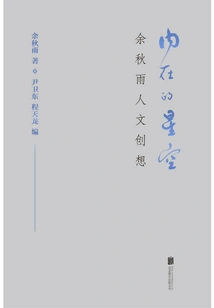
内在的星空:余秋雨人文创想(2020版)
Written By Yu Qiuyu, Edited By Yin Weidong And Cheng Tianlong
Qiu Yu's prose has been popular in the Chinese world and has remained popular for many years. This book captures the essence of Yu Qiuyu's more than 20 masterpieces and divides it into six parts: historical knowledge, elegance, calligraphy, this life, travel, and practice. The profound humanistic knowledge combined with the extraordinary talent of language, combining the brilliance of words and the beauty of thoughts, concentratedly demonstrates Yu Qiuyu's unique humanistic creativity, and also makes it easy for readers to have a glance at the essence of Yu Qiuyu's forty years of reading and writing.
Qiu Yu's prose has been popular in the Chinese world and has remained popular for many years. This book captures the essence of Yu Qiuyu's more than 20 masterpieces and divides it into six parts: historical knowledge, elegance, calligraphy, this life, travel, and practice. The profound humanistic knowledge combined with the extraordinary talent of language, combining the brilliance of words and the beauty of thoughts, concentratedly demonstrates Yu Qiuyu's unique humanistic creativity, and also makes it easy for readers to have a glance at the essence of Yu Qiuyu's forty years of reading and writing.
北大授课(新版)
Yu Qiuyu
This book is the complete record of the "History of Chinese Culture" course taught by Yu Qiuyu at Peking University. The first part is a lightning-fast "flash question" and "flash answer" between students from Peking University, National Taiwan University and Mr. Yu Qiuyu, covering a large number of difficult topics in contemporary society. But from time to time, it seems so crisp, cheerful, humorous, and full of pleasure to read. It has been praised by critics as "a cultural philosophy struck in a state of high-speed movement." The second part uses forty-eight lessons to connect the development of Chinese culture from the Hongmeng stage to the May 4th Movement. The dialogue between Mr. Yu Qiuyu and the students is the essence of speculation and is also a re-selection and discovery of history and culture. Enter Peking University, follow Yu Qiuyu, and begin an exciting journey of Chinese culture. The final version was personally authorized by Yu Qiuyu, who re-edited all articles.
This book is the complete record of the "History of Chinese Culture" course taught by Yu Qiuyu at Peking University. The first part is a lightning-fast "flash question" and "flash answer" between students from Peking University, National Taiwan University and Mr. Yu Qiuyu, covering a large number of difficult topics in contemporary society. But from time to time, it seems so crisp, cheerful, humorous, and full of pleasure to read. It has been praised by critics as "a cultural philosophy struck in a state of high-speed movement." The second part uses forty-eight lessons to connect the development of Chinese culture from the Hongmeng stage to the May 4th Movement. The dialogue between Mr. Yu Qiuyu and the students is the essence of speculation and is also a re-selection and discovery of history and culture. Enter Peking University, follow Yu Qiuyu, and begin an exciting journey of Chinese culture. The final version was personally authorized by Yu Qiuyu, who re-edited all articles.
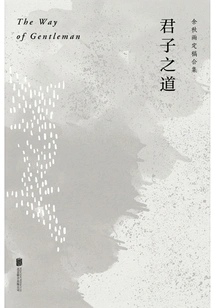
The Way of a Gentleman (2020 Edition)
Literature君子之道(2020版)
Yu Qiuyu
Yu Qiuyu spent more than ten years exploring. In the study of Chinese and Western cultures, he dissected the collective personality of the Chinese nation from the accumulation of thousands of years of Chinese culture. The core secret of all cultures is collective personality, and the personality ideal of Chinese culture is the way of a gentleman. The whole book systematically introduces the outline of the gentleman's way, explores how a gentleman deals with the relationship between being a human being, conduct in the world, reputation, and freedom; it elaborates on the spiritual insights gained from Buddhism when facing life problems; at the same time, it provides contemporary young people with a more adequate international perspective, understanding how wise men from all over the world view life, years, and death, and explores the way of life with the way of a gentleman. The Way of a Gentleman is the key to understanding Chinese culture. "To be a gentleman is to be a qualified and ideal Chinese. I have always believed that the reason why Chinese culture has not declined is that the gentleman has not died and his personality has not collapsed." Based on the twenty-four famous sayings in this treatise, the final version adds 36 new famous sayings to form the "Sixty Famous Sayings about the Way of a Gentleman", which explains the gentleman's style and wisdom one by one. Pursue the way of a gentleman and lock in the right path of life.
Yu Qiuyu spent more than ten years exploring. In the study of Chinese and Western cultures, he dissected the collective personality of the Chinese nation from the accumulation of thousands of years of Chinese culture. The core secret of all cultures is collective personality, and the personality ideal of Chinese culture is the way of a gentleman. The whole book systematically introduces the outline of the gentleman's way, explores how a gentleman deals with the relationship between being a human being, conduct in the world, reputation, and freedom; it elaborates on the spiritual insights gained from Buddhism when facing life problems; at the same time, it provides contemporary young people with a more adequate international perspective, understanding how wise men from all over the world view life, years, and death, and explores the way of life with the way of a gentleman. The Way of a Gentleman is the key to understanding Chinese culture. "To be a gentleman is to be a qualified and ideal Chinese. I have always believed that the reason why Chinese culture has not declined is that the gentleman has not died and his personality has not collapsed." Based on the twenty-four famous sayings in this treatise, the final version adds 36 new famous sayings to form the "Sixty Famous Sayings about the Way of a Gentleman", which explains the gentleman's style and wisdom one by one. Pursue the way of a gentleman and lock in the right path of life.
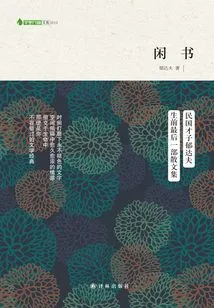
Xianshu
Literature闲书
Yu Dafu
"Xianshu" is Yu Dafu's last collection of essays before his death. It contains 40 articles, including essays, books, reviews, travel notes, etc. These include "Biographic Literature", "August in Hangzhou", "Lonely Spring Dynasty", "Spring Sorrow", "Autumn in the Old Capital", "Winter Scenery in Jiangnan", "Meiyu Diary" and other famous works. His prose is full of poetic charm, with fresh language, delicate brushwork, and sincere emotions. It is natural and elegant like flowing clouds and flowing water, and is highly personalized, emitting the voice of a talented intellectual.
"Xianshu" is Yu Dafu's last collection of essays before his death. It contains 40 articles, including essays, books, reviews, travel notes, etc. These include "Biographic Literature", "August in Hangzhou", "Lonely Spring Dynasty", "Spring Sorrow", "Autumn in the Old Capital", "Winter Scenery in Jiangnan", "Meiyu Diary" and other famous works. His prose is full of poetic charm, with fresh language, delicate brushwork, and sincere emotions. It is natural and elegant like flowing clouds and flowing water, and is highly personalized, emitting the voice of a talented intellectual.
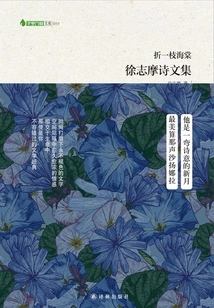
徐志摩诗文集:折一枝海棠
Xu Zhimo
"Folding a Branch of Begonia" is a collection of poems by Crescent School poet Xu Zhimo. It selects more than 150 poems written by him in various periods (including several fine prose works). Most of them are on the theme of love, which comprehensively demonstrates the poet's unconstrained creative talent and poetic style. It is the best choice for reading and understanding Xu Zhimo's poems.
"Folding a Branch of Begonia" is a collection of poems by Crescent School poet Xu Zhimo. It selects more than 150 poems written by him in various periods (including several fine prose works). Most of them are on the theme of love, which comprehensively demonstrates the poet's unconstrained creative talent and poetic style. It is the best choice for reading and understanding Xu Zhimo's poems.
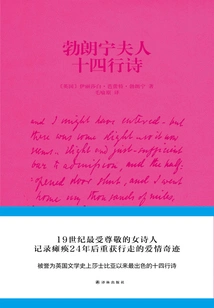
Mrs Browning's Sonnets
Literature勃朗宁夫人十四行诗
(uk) Elizabeth Barrett Browning
The poems recorded in this book were written by Mrs. Browning after they fell in love and before they got married. They express Mrs. Browning's joy, excitement, worry and other emotions after falling in love. The purity and enthusiasm of love have infected countless readers. After Browning read it, he happily called it the most beautiful sonnet since Shakespeare.
The poems recorded in this book were written by Mrs. Browning after they fell in love and before they got married. They express Mrs. Browning's joy, excitement, worry and other emotions after falling in love. The purity and enthusiasm of love have infected countless readers. After Browning read it, he happily called it the most beautiful sonnet since Shakespeare.
哈姆莱特(世界十大文学名著)
(english) Shakespeare
"Hamlet" contains Shakespeare's four most famous tragedies: "Hamlet", "Othello", "King Lear" and "Macbeth". In order to avenge his father, Hamlet found that "the whole era was out of joint" and decided to take up the responsibility of "rearranging the world". The result was that his ambition was empty and he was unable to recover. Othello is an upright and honest man who trusts people but hates evil as much as he hates evil. He killed his wife and himself under the influence of an adulterer. In pursuit of the best and the most beautiful, he suffered evil retribution. King Lear lost his nature in the honor, pride, and self-confidence that power brought to him. He lost his role as a king and became an ordinary person. He could be equally or even greater, so he suffered a lot of pain. Macbeth was originally a meritorious hero with a kind and beautiful side in his character. However, driven by the temptation of the throne and ambition, he became a sinner who "went from blood to blood" and regretted nothing. The tragedies of these characters profoundly reveal the various social evils that have begun to appear during the period of primitive accumulation of capital, and show the irreconcilable contradiction between humanistic ideals and cruel reality, which has a high degree of general significance.
"Hamlet" contains Shakespeare's four most famous tragedies: "Hamlet", "Othello", "King Lear" and "Macbeth". In order to avenge his father, Hamlet found that "the whole era was out of joint" and decided to take up the responsibility of "rearranging the world". The result was that his ambition was empty and he was unable to recover. Othello is an upright and honest man who trusts people but hates evil as much as he hates evil. He killed his wife and himself under the influence of an adulterer. In pursuit of the best and the most beautiful, he suffered evil retribution. King Lear lost his nature in the honor, pride, and self-confidence that power brought to him. He lost his role as a king and became an ordinary person. He could be equally or even greater, so he suffered a lot of pain. Macbeth was originally a meritorious hero with a kind and beautiful side in his character. However, driven by the temptation of the throne and ambition, he became a sinner who "went from blood to blood" and regretted nothing. The tragedies of these characters profoundly reveal the various social evils that have begun to appear during the period of primitive accumulation of capital, and show the irreconcilable contradiction between humanistic ideals and cruel reality, which has a high degree of general significance.
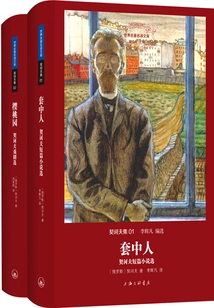
世界名著名译文库:契诃夫集(套装共2册)
(russian) Chekhov
"The Man in the Trap: Selected Short Stories by Chekhov" is an anthology of Chekhov's short stories, including more than 20 works including Chekhov's representative short stories "Chameleon", "Death of an Official", "Wanka", "Ward No. 6", "The Man in the Trap" and so on. Chekhov is known as one of the three greatest short story writers in the world. His short stories are outstanding representatives of Russian and even world realist literature at the end of the 19th century. The works selected in this book represent Chekhov's creative achievements in different periods. Many of them have been selected into primary and secondary school textbooks and are well-known to every household. "The Cherry Orchard: Selected Plays by Chekhov" is a collection of Chekhov's drama works, including "Ivanov", "The Seagull", "Uncle Vanya", "Three Sisters" and "The Cherry Orchard". Chekhov is both a master of short stories and a master of dramatic art. Script creation is an important part of Chekhov's literary creation. His creations revolutionized Russian dramatic art and had a great influence on 20th century drama.
"The Man in the Trap: Selected Short Stories by Chekhov" is an anthology of Chekhov's short stories, including more than 20 works including Chekhov's representative short stories "Chameleon", "Death of an Official", "Wanka", "Ward No. 6", "The Man in the Trap" and so on. Chekhov is known as one of the three greatest short story writers in the world. His short stories are outstanding representatives of Russian and even world realist literature at the end of the 19th century. The works selected in this book represent Chekhov's creative achievements in different periods. Many of them have been selected into primary and secondary school textbooks and are well-known to every household. "The Cherry Orchard: Selected Plays by Chekhov" is a collection of Chekhov's drama works, including "Ivanov", "The Seagull", "Uncle Vanya", "Three Sisters" and "The Cherry Orchard". Chekhov is both a master of short stories and a master of dramatic art. Script creation is an important part of Chekhov's literary creation. His creations revolutionized Russian dramatic art and had a great influence on 20th century drama.
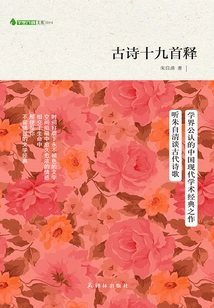
古诗十九首释(字里行间文库)
Zhu Ziqing
"Nineteen Interpretations of Ancient Poems" contains Mr. Zhu Ziqing's classic academic work "Nineteen Interpretations of Ancient Poems" and some chapters of "Poems and Commentaries". In "Interpretations of Nineteen Ancient Poems", Zhu Ziqing reinterpreted "Nineteen Ancient Poems" with a modern academic vision and aesthetic taste. He not only annotated and verified the facts of the poems, but also appreciated and criticized the meaning of the poems. This formed Zhu Ziqing's unique interpretation of poems and became a model for future generations to study. "Shi Yan Zhi Bian" excerpts three chapters: Poetry Yan Zhi, Poetry Teaching, and Zhengbian. It focuses on studying the development of the history of poetic theory. It is the most essential part of Zhu Ziqing's research on poetry theory.
"Nineteen Interpretations of Ancient Poems" contains Mr. Zhu Ziqing's classic academic work "Nineteen Interpretations of Ancient Poems" and some chapters of "Poems and Commentaries". In "Interpretations of Nineteen Ancient Poems", Zhu Ziqing reinterpreted "Nineteen Ancient Poems" with a modern academic vision and aesthetic taste. He not only annotated and verified the facts of the poems, but also appreciated and criticized the meaning of the poems. This formed Zhu Ziqing's unique interpretation of poems and became a model for future generations to study. "Shi Yan Zhi Bian" excerpts three chapters: Poetry Yan Zhi, Poetry Teaching, and Zhengbian. It focuses on studying the development of the history of poetic theory. It is the most essential part of Zhu Ziqing's research on poetry theory.
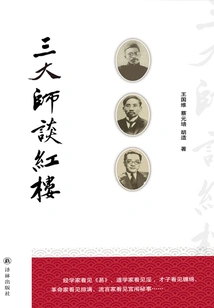
Three Masters Talk About Red Mansions
Literature三大师谈红楼
Wang Guowei Cai Yuanpei Hu Shi
This book contains three articles respectively commenting on "Dream of Red Mansions" by Chinese masters of Chinese studies Wang Guowei, Cai Yuanpei and Hu Shi, namely "Commentary on Dream of Red Mansions", "Records of Hidden Things in the Stone" and "Critical Research on Dream of Red Mansions", with exquisite illustrations. By reading the whole book, you can understand the respective opinions and views of the three masters, gain a new understanding of the value of "Dream of Red Mansions", such as the tragic significance of "Dream of Red Mansions", "Dream of Red Mansions" as a political novel, the family background and life research of Cao Xueqin, the author of "Dream of Red Mansions", etc., And review the grace and charm of the masters in academic debates.
This book contains three articles respectively commenting on "Dream of Red Mansions" by Chinese masters of Chinese studies Wang Guowei, Cai Yuanpei and Hu Shi, namely "Commentary on Dream of Red Mansions", "Records of Hidden Things in the Stone" and "Critical Research on Dream of Red Mansions", with exquisite illustrations. By reading the whole book, you can understand the respective opinions and views of the three masters, gain a new understanding of the value of "Dream of Red Mansions", such as the tragic significance of "Dream of Red Mansions", "Dream of Red Mansions" as a political novel, the family background and life research of Cao Xueqin, the author of "Dream of Red Mansions", etc., And review the grace and charm of the masters in academic debates.
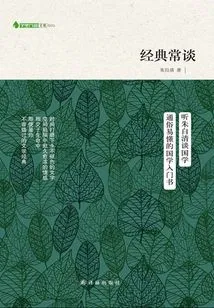
经典常谈(字里行间文库)
Zhu Ziqing
This book is Mr. Zhu Ziqing's introduction to ancient Chinese literature, history, and philosophy classics for young people. According to the order of classics, history, zi, and collection, and taking into account traditional opinions, it successively analyzes "Shuowen Jiezi", "Zhouyi", "Shangshu", and "Book of Songs" , Three Rites, Three Biography of the Spring and Autumn Period, Four Books, "Warring States Policy", "Historical Records", "Hanshu", Zhuzi, Ci Fu, Poems and Wen are explained with incisive insights and simple explanations. It is a guide for readers to understand ancient Chinese cultural classics and an introductory book to Chinese studies.
This book is Mr. Zhu Ziqing's introduction to ancient Chinese literature, history, and philosophy classics for young people. According to the order of classics, history, zi, and collection, and taking into account traditional opinions, it successively analyzes "Shuowen Jiezi", "Zhouyi", "Shangshu", and "Book of Songs" , Three Rites, Three Biography of the Spring and Autumn Period, Four Books, "Warring States Policy", "Historical Records", "Hanshu", Zhuzi, Ci Fu, Poems and Wen are explained with incisive insights and simple explanations. It is a guide for readers to understand ancient Chinese cultural classics and an introductory book to Chinese studies.
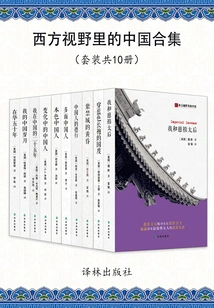
西方视野里的中国合集(套装共10册)
(uk) Johnston Et Al.
The China from a Western Perspective series looks at the roots of Chinese society through the eyes of Western culture. A collection of 10 volumes in total: "China from a Western Perspective: Dusk in the Forbidden City" "China from a Western Perspective: The Changing Chinese" "China from a Western Perspective: The Many-faceted Chinese" "China from a Western Perspective: The Virtues of the Chinese" "China from a Western Perspective: The True Colors of the Chinese" "China from a Western Perspective: My Twenty-Five Years in China" "China from a Western Perspective: Me and the Empress Dowager Cixi" "China from a Western Perspective: The Country in Blue Robes" "China from a Western Perspective: My Chinese Years" "China from a Western Perspective: Fifty Years in China".
The China from a Western Perspective series looks at the roots of Chinese society through the eyes of Western culture. A collection of 10 volumes in total: "China from a Western Perspective: Dusk in the Forbidden City" "China from a Western Perspective: The Changing Chinese" "China from a Western Perspective: The Many-faceted Chinese" "China from a Western Perspective: The Virtues of the Chinese" "China from a Western Perspective: The True Colors of the Chinese" "China from a Western Perspective: My Twenty-Five Years in China" "China from a Western Perspective: Me and the Empress Dowager Cixi" "China from a Western Perspective: The Country in Blue Robes" "China from a Western Perspective: My Chinese Years" "China from a Western Perspective: Fifty Years in China".
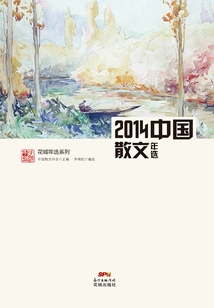
2014 Annual Selections of Chinese Prose
Literature2014中国散文年选
Editor-in-chief Of The Chinese Prose Society
Monotonous sameness is the old enemy of literature. The editors have extracted the essence from a large number of essays and divided them into six series: "Collecting Memories", "Waiting for a Bowl of Nostalgia", "Our World is in Its Eyes", "Farewell to Ignorance and Boring", "Experience at the Deepest Level" and "Looking Back in the Bloodline". The articles mostly look back at history that should not be buried in the dust but seem to have been forgotten, and there are also many personal writings. "Reminiscences" includes reviews of history and past events by famous literary figures, such as "Ah Q catches lice, "Forget it! Forget it!" And "I am not a passerby, I am a returnee." "Waiting for a Bowl of Nostalgia", as the name suggests, is a collection of deep homesickness. "Our World in Its Eyes" is mostly an article about scenery, recording the joy or sorrow found in daily life. "Farewell to Wisdom and Boredom" is a collection of articles about the past. The articles of talented scholars and knowledgeable writers are mixed. Guo Jingming's name appears in this anthology for the first time. "Looking Back in the Bloodline" is also a review of the past. Zhang Yihe's "The Water is Deep and the Water is Shallow, the East and West Streams, the Clouds Are Flying and the Mountains Are Far and Near" is quite eye-catching. The selection is well-written and the anthology reflects the creative achievements of the 2014 essays.
Monotonous sameness is the old enemy of literature. The editors have extracted the essence from a large number of essays and divided them into six series: "Collecting Memories", "Waiting for a Bowl of Nostalgia", "Our World is in Its Eyes", "Farewell to Ignorance and Boring", "Experience at the Deepest Level" and "Looking Back in the Bloodline". The articles mostly look back at history that should not be buried in the dust but seem to have been forgotten, and there are also many personal writings. "Reminiscences" includes reviews of history and past events by famous literary figures, such as "Ah Q catches lice, "Forget it! Forget it!" And "I am not a passerby, I am a returnee." "Waiting for a Bowl of Nostalgia", as the name suggests, is a collection of deep homesickness. "Our World in Its Eyes" is mostly an article about scenery, recording the joy or sorrow found in daily life. "Farewell to Wisdom and Boredom" is a collection of articles about the past. The articles of talented scholars and knowledgeable writers are mixed. Guo Jingming's name appears in this anthology for the first time. "Looking Back in the Bloodline" is also a review of the past. Zhang Yihe's "The Water is Deep and the Water is Shallow, the East and West Streams, the Clouds Are Flying and the Mountains Are Far and Near" is quite eye-catching. The selection is well-written and the anthology reflects the creative achievements of the 2014 essays.
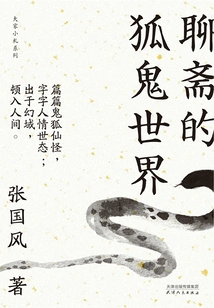
The World of Fox Ghosts in Liaozhai
Literature聊斋的狐鬼世界
Zhang Guofeng
"Strange Stories from a Chinese Studio" is a collection of short stories in classical Chinese that can be said to be "unprecedented and unprecedented". Pu Songling used his extraordinary imagination and profound insight to construct a netherworld that is both real and illusory, and includes both humans and ghosts. This book contains more than 40 wonderful comments about "Liao Zhai" by Professor Zhang Guofeng, a famous classical literature scholar. By tasting the characters and stories of Liaozhai, he reveals the real world hidden in the text and understands Pu Songling's genius conception. The structure of the book is simple and clear, the text is profound and easy to understand, and the ideas are neither profound nor complicated; the language also strives to be easy to understand. It is an extremely rare masterpiece that can be easily understood by laymen and is a masterpiece of "Liao Zhai" appreciation.
"Strange Stories from a Chinese Studio" is a collection of short stories in classical Chinese that can be said to be "unprecedented and unprecedented". Pu Songling used his extraordinary imagination and profound insight to construct a netherworld that is both real and illusory, and includes both humans and ghosts. This book contains more than 40 wonderful comments about "Liao Zhai" by Professor Zhang Guofeng, a famous classical literature scholar. By tasting the characters and stories of Liaozhai, he reveals the real world hidden in the text and understands Pu Songling's genius conception. The structure of the book is simple and clear, the text is profound and easy to understand, and the ideas are neither profound nor complicated; the language also strives to be easy to understand. It is an extremely rare masterpiece that can be easily understood by laymen and is a masterpiece of "Liao Zhai" appreciation.
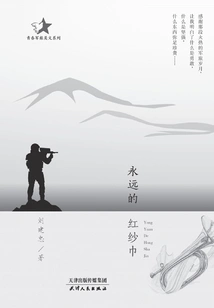
Forever Red Scarf
Literature永远的红纱巾
Liu Jianzhong
This book is divided into four volumes, including prose works such as "Northern Soldiers and Southern Girls", "Good Soldier Three Woods", "Sorrow", "Touch of Night Walk", "Father is a Stalk of Wheat", and "Brotherly Love".
This book is divided into four volumes, including prose works such as "Northern Soldiers and Southern Girls", "Good Soldier Three Woods", "Sorrow", "Touch of Night Walk", "Father is a Stalk of Wheat", and "Brotherly Love".
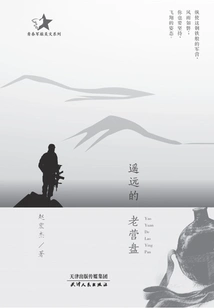
Distant Old Camp
Literature遥远的老营盘
Zhao Hongjie
This book selects more than 40 military essays by the emerging military writer Zhao Hongjie published in "Literary News" and other newspapers, including "The Military Song is Loud", "Yan'an Essays", "Following the Heroes", "Three Random Questions", "Little Daughter", etc.
This book selects more than 40 military essays by the emerging military writer Zhao Hongjie published in "Literary News" and other newspapers, including "The Military Song is Loud", "Yan'an Essays", "Following the Heroes", "Three Random Questions", "Little Daughter", etc.
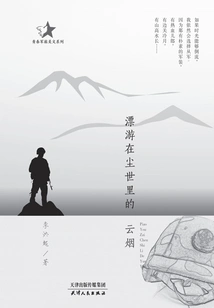
Clouds and Smoke Floating in the World
Literature漂游在尘世里的云烟
Li Hongchao
In "Clouds and Smoke Floating in the World", Li Hongchao gathered these words and just wanted to tell those comrades who have served as soldiers or are currently serving in the army, as well as those of you who have never served as soldiers, that every step we have taken is heavy. Whether in a green military camp or in a colorful place, the imprint of the military is not getting blurry but becoming clearer to you. Looking back, you will find that how important the process is, the results seem insignificant.
In "Clouds and Smoke Floating in the World", Li Hongchao gathered these words and just wanted to tell those comrades who have served as soldiers or are currently serving in the army, as well as those of you who have never served as soldiers, that every step we have taken is heavy. Whether in a green military camp or in a colorful place, the imprint of the military is not getting blurry but becoming clearer to you. Looking back, you will find that how important the process is, the results seem insignificant.
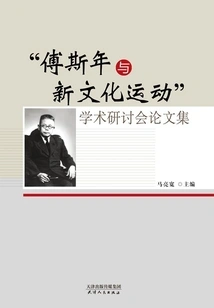
“傅斯年与新文化运动”学术研讨会论文集
Editor-in-chief Ma Liangkuan
This book is the culmination of the academic symposium "Fu Sinian and the New Culture Movement" held at Liaocheng University in August 2014. The conference papers can be roughly divided into four categories: research on the relationship between Fu Sinian and the May 4th New Culture Movement, discussion and commentary on Fu Sinian's ideas, exploration of Fu Sinian's relationship with his contemporaries and the similarities and differences in his thoughts, and an analysis of Fu Sinian's research status.
This book is the culmination of the academic symposium "Fu Sinian and the New Culture Movement" held at Liaocheng University in August 2014. The conference papers can be roughly divided into four categories: research on the relationship between Fu Sinian and the May 4th New Culture Movement, discussion and commentary on Fu Sinian's ideas, exploration of Fu Sinian's relationship with his contemporaries and the similarities and differences in his thoughts, and an analysis of Fu Sinian's research status.
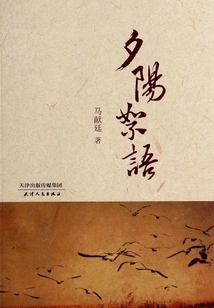
Sunset Whispers
Literature夕阳絮语
Ma Xianting
This book selects 100 essays from the collection of essays written by the author Ma Xianting after he was eighty years old. The book is divided into eight parts: "Knowing the Elderly", "Being a Self", "Being Happy with the Elderly", "Nourishing the Heart", "Keeping Health", "Family Love", "Love in the World" and "Removing Oneself". They tell their own life experience and insights from the perspective of how the elderly treat themselves well, how to treat others, how to correctly handle the relationship with family and society, and how to exert positive energy in social life. Each short article in the book is full of an octogenarian's cherishing of life, full of wisdom and affection, and is a trickle flowing from a quiet and clear heart.
This book selects 100 essays from the collection of essays written by the author Ma Xianting after he was eighty years old. The book is divided into eight parts: "Knowing the Elderly", "Being a Self", "Being Happy with the Elderly", "Nourishing the Heart", "Keeping Health", "Family Love", "Love in the World" and "Removing Oneself". They tell their own life experience and insights from the perspective of how the elderly treat themselves well, how to treat others, how to correctly handle the relationship with family and society, and how to exert positive energy in social life. Each short article in the book is full of an octogenarian's cherishing of life, full of wisdom and affection, and is a trickle flowing from a quiet and clear heart.
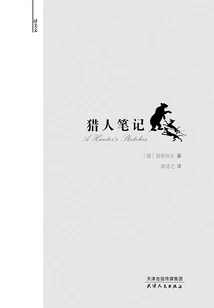
Hunter's Notes
Literature猎人笔记
Turgenev
The famous work of the outstanding Russian writer Turgenev in the 19th century. This is a collection of essays describing rural life in Russia in the mid-19th century through hunters' hunting activities. The work takes a hunter's hunting as a clue and depicts many characters such as landlords, housekeepers, mill wives, town doctors, aristocratic intellectuals, serfs, peasant children, etc., Truly showing the life style of people from all walks of life in urban and rural areas in the era in which the author lived. With Turgenev's graceful narration, the natural scenery of Russia, the customs and habits of the Russian people, the bullying of farmers by landlords, and the kindness, simplicity and wisdom of farmers slowly flow out in front of us like lyrical songs, converging into a colorful and touching symphonic poem. For readers in the 21st century, it is still an immortal work that provides infinitely beautiful artistic enjoyment and is rich in instruction.
The famous work of the outstanding Russian writer Turgenev in the 19th century. This is a collection of essays describing rural life in Russia in the mid-19th century through hunters' hunting activities. The work takes a hunter's hunting as a clue and depicts many characters such as landlords, housekeepers, mill wives, town doctors, aristocratic intellectuals, serfs, peasant children, etc., Truly showing the life style of people from all walks of life in urban and rural areas in the era in which the author lived. With Turgenev's graceful narration, the natural scenery of Russia, the customs and habits of the Russian people, the bullying of farmers by landlords, and the kindness, simplicity and wisdom of farmers slowly flow out in front of us like lyrical songs, converging into a colorful and touching symphonic poem. For readers in the 21st century, it is still an immortal work that provides infinitely beautiful artistic enjoyment and is rich in instruction.
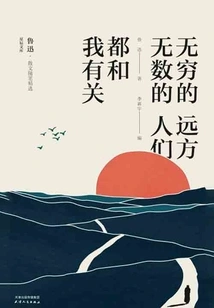
无穷的远方,无数的人们,都和我有关
Lu Xun Li Xinyu
This book is selected and compiled by Professor Li Xinyu, a famous scholar and expert on Lu Xun. Different from the "fighter and mentor" that the world is familiar with, most of the articles collected in this collection are gentle and dilute articles written by Mr. Lu Xun, and do not include those words filled with blood and tears or angry frowns. Of course, light and heavy, hard and soft are relative. If the author himself is heavy, even if he chooses the lightest words, he may still be heavy; if the author himself is rigid, even if he chooses the lightest words, he may still contain emery. Lu Xun is undoubtedly both serious and strong, but from these selected articles, we can still see other aspects of Mr. Da, which is more conducive to readers' understanding of Lu Xun, a complex image that Chinese people will always love, always suffer, and never get around.
This book is selected and compiled by Professor Li Xinyu, a famous scholar and expert on Lu Xun. Different from the "fighter and mentor" that the world is familiar with, most of the articles collected in this collection are gentle and dilute articles written by Mr. Lu Xun, and do not include those words filled with blood and tears or angry frowns. Of course, light and heavy, hard and soft are relative. If the author himself is heavy, even if he chooses the lightest words, he may still be heavy; if the author himself is rigid, even if he chooses the lightest words, he may still contain emery. Lu Xun is undoubtedly both serious and strong, but from these selected articles, we can still see other aspects of Mr. Da, which is more conducive to readers' understanding of Lu Xun, a complex image that Chinese people will always love, always suffer, and never get around.
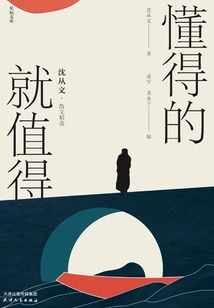
懂得的就值得:沈从文散文精选
Shen Congwen Ling Yu Long Yongqian
This book was selected and compiled by Mr. Ling Yu, who is famous for his research on Shen Congwen, and his student Long Yongqian. It fully contains the essence of more than 20 of Shen Congwen's numerous prose works. The lines are filled with the ancient atmosphere accumulated by history, which is simple and thick, simple and expressive. At the same time, it is also full of the author's hidden worries and philosophical thinking about life. Reading Shen Congwen's words, you will come into contact with another kind of life, gain insights from it, and have a deeper understanding of life or life.
This book was selected and compiled by Mr. Ling Yu, who is famous for his research on Shen Congwen, and his student Long Yongqian. It fully contains the essence of more than 20 of Shen Congwen's numerous prose works. The lines are filled with the ancient atmosphere accumulated by history, which is simple and thick, simple and expressive. At the same time, it is also full of the author's hidden worries and philosophical thinking about life. Reading Shen Congwen's words, you will come into contact with another kind of life, gain insights from it, and have a deeper understanding of life or life.
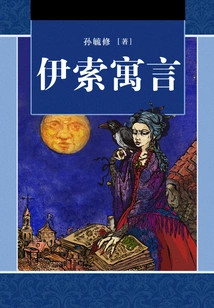
Aesop's Fables (translated by Sun Yuxiu)
Literature伊索寓言(孙毓修译本)
(borrowed From Ancient Greece) Aesop
Extracurricular readings during the Republic of China period. "Aesop's Fables" is said to be a collection of fables written by Aesop, an ancient Greek slave who was freed in the sixth century BC. It also added Indian, Arabic and Christian stories, with a total of 357 fables.
Extracurricular readings during the Republic of China period. "Aesop's Fables" is said to be a collection of fables written by Aesop, an ancient Greek slave who was freed in the sixth century BC. It also added Indian, Arabic and Christian stories, with a total of 357 fables.
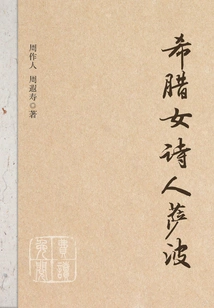
Greek Poetess Sabo
Literature希腊女诗人萨波
Zhou Zuoren Zhou Xianshou
Sappho's reputation in Greece is great. Their own people usually call Homer a poet without mentioning his name. Similarly, Sabo is only called a poetess. This book introduces Sapo, with poetry as the main subject and life as the secondary subject. But in fact, because the poems are difficult to translate and the remaining texts are scattered, most of the surviving poems are fragments and fragments, which are difficult to form into volumes. Therefore, they are mixed in with daily life. There are eighty sections in total, and almost all the important ones are included in the collection of poems. The six articles in this article are all taken from "The Life of Sabo" by Arthur Weigall in England. The whole book is too complicated, so the rest have not been translated. If there is any supplementary material, it is included in Appendix A at the end of each article. The poems by Sapo recorded in the article are also translated according to the original text of the poetry collection and listed as Appendix B. This is the true appearance of the original poems and can be used as a reference.
Sappho's reputation in Greece is great. Their own people usually call Homer a poet without mentioning his name. Similarly, Sabo is only called a poetess. This book introduces Sapo, with poetry as the main subject and life as the secondary subject. But in fact, because the poems are difficult to translate and the remaining texts are scattered, most of the surviving poems are fragments and fragments, which are difficult to form into volumes. Therefore, they are mixed in with daily life. There are eighty sections in total, and almost all the important ones are included in the collection of poems. The six articles in this article are all taken from "The Life of Sabo" by Arthur Weigall in England. The whole book is too complicated, so the rest have not been translated. If there is any supplementary material, it is included in Appendix A at the end of each article. The poems by Sapo recorded in the article are also translated according to the original text of the poetry collection and listed as Appendix B. This is the true appearance of the original poems and can be used as a reference.
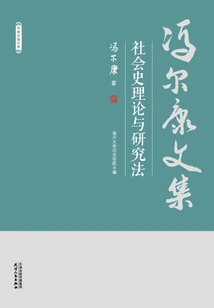
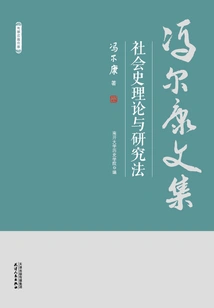
社会史理论与研究法
Written By Feng Erkang, Compiled By The School Of History, Nankai University
It studies historical theories and historical research methods from a methodological perspective, and is divided into five columns: a summary of historical research, social history research and its methodologies, advocating for new fields of historical research, my study of history and governance, and appendices. In order to show that history mainly clarifies and states historical facts, and uses historical knowledge to enlighten people with wisdom, that is, it emphasizes the social function of history, rather than the political function.
It studies historical theories and historical research methods from a methodological perspective, and is divided into five columns: a summary of historical research, social history research and its methodologies, advocating for new fields of historical research, my study of history and governance, and appendices. In order to show that history mainly clarifies and states historical facts, and uses historical knowledge to enlighten people with wisdom, that is, it emphasizes the social function of history, rather than the political function.
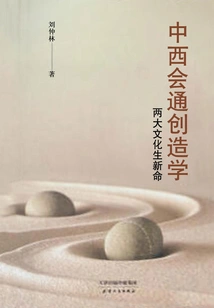
中西会通创造学:两大文化生新命
Liu Zhonglin
As a modern trend in the West, creation studies is an interdisciplinary field developed in the United States in the 1940s and is closely related to market economy, patented inventions, psychology, education, etc. Western creative studies focus on developing creative abilities and popularizing creative techniques, focusing on creating results (belonging to "foreign studies"). As one of the representatives of oriental culture, Chinese traditional culture is extensive, profound and has a long history. It is closely related to philosophy, education, religion, literature and art, science and technology, etc. The core of Chinese culture is Chinese philosophy, and the core of Chinese philosophy is "Tao". The core of "Tao" is practical experience, focusing on physical and mental cultivation (belonging to "internal learning").
As a modern trend in the West, creation studies is an interdisciplinary field developed in the United States in the 1940s and is closely related to market economy, patented inventions, psychology, education, etc. Western creative studies focus on developing creative abilities and popularizing creative techniques, focusing on creating results (belonging to "foreign studies"). As one of the representatives of oriental culture, Chinese traditional culture is extensive, profound and has a long history. It is closely related to philosophy, education, religion, literature and art, science and technology, etc. The core of Chinese culture is Chinese philosophy, and the core of Chinese philosophy is "Tao". The core of "Tao" is practical experience, focusing on physical and mental cultivation (belonging to "internal learning").
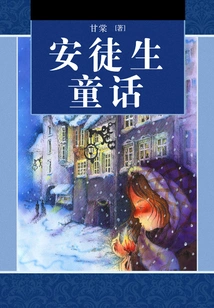
Andersen's Fairy Tales
Literature安徒生童话
Gantang
Extracurricular readings during the Republic of China period. "Andersen's Fairy Tales" is a collection of fairy tales created by the Danish writer Andersen. The more famous stories include: "The Little Mermaid", "The Ugly Duckling", "The Little Match Girl", "Thumbelina", etc.
Extracurricular readings during the Republic of China period. "Andersen's Fairy Tales" is a collection of fairy tales created by the Danish writer Andersen. The more famous stories include: "The Little Mermaid", "The Ugly Duckling", "The Little Match Girl", "Thumbelina", etc.
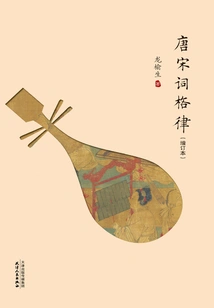
Rhythm of Tang and Song Poetry
Literature唐宋词格律
Long Yusheng
This book is a popular and instrumental work on ci written by Long Yusheng, a master of ci studies. The book is divided into five parts: flat rhyme pattern, oblique rhyme pattern, flat and oblique rhyme conversion pattern, flat and oblique rhyme pattern, and plain and oblique rhyme pattern with wrong leaf pattern. It contains a total of 153 word plates. Under each word plate, the plain rhyme pattern, sentence reading and rhyme position are marked. In addition, it also takes into account the declensions, and uses the classic words of poets of the Tang and Song Dynasties as a reference; in addition, the origin and evolution process of the word card are also explained under each word card, and for some necessary explanations, the emotions that are suitable for expression are pointed out, so that readers can accurately grasp the artistic characteristics of the words, and avoid misunderstandings in the appreciation and creation of the words.
This book is a popular and instrumental work on ci written by Long Yusheng, a master of ci studies. The book is divided into five parts: flat rhyme pattern, oblique rhyme pattern, flat and oblique rhyme conversion pattern, flat and oblique rhyme pattern, and plain and oblique rhyme pattern with wrong leaf pattern. It contains a total of 153 word plates. Under each word plate, the plain rhyme pattern, sentence reading and rhyme position are marked. In addition, it also takes into account the declensions, and uses the classic words of poets of the Tang and Song Dynasties as a reference; in addition, the origin and evolution process of the word card are also explained under each word card, and for some necessary explanations, the emotions that are suitable for expression are pointed out, so that readers can accurately grasp the artistic characteristics of the words, and avoid misunderstandings in the appreciation and creation of the words.
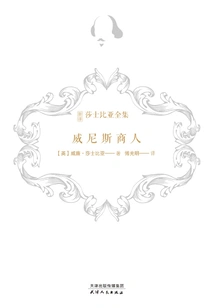
威尼斯商人(新译莎士比亚全集)
(uk) William Shakespeare
An important early work by Shakespeare, a highly satirical comedy. Created around 1596-1597. The theme of the script is to praise benevolence, friendship and love. It also reflects the contradiction between the commercial bourgeoisie and the loan sharks in the early stage of capitalism, and expresses the author's humanistic thoughts on issues such as money, law and religion in bourgeois society. An important literary achievement of this play is to create the typical image of Shylock, a profit-seeking, ruthless loan shark.
An important early work by Shakespeare, a highly satirical comedy. Created around 1596-1597. The theme of the script is to praise benevolence, friendship and love. It also reflects the contradiction between the commercial bourgeoisie and the loan sharks in the early stage of capitalism, and expresses the author's humanistic thoughts on issues such as money, law and religion in bourgeois society. An important literary achievement of this play is to create the typical image of Shylock, a profit-seeking, ruthless loan shark.
Historical Research
Literature史料学研究
Written By Feng Erkang, Compiled By The School Of History, Nankai University
It collects the author's articles on the study of historical materials, divided into five columns: overview, visual historical materials, biography, chronology, diary, letters, compilation, local chronicles, archives, and interpretation of historical materials. The research is not limited to the study of historical materials of Qing history, but also covers the historical materials of China's general history, from the Han Dynasty to the contemporary period. It aims to understand the value of historical materials of various document genres, paying special attention to Chinese social history historical materials and visual historical materials.
It collects the author's articles on the study of historical materials, divided into five columns: overview, visual historical materials, biography, chronology, diary, letters, compilation, local chronicles, archives, and interpretation of historical materials. The research is not limited to the study of historical materials of Qing history, but also covers the historical materials of China's general history, from the Han Dynasty to the contemporary period. It aims to understand the value of historical materials of various document genres, paying special attention to Chinese social history historical materials and visual historical materials.
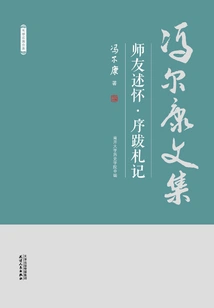
师友述怀?序跋札记
Written By Feng Erkang, Compiled By The School Of History, Nankai University
This collection consists of 10 volumes, including historian Mr. Feng Erkang's academic papers, notes on reading history, prefaces and postscripts, book reviews, memoirs, etc., Covering areas such as historical theory, Qing history, social history, cultural history, clan history, Anhui studies, etc. There are more than 360 articles in total and more than 3.8 Million words. Content academic value. "Reminiscences of Teachers and Friends, Preface and Postscripts" is divided into six columns: Reminiscences of Teachers and Friends, Preface and Postscripts, Book Reviews, Random Talks on Qing History, Cultural Reflections, and Others. The nearly 80 articles included in this collection recall the author's warm past interactions with his mentors and classmates during his studies, teaching, and academic research, and express his admiration and gratitude to his mentors. They have both precious historical value and profound educational significance.
This collection consists of 10 volumes, including historian Mr. Feng Erkang's academic papers, notes on reading history, prefaces and postscripts, book reviews, memoirs, etc., Covering areas such as historical theory, Qing history, social history, cultural history, clan history, Anhui studies, etc. There are more than 360 articles in total and more than 3.8 Million words. Content academic value. "Reminiscences of Teachers and Friends, Preface and Postscripts" is divided into six columns: Reminiscences of Teachers and Friends, Preface and Postscripts, Book Reviews, Random Talks on Qing History, Cultural Reflections, and Others. The nearly 80 articles included in this collection recall the author's warm past interactions with his mentors and classmates during his studies, teaching, and academic research, and express his admiration and gratitude to his mentors. They have both precious historical value and profound educational significance.
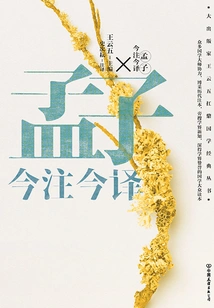
孟子今注今译
Edited By Wang Yunwu And Translated By Shi Ciyun
This series is edited by Mr. Wang Yunwu, a master publisher. He carefully selects famous classics from various collections of Chinese Classics and History, and invites a group of cultural celebrities with rigorous academic styles and rigorous academics (such as Nan Huaijin, Mao Zishui, Yang Lianggong, etc.) To annotate, translate, and explain. They draw on the annotations of the past dynasties and search for new knowledge in the academic world. It is a rare treasure in the field of Chinese Studies research. It has been reprinted more than 20 times since its publication, and has won praise from the academic community. This book refers to Zhao Qi's Annotations on Mencius, Zhu Xi's Annotations on Mencius, Qing Jiaoxun's Justice of Mencius, the Mencius part of Chen Li's Dongshu Shuji, Dai Dongyuan's Evidence of the Meanings of Mencius' Words, Kang Youwei's Wei of Mencius, Hu Yuhuan's Original Meaning of Mencius, Qian Mu's Synopsis of Mencius, and Mao Zishui's Mencius Jiao's Supplements and Supplements, etc., To ensure that the annotations and translations are accurate and clear.
This series is edited by Mr. Wang Yunwu, a master publisher. He carefully selects famous classics from various collections of Chinese Classics and History, and invites a group of cultural celebrities with rigorous academic styles and rigorous academics (such as Nan Huaijin, Mao Zishui, Yang Lianggong, etc.) To annotate, translate, and explain. They draw on the annotations of the past dynasties and search for new knowledge in the academic world. It is a rare treasure in the field of Chinese Studies research. It has been reprinted more than 20 times since its publication, and has won praise from the academic community. This book refers to Zhao Qi's Annotations on Mencius, Zhu Xi's Annotations on Mencius, Qing Jiaoxun's Justice of Mencius, the Mencius part of Chen Li's Dongshu Shuji, Dai Dongyuan's Evidence of the Meanings of Mencius' Words, Kang Youwei's Wei of Mencius, Hu Yuhuan's Original Meaning of Mencius, Qian Mu's Synopsis of Mencius, and Mao Zishui's Mencius Jiao's Supplements and Supplements, etc., To ensure that the annotations and translations are accurate and clear.
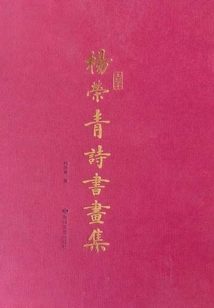
杨荣青诗书画集
Yang Rongqing
This manuscript contains more than 130 calligraphy and painting works carefully created over the years, with a wide range of themes, various forms, unique calligraphy styles, and different styles. It has high artistic attainments and creations, and has certain guiding and reference significance for calligraphy and painting lovers.
This manuscript contains more than 130 calligraphy and painting works carefully created over the years, with a wide range of themes, various forms, unique calligraphy styles, and different styles. It has high artistic attainments and creations, and has certain guiding and reference significance for calligraphy and painting lovers.
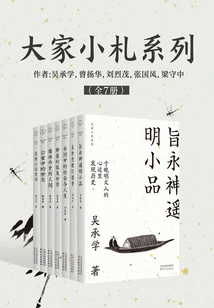
大家小札系列(全7册)
Wu Chengxue Zeng Yanghua Liu Liemao Zhang Guofeng Liang Shouzhong
The "Everyone's Notes" series includes: "Essays about the Eternal God Yaoming", "Apocalyptic Elegy A Dream of Red Mansions", "Society and Life in the Water Margin", "The World of Fox and Ghosts in Liaozhai", "The World in Scholars", "The State of the World in Public Cases" and "History of Martial Arts Novels", a total of 7 volumes.
The "Everyone's Notes" series includes: "Essays about the Eternal God Yaoming", "Apocalyptic Elegy A Dream of Red Mansions", "Society and Life in the Water Margin", "The World of Fox and Ghosts in Liaozhai", "The World in Scholars", "The State of the World in Public Cases" and "History of Martial Arts Novels", a total of 7 volumes.
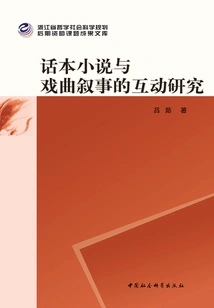
话本小说与戏曲叙事的互动研究
Lu Ru
This book is included in the late-stage funding of Zhejiang Province in 2017. This book is revised based on the doctoral thesis. The author mainly uses the theoretical framework of Western narratology, starting from the common narrative nature of opera and story-telling novels, and explores the interaction between the narrative modes and narrative content of story-telling novels and dramas. It not only explores the feasibility of the two-way narrative interaction between story-telling novels and operas, but also analyzes the penetration of narrative modes of story-telling novels and operas, and reveals the need to realize the conversion of narrative time, narrative angle, and narrative structure due to different artistic characteristics when the two interact; at the same time, combined with personal Case analysis examines the penetration of narrative content between story-telling novels and operas, and also explores the differences between the two in terms of narrative themes, narrative characters, narrative plots, etc. Due to different artistic characteristics, revealing that the texts of different story-telling novels and operas of the same story present different narrative characteristics.
This book is included in the late-stage funding of Zhejiang Province in 2017. This book is revised based on the doctoral thesis. The author mainly uses the theoretical framework of Western narratology, starting from the common narrative nature of opera and story-telling novels, and explores the interaction between the narrative modes and narrative content of story-telling novels and dramas. It not only explores the feasibility of the two-way narrative interaction between story-telling novels and operas, but also analyzes the penetration of narrative modes of story-telling novels and operas, and reveals the need to realize the conversion of narrative time, narrative angle, and narrative structure due to different artistic characteristics when the two interact; at the same time, combined with personal Case analysis examines the penetration of narrative content between story-telling novels and operas, and also explores the differences between the two in terms of narrative themes, narrative characters, narrative plots, etc. Due to different artistic characteristics, revealing that the texts of different story-telling novels and operas of the same story present different narrative characteristics.
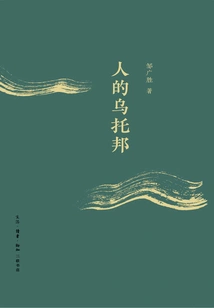
Man's Utopia
Literature人的乌托邦
Zou Guangsheng
Ideal personality is a life goal pursued by wise men at home and abroad in ancient and modern times. At the same time, they use their own life practice to clarify its true meaning. The unity of knowledge and action is fundamental. From the perspective of truth, goodness, and beauty, this book uses Confucius, Zhuangzi, Buddha, Socrates, Jesus, and other famous sages throughout the ages as examples to explore what it means to be the highest state a person can achieve. Their words and deeds are of great significance to our reflection on our current life.
Ideal personality is a life goal pursued by wise men at home and abroad in ancient and modern times. At the same time, they use their own life practice to clarify its true meaning. The unity of knowledge and action is fundamental. From the perspective of truth, goodness, and beauty, this book uses Confucius, Zhuangzi, Buddha, Socrates, Jesus, and other famous sages throughout the ages as examples to explore what it means to be the highest state a person can achieve. Their words and deeds are of great significance to our reflection on our current life.
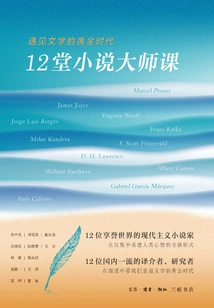
12堂小说大师课:遇见文学的黄金时代
Lu Jiande Et Al.
12 world-renowned modernist novelists reconstruct a new form of human mind in rebellion; 12 domestic first-class translators and researchers take us back to the golden age of literature through careful reading. Yu Zhongxian, Liu Xuelan, Dai Congrong, Wu Xiaodong, Lu Jiande, Mao Jian, Lin Bin, Chen Zhongyi, Yuan Xiaoyi, Wen Zheng, Fan Ye, Dong Qiang are all in this true novel master class. Vivid: A literature lesson that can be understood even without reading the original work. Concise explanation: A writer only leaves it to one expert to dig deeper. Authoritative: From the translator's perspective, the beauty of the original work is directly accessible. New knowledge: Use novels as a window to analyze Western civilization and philosophy. Modernism shaped the psychology and way of "modern people" experiencing the world. Modernist novels that emphasize rebelliousness, avant-gardeness, and experimentation not only conduct in-depth explorations in aspects such as self-awareness, character, and the complex relationship between people and society, but also challenge the novel's creative techniques, readers' aesthetic habits, and people's moral ethics. These classic modern novels take us to countless challenging spiritual horizons. It is an aesthetic journey as well as an ethical journey. It can not only help us understand the "wasteland" and "magic" experiences we experienced in the 20th century, but also allow the souls gradually lost in the digital and networked era to regain the dual sensitivity of consciousness and emotion, and better understand the present as a consequence of modernity. Why read novels? Is the novel dead? How can I finish reading "In Search of Lost Time"? Who is K in "The Castle"? How is the suspense of "Winter Night Traveler" set up? How did Fitzgerald show off his wealth? Why doesn't Marquez consider himself a representative of magical realism? Proust, Woolf, Joyce, Kafka, Lawrence, Fitzgerald, Faulkner, Borges, Camus, Calvino, Marquez, Kundera. These names represent the most brilliant golden age of literature in history. Their thoughts and works have had a huge and far-reaching impact on human civilization to this day. 12 Brilliant novel master classes, 12 of the most authoritative scholar-translators in China, each explain a 20th century novel master and a masterpiece, combining the conditions of the times and the writer's background, lifting the veil of text, leading us to gain insight into the connotation of the work, and analyze Western society, thought and civilization. Based on the works of these most classic writers and the background of the times, we can build the common sense and foundation of literature and appreciate the beauty of language and life.
12 world-renowned modernist novelists reconstruct a new form of human mind in rebellion; 12 domestic first-class translators and researchers take us back to the golden age of literature through careful reading. Yu Zhongxian, Liu Xuelan, Dai Congrong, Wu Xiaodong, Lu Jiande, Mao Jian, Lin Bin, Chen Zhongyi, Yuan Xiaoyi, Wen Zheng, Fan Ye, Dong Qiang are all in this true novel master class. Vivid: A literature lesson that can be understood even without reading the original work. Concise explanation: A writer only leaves it to one expert to dig deeper. Authoritative: From the translator's perspective, the beauty of the original work is directly accessible. New knowledge: Use novels as a window to analyze Western civilization and philosophy. Modernism shaped the psychology and way of "modern people" experiencing the world. Modernist novels that emphasize rebelliousness, avant-gardeness, and experimentation not only conduct in-depth explorations in aspects such as self-awareness, character, and the complex relationship between people and society, but also challenge the novel's creative techniques, readers' aesthetic habits, and people's moral ethics. These classic modern novels take us to countless challenging spiritual horizons. It is an aesthetic journey as well as an ethical journey. It can not only help us understand the "wasteland" and "magic" experiences we experienced in the 20th century, but also allow the souls gradually lost in the digital and networked era to regain the dual sensitivity of consciousness and emotion, and better understand the present as a consequence of modernity. Why read novels? Is the novel dead? How can I finish reading "In Search of Lost Time"? Who is K in "The Castle"? How is the suspense of "Winter Night Traveler" set up? How did Fitzgerald show off his wealth? Why doesn't Marquez consider himself a representative of magical realism? Proust, Woolf, Joyce, Kafka, Lawrence, Fitzgerald, Faulkner, Borges, Camus, Calvino, Marquez, Kundera. These names represent the most brilliant golden age of literature in history. Their thoughts and works have had a huge and far-reaching impact on human civilization to this day. 12 Brilliant novel master classes, 12 of the most authoritative scholar-translators in China, each explain a 20th century novel master and a masterpiece, combining the conditions of the times and the writer's background, lifting the veil of text, leading us to gain insight into the connotation of the work, and analyze Western society, thought and civilization. Based on the works of these most classic writers and the background of the times, we can build the common sense and foundation of literature and appreciate the beauty of language and life.
Collection of Zhang Jingsheng
Literature张竞生集
Zhang Jingsheng
This collection is divided into ten volumes, which brings together all Zhang Jingsheng's works and early critical and reminiscence articles that can be found so far. It is a rare material for studying Zhang Jingsheng's life and times. Most of the content in this collection was published for the first time after 1949, and some of the content has never been published.
This collection is divided into ten volumes, which brings together all Zhang Jingsheng's works and early critical and reminiscence articles that can be found so far. It is a rare material for studying Zhang Jingsheng's life and times. Most of the content in this collection was published for the first time after 1949, and some of the content has never been published.
陶渊明之文艺及其品格
Liang Qichao
Liang Qichao's discussion of Tao is unique in its viewpoints, methods and writing style, creating a new era of studying Tao Yuanming from a modern academic perspective. Liang Qichao paid special attention to Tao Yuanming's status in literary history and believed that Tao was the second unique writer after Qu Yuan. He systematically discussed Tao Yuanming's "latent characteristics" from three aspects, and believed that Tao was the happiest person in the world, and his fundamental outlook on life was nature and freedom. Moreover, in addition to affirming that Tao Yuanming was "a noble person", he was also discerning and insightful, emphasizing that Tao Yuanming was an "extremely enthusiastic and heroic" person, "the most sentimental and sentimental" person, and an "extremely serious person with a strong sense of moral responsibility".
Liang Qichao's discussion of Tao is unique in its viewpoints, methods and writing style, creating a new era of studying Tao Yuanming from a modern academic perspective. Liang Qichao paid special attention to Tao Yuanming's status in literary history and believed that Tao was the second unique writer after Qu Yuan. He systematically discussed Tao Yuanming's "latent characteristics" from three aspects, and believed that Tao was the happiest person in the world, and his fundamental outlook on life was nature and freedom. Moreover, in addition to affirming that Tao Yuanming was "a noble person", he was also discerning and insightful, emphasizing that Tao Yuanming was an "extremely enthusiastic and heroic" person, "the most sentimental and sentimental" person, and an "extremely serious person with a strong sense of moral responsibility".
Hunan Army Chronicles
Literature湘军志
Wang Kaiyun
Wang Kaiyun himself had a close relationship with many Hunan Army generals, and he also admired Zeng Guofan. In order to write this book, in addition to personal experiences and word-of-mouth from visits, he also managed to borrow a large number of files from the Military Aircraft Department and asked people to make maps. It took seven years to complete the book. However, in addition to praising the heroic achievements of the Hunan Army in the book, he also described the fierceness of the Taiping Army in the early stage, the contradictions between the various factions within the Qing Dynasty, the devastation of the Hunan Army in the early stage of repeated defeats, and Zeng Guoquan's plundering and annexation of property after conquering Jiangning, and described them one by one. Therefore, as soon as the book was printed, it was attacked by the Hunan army generals, who considered it a "slanderous book" and forced Wang Kaiyun to hand over the original edition to Guo Jiutao for destruction to avoid disaster. For this reason, later generations of scholars once praised this work for its "brilliant writing style and the best sensual literature among the miscellaneous histories of our country in the past millennium" and as "the clearest judge of right and wrong, and the best history of the post-Tang Dynasty".
Wang Kaiyun himself had a close relationship with many Hunan Army generals, and he also admired Zeng Guofan. In order to write this book, in addition to personal experiences and word-of-mouth from visits, he also managed to borrow a large number of files from the Military Aircraft Department and asked people to make maps. It took seven years to complete the book. However, in addition to praising the heroic achievements of the Hunan Army in the book, he also described the fierceness of the Taiping Army in the early stage, the contradictions between the various factions within the Qing Dynasty, the devastation of the Hunan Army in the early stage of repeated defeats, and Zeng Guoquan's plundering and annexation of property after conquering Jiangning, and described them one by one. Therefore, as soon as the book was printed, it was attacked by the Hunan army generals, who considered it a "slanderous book" and forced Wang Kaiyun to hand over the original edition to Guo Jiutao for destruction to avoid disaster. For this reason, later generations of scholars once praised this work for its "brilliant writing style and the best sensual literature among the miscellaneous histories of our country in the past millennium" and as "the clearest judge of right and wrong, and the best history of the post-Tang Dynasty".
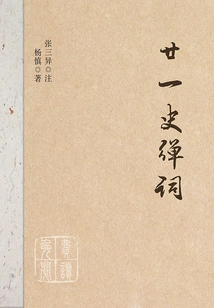
廿一史弹词注(历代史略十段锦词话)
Written By Yang Shen And Annotated By Zhang Sanyi
The Ming Dynasty writer Yang Shen wrote a rap-type Chinese epic when he was exiled to Yunnan, and he is also the ancestor of later generations of tanci. The whole article is based on the deeds recorded in official history, and is composed of stories written in the market place, mixed with songs about laughter and dancing, the narrative is composed of vernacular and lyrics, and the music has both introduction and ending. The opening words of "Romance of the Three Kingdoms" that we are familiar with today are "The Rolling Waters of the Yangtze River Passing East", which comes from the "Speaking of the Qin and Han Dynasties" section of this work, while the opening words of "The Chronicles of the Eastern Zhou Dynasties" with the words "Moon over the Xijiang River" come from the section of "Thirds and Two Jins" of this work. The predecessors said that the tailoring is wonderful, with short and simple cuts, and all the sizes are included in it, which can be described as craftsmanship. Retelling the general history for easy satirical recitation. It has been passed down many times and remains popular. Later generations made revisions, additions and deletions as they saw fit. This version is an annotated version by Zhang Sanyi, a Jinshi scholar from the Qing Dynasty.
The Ming Dynasty writer Yang Shen wrote a rap-type Chinese epic when he was exiled to Yunnan, and he is also the ancestor of later generations of tanci. The whole article is based on the deeds recorded in official history, and is composed of stories written in the market place, mixed with songs about laughter and dancing, the narrative is composed of vernacular and lyrics, and the music has both introduction and ending. The opening words of "Romance of the Three Kingdoms" that we are familiar with today are "The Rolling Waters of the Yangtze River Passing East", which comes from the "Speaking of the Qin and Han Dynasties" section of this work, while the opening words of "The Chronicles of the Eastern Zhou Dynasties" with the words "Moon over the Xijiang River" come from the section of "Thirds and Two Jins" of this work. The predecessors said that the tailoring is wonderful, with short and simple cuts, and all the sizes are included in it, which can be described as craftsmanship. Retelling the general history for easy satirical recitation. It has been passed down many times and remains popular. Later generations made revisions, additions and deletions as they saw fit. This version is an annotated version by Zhang Sanyi, a Jinshi scholar from the Qing Dynasty.
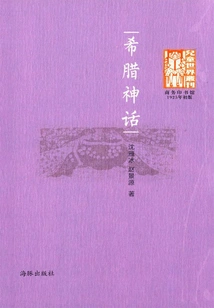
Greek Mythology
Literature希腊神话
Shen Yanbing Zhao Jingyuan
Extracurricular readings during the Republic of China period. It contains ten stories in total: "The Story of Prometheus Stealing Fire", "Why is there Trouble in the World", "The Flood", "The Return of Spring", "The Pine and the Chariot of the Sun God", "The Long Ears of Midas", "Cartmus and the Dragon", "Brerophon and His Horse", "How the Proud Arachna was Punished" and "Jeson and the Golden Fleece".
Extracurricular readings during the Republic of China period. It contains ten stories in total: "The Story of Prometheus Stealing Fire", "Why is there Trouble in the World", "The Flood", "The Return of Spring", "The Pine and the Chariot of the Sun God", "The Long Ears of Midas", "Cartmus and the Dragon", "Brerophon and His Horse", "How the Proud Arachna was Punished" and "Jeson and the Golden Fleece".
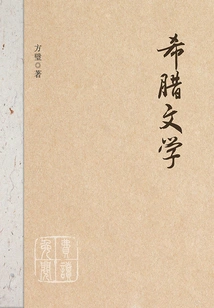
Greek Literature
Literature希腊文学
Fang Bi
The old Greeks were "free citizens" in a small "city state"; they had large groups of slaves working for them to handle all the nasty little things necessary for life, so they had a lot of time to develop literature and art. Because they are "free citizens" in a small "city" and they are acquaintances who often meet each other, so when their writers and artists start writing, sculpture and painting, they will never forget who will criticize their works. Therefore, they will never fail to think of how to make their works understood by fellow villagers who are also "free citizens". He knew very well that his fellow villagers worked vigorously and lively. Although they believed that everything was controlled by "fate", they would never be so worried or motionless because of it. They always wanted to enjoy life before they died, but they also had a "moderate" character, and "balance" was their ideal. Because he knew all this, he expressed it in his works.
The old Greeks were "free citizens" in a small "city state"; they had large groups of slaves working for them to handle all the nasty little things necessary for life, so they had a lot of time to develop literature and art. Because they are "free citizens" in a small "city" and they are acquaintances who often meet each other, so when their writers and artists start writing, sculpture and painting, they will never forget who will criticize their works. Therefore, they will never fail to think of how to make their works understood by fellow villagers who are also "free citizens". He knew very well that his fellow villagers worked vigorously and lively. Although they believed that everything was controlled by "fate", they would never be so worried or motionless because of it. They always wanted to enjoy life before they died, but they also had a "moderate" character, and "balance" was their ideal. Because he knew all this, he expressed it in his works.
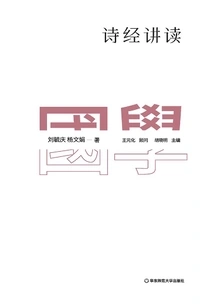
Reading of the Book of Songs
Literature诗经讲读
Liu Yuqing Editor-in-chief Yang Wenjuan
"The Book of Songs" selects more than 120 of them and arranges them according to ten themes: marriage and love, sacrificial songs, epic poems, swallow drinking, military travel, farming, animal husbandry and hunting, complaints, blessings, and miscellaneous feelings. There is also a detailed "Introduction" before the ten topics, which explains the cultural significance, literary contribution and new ways of studying the Book of Songs. The book contains essential annotations, sophisticated commentary, and wonderful collections of reviews. It also has columns for discussion of issues, expansion of cultural history, and literature links. The annotations, explanations, and expansions are detailed. In addition, the author in this book puts forward many viewpoints that are different from what we usually think of, which will help readers expand their knowledge and open up a broad historical and cultural space.
"The Book of Songs" selects more than 120 of them and arranges them according to ten themes: marriage and love, sacrificial songs, epic poems, swallow drinking, military travel, farming, animal husbandry and hunting, complaints, blessings, and miscellaneous feelings. There is also a detailed "Introduction" before the ten topics, which explains the cultural significance, literary contribution and new ways of studying the Book of Songs. The book contains essential annotations, sophisticated commentary, and wonderful collections of reviews. It also has columns for discussion of issues, expansion of cultural history, and literature links. The annotations, explanations, and expansions are detailed. In addition, the author in this book puts forward many viewpoints that are different from what we usually think of, which will help readers expand their knowledge and open up a broad historical and cultural space.
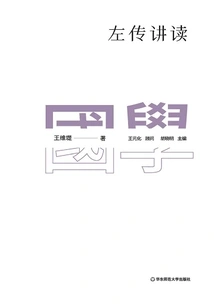
Zuo Chuan's Lecture and Reading
Literature左传讲读
Wang Weidi
The full name of "Zuo Zhuan" is "Chun Qiu Zuo Shi Zhuan". It is one of the three "Chun Qiu" biographies. It is an exegesis of "Chun Qiu" based on facts. It was included in the "Nine Classics" and "Thirteen Classics" in ancient times. It is one of the main classics of Confucianism and one of the important cultural classics in ancient China. It uses the reigns of the twelve monarchs of the Lu State during the Spring and Autumn Period as clues to record events. It begins in the first year of Lu Yin (722 BC) and ends in the 27th year of Lu Aigong (468 BC). It records a total of 255 years of historical facts. It is my country's first detailed and systematic history book. The history, culture and personal deeds of the Spring and Autumn Period recorded in the book are of great historical value. Its narrative structure, exquisite structure and beautiful language have great literary value. Therefore, people today regard it as an outstanding chronicle history book and historical biography.
The full name of "Zuo Zhuan" is "Chun Qiu Zuo Shi Zhuan". It is one of the three "Chun Qiu" biographies. It is an exegesis of "Chun Qiu" based on facts. It was included in the "Nine Classics" and "Thirteen Classics" in ancient times. It is one of the main classics of Confucianism and one of the important cultural classics in ancient China. It uses the reigns of the twelve monarchs of the Lu State during the Spring and Autumn Period as clues to record events. It begins in the first year of Lu Yin (722 BC) and ends in the 27th year of Lu Aigong (468 BC). It records a total of 255 years of historical facts. It is my country's first detailed and systematic history book. The history, culture and personal deeds of the Spring and Autumn Period recorded in the book are of great historical value. Its narrative structure, exquisite structure and beautiful language have great literary value. Therefore, people today regard it as an outstanding chronicle history book and historical biography.
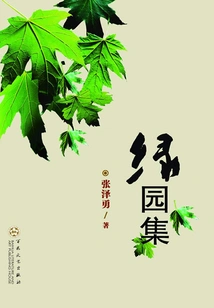
Green Garden Collection
Literature绿园集
Zhang Zeyong
This book is a collection of life essays by Hubei writer Zhang Zeyong. The content covers a wide range of topics, the language is fluent, it inspires and sighs, and it has certain cultural value.
This book is a collection of life essays by Hubei writer Zhang Zeyong. The content covers a wide range of topics, the language is fluent, it inspires and sighs, and it has certain cultural value.