Library
Browse and search books
13,360 novels found
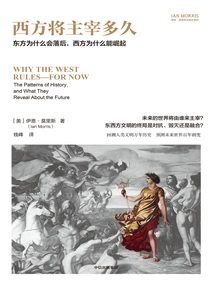
西方将主宰多久:东方为什么会落后,西方为什么能崛起(伊恩·莫里斯文明史系列)
I
Based on the 50,000-year history of human development in the East and the West, the author of this book, Ian Morris, points out that the dominance of the West was neither destined from ancient times nor a short-term accident. Neither of these views can explain why, despite falling behind, the modern West caught up with or even surpassed the East. Morris believes geography is key. It is geographical factors that have led Eastern and Western societies to embark on completely different development trajectories, and social development has in turn changed the meaning of geography. This two-way force has created the world structure from ancient times to the present, and has gradually shaped the historical pattern of the rise and fall of the East and the West. The author connects outstanding discoveries in various disciplines and combines it with his original "Social Development Index" to intuitively present the development of Eastern and Western societies in different time and space in the form of scores, revealing how wealth and power were transferred from the East to the West, thus establishing the West's dominance for hundreds of years. At the same time, the book doesn't stop there. By sorting out a series of details such as war, climate change, and energy evolution, the author not only traces the historical roots of the West's dominance of the world, but also boldly predicts the drastic changes that will occur in the world in the next hundred years.
Based on the 50,000-year history of human development in the East and the West, the author of this book, Ian Morris, points out that the dominance of the West was neither destined from ancient times nor a short-term accident. Neither of these views can explain why, despite falling behind, the modern West caught up with or even surpassed the East. Morris believes geography is key. It is geographical factors that have led Eastern and Western societies to embark on completely different development trajectories, and social development has in turn changed the meaning of geography. This two-way force has created the world structure from ancient times to the present, and has gradually shaped the historical pattern of the rise and fall of the East and the West. The author connects outstanding discoveries in various disciplines and combines it with his original "Social Development Index" to intuitively present the development of Eastern and Western societies in different time and space in the form of scores, revealing how wealth and power were transferred from the East to the West, thus establishing the West's dominance for hundreds of years. At the same time, the book doesn't stop there. By sorting out a series of details such as war, climate change, and energy evolution, the author not only traces the historical roots of the West's dominance of the world, but also boldly predicts the drastic changes that will occur in the world in the next hundred years.
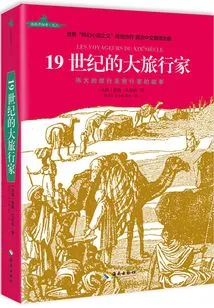
19世纪的大旅行家
G
"The Great Travelers of the 19th Century" mainly tells the exploration and examination of the West and Central Asia, the interior of Africa, global navigation, and the Arctic and Antarctic regions by famous European travelers and navigators in the 19th century. Different from the era of "Geographic Discovery", travelers and navigators turned their attention more to the exploration of the human history and culture of the places they visited. Travelers were also linguists, writers, religious historians and geographers. Their expedition records make human history more vivid and full, and their adventure experiences also inspire people to continue exploring the unknown world.
"The Great Travelers of the 19th Century" mainly tells the exploration and examination of the West and Central Asia, the interior of Africa, global navigation, and the Arctic and Antarctic regions by famous European travelers and navigators in the 19th century. Different from the era of "Geographic Discovery", travelers and navigators turned their attention more to the exploration of the human history and culture of the places they visited. Travelers were also linguists, writers, religious historians and geographers. Their expedition records make human history more vivid and full, and their adventure experiences also inspire people to continue exploring the unknown world.
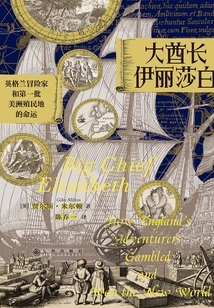
Elizabeth, the Great Chief: an English Adventurer and the Fate of the First American Colonies
History大酋长伊丽莎白:英格兰冒险家和第一批美洲殖民地的命运
I
This book tells the story of how merchants and adventurers from Elizabethan England crossed the Atlantic and settled in the New World. In 1584, a voyage organized by Walter Raleigh arrived at Roanoke Island. In order to establish a settlement here, they made many attempts and explorations over the next 20 years and invested a lot of money, manpower and materials. Their experiences ranged from funny to tragic, and the whereabouts of some remain a mystery to this day. With the efforts of generations of adventurers, Jamestown was finally built in 1611. This was the first permanent colony established by the English on the far side of the Atlantic Ocean. Based on a large number of diaries and manuscripts, the author tells readers this ups and downs, exciting, mysterious and vivid story, and leads readers on an adventure journey to America.
This book tells the story of how merchants and adventurers from Elizabethan England crossed the Atlantic and settled in the New World. In 1584, a voyage organized by Walter Raleigh arrived at Roanoke Island. In order to establish a settlement here, they made many attempts and explorations over the next 20 years and invested a lot of money, manpower and materials. Their experiences ranged from funny to tragic, and the whereabouts of some remain a mystery to this day. With the efforts of generations of adventurers, Jamestown was finally built in 1611. This was the first permanent colony established by the English on the far side of the Atlantic Ocean. Based on a large number of diaries and manuscripts, the author tells readers this ups and downs, exciting, mysterious and vivid story, and leads readers on an adventure journey to America.

M译丛套装05:战斗民族养成记
L
M Translation Series Set 05 includes "The Crimean War: The Forgotten Imperial Game" and "Natasha's Dance: A Cultural History of Russia". "Crimian War: The Forgotten Imperial Game" In 1853, Tsar Nicholas I used religious disputes to invade the Danube Principalities that are now Romania. Subsequently, the crumbling Ottoman Empire struggled to maintain its power in Europe, the United Kingdom, which was worried about Russia's expansion, and the French Emperor Napoleon III, who wanted to restore its glory, successively declared war on Russia. The Crimean War, which lasted for 18 months, caused huge human losses, completely rewritten the political landscape of Europe, and profoundly affected the modernization processes of Russia and Turkey. "Natasha's Dance: A History of Russian Culture" explores the differences between European civilization and folk elements in Russian culture, the confrontation between "civilized" and "native" Russias, and the division between the aristocratic upper class and the lower class rural people through the discussion of Russian ballet, painting, poetry, drama and music that emerged in the 18th century. The book further discusses the construction and expression of "Russian soul" and "Russianness", revealing the impact of politics, national identity, social concepts, customs, folk art, religion, etc. On the formation and development of Russian culture, presenting a splendid and dazzling cultural scroll full of dramatic details.
M Translation Series Set 05 includes "The Crimean War: The Forgotten Imperial Game" and "Natasha's Dance: A Cultural History of Russia". "Crimian War: The Forgotten Imperial Game" In 1853, Tsar Nicholas I used religious disputes to invade the Danube Principalities that are now Romania. Subsequently, the crumbling Ottoman Empire struggled to maintain its power in Europe, the United Kingdom, which was worried about Russia's expansion, and the French Emperor Napoleon III, who wanted to restore its glory, successively declared war on Russia. The Crimean War, which lasted for 18 months, caused huge human losses, completely rewritten the political landscape of Europe, and profoundly affected the modernization processes of Russia and Turkey. "Natasha's Dance: A History of Russian Culture" explores the differences between European civilization and folk elements in Russian culture, the confrontation between "civilized" and "native" Russias, and the division between the aristocratic upper class and the lower class rural people through the discussion of Russian ballet, painting, poetry, drama and music that emerged in the 18th century. The book further discusses the construction and expression of "Russian soul" and "Russianness", revealing the impact of politics, national identity, social concepts, customs, folk art, religion, etc. On the formation and development of Russian culture, presenting a splendid and dazzling cultural scroll full of dramatic details.
N
Historyn
J
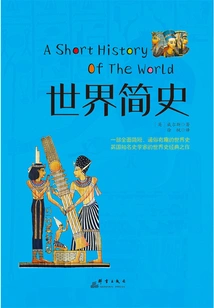
"A Brief History of the World" is a unique world history, covering major historical events from the beginning of human civilization to the Second World War. He has unique insights and discussions on ancient Egypt, ancient Greece, ancient Rome, the European Renaissance, the British Industrial Revolution, the Reformation, the French Revolution, the American Revolution, etc. In addition, the book also touches on Eastern culture, including Confucianism and Taoism.
"A Brief History of the World" is a unique world history, covering major historical events from the beginning of human civilization to the Second World War. He has unique insights and discussions on ancient Egypt, ancient Greece, ancient Rome, the European Renaissance, the British Industrial Revolution, the Reformation, the French Revolution, the American Revolution, etc. In addition, the book also touches on Eastern culture, including Confucianism and Taoism.
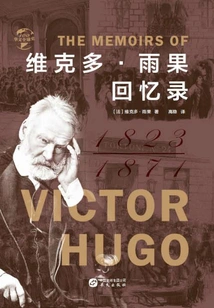
维克多·雨果回忆录(华文全球史)
G
This book records what Victor Hugo saw, heard, felt, and thought for nearly fifty years from 1823 to 1871. It was praised by Le Figaro as "one of the documents of French history in the 19th century." In this epic work, Victor Hugo comprehensively records and profoundly analyzes a series of magnificent and major historical events such as the Coup of 18 Brumaire, the Napoleonic Wars, the Restoration of the Bourbon Dynasty, the July Revolution of 1830, the June Uprising of 1848, the Franco-Prussian War, and the Paris Commune Uprising.
This book records what Victor Hugo saw, heard, felt, and thought for nearly fifty years from 1823 to 1871. It was praised by Le Figaro as "one of the documents of French history in the 19th century." In this epic work, Victor Hugo comprehensively records and profoundly analyzes a series of magnificent and major historical events such as the Coup of 18 Brumaire, the Napoleonic Wars, the Restoration of the Bourbon Dynasty, the July Revolution of 1830, the June Uprising of 1848, the Franco-Prussian War, and the Paris Commune Uprising.
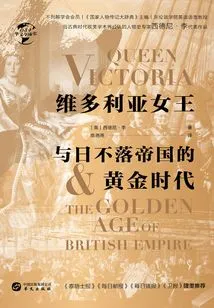
Queen Victoria and the Golden Age of the Empire on Which the Sun Never Sets (chinese Global History)
History维多利亚女王与日不落帝国的黄金时代(华文全球史)
B
This book tells the internal history, diplomatic history, economic history, and expansion history of the British Empire in the era of Queen Victoria of the Hanoverian Dynasty. It systematically interprets the inevitable relationship between the succession rules of the Hanoverian Dynasty and the arrival of the Victorian era, the decision-making mechanism of the British government under the decentralized system of monarch and parliament, the pros and cons of diversified royal marriages, the 1848 Revolution, the Irish Independence Movement, the Crimean War, the Indian Mutiny, the Boer War and other major events.
This book tells the internal history, diplomatic history, economic history, and expansion history of the British Empire in the era of Queen Victoria of the Hanoverian Dynasty. It systematically interprets the inevitable relationship between the succession rules of the Hanoverian Dynasty and the arrival of the Victorian era, the decision-making mechanism of the British government under the decentralized system of monarch and parliament, the pros and cons of diversified royal marriages, the 1848 Revolution, the Irish Independence Movement, the Crimean War, the Indian Mutiny, the Boer War and other major events.
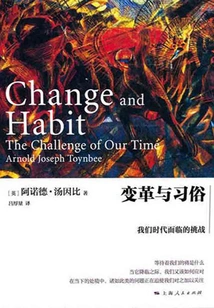
变革与习俗:我们时代面临的挑战
H
"Change and Custom: Challenges Facing Our Times" is Toynbee's work with a strong sense of mission, written in the 1960s. In response to the problems existing in the world at that time, such as the threat of human destruction caused by the arms race, global population surge, religious disputes, and environmental damage caused by over-development, Toynbee started from whether human habits can be changed. Through the analysis and research of past history, he pointed out that, unlike nature, human habits can be changed when faced with inescapable choices. Although the analysis in this book deals with the world of the 1960s, most of the issues mentioned still exist or are even more pressing today.
"Change and Custom: Challenges Facing Our Times" is Toynbee's work with a strong sense of mission, written in the 1960s. In response to the problems existing in the world at that time, such as the threat of human destruction caused by the arms race, global population surge, religious disputes, and environmental damage caused by over-development, Toynbee started from whether human habits can be changed. Through the analysis and research of past history, he pointed out that, unlike nature, human habits can be changed when faced with inescapable choices. Although the analysis in this book deals with the world of the 1960s, most of the issues mentioned still exist or are even more pressing today.
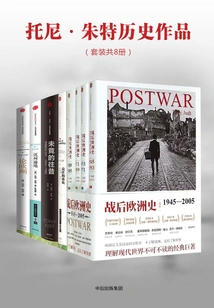
托尼·朱特历史作品(套装共8册)
H
This set is a historical series of works by Tony Judt, which includes "History of Postwar Europe" (set of 4 volumes), "The Unfinished Past", "The Burden of Responsibility", "Sickness Everywhere", "The Unfinished Past", and "On Europe".
This set is a historical series of works by Tony Judt, which includes "History of Postwar Europe" (set of 4 volumes), "The Unfinished Past", "The Burden of Responsibility", "Sickness Everywhere", "The Unfinished Past", and "On Europe".
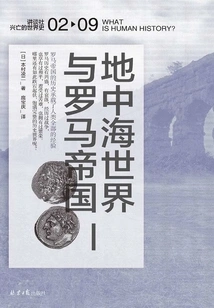
地中海世界与罗马帝国(讲谈社·兴亡的世界史 02)
N
"The Mediterranean World and the Roman Empire (Kodansha·Rise and Fall of World History 02)" As a political entity, the ancient Mediterranean world was unified by the Roman Empire. By late antiquity, the Mediterranean world was a world containing many possibilities. The traditional world with different customs before unification was revived again, establishing its own world that existed in ancient times. From ancient times to the present, people have used the decline of the Roman Empire as a mirror to compare their own times. What lessons can our world learn from the decline of such a prosperous civilization?
"The Mediterranean World and the Roman Empire (Kodansha·Rise and Fall of World History 02)" As a political entity, the ancient Mediterranean world was unified by the Roman Empire. By late antiquity, the Mediterranean world was a world containing many possibilities. The traditional world with different customs before unification was revived again, establishing its own world that existed in ancient times. From ancient times to the present, people have used the decline of the Roman Empire as a mirror to compare their own times. What lessons can our world learn from the decline of such a prosperous civilization?
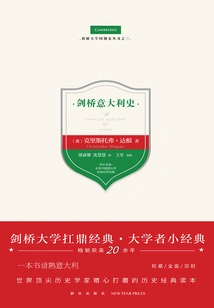
Cambridge History of Italy
History剑桥意大利史
Q
Since its unification in 1861, Italy has made unremitting efforts to build an efficient political system and a high sense of national identity. This second edition of Christopher Duggan's acclaimed Cambridge History of Italy describes the political and socioeconomic evolution of Italy from the fall of the Roman Empire to the present; and examines the difficulties Italy has faced in shaping its image as a nation-state over the past two centuries. Duggan combines the history of political, economic, social, and cultural evolution to highlight the transitions between different plans for nation-building devised by pragmatists and idealists. This revised edition expands on the previous chapters and also adds a chapter on Italy in the 21st century. Therefore, this book will be an ideal choice for readers who have a special preference for modern Italian history, especially those with a strong interest in fascism and the Mafia.
Since its unification in 1861, Italy has made unremitting efforts to build an efficient political system and a high sense of national identity. This second edition of Christopher Duggan's acclaimed Cambridge History of Italy describes the political and socioeconomic evolution of Italy from the fall of the Roman Empire to the present; and examines the difficulties Italy has faced in shaping its image as a nation-state over the past two centuries. Duggan combines the history of political, economic, social, and cultural evolution to highlight the transitions between different plans for nation-building devised by pragmatists and idealists. This revised edition expands on the previous chapters and also adds a chapter on Italy in the 21st century. Therefore, this book will be an ideal choice for readers who have a special preference for modern Italian history, especially those with a strong interest in fascism and the Mafia.
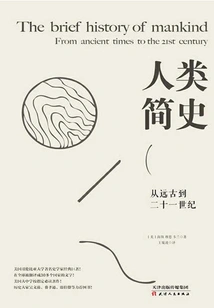
人类简史:从远古到二十一世纪
K
"A Brief History of Humankind: From Ancient Times to the Twenty-First Century" is a masterpiece of world history jointly completed by Columbia University historian Hayes and three historians including Moon and Wayland. Since its publication, it has received overwhelming praise and has been translated into many languages and circulated around the world. It can be said to be a handed down classic with global influence. This publication has undergone rigorous revision. From ancient times to the 21st century, it is a better and more systematic work for readers to fully understand human history. Best-selling for 80 years and lasting for 80 years, the original English version has been translated and revised to perfectly present the original masterpiece.
"A Brief History of Humankind: From Ancient Times to the Twenty-First Century" is a masterpiece of world history jointly completed by Columbia University historian Hayes and three historians including Moon and Wayland. Since its publication, it has received overwhelming praise and has been translated into many languages and circulated around the world. It can be said to be a handed down classic with global influence. This publication has undergone rigorous revision. From ancient times to the 21st century, it is a better and more systematic work for readers to fully understand human history. Best-selling for 80 years and lasting for 80 years, the original English version has been translated and revised to perfectly present the original masterpiece.
L
Historyl
M
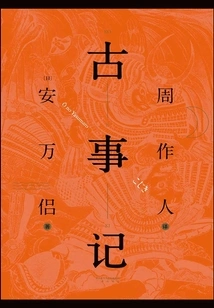
"Kojiki" was written in 712 AD. It is Japan's oldest history book and the first official history book compiled by the Japanese emperor to trace the roots of the nation. The whole book is divided into three volumes: Volume One, Volume Two, and Volume Two. The first volume records myths and legends, recording the origins of Japanese gods, while the middle and second volumes record the stories of the thirty-three generations of Japanese emperors from Emperor Jimmu to Emperor Suiko. This book combines historical facts and fiction, covering creation myths, primitive ballads, heroic legends, folk tales, etc. It is a historical classic for one-step understanding of Japan's origins. It is also an excellent literary work and a must-read classic for understanding Japan's unique spiritual temperament and national characteristics. From the ancient division of heaven and earth to the establishment of the inheritance of the emperor's divine line, this book understands Japan's magnificent history from the creation of the world to the era of the ancient emperors. This version refers to the Japanese original version and other versions as well as the Japanese official website information to check for errors, and adopts Zhou Zuoren's classic translation. Zhou Zuoren has studied Japanese culture for more than fifty years and is deeply familiar with Japanese culture and people's unique mental state. Zhou's profound translation provides a solid and detailed background supplement for the text. Using Satan-kun's newly drawn full-color illustrations, it covers six of Japan's most classic mythological characters and stories.
"Kojiki" was written in 712 AD. It is Japan's oldest history book and the first official history book compiled by the Japanese emperor to trace the roots of the nation. The whole book is divided into three volumes: Volume One, Volume Two, and Volume Two. The first volume records myths and legends, recording the origins of Japanese gods, while the middle and second volumes record the stories of the thirty-three generations of Japanese emperors from Emperor Jimmu to Emperor Suiko. This book combines historical facts and fiction, covering creation myths, primitive ballads, heroic legends, folk tales, etc. It is a historical classic for one-step understanding of Japan's origins. It is also an excellent literary work and a must-read classic for understanding Japan's unique spiritual temperament and national characteristics. From the ancient division of heaven and earth to the establishment of the inheritance of the emperor's divine line, this book understands Japan's magnificent history from the creation of the world to the era of the ancient emperors. This version refers to the Japanese original version and other versions as well as the Japanese official website information to check for errors, and adopts Zhou Zuoren's classic translation. Zhou Zuoren has studied Japanese culture for more than fifty years and is deeply familiar with Japanese culture and people's unique mental state. Zhou's profound translation provides a solid and detailed background supplement for the text. Using Satan-kun's newly drawn full-color illustrations, it covers six of Japan's most classic mythological characters and stories.
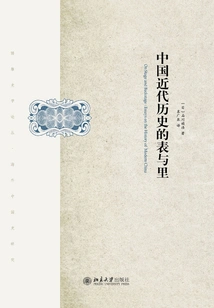
中国近代历史的表与里
P
This book contains 15 papers written by Ishikawa Masahiro to examine the historical facts of modern China, focusing on two issues: first, the nationalist thought in the late Qing Dynasty and the early Republic of China; second, the national revolution in the 1920s. Based on a large amount of historical materials, the author cleverly raises questions and provides rigorous arguments, which reflects his practical and realistic scholarly style. For example, the tracing of the concept of the "Sleeping Lion" image in the late Qing Dynasty, the interpretation of the popularity of the "Yellow Emperor" symbol, and the research on the "Chinese and dogs are not allowed to enter" notice board have all been carefully examined and solid conclusions have been drawn. The publication of this book will help promote domestic research and arouse the interest of general history lovers. This book has not yet been published in Japanese. A few of the collected papers have been translated into Chinese and published, and the author has revised them this time. For other original works published in Japanese or English, the author grants copyright free of charge. Just pay the translation fee.
This book contains 15 papers written by Ishikawa Masahiro to examine the historical facts of modern China, focusing on two issues: first, the nationalist thought in the late Qing Dynasty and the early Republic of China; second, the national revolution in the 1920s. Based on a large amount of historical materials, the author cleverly raises questions and provides rigorous arguments, which reflects his practical and realistic scholarly style. For example, the tracing of the concept of the "Sleeping Lion" image in the late Qing Dynasty, the interpretation of the popularity of the "Yellow Emperor" symbol, and the research on the "Chinese and dogs are not allowed to enter" notice board have all been carefully examined and solid conclusions have been drawn. The publication of this book will help promote domestic research and arouse the interest of general history lovers. This book has not yet been published in Japanese. A few of the collected papers have been translated into Chinese and published, and the author has revised them this time. For other original works published in Japanese or English, the author grants copyright free of charge. Just pay the translation fee.
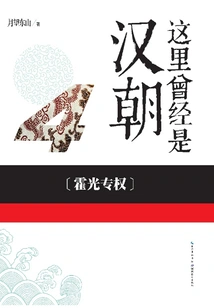
这里曾经是汉朝4
I
The fourth part of "This Was the Han Dynasty" begins with Huo Guang gaining power and selecting Liu He, the new emperor of the Han Dynasty, and ends with the two relatives of the Han Dynasty, the Wang family and the Fu family, competing for favor and profit. After Huo Guang overthrew Shangguan Jie and others, he consolidated power and selected Liu He to be the emperor of the Han Dynasty. However, after Liu He ascended the throne, Huo Guang had no choice but to abolish him because of his immature political thinking and misbehavior. Unexpectedly, the poor boy Liu Bingjin ushered in the spring of his life, was welcomed into the palace, became the throne, and ruled the world. However, after Huo Guang died of illness, Liu Bing, instead of being grateful for Huo's support, instead hung a sharp sword and suddenly pushed the Huo family's life and death to the forefront.
The fourth part of "This Was the Han Dynasty" begins with Huo Guang gaining power and selecting Liu He, the new emperor of the Han Dynasty, and ends with the two relatives of the Han Dynasty, the Wang family and the Fu family, competing for favor and profit. After Huo Guang overthrew Shangguan Jie and others, he consolidated power and selected Liu He to be the emperor of the Han Dynasty. However, after Liu He ascended the throne, Huo Guang had no choice but to abolish him because of his immature political thinking and misbehavior. Unexpectedly, the poor boy Liu Bingjin ushered in the spring of his life, was welcomed into the palace, became the throne, and ruled the world. However, after Huo Guang died of illness, Liu Bing, instead of being grateful for Huo's support, instead hung a sharp sword and suddenly pushed the Huo family's life and death to the forefront.
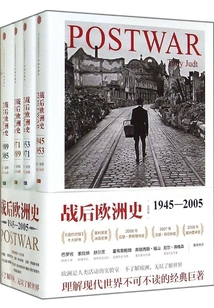
战后欧洲史(全集)
H
"Postwar European History" (a four-volume set) is the most important representative work of Tony Judt, the most respected historian and thinker in the world today. It took 20 years to conceive and 10 years to write. It makes extensive use of documents in 6 languages, covers 34 countries, and takes into account Western Europe. Eastern Europe, covering the whole of Europe, is the first master-class historical masterpiece that comprehensively displays the political, economic and cultural changes of modern Europe over the past 60 years. It is recommended by European and American political leaders such as European Commission President Barroso, European Parliament Speaker Schulz, and EU Foreign Minister Solana. From brutal genocide to the advocacy of human rights values, from fascism sweeping the world to the disintegration of the Soviet Eastern European socialist bloc, from free capital markets to big-government welfare states, from arms races to the establishment of the European Union for mutual assistance and cooperation, from tariff barriers to the unified currency Euro... Europe is a laboratory of human activities. It has experienced the baptism and experimentation of various political systems, ideologies, social systems, economic orders, and cultural trends of thought. No wonder, Tony Judt said: "Like a fox, Europe knows a lot." For the modern public, "it is impossible to understand the world without understanding Europe." "Postwar European History" is a masterpiece that Tony Judt, the top contemporary historian, has worked on for more than ten years. From the end of World War II to the beginning of the 21st century, this book shows the political, economic, social, and cultural history of Europe, comprehensively and concisely reproduces the reality and spiritual process of Europe's reconstruction on the ruins of the war, and reveals Europe's future path toward unity and self-reliance. Tony Judt used keen observation, profound humanistic care and superb narrative ability to refine the sixty years of European history from 1945 to 2005 into a fascinating, significant and deeply personal work. "Postwar European History" received rave reviews after its publication and won numerous awards. It was praised as "the book on postwar European history" and "a great work that cannot be surpassed in the short term". It has become a "must-read classic masterpiece for understanding the modern world" for the public.
"Postwar European History" (a four-volume set) is the most important representative work of Tony Judt, the most respected historian and thinker in the world today. It took 20 years to conceive and 10 years to write. It makes extensive use of documents in 6 languages, covers 34 countries, and takes into account Western Europe. Eastern Europe, covering the whole of Europe, is the first master-class historical masterpiece that comprehensively displays the political, economic and cultural changes of modern Europe over the past 60 years. It is recommended by European and American political leaders such as European Commission President Barroso, European Parliament Speaker Schulz, and EU Foreign Minister Solana. From brutal genocide to the advocacy of human rights values, from fascism sweeping the world to the disintegration of the Soviet Eastern European socialist bloc, from free capital markets to big-government welfare states, from arms races to the establishment of the European Union for mutual assistance and cooperation, from tariff barriers to the unified currency Euro... Europe is a laboratory of human activities. It has experienced the baptism and experimentation of various political systems, ideologies, social systems, economic orders, and cultural trends of thought. No wonder, Tony Judt said: "Like a fox, Europe knows a lot." For the modern public, "it is impossible to understand the world without understanding Europe." "Postwar European History" is a masterpiece that Tony Judt, the top contemporary historian, has worked on for more than ten years. From the end of World War II to the beginning of the 21st century, this book shows the political, economic, social, and cultural history of Europe, comprehensively and concisely reproduces the reality and spiritual process of Europe's reconstruction on the ruins of the war, and reveals Europe's future path toward unity and self-reliance. Tony Judt used keen observation, profound humanistic care and superb narrative ability to refine the sixty years of European history from 1945 to 2005 into a fascinating, significant and deeply personal work. "Postwar European History" received rave reviews after its publication and won numerous awards. It was praised as "the book on postwar European history" and "a great work that cannot be surpassed in the short term". It has become a "must-read classic masterpiece for understanding the modern world" for the public.
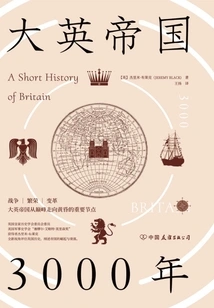
大英帝国3000年
P
This is a wonderful book that gives a panoramic view of British history. Jeremy Blake condenses 3,000 years of Great Britain into this book, taking readers on a breathtaking journey through British history. This book takes chronology as the axis and introduces how Britain gradually grew from a small island country to become the British Empire that has "held power in the world" for hundreds of years from aspects such as wars, regime changes, economic and cultural development, and how it gradually declined. The book takes the popular Scottish independence referendum event as an opportunity to show the development process of modern "Britishization". Starting from the impact of the British geographical environment on its development, this book explores the formation of British society and political culture, and also shows readers the national identity and collective memory of the British people after the vicissitudes of life. The rise of the British Empire and the process from its dominance to its end are clearly reflected in the book.
This is a wonderful book that gives a panoramic view of British history. Jeremy Blake condenses 3,000 years of Great Britain into this book, taking readers on a breathtaking journey through British history. This book takes chronology as the axis and introduces how Britain gradually grew from a small island country to become the British Empire that has "held power in the world" for hundreds of years from aspects such as wars, regime changes, economic and cultural development, and how it gradually declined. The book takes the popular Scottish independence referendum event as an opportunity to show the development process of modern "Britishization". Starting from the impact of the British geographical environment on its development, this book explores the formation of British society and political culture, and also shows readers the national identity and collective memory of the British people after the vicissitudes of life. The rise of the British Empire and the process from its dominance to its end are clearly reflected in the book.
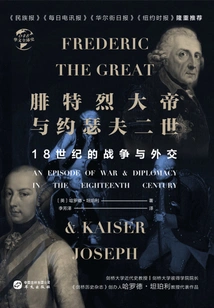
腓特烈大帝与约瑟夫二世:18世纪的战争与外交
R
"Frederick the Great and Joseph II: War and Diplomacy in the 18th Century" takes the two heroes of Central Europe, Frederick the Great and Joseph II, as the background of their struggle for hegemony, and takes the War of Succession of the Principality of Bavaria as the entry point to provide an in-depth interpretation of the history of the major European powers' participation in wars and melees. Why did the national strategies of Frederick the Great and Joseph II conflict? Why did the issue of succession to the throne of the Duchy of Bavaria become the trigger that set off the powder keg in Europe? Why can't the melee between the great powers completely destroy the balance of power in Europe? Why is the European order established by the Treaty of Taschen fragile? What historical impact did the entry of the Russian Imperial Army into the Holy Roman Empire have? This book will explain it in detail.
"Frederick the Great and Joseph II: War and Diplomacy in the 18th Century" takes the two heroes of Central Europe, Frederick the Great and Joseph II, as the background of their struggle for hegemony, and takes the War of Succession of the Principality of Bavaria as the entry point to provide an in-depth interpretation of the history of the major European powers' participation in wars and melees. Why did the national strategies of Frederick the Great and Joseph II conflict? Why did the issue of succession to the throne of the Duchy of Bavaria become the trigger that set off the powder keg in Europe? Why can't the melee between the great powers completely destroy the balance of power in Europe? Why is the European order established by the Treaty of Taschen fragile? What historical impact did the entry of the Russian Imperial Army into the Holy Roman Empire have? This book will explain it in detail.
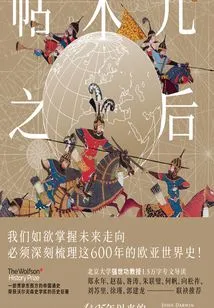
帖木儿之后:1405年以来的全球帝国史
Y
In 1405, Timur, the last "world conqueror", died on his way to China. This not only caused the collapse of Timur's empire, but also ended the era when steppe empires dominated the entire Eurasian continent since Genghis Khan, and opened a new page in global history. In the traditional European-centered world history narrative, the Great Geographical Discovery, the Age of Discovery, the Industrial Revolution, and the "rise of the West" including the United States-these terms constitute key clues for people to interpret the course of modern global development. But according to John Darwin, a heavyweight historian at Oxford University, the center of world history is Eurasia rather than the ocean world. For the entire Eurasian world, including China, 1405 was the beginning of diversified global modern history. The collapse of Timur's hegemony directly gave rise to a tripartite confrontation between Europe, the Islamic world, and East Asia. Europe has felt tremendous pressure from other civilizations for hundreds of years. This long dynamic balance of power continued until the advent of the "Eurasian Revolution" at the end of the 18th century... This historical masterpiece that reinterprets the origin of the globalized world jumps out of the European perspective and comprehensively overlooks the world stage since 1405. It draws the Ottoman, Safavid, Mughal, "Chinese", Japanese, Russian (Soviet Union), British, American and other empires into the big chessboard of the Eurasian continent, making these 600 years of world history no longer a one-man show of the West.
In 1405, Timur, the last "world conqueror", died on his way to China. This not only caused the collapse of Timur's empire, but also ended the era when steppe empires dominated the entire Eurasian continent since Genghis Khan, and opened a new page in global history. In the traditional European-centered world history narrative, the Great Geographical Discovery, the Age of Discovery, the Industrial Revolution, and the "rise of the West" including the United States-these terms constitute key clues for people to interpret the course of modern global development. But according to John Darwin, a heavyweight historian at Oxford University, the center of world history is Eurasia rather than the ocean world. For the entire Eurasian world, including China, 1405 was the beginning of diversified global modern history. The collapse of Timur's hegemony directly gave rise to a tripartite confrontation between Europe, the Islamic world, and East Asia. Europe has felt tremendous pressure from other civilizations for hundreds of years. This long dynamic balance of power continued until the advent of the "Eurasian Revolution" at the end of the 18th century... This historical masterpiece that reinterprets the origin of the globalized world jumps out of the European perspective and comprehensively overlooks the world stage since 1405. It draws the Ottoman, Safavid, Mughal, "Chinese", Japanese, Russian (Soviet Union), British, American and other empires into the big chessboard of the Eurasian continent, making these 600 years of world history no longer a one-man show of the West.
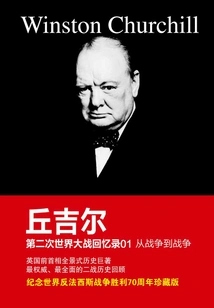
第二次世界大战回忆录1:从战争到战争
J
This book explains the author's own perspective on the situation from 1919 to 1939, and his in-depth consideration of a series of policies of Germany as a defeated country and Britain and France as victors after World War I. On this basis, it details Germany's preparations for launching World War II and Hitler's conspiracy. In this book, the author shows his vision and wisdom as a great statesman and strategist through relevant historical materials.
This book explains the author's own perspective on the situation from 1919 to 1939, and his in-depth consideration of a series of policies of Germany as a defeated country and Britain and France as victors after World War I. On this basis, it details Germany's preparations for launching World War II and Hitler's conspiracy. In this book, the author shows his vision and wisdom as a great statesman and strategist through relevant historical materials.
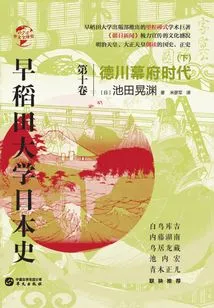
早稻田大学日本史(卷十):德川幕府时代(下)(华文全球史)
L
This book is an important document for studying the history of the Tokugawa Shogunate. It systematically tells the history of the reigns of generals such as Tokugawa Tsunayoshi, Tokugawa Yoshimune, Tokugawa Ieshige, Tokugawa Ieharu, and Tokugawa Ieqi. How did Tokugawa Tsunayoshi handle the relationship between the shogunate and the daimyo? From Tokugawa Tsunayoshi to Tokugawa Ienbu, what subtle changes have taken place in Japan's policy toward North Korea? From Tokugawa Yoshimune to Tokugawa Ieshige, why did the theory of imperial restoration arise in Japan? During the Tokugawa Ieharu period, why did Tanuma Yoshitsu's dictatorship appear? How did Tokugawa Iesai's economic policies promote the shogunate's rule to its peak? This book will answer them one by one.
This book is an important document for studying the history of the Tokugawa Shogunate. It systematically tells the history of the reigns of generals such as Tokugawa Tsunayoshi, Tokugawa Yoshimune, Tokugawa Ieshige, Tokugawa Ieharu, and Tokugawa Ieqi. How did Tokugawa Tsunayoshi handle the relationship between the shogunate and the daimyo? From Tokugawa Tsunayoshi to Tokugawa Ienbu, what subtle changes have taken place in Japan's policy toward North Korea? From Tokugawa Yoshimune to Tokugawa Ieshige, why did the theory of imperial restoration arise in Japan? During the Tokugawa Ieharu period, why did Tanuma Yoshitsu's dictatorship appear? How did Tokugawa Iesai's economic policies promote the shogunate's rule to its peak? This book will answer them one by one.
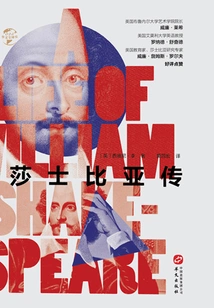
莎士比亚传(华文全球史)
Q
This book has a total of twenty-one chapters, arranged in chronological order, with Shakespeare's poetry creation and drama creation as the main line, interspersed with details such as his life experience, marriage, patron, real life, later evaluations, and related research in various countries, giving a detailed introduction to Shakespeare's short but outstanding life. In addition to the main text, there are ten appendices, which provide a large amount of precious historical materials for the biography and further highlight the academic value of the entire work. Why did Shakespeare abandon his wife and children in his early years, leave his hometown and come to London to work hard? What are the unspeakable difficulties? In what context were Shakespeare's plays, such as "Love in Love" and "The Merchant of Venice", written? What content in the play reflects Shakespeare's own hometown and personal life? What was Shakespeare's relationship with theater colleagues such as Ben Johnson and the troupe of children's actors? What was the attitude of the royal families of Elizabeth I and James I towards Shakespeare's plays? What are the hidden secrets behind the publication of the historic First Folio of Shakespeare's plays? Which existing portraits of Shakespeare can stand the test of history? What questions and debates exist in the academic community about Shakespeare's true identity? What are the paradoxes in Shakespeare's sonnets? This book will answer these questions one by one that have rarely been touched upon by previous authors.
This book has a total of twenty-one chapters, arranged in chronological order, with Shakespeare's poetry creation and drama creation as the main line, interspersed with details such as his life experience, marriage, patron, real life, later evaluations, and related research in various countries, giving a detailed introduction to Shakespeare's short but outstanding life. In addition to the main text, there are ten appendices, which provide a large amount of precious historical materials for the biography and further highlight the academic value of the entire work. Why did Shakespeare abandon his wife and children in his early years, leave his hometown and come to London to work hard? What are the unspeakable difficulties? In what context were Shakespeare's plays, such as "Love in Love" and "The Merchant of Venice", written? What content in the play reflects Shakespeare's own hometown and personal life? What was Shakespeare's relationship with theater colleagues such as Ben Johnson and the troupe of children's actors? What was the attitude of the royal families of Elizabeth I and James I towards Shakespeare's plays? What are the hidden secrets behind the publication of the historic First Folio of Shakespeare's plays? Which existing portraits of Shakespeare can stand the test of history? What questions and debates exist in the academic community about Shakespeare's true identity? What are the paradoxes in Shakespeare's sonnets? This book will answer these questions one by one that have rarely been touched upon by previous authors.
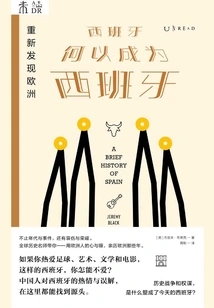
重新发现欧洲:西班牙何以成为西班牙
Y
Spain, known as a powerful country, has been recovering lost territory for more than a thousand years? Why did an empire on which the sun never sets rise to its peak and then decline? Cervantes' drama had already predicted this? Spanish people are passionate, but their rulers are Machiavellian? It is said that Spain has developed transportation, but at one time they could only ride donkeys when going out? Harsh environment and historical wars, what exactly shaped Spain? Renowned historian Jeremy Black uses concise language and rich materials to tell the unknown history of Spain. From the small border countries in ancient Rome who fought bloody battles against the royal power, to the maritime empires in the Age of Discovery, to the revolutionary vanguards who opposed dictators in the 20th century. This book takes the intertwined influence of famous historical events on reality as the main line. From the perspectives of environment, population, politics, economy, food and life, etc., This book deeply depicts the whole picture of Spanish history, and travels freely during 2500 years. This book helps us understand how a former maritime supremacy, a cradle of revolution, and today's artistic power took shape.
Spain, known as a powerful country, has been recovering lost territory for more than a thousand years? Why did an empire on which the sun never sets rise to its peak and then decline? Cervantes' drama had already predicted this? Spanish people are passionate, but their rulers are Machiavellian? It is said that Spain has developed transportation, but at one time they could only ride donkeys when going out? Harsh environment and historical wars, what exactly shaped Spain? Renowned historian Jeremy Black uses concise language and rich materials to tell the unknown history of Spain. From the small border countries in ancient Rome who fought bloody battles against the royal power, to the maritime empires in the Age of Discovery, to the revolutionary vanguards who opposed dictators in the 20th century. This book takes the intertwined influence of famous historical events on reality as the main line. From the perspectives of environment, population, politics, economy, food and life, etc., This book deeply depicts the whole picture of Spanish history, and travels freely during 2500 years. This book helps us understand how a former maritime supremacy, a cradle of revolution, and today's artistic power took shape.
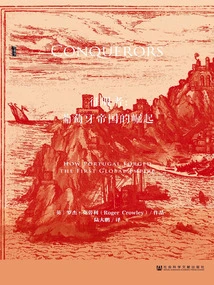
征服者:葡萄牙帝国的崛起
I
The discovery of a passage around the Horn of Africa to India was a great breakthrough in the history of navigation, but it also heralded a complete disruption of the world order. Over the next century, no European empire was more ambitious than Portugal, and no monarch was more predatory than the Portuguese kings. In the process, they created the first long-range seafaring empire, unleashing the globalizing forces that now shape our world. Through Crowley's pen, the full story of the Portuguese Empire and the human cost of its ambitions is finally told.
The discovery of a passage around the Horn of Africa to India was a great breakthrough in the history of navigation, but it also heralded a complete disruption of the world order. Over the next century, no European empire was more ambitious than Portugal, and no monarch was more predatory than the Portuguese kings. In the process, they created the first long-range seafaring empire, unleashing the globalizing forces that now shape our world. Through Crowley's pen, the full story of the Portuguese Empire and the human cost of its ambitions is finally told.
牛津通识读本:法国大革命(中文版)
N
The book begins with an exploration of familiar imagery from the French Revolution, from Dickens, Baroness O'Shea, and Tolstoy, as well as the legend of "if there's no bread, let them eat cake" and the tricolor flag. Then, through a brief examination of the ancien régime and its collapse, Doyle analyzes how revolutions come about: how they become obsolete and how achievements fail to satisfy ambition. Doyle strives to make readers realize that the French Revolution destroyed long-lasting culture, institutions, and social structures in France and beyond, and that we are still living with the legacy of this revolution today. The final part of the book considers why this revolution caused so much controversy.
The book begins with an exploration of familiar imagery from the French Revolution, from Dickens, Baroness O'Shea, and Tolstoy, as well as the legend of "if there's no bread, let them eat cake" and the tricolor flag. Then, through a brief examination of the ancien régime and its collapse, Doyle analyzes how revolutions come about: how they become obsolete and how achievements fail to satisfy ambition. Doyle strives to make readers realize that the French Revolution destroyed long-lasting culture, institutions, and social structures in France and beyond, and that we are still living with the legacy of this revolution today. The final part of the book considers why this revolution caused so much controversy.
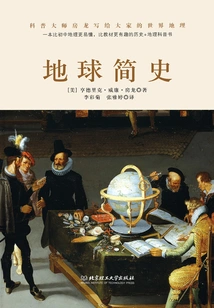
A Brief History of the Earth
History地球简史
H
"A Brief History of the Earth" is a classic work by the popular science master Fang Long. The author interprets the relationship between man and the earth from a historical perspective as a humanist. Fanglong put all the mountains, cities and oceans on the map, allowing readers to understand the people living in those places, where they came from, why they got there, and what their customs are. He wrote the stories that people really care about and the really interesting countries in the world into this book, telling the historical evolution of each country from a geographical perspective. The book has a total of 47 chapters, starting from the earth, to the relevant geographical history of the world's major countries, accompanied by the author's hand-drawn illustrations, looking at the evolution of history from a geographical perspective. The process of human understanding of geography is actually part of human development. The geographical environment shapes people, and people continue to transform the environment. How to deal with the relationship with the earth is worth thinking about. The book uses popular and humorous language and literary techniques to make knowledge more flexible, showing the laws of physical geography and the various forms of human geography. Allowing readers to read history like a story is of great help in understanding the historical development of major world powers and the geography of the earth.
"A Brief History of the Earth" is a classic work by the popular science master Fang Long. The author interprets the relationship between man and the earth from a historical perspective as a humanist. Fanglong put all the mountains, cities and oceans on the map, allowing readers to understand the people living in those places, where they came from, why they got there, and what their customs are. He wrote the stories that people really care about and the really interesting countries in the world into this book, telling the historical evolution of each country from a geographical perspective. The book has a total of 47 chapters, starting from the earth, to the relevant geographical history of the world's major countries, accompanied by the author's hand-drawn illustrations, looking at the evolution of history from a geographical perspective. The process of human understanding of geography is actually part of human development. The geographical environment shapes people, and people continue to transform the environment. How to deal with the relationship with the earth is worth thinking about. The book uses popular and humorous language and literary techniques to make knowledge more flexible, showing the laws of physical geography and the various forms of human geography. Allowing readers to read history like a story is of great help in understanding the historical development of major world powers and the geography of the earth.
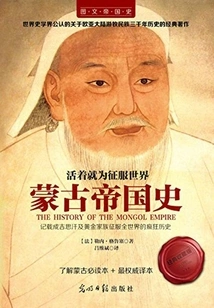
活着就为征服世界:蒙古帝国史
I
This book is a classic work about the three thousand years of history of nomadic peoples in Eurasia. How did Temujin, who lost his father at a young age, lead the weak nomads to defeat all the heroes and unify Mongolia? How did he and his successors continue their western expeditions to create the largest land empire in history? In this work, the author uses the rise and development of the nation as a clue to outline the history of the Mongolian army led by Genghis Khan in the vast Eurasian continent. In addition to the history of the Mongolian conquests throughout the book, the book also contains the intertwined human nature of cunning and helplessness, cruelty and coldness, friendship and betrayal, presenting readers with a thrilling and gripping historical picture.
This book is a classic work about the three thousand years of history of nomadic peoples in Eurasia. How did Temujin, who lost his father at a young age, lead the weak nomads to defeat all the heroes and unify Mongolia? How did he and his successors continue their western expeditions to create the largest land empire in history? In this work, the author uses the rise and development of the nation as a clue to outline the history of the Mongolian army led by Genghis Khan in the vast Eurasian continent. In addition to the history of the Mongolian conquests throughout the book, the book also contains the intertwined human nature of cunning and helplessness, cruelty and coldness, friendship and betrayal, presenting readers with a thrilling and gripping historical picture.
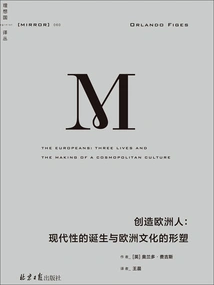
创造欧洲人:现代性的诞生与欧洲文化的形塑
M
Through the experiences of the writer Turgenev, the French soprano and composer Pauline Viardot, and Pauline's husband, the well-known translator and art critic Louis Viardot, this book explores how the rise of the railway age in the 19th century contributed to the encounter between art and capitalism, how it shaped European literature and art, and how Europe was culturally regarded as a whole without being restricted by national boundaries, forming a consensus of "European culture" and "European civilization." Artists and their works travel across the country. For example, in 1847, Berlioz took the same railway from Paris to Russia via Brussels to hold a concert. Bands, choirs, opera and theater actors, traveling art exhibitions, writers, etc. Became regular guests on the train. International markets opened up for mass-produced cheap reproductions of paintings and prints of books and musical scores.
Through the experiences of the writer Turgenev, the French soprano and composer Pauline Viardot, and Pauline's husband, the well-known translator and art critic Louis Viardot, this book explores how the rise of the railway age in the 19th century contributed to the encounter between art and capitalism, how it shaped European literature and art, and how Europe was culturally regarded as a whole without being restricted by national boundaries, forming a consensus of "European culture" and "European civilization." Artists and their works travel across the country. For example, in 1847, Berlioz took the same railway from Paris to Russia via Brussels to hold a concert. Bands, choirs, opera and theater actors, traveling art exhibitions, writers, etc. Became regular guests on the train. International markets opened up for mass-produced cheap reproductions of paintings and prints of books and musical scores.
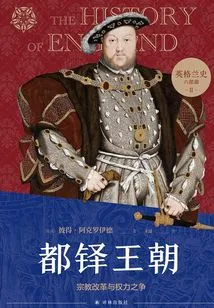
都铎王朝:宗教改革与权力之争(英格兰史六部曲2)
G
"The Six-Part History of England" is the representative work of the historical writer Peter Ackroyd, which includes six volumes: "The Founding of the Empire", "The Tudor Dynasty", "The Age of Rebellion", "The Revolutionary Century", "The King of the World" and "Revolution". It writes the historical process of this legendary country in a magnificent way: how this once closed island country gradually turned into an empire with territories all over the world through religious reform, parliamentary system, technological and ideological revolution, as well as trade and colonial expansion; and how it repositioned itself in the new post-war order as the empire declined today and continued to influence the world. Ackroyd's writing conveys his deep attachment to this country that once stood at the apex of human civilization. It not only creates a history of struggle and innovation for the rise of a great power, but also creates a glorious national epic. "The Tudors" is the second volume of Ackroyd's "Six Parts of History of England", covering the historical period from Henry VIII to Elizabeth I when England was mainly ruled by the Tudor family. This volume mainly discusses the religious reform caused by Henry VIII's break with the Roman Church, and the struggle between the English monarchy and the change of the state religion during this period. Under Ackroyd's fascinating writing, the resolute Henry VIII, the short-lived Edward VI, the "Bloody Mary" who tried to restore Catholicism, and the Elizabeth I who created the "golden age", the magnificent life of the Tudor Dynasty comes to life on the page.
"The Six-Part History of England" is the representative work of the historical writer Peter Ackroyd, which includes six volumes: "The Founding of the Empire", "The Tudor Dynasty", "The Age of Rebellion", "The Revolutionary Century", "The King of the World" and "Revolution". It writes the historical process of this legendary country in a magnificent way: how this once closed island country gradually turned into an empire with territories all over the world through religious reform, parliamentary system, technological and ideological revolution, as well as trade and colonial expansion; and how it repositioned itself in the new post-war order as the empire declined today and continued to influence the world. Ackroyd's writing conveys his deep attachment to this country that once stood at the apex of human civilization. It not only creates a history of struggle and innovation for the rise of a great power, but also creates a glorious national epic. "The Tudors" is the second volume of Ackroyd's "Six Parts of History of England", covering the historical period from Henry VIII to Elizabeth I when England was mainly ruled by the Tudor family. This volume mainly discusses the religious reform caused by Henry VIII's break with the Roman Church, and the struggle between the English monarchy and the change of the state religion during this period. Under Ackroyd's fascinating writing, the resolute Henry VIII, the short-lived Edward VI, the "Bloody Mary" who tried to restore Catholicism, and the Elizabeth I who created the "golden age", the magnificent life of the Tudor Dynasty comes to life on the page.
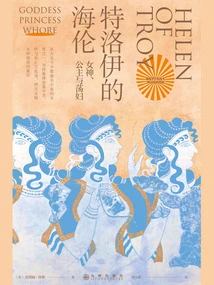
特洛伊的海伦:女神、公主与荡妇
K
For thousands of years, the image of Helen has been the product of male desire projection, and this book attempts to restore a real Helen: a princess from Western prehistoric times who mastered the channel to communicate with gods. She attracted heroes from all over Greece to participate in martial arts competitions to find a bride. After her marriage, she gained immense wealth and power, but she eloped with the Trojan prince. The brutal Ten Years' War broke out soon after. Later, some said she returned to Greece, some said she was killed on an island, and some said she turned into a star in the sky. However, no matter what becomes of her real body, she will always exist as a symbol of love and desire.
For thousands of years, the image of Helen has been the product of male desire projection, and this book attempts to restore a real Helen: a princess from Western prehistoric times who mastered the channel to communicate with gods. She attracted heroes from all over Greece to participate in martial arts competitions to find a bride. After her marriage, she gained immense wealth and power, but she eloped with the Trojan prince. The brutal Ten Years' War broke out soon after. Later, some said she returned to Greece, some said she was killed on an island, and some said she turned into a star in the sky. However, no matter what becomes of her real body, she will always exist as a symbol of love and desire.
零年:1945·现代世界诞生的时刻
J
"Year Zero" reviews the changes in the world situation in 1945, the end of World War II. One world has come to an end, and another brand-new world with an uncertain future is slowly opening. Regime changes are taking place all over the world, and brutal power struggles and earth-shaking changes are taking place in both Asia and continental Europe. In the process, the modern world as we know it was born. The end of the war brought liberation and joy everywhere, but through the eyes of those who witnessed it, the ruthless revenge on a large scale, widespread famine, and the dilemma of overstretched resources were clearly visible. At the same time, European forces were reorganized, communism in Russia and Eastern Europe grew stronger, civil war broke out in China, the US military took over Japan, and Southeast Asian countries shifted from colonial liberation to authoritarian rule. The complex international relations heralded the beginning of the Cold War.
"Year Zero" reviews the changes in the world situation in 1945, the end of World War II. One world has come to an end, and another brand-new world with an uncertain future is slowly opening. Regime changes are taking place all over the world, and brutal power struggles and earth-shaking changes are taking place in both Asia and continental Europe. In the process, the modern world as we know it was born. The end of the war brought liberation and joy everywhere, but through the eyes of those who witnessed it, the ruthless revenge on a large scale, widespread famine, and the dilemma of overstretched resources were clearly visible. At the same time, European forces were reorganized, communism in Russia and Eastern Europe grew stronger, civil war broke out in China, the US military took over Japan, and Southeast Asian countries shifted from colonial liberation to authoritarian rule. The complex international relations heralded the beginning of the Cold War.
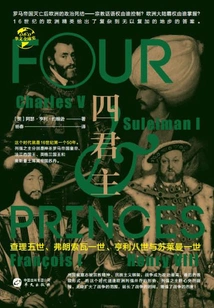
四君主:查理五世、弗朗索瓦一世、亨利八世与苏莱曼一世(华文全球史)
O
This book is an authoritative work generally recognized by European academic circles. It tells the complex and changeable history of Europe in the first half of the 16th century. It focuses on the two royal families of Habsburg and Valois competing for Italy and European hegemony. It also focuses on the Holy Roman Emperor Charles V, King Francois I of France, King Henry VIII of England, and King Osman. It starts with the bloody wars and the various diplomatic struggles between the Sultan Suleiman I of the Man-Turk Empire, and is mixed with a series of far-reaching historical events such as the religious reform and the discovery of the New World. It provides a profound interpretation of the complicated and ebbing relationships between national power and international power, monarchy and religious power. It is well worth reading.
This book is an authoritative work generally recognized by European academic circles. It tells the complex and changeable history of Europe in the first half of the 16th century. It focuses on the two royal families of Habsburg and Valois competing for Italy and European hegemony. It also focuses on the Holy Roman Emperor Charles V, King Francois I of France, King Henry VIII of England, and King Osman. It starts with the bloody wars and the various diplomatic struggles between the Sultan Suleiman I of the Man-Turk Empire, and is mixed with a series of far-reaching historical events such as the religious reform and the discovery of the New World. It provides a profound interpretation of the complicated and ebbing relationships between national power and international power, monarchy and religious power. It is well worth reading.
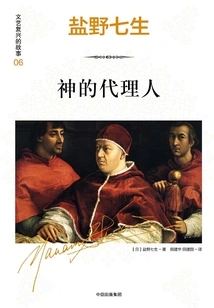
God's Agent
History神的代理人
G
"Renaissance Story 06·God's Agent" 1. Angels and Devils, God's Agent's Choice in the Renaissance. Look at the rise and fall of the Renaissance through the lens of four popes. 2. Explain the profound things in simple terms, it is both a historical work and a popular reading. Yu Minhong once said that Shiono Qisheng's historical works are not ideological and allow stories to be combined with evaluation. All eras and characters have been demonstrated and examined, so they are not fictional, but they still retain readability. Reading this book will be a deeply satisfying experience.
"Renaissance Story 06·God's Agent" 1. Angels and Devils, God's Agent's Choice in the Renaissance. Look at the rise and fall of the Renaissance through the lens of four popes. 2. Explain the profound things in simple terms, it is both a historical work and a popular reading. Yu Minhong once said that Shiono Qisheng's historical works are not ideological and allow stories to be combined with evaluation. All eras and characters have been demonstrated and examined, so they are not fictional, but they still retain readability. Reading this book will be a deeply satisfying experience.
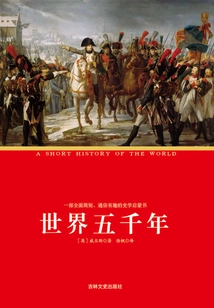
世界五千年
I
"Five Thousand Years of the World" is a popular history book without the scholarly atmosphere of a serious historical work, and it got rid of the intolerance of nationalism and even Eurocentrism earlier than many works of that era. The book focuses on the heritage of human culture, including ideas, culture, religion and other heritages, which are truly valuable things in the course of human civilization. This book discusses the history of the world spanning five continents from the formation of the earth, the origin of living things and human beings to the modern day World War I. Wells summarized the purpose of this book as "to show in a straightforward manner to men of average intelligence the inevitable development of political, social, and economic organization into a world federation if civilization is to continue."
"Five Thousand Years of the World" is a popular history book without the scholarly atmosphere of a serious historical work, and it got rid of the intolerance of nationalism and even Eurocentrism earlier than many works of that era. The book focuses on the heritage of human culture, including ideas, culture, religion and other heritages, which are truly valuable things in the course of human civilization. This book discusses the history of the world spanning five continents from the formation of the earth, the origin of living things and human beings to the modern day World War I. Wells summarized the purpose of this book as "to show in a straightforward manner to men of average intelligence the inevitable development of political, social, and economic organization into a world federation if civilization is to continue."
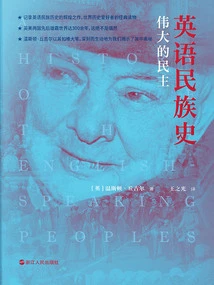
S
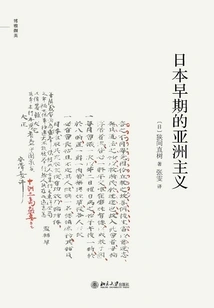
Early Asianism in Japan
History日本早期的亚洲主义
O
This book examines the early history of "Asianism" in detail, focusing on the thirty years from the Meiji Restoration in 1868 to the establishment of the East Asia Dobunkai in 1898; it sorts out the organizations and activities of relevant groups in chapters - these groups not only play a central role in understanding the ins and outs of Asiaticism, but their activities are a part that cannot be ignored in the modern history of East Asia. The text of the book is about 130,000 words, which was modified by the author on the basis of a series of articles in East Asia magazine (August 2001-March 2002), and some important matters and notes were added. There is also an appendix of about 100 pages, which is a precious compilation of relevant original historical materials, with an explanation of about 7,000 words.
This book examines the early history of "Asianism" in detail, focusing on the thirty years from the Meiji Restoration in 1868 to the establishment of the East Asia Dobunkai in 1898; it sorts out the organizations and activities of relevant groups in chapters - these groups not only play a central role in understanding the ins and outs of Asiaticism, but their activities are a part that cannot be ignored in the modern history of East Asia. The text of the book is about 130,000 words, which was modified by the author on the basis of a series of articles in East Asia magazine (August 2001-March 2002), and some important matters and notes were added. There is also an appendix of about 100 pages, which is a precious compilation of relevant original historical materials, with an explanation of about 7,000 words.
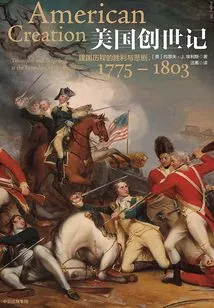
美国创世记:建国历程的胜利与悲剧,1775—1803
L
From 1775 to 1803, the United States became the United States for 28 years. During these 28 years, it was a fragile new country that struggled with the harsh times. After several military, diplomatic, political, and ideological confrontations, the United States found the source of its power to become stronger; and the historical regrets and hidden dangers left at this time have also become the root of the North-South differences and racial conflicts in the United States until today. In this novel structure of American history, founders with distinctive personalities and once-in-a-lifetime historical opportunities come together to explain the founding of the United States in 6 acts of the "most American" historical drama.
From 1775 to 1803, the United States became the United States for 28 years. During these 28 years, it was a fragile new country that struggled with the harsh times. After several military, diplomatic, political, and ideological confrontations, the United States found the source of its power to become stronger; and the historical regrets and hidden dangers left at this time have also become the root of the North-South differences and racial conflicts in the United States until today. In this novel structure of American history, founders with distinctive personalities and once-in-a-lifetime historical opportunities come together to explain the founding of the United States in 6 acts of the "most American" historical drama.
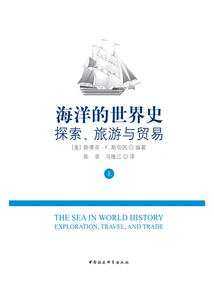
海洋的世界史:探索、旅游与贸易(上)
B
J
J
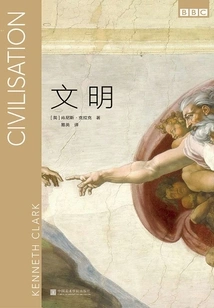
Civilization
History文明
H
In Civilization, Kenneth Clark's wide-ranging narrative examines the development of Western Europe since the fall of the Roman Empire, covering the ideas, books, architecture, and works of art that made up Western European civilization. The author takes us from ninth-century Iona to twelfth-century France, from Florence to Urbino, and from Germany to Rome, England, the Netherlands, and the United States. Against this historical backdrop, he paints a remarkable cast of characters-men and women who gave civilization new energy and broadened our understanding of the world and ourselves. He also highlighted the works of genius produced by them - in the fields of architecture, sculpture, painting, philosophy, poetry, music, science and engineering, from the Academy of Athens painted by Raphael to the bridges designed by Brunel. "Civilization" is Clark's eternal nostalgia for European civilization. In his narration, we will see: At what moment does the artist get rid of the shackles of the times? What period has art gone through, and how does it transcend the bonds of time and space?
In Civilization, Kenneth Clark's wide-ranging narrative examines the development of Western Europe since the fall of the Roman Empire, covering the ideas, books, architecture, and works of art that made up Western European civilization. The author takes us from ninth-century Iona to twelfth-century France, from Florence to Urbino, and from Germany to Rome, England, the Netherlands, and the United States. Against this historical backdrop, he paints a remarkable cast of characters-men and women who gave civilization new energy and broadened our understanding of the world and ourselves. He also highlighted the works of genius produced by them - in the fields of architecture, sculpture, painting, philosophy, poetry, music, science and engineering, from the Academy of Athens painted by Raphael to the bridges designed by Brunel. "Civilization" is Clark's eternal nostalgia for European civilization. In his narration, we will see: At what moment does the artist get rid of the shackles of the times? What period has art gone through, and how does it transcend the bonds of time and space?
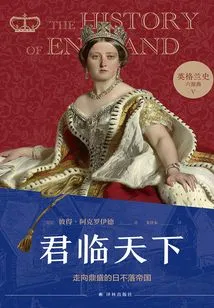
君临天下:走向鼎盛的日不落帝国(英格兰史六部曲5)
G
"The Six-Part History of England" is the representative work of the historical writer Peter Ackroyd, which includes six volumes: "The Founding of the Empire", "The Tudor Dynasty", "The Age of Rebellion", "The Revolutionary Century", "The King of the World" and "Revolution". It writes the historical process of this legendary country in a magnificent way: how this once closed island country gradually turned into an empire with territories all over the world through religious reform, parliamentary system, technological and ideological revolution, as well as trade and colonial expansion; and how it repositioned itself in the new post-war order as the empire declined today and continued to influence the world. Ackroyd's writing conveys his deep attachment to this country that once stood at the apex of human civilization. It not only creates a history of struggle and innovation for the rise of a great power, but also creates a glorious national epic. "Kingdom" is the fifth volume in Ackroyd's "Six Parts of History of England". It begins with the depression after the Battle of Waterloo in 1815 and ends with the death of Queen Victoria in 1901. After the profligate George IV and the mediocre William IV, the 18-year-old Queen Victoria ascended the throne and ushered in an era of tremendous innovation. Technological progress swept the entire country, and excellent inventions emerged in endlessly. The emergence of the middle class changed the social form, the progress of science broke the ancient traditions of the Anglican Church, secular ideas were spread among the people, and a group of outstanding literary giants also emerged. During the Victorian period, Britain relied on the Industrial Revolution and maritime supremacy to reach the top of the world and was known as the "Empire on which the Sun Never Sets."
"The Six-Part History of England" is the representative work of the historical writer Peter Ackroyd, which includes six volumes: "The Founding of the Empire", "The Tudor Dynasty", "The Age of Rebellion", "The Revolutionary Century", "The King of the World" and "Revolution". It writes the historical process of this legendary country in a magnificent way: how this once closed island country gradually turned into an empire with territories all over the world through religious reform, parliamentary system, technological and ideological revolution, as well as trade and colonial expansion; and how it repositioned itself in the new post-war order as the empire declined today and continued to influence the world. Ackroyd's writing conveys his deep attachment to this country that once stood at the apex of human civilization. It not only creates a history of struggle and innovation for the rise of a great power, but also creates a glorious national epic. "Kingdom" is the fifth volume in Ackroyd's "Six Parts of History of England". It begins with the depression after the Battle of Waterloo in 1815 and ends with the death of Queen Victoria in 1901. After the profligate George IV and the mediocre William IV, the 18-year-old Queen Victoria ascended the throne and ushered in an era of tremendous innovation. Technological progress swept the entire country, and excellent inventions emerged in endlessly. The emergence of the middle class changed the social form, the progress of science broke the ancient traditions of the Anglican Church, secular ideas were spread among the people, and a group of outstanding literary giants also emerged. During the Victorian period, Britain relied on the Industrial Revolution and maritime supremacy to reach the top of the world and was known as the "Empire on which the Sun Never Sets."
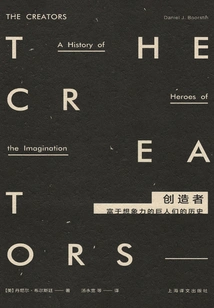
文明的历史:创造者
J
The epic masterpiece of the famous literary historian Daniel Boorstin, a far-reaching world history trilogy; it caused a sensation after being published in the United States, has been a best-seller for more than 30 years, and has been translated into more than 20 languages; it is a perfect combination of history and popular science, with detailed and interesting content; In "The History of Civilization: The Creators", the author recreates the cultural and artistic achievements of more than three thousand years, vividly describing the outstanding figures who created our splendid cultural heritage and enriched the human world in philosophy, drama, literature, architecture, painting, sculpture, music, etc. Creation is the eternal theme of mankind. From the construction of the pyramid to the design of the elegant dome of the Florence Cathedral, from Dante's "Divine Comedy" to Balzac's "Human Comedy", from the ancient rituals of the Dionysia to the graceful dance of modern ballet, and from human beings' challenge to the external world to self-creation and exploration of the inner wilderness, the author, with his unique elegant and charming writing style, deeply and comprehensively explores the profound theme of human creation.
The epic masterpiece of the famous literary historian Daniel Boorstin, a far-reaching world history trilogy; it caused a sensation after being published in the United States, has been a best-seller for more than 30 years, and has been translated into more than 20 languages; it is a perfect combination of history and popular science, with detailed and interesting content; In "The History of Civilization: The Creators", the author recreates the cultural and artistic achievements of more than three thousand years, vividly describing the outstanding figures who created our splendid cultural heritage and enriched the human world in philosophy, drama, literature, architecture, painting, sculpture, music, etc. Creation is the eternal theme of mankind. From the construction of the pyramid to the design of the elegant dome of the Florence Cathedral, from Dante's "Divine Comedy" to Balzac's "Human Comedy", from the ancient rituals of the Dionysia to the graceful dance of modern ballet, and from human beings' challenge to the external world to self-creation and exploration of the inner wilderness, the author, with his unique elegant and charming writing style, deeply and comprehensively explores the profound theme of human creation.
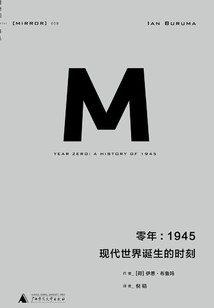
Year Zero: 1945
History零年:1945
H
In 1945, a new world emerged on the ruins of World War II. This book records the historical events around the world in this important year, which is very sad. This book is a review of what happened in 1945, the end of World War II. One world has come to an end, and another brand-new world with an uncertain future is slowly opening. Regime changes are taking place all over the world, whether in Asia or continental Europe. The ensuing power struggle was often brutal, and in the process gave birth to the modern world as we know it. This work has a grand layout and ups and downs of the characters' stories. In the book, the author talks about film and television art works in Asia and Europe. Perhaps no one was better suited to write Year Zero than Ian Buruma, his masterpiece.
In 1945, a new world emerged on the ruins of World War II. This book records the historical events around the world in this important year, which is very sad. This book is a review of what happened in 1945, the end of World War II. One world has come to an end, and another brand-new world with an uncertain future is slowly opening. Regime changes are taking place all over the world, whether in Asia or continental Europe. The ensuing power struggle was often brutal, and in the process gave birth to the modern world as we know it. This work has a grand layout and ups and downs of the characters' stories. In the book, the author talks about film and television art works in Asia and Europe. Perhaps no one was better suited to write Year Zero than Ian Buruma, his masterpiece.
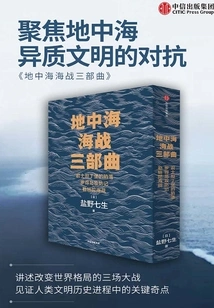
地中海海战三部曲(套装全3册)
G
The "Mediterranean Naval War Trilogy" is an important work by the famous Japanese non-fiction historical writer Shiono Nanao. It tells the story of two heterogeneous civilizations, Christianity and Islam, using the Mediterranean as the war stage. They fought against each other for belief, land and trade control, and ultimately changed the world structure and the direction of human civilization. The three wars - the fall of Constantinople in 1453, the attack and defense of Rhodes in 1522, and the Naval Battle of Lepanto in 1571. "The Fall of Constantinople" tells the story of the Ottoman Turkish Empire's capture of Constantinople, the capital of the Byzantine Empire, in 1453. The aging civilization was defeated by the emerging civilization. Constantinople was located at the intersection of the East and the West, and was a battleground for the military strategists of that era. After this battle, the shining pearl on the Eurasian continent changed hands, ushering in the prelude to the changes of the times. "The Battle of Rhodes" tells the story of the Ottoman Turkish Empire's attack on Rhodes in 1522, the stronghold of the Knights of St. John in the Mediterranean and the frontier against the pagans. It records the last glory of the dying European knight class. In the face of the Turkish army, a declining religious group fought bravely and left a magnificent mark in history. Even though it was defeated, it was glorious. "The Battle of Lepanto" tells the story of a battle that took place at the Cape of Lepanto between the Ottoman Turkish Empire Navy and the Holy Alliance's combined fleet composed of Venice, Spain and the Holy See in 1571. The combined fleet won a great victory, but the fruits of victory were soon wiped out by the dismal dissolution of the Holy Alliance. These three "wars to divide the world" were an important turning point in the development of human civilization and a key singularity in the historical process. In the blood and fire, the European Christian civilization and the Islamic civilization in Central Asia collided with dazzling sparks. Since then, the power of Christianity has gradually declined, and the Islamic civilization has gradually taken control of the Mediterranean world and embarked on the journey of hegemony on the historical stage.
The "Mediterranean Naval War Trilogy" is an important work by the famous Japanese non-fiction historical writer Shiono Nanao. It tells the story of two heterogeneous civilizations, Christianity and Islam, using the Mediterranean as the war stage. They fought against each other for belief, land and trade control, and ultimately changed the world structure and the direction of human civilization. The three wars - the fall of Constantinople in 1453, the attack and defense of Rhodes in 1522, and the Naval Battle of Lepanto in 1571. "The Fall of Constantinople" tells the story of the Ottoman Turkish Empire's capture of Constantinople, the capital of the Byzantine Empire, in 1453. The aging civilization was defeated by the emerging civilization. Constantinople was located at the intersection of the East and the West, and was a battleground for the military strategists of that era. After this battle, the shining pearl on the Eurasian continent changed hands, ushering in the prelude to the changes of the times. "The Battle of Rhodes" tells the story of the Ottoman Turkish Empire's attack on Rhodes in 1522, the stronghold of the Knights of St. John in the Mediterranean and the frontier against the pagans. It records the last glory of the dying European knight class. In the face of the Turkish army, a declining religious group fought bravely and left a magnificent mark in history. Even though it was defeated, it was glorious. "The Battle of Lepanto" tells the story of a battle that took place at the Cape of Lepanto between the Ottoman Turkish Empire Navy and the Holy Alliance's combined fleet composed of Venice, Spain and the Holy See in 1571. The combined fleet won a great victory, but the fruits of victory were soon wiped out by the dismal dissolution of the Holy Alliance. These three "wars to divide the world" were an important turning point in the development of human civilization and a key singularity in the historical process. In the blood and fire, the European Christian civilization and the Islamic civilization in Central Asia collided with dazzling sparks. Since then, the power of Christianity has gradually declined, and the Islamic civilization has gradually taken control of the Mediterranean world and embarked on the journey of hegemony on the historical stage.
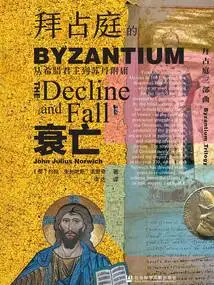
拜占庭的衰亡:从希腊君主到苏丹附庸
U
This book is the last volume of the "Byzantine Trilogy" and the climax of this grand epic. This volume continues the history of Alexius Comnenos' accession to the throne in 1081. Thereafter, the Fourth Crusade, led by the blind octogenarian and extremely cunning Doge of Venice, Enrique Dandolo, brought great disaster to Constantinople. The later years of the Byzantine era were filled with sorrow and they were embroiled in painful and long battles with the Ottoman Sultan. In 1453, this thousand-year empire that once spanned Europe, Asia, and Africa was wiped out with the fall of Constantinople and the death of the last emperor, Constantine XI.
This book is the last volume of the "Byzantine Trilogy" and the climax of this grand epic. This volume continues the history of Alexius Comnenos' accession to the throne in 1081. Thereafter, the Fourth Crusade, led by the blind octogenarian and extremely cunning Doge of Venice, Enrique Dandolo, brought great disaster to Constantinople. The later years of the Byzantine era were filled with sorrow and they were embroiled in painful and long battles with the Ottoman Sultan. In 1453, this thousand-year empire that once spanned Europe, Asia, and Africa was wiped out with the fall of Constantinople and the death of the last emperor, Constantine XI.
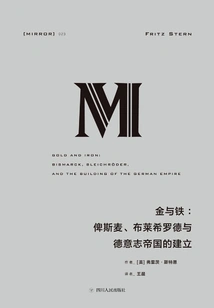
金与铁:俾斯麦、布莱希罗德与德意志帝国的建立(理想国译丛 23)
S
Bismarck's speech to the Prussian Parliament in 1862 earned him the title of "Iron Chancellor", but the establishment of the German Empire relied more on money, coal and iron, rather than iron and blood. Fritz Stern's "Gold and Iron" adopts a unique perspective and chooses the relationship between Bismarck and his Prussian Jewish banker Bleichröder as the main line to depict the inextricable relationship between the German political and financial circles and the two worlds in Germany: the new world of capitalism and the old world of ancient feudal spirit. The success of the Jews as a minority and the conflicts of interest brought about by social mobility not only revealed the fragility of the new German Empire and its ruling class, but also demonstrated the duality of wealth-it both threatened tradition and provided hope for social mobility. Gold and Iron shows how German and Jewish hypocrisy and self-deception rose to dominate the system, ultimately having dire consequences.
Bismarck's speech to the Prussian Parliament in 1862 earned him the title of "Iron Chancellor", but the establishment of the German Empire relied more on money, coal and iron, rather than iron and blood. Fritz Stern's "Gold and Iron" adopts a unique perspective and chooses the relationship between Bismarck and his Prussian Jewish banker Bleichröder as the main line to depict the inextricable relationship between the German political and financial circles and the two worlds in Germany: the new world of capitalism and the old world of ancient feudal spirit. The success of the Jews as a minority and the conflicts of interest brought about by social mobility not only revealed the fragility of the new German Empire and its ruling class, but also demonstrated the duality of wealth-it both threatened tradition and provided hope for social mobility. Gold and Iron shows how German and Jewish hypocrisy and self-deception rose to dominate the system, ultimately having dire consequences.
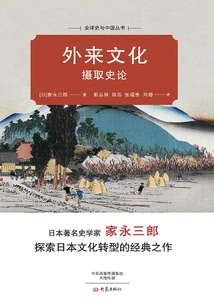
外来文化摄取史论
R
In this book, the author Saburo Ienaga not only describes the basic features of Japan's absorption of Chinese culture in ancient times and Western culture in modern times with the objectivity of a historian, but also examines the ideological basis of Japan's absorption of Chinese and Western culture with the fairness of a commentator. The essence of Japan's modernization is, in the final analysis, a question of how to treat foreign culture. Different cultural types are formed in different environments. Therefore, cultural independence and adaptability must be maintained in cultural exchanges. The entire book clearly shows the entire process of Japan's modern cultural transformation. In Japan's cultural selection process over the past century, there have been many successful inspirations and many failed lessons. These are worthy of our careful study and analysis. The detailed and rich information in this book not only allows us to see the entire process of Japan's modern cultural transformation relatively clearly, but also can be used as background material for our study of relevant issues for analysis and utilization.
In this book, the author Saburo Ienaga not only describes the basic features of Japan's absorption of Chinese culture in ancient times and Western culture in modern times with the objectivity of a historian, but also examines the ideological basis of Japan's absorption of Chinese and Western culture with the fairness of a commentator. The essence of Japan's modernization is, in the final analysis, a question of how to treat foreign culture. Different cultural types are formed in different environments. Therefore, cultural independence and adaptability must be maintained in cultural exchanges. The entire book clearly shows the entire process of Japan's modern cultural transformation. In Japan's cultural selection process over the past century, there have been many successful inspirations and many failed lessons. These are worthy of our careful study and analysis. The detailed and rich information in this book not only allows us to see the entire process of Japan's modern cultural transformation relatively clearly, but also can be used as background material for our study of relevant issues for analysis and utilization.
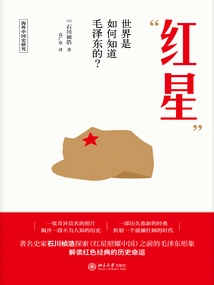
“红星”:世界是如何知道毛泽东的?
O
The first half of the book starts with an erroneous "" photo published in the Japanese government gazette in 1937, tracing the historical process of the outside world's gradual understanding of the Chinese revolutionary leader, as well as the misunderstandings, coincidences and deliberate concealments that occurred during this period. The second half is dedicated to restoring the birth process and version changes of "Red Star Shines on China", combing its historical fate in China, the Soviet Union, Japan and other places in detail, and clarifying many misunderstandings and false accusations about this masterpiece in later generations.
The first half of the book starts with an erroneous "" photo published in the Japanese government gazette in 1937, tracing the historical process of the outside world's gradual understanding of the Chinese revolutionary leader, as well as the misunderstandings, coincidences and deliberate concealments that occurred during this period. The second half is dedicated to restoring the birth process and version changes of "Red Star Shines on China", combing its historical fate in China, the Soviet Union, Japan and other places in detail, and clarifying many misunderstandings and false accusations about this masterpiece in later generations.
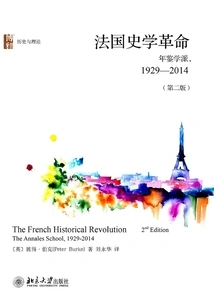
法国史学革命
Q
This book is a critical history of the French Annals School, examining the sixty-year development history of this historical research group since the founding of the Annals magazine in 1929. There is no doubt that the Annales School was the most influential historical innovation movement in the 20th century. In the development process of the so-called "new history", it is the most important driving force. The Yearbook Group combines traditional history with geography, economics, linguistics, psychology, anthropology and other social sciences, expanding the field of history to a vast field of human activities, and creating a series of new methods, such as problem-oriented history, comparative history, historical psychology, geographical history, long-term history, serial history, historical anthropology, etc. Peter Burke distinguished three generations of scholars in the development of the Annales School. The first generation included the founders Lucien Fevere and Marc Bloch, who waged war against the traditional historiography system and created the magazine Annales to encourage interdisciplinary collaboration. The second generation was dominated by Braudel, who was already regarded as the most outstanding historian of his generation. The third generation includes famous contemporary historians such as Dupuy, Le Goff, and Leroy Ladurie. Burke's analysis is thorough and concise, and the key classics and branches of the Annales movement are clearly visible. This book was published by our company in 2006. Due to its concise and clear narrative and beautiful and smooth translation, it has become a must-read for introductory reading about the French Annales School, and has also become a classic recommendation in the history classes of major universities.
This book is a critical history of the French Annals School, examining the sixty-year development history of this historical research group since the founding of the Annals magazine in 1929. There is no doubt that the Annales School was the most influential historical innovation movement in the 20th century. In the development process of the so-called "new history", it is the most important driving force. The Yearbook Group combines traditional history with geography, economics, linguistics, psychology, anthropology and other social sciences, expanding the field of history to a vast field of human activities, and creating a series of new methods, such as problem-oriented history, comparative history, historical psychology, geographical history, long-term history, serial history, historical anthropology, etc. Peter Burke distinguished three generations of scholars in the development of the Annales School. The first generation included the founders Lucien Fevere and Marc Bloch, who waged war against the traditional historiography system and created the magazine Annales to encourage interdisciplinary collaboration. The second generation was dominated by Braudel, who was already regarded as the most outstanding historian of his generation. The third generation includes famous contemporary historians such as Dupuy, Le Goff, and Leroy Ladurie. Burke's analysis is thorough and concise, and the key classics and branches of the Annales movement are clearly visible. This book was published by our company in 2006. Due to its concise and clear narrative and beautiful and smooth translation, it has become a must-read for introductory reading about the French Annales School, and has also become a classic recommendation in the history classes of major universities.
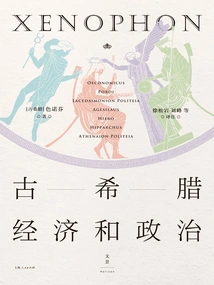
古希腊经济和政治
P
Xenophon was one of the three major historians of ancient Greece along with Herodotus and Thucydides. He not only wrote "History of Greece" and "The Long March" and other masterpieces that were praised by later generations, but also wrote many short articles criticizing the city-state system and people and events at that time. "Economics and Politics of Ancient Greece" is a collection of seven short treatises by Xenophon, including "Domestic Economics", "On Financial Resources", "Spartan Constitution", "Agesilaus", "Hiero", "On Captains of Cavalry" and "The Constitution of Athens" written under the name of Xenophon. Although these articles are short, they are quite groundbreaking. They are the earliest works in the classical era to discuss topics such as family life management, city-state income and expenditure reduction, and cavalry combat training. They have left a wealth of historical materials for future generations to understand the major city-states of Sparta and Athens in the Greek classical era, as well as the social life and political, economic, and military conditions of the time.
Xenophon was one of the three major historians of ancient Greece along with Herodotus and Thucydides. He not only wrote "History of Greece" and "The Long March" and other masterpieces that were praised by later generations, but also wrote many short articles criticizing the city-state system and people and events at that time. "Economics and Politics of Ancient Greece" is a collection of seven short treatises by Xenophon, including "Domestic Economics", "On Financial Resources", "Spartan Constitution", "Agesilaus", "Hiero", "On Captains of Cavalry" and "The Constitution of Athens" written under the name of Xenophon. Although these articles are short, they are quite groundbreaking. They are the earliest works in the classical era to discuss topics such as family life management, city-state income and expenditure reduction, and cavalry combat training. They have left a wealth of historical materials for future generations to understand the major city-states of Sparta and Athens in the Greek classical era, as well as the social life and political, economic, and military conditions of the time.