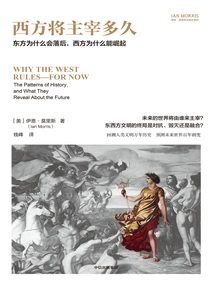
How Long Will the West Dominate: Why the East Lags Behind, and Why the West Can Rise (ian Morris Civilization History Series)
by I
About This Novel
Based on the 50,000-year history of human development in the East and the West, the author of this book, Ian Morris, points out that the dominance of the West was neither destined from ancient times nor a short-term accident. Neither of these views can explain why, despite falling behind, the modern West caught up with or even surpassed the East. Morris believes geography is key. It is geographical factors that have led Eastern and Western societies to embark on completely different development trajectories, and social development has in turn changed the meaning of geography. This two-way force has created the world structure from ancient times to the present, and has gradually shaped the historical pattern of the rise and fall of the East and the West. The author connects outstanding discoveries in various disciplines and combines it with his original "Social Development Index" to intuitively present the development of Eastern and Western societies in different time and space in the form of scores, revealing how wealth and power were transferred from the East to the West, thus establishing the West's dominance for hundreds of years. At the same time, the book doesn't stop there. By sorting out a series of details such as war, climate change, and energy evolution, the author not only traces the historical roots of the West's dominance of the world, but also boldly predicts the drastic changes that will occur in the world in the next hundred years.
Official Sources
What Readers Think
Rating
Community(0)
Official(1)Scraped 1mo ago
The early chapters of this book are better written than the later ones, and the author's choice of angles better illustrates the law of historical development. The laws of historical development in later chapters, especially in modern times, are not so clear. The laws of historical development are as complex as the development of human society and require constant research. Overall, I still recommend this book
Rating
Community(0)
Official(1)Scraped 1mo ago
The early chapters of this book are better written than the later ones, and the author's choice of angles better illustrates the law of historical development. The laws of historical development in later chapters, especially in modern times, are not so clear. The laws of historical development are as complex as the development of human society and require constant research. Overall, I still recommend this book