Library
Browse and search books
128 novels found
The Spring and Autumn Period
Literature走马春秋
Anonymous
"Zou Ma Chun Qiu", also known as "Le Yi Fa Qi", is the fifth part of "Six Parts of Spring and Autumn". It is a novel about gods and demons adapted from "Quan Xiang Ping Hua". It tells the story of the death of King Xuan of Qi and the succession of King Min of Qi. At this time, King Min of Qi was very powerful and united Han, Zhao and Wei to attack Qin and expand its territory. All the vassal states planned to desert Qin and submit to Qi. However, King Min of Qi was arrogant and arrogant, and the people could not tolerate his tyranny. He favored Concubine Zou and forced Sun Bin away. Le Yi came to surrender and was not reused, so he defected to Yan and led his troops to attack Qi. King Xiang of Qi came to the throne and invited Sun Bin to retreat from the Yan army. Le Yi invited his master Huang Boyang to angrily set up an array of five ghosts to trap Sun Bin. Jin Yanmao then asked Wang Chan to go down the mountain to rescue him. Both sides had gods to help him fight.
"Zou Ma Chun Qiu", also known as "Le Yi Fa Qi", is the fifth part of "Six Parts of Spring and Autumn". It is a novel about gods and demons adapted from "Quan Xiang Ping Hua". It tells the story of the death of King Xuan of Qi and the succession of King Min of Qi. At this time, King Min of Qi was very powerful and united Han, Zhao and Wei to attack Qin and expand its territory. All the vassal states planned to desert Qin and submit to Qi. However, King Min of Qi was arrogant and arrogant, and the people could not tolerate his tyranny. He favored Concubine Zou and forced Sun Bin away. Le Yi came to surrender and was not reused, so he defected to Yan and led his troops to attack Qi. King Xiang of Qi came to the throne and invited Sun Bin to retreat from the Yan army. Le Yi invited his master Huang Boyang to angrily set up an array of five ghosts to trap Sun Bin. Jin Yanmao then asked Wang Chan to go down the mountain to rescue him. Both sides had gods to help him fight.
半小时速读水浒108将
Anonymous
The Water Margin concretely and vividly describes the entire process from the occurrence, development and failure of the peasant uprising headed by Song Jiang. It exposes the darkness, decadence and evils of the ruling class in feudal society. It enthusiastically praises the rebellious spirit and righteous actions of the uprising heroes, creates a glorious image of a large number of Liangshan heroes, and vividly reveals the objective truth of "officials forcing the people to rebel" in feudal society and the internal reasons for the failure of the peasant uprising. This book gives a brief introduction to 108, so that readers who are interested in Water Margin can have a deeper understanding of the characters.
The Water Margin concretely and vividly describes the entire process from the occurrence, development and failure of the peasant uprising headed by Song Jiang. It exposes the darkness, decadence and evils of the ruling class in feudal society. It enthusiastically praises the rebellious spirit and righteous actions of the uprising heroes, creates a glorious image of a large number of Liangshan heroes, and vividly reveals the objective truth of "officials forcing the people to rebel" in feudal society and the internal reasons for the failure of the peasant uprising. This book gives a brief introduction to 108, so that readers who are interested in Water Margin can have a deeper understanding of the characters.
Mysterious Resurrection: Weird Puzzle
Light Novel神秘复苏:诡异拼图
Anonymous
I have never hated my incompetence and being unable to do anything as much as I do today.
I have never hated my incompetence and being unable to do anything as much as I do today.
Getting Lost
Short Fiction迷途当返
Anonymous
In Su Nianxu's eyes, I, a man who has been with me for many years, has long lost my original charm and has turned into mosquito blood on the bedside, no longer a cinnabar mole in my heart. But she didn't know that she wasn't the only one who could make a new choice. I am planning to divorce, let go happily, and let her get what she wants. She could finally embrace Bai Yueguang, but why did she come back to me?
In Su Nianxu's eyes, I, a man who has been with me for many years, has long lost my original charm and has turned into mosquito blood on the bedside, no longer a cinnabar mole in my heart. But she didn't know that she wasn't the only one who could make a new choice. I am planning to divorce, let go happily, and let her get what she wants. She could finally embrace Bai Yueguang, but why did she come back to me?
Qin
Literature秦
Anonymous
The name of the vassal state of China in the Zhou Dynasty, in the area of present-day Shaanxi and Gansu Provinces.
The name of the vassal state of China in the Zhou Dynasty, in the area of present-day Shaanxi and Gansu Provinces.
Jiang Han Et Al (2)
General Fiction蒋寒等(二)
Anonymous
The fight between Wang Keke and Xu Jing evolved from a fight when they met to a fight after their marriage, and their relatives have since become members of the United Nations. Once the situation becomes tense, they make long-distance calls to resolve it separately; once there is a brutal fight, peacekeeping troops are sent there. The peace has been negotiated, the agreement has been signed, but you are using it as a back-up! Friction continues, and even escalates to the point of wanting to destroy each other. Until the cold war: separate beds, no talking. Wang Keke is very troubled. He can handle cutting-edge topics but cannot handle his wife. He always says "I won't accept your tricks" when talking about his wife. He didn't know which one his wife would take. Xu Jing is often moody and makes people get goosebumps when she gets better.
The fight between Wang Keke and Xu Jing evolved from a fight when they met to a fight after their marriage, and their relatives have since become members of the United Nations. Once the situation becomes tense, they make long-distance calls to resolve it separately; once there is a brutal fight, peacekeeping troops are sent there. The peace has been negotiated, the agreement has been signed, but you are using it as a back-up! Friction continues, and even escalates to the point of wanting to destroy each other. Until the cold war: separate beds, no talking. Wang Keke is very troubled. He can handle cutting-edge topics but cannot handle his wife. He always says "I won't accept your tricks" when talking about his wife. He didn't know which one his wife would take. Xu Jing is often moody and makes people get goosebumps when she gets better.
Ad and Steve
General Fiction阿德与史蒂夫
Anonymous
When I first arrived in Hong Kong, I lived in a tenement building because I didn't apply for a student apartment. In an old community like the West District, buildings are snobbishly divided into tenement buildings and western-style buildings. The difference is that the former does not have an elevator. I live on the top seventh floor. In other words, upstairs is the roof, which houses a wet laundry and the landlord's flora and fauna. The scenery in the Zoological and Botanical Garden is unique, except for the two vicious dogs guarding the gate. The landlord is a Chaozhou native. He planted monstera trees elegantly and even built a pond to raise two koi carps. Naturally, he mercifully fed the mosquitoes that lurk during the day and emerge at night. With such an ecology, it is not surprising that thousands of sounds are singing in unison at night. The dogs were bored, biting each other and grinding their teeth as a pastime. The buzzing of mosquitoes can be ignored as you get used to it over time. The landlord was so shrewd that he divided a three-bedroom apartment into separate apartments.
When I first arrived in Hong Kong, I lived in a tenement building because I didn't apply for a student apartment. In an old community like the West District, buildings are snobbishly divided into tenement buildings and western-style buildings. The difference is that the former does not have an elevator. I live on the top seventh floor. In other words, upstairs is the roof, which houses a wet laundry and the landlord's flora and fauna. The scenery in the Zoological and Botanical Garden is unique, except for the two vicious dogs guarding the gate. The landlord is a Chaozhou native. He planted monstera trees elegantly and even built a pond to raise two koi carps. Naturally, he mercifully fed the mosquitoes that lurk during the day and emerge at night. With such an ecology, it is not surprising that thousands of sounds are singing in unison at night. The dogs were bored, biting each other and grinding their teeth as a pastime. The buzzing of mosquitoes can be ignored as you get used to it over time. The landlord was so shrewd that he divided a three-bedroom apartment into separate apartments.
Classical Romance Novels: Five Beautiful Relationships (4)
General Fiction古典言情小说:五美缘(四)
Anonymous
"Five Beauties" is a famous romance novel that was quite famous when it was first published. It was also a novel that had been banned. Readers who are interested in this kind of classical literature must read this book. The book tells the story of the marriage between scholar Feng Xu and five beauties. Among them, the protagonist goes through many twists and turns and hardships, and finally marries the five beauties, achieving the "five beauties". The book is full of praise for women, but at the same time there are also some plot descriptions that exaggerate the love between men and women. In the Qing Dynasty, it was classified as an "obscene book" and was also banned. The work is quite distinctive in terms of artistic expression: the storyline is vivid and fascinating; the characters are numerous and full of personality, especially the description of the five beauties. They have distinct personalities, changing the model of women in previous novels being weak and dependent on others for survival, and writing about their strong characters. The structure of the book is rigorous and dense; the writing style is vivid and rich, and the events, characters and scenes written are as if they were there, and the images are vivid. The writing is simple and interesting, with endless aftertaste, making it hard to put down after reading it.
"Five Beauties" is a famous romance novel that was quite famous when it was first published. It was also a novel that had been banned. Readers who are interested in this kind of classical literature must read this book. The book tells the story of the marriage between scholar Feng Xu and five beauties. Among them, the protagonist goes through many twists and turns and hardships, and finally marries the five beauties, achieving the "five beauties". The book is full of praise for women, but at the same time there are also some plot descriptions that exaggerate the love between men and women. In the Qing Dynasty, it was classified as an "obscene book" and was also banned. The work is quite distinctive in terms of artistic expression: the storyline is vivid and fascinating; the characters are numerous and full of personality, especially the description of the five beauties. They have distinct personalities, changing the model of women in previous novels being weak and dependent on others for survival, and writing about their strong characters. The structure of the book is rigorous and dense; the writing style is vivid and rich, and the events, characters and scenes written are as if they were there, and the images are vivid. The writing is simple and interesting, with endless aftertaste, making it hard to put down after reading it.
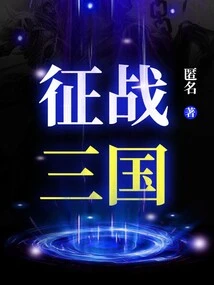
征战三国
Anonymous
Fighting for power, seizing power, and seizing the world, an ordinary person's journey in the Three Kingdoms online game. A game called "Conquest" will take you to the pinnacle of life!
Fighting for power, seizing power, and seizing the world, an ordinary person's journey in the Three Kingdoms online game. A game called "Conquest" will take you to the pinnacle of life!
Two Titles of Jia Pingwa's Novels
General Fiction贾平凹小说二题
Anonymous
I moved to Qinglongyuan Courtyard and met Fatty Shi. Fatty Shi was rumored to be one way or another in people's reputation. Some said he smoked heavy cigarettes, while others said he had been arrested by the Public Security Bureau. But in the end, the position of director of the neighborhood committee belonged to him. After being introduced by a friend, I moved to a residential compound called Qinglongyuan. This courtyard is very small, with no gardens or lawns, and a total of eight buildings that are irregular and cramped. There was originally a guard room designed at the entrance of the courtyard, but it seemed that there had never been a guard. The two huts were used as small shops selling tobacco, alcohol and candies, and a linoleum tent was set up outside the eaves, with large items such as brooms, mops, coal stoves and plastic pots, buckets and pots placed in a messy mess.
I moved to Qinglongyuan Courtyard and met Fatty Shi. Fatty Shi was rumored to be one way or another in people's reputation. Some said he smoked heavy cigarettes, while others said he had been arrested by the Public Security Bureau. But in the end, the position of director of the neighborhood committee belonged to him. After being introduced by a friend, I moved to a residential compound called Qinglongyuan. This courtyard is very small, with no gardens or lawns, and a total of eight buildings that are irregular and cramped. There was originally a guard room designed at the entrance of the courtyard, but it seemed that there had never been a guard. The two huts were used as small shops selling tobacco, alcohol and candies, and a linoleum tent was set up outside the eaves, with large items such as brooms, mops, coal stoves and plastic pots, buckets and pots placed in a messy mess.
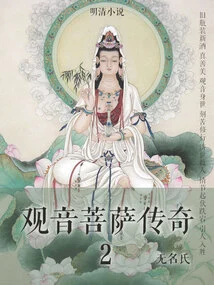
Ming and Qing Novels: the Legend of Guanyin Bodhisattva 2
General Fiction明清小说:观音菩萨传奇2
Anonymous
"The Legend of Guanyin Bodhisattva" was widely circulated among the people in the late Qing Dynasty and the early Republic of China. It tells the touching story of Guanyin Bodhisattva's extraordinary life experience, his practice experience of going through all kinds of hardships, his great kindness and compassion, his kindness to others, and his tireless efforts to help people. This book is worth reading for readers interested in such topics. The author uses easy-to-understand words to vividly describe the legend of Avalokitesvara Bodhisattva from attaining the Tao, to various dharma appearances, various incarnations, to salvation and salvation, as well as the traces it left in history. So that readers can clearly understand each wonderful legendary story. In addition to the wonderful allusions, I gained a preliminary understanding of Buddhist thought and Buddhist history. The author takes the traditional Guanyin story as the main line and incorporates a large number of plots about Guanyin from ancient operas, novels, notes and folklore to make the content richer, the plot fuller and the book more readable.
"The Legend of Guanyin Bodhisattva" was widely circulated among the people in the late Qing Dynasty and the early Republic of China. It tells the touching story of Guanyin Bodhisattva's extraordinary life experience, his practice experience of going through all kinds of hardships, his great kindness and compassion, his kindness to others, and his tireless efforts to help people. This book is worth reading for readers interested in such topics. The author uses easy-to-understand words to vividly describe the legend of Avalokitesvara Bodhisattva from attaining the Tao, to various dharma appearances, various incarnations, to salvation and salvation, as well as the traces it left in history. So that readers can clearly understand each wonderful legendary story. In addition to the wonderful allusions, I gained a preliminary understanding of Buddhist thought and Buddhist history. The author takes the traditional Guanyin story as the main line and incorporates a large number of plots about Guanyin from ancient operas, novels, notes and folklore to make the content richer, the plot fuller and the book more readable.
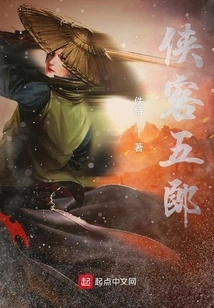
Knight Goro
Martial Arts侠客五郎
Anonymous
Since the death of Wu Lang, the former supreme knight in the martial arts world, the world has been in chaos. Each of the thirteen martial arts families occupies one side, and each wants to become the supreme king of the martial arts world and dominate the world. The major factions choose to elect this martial arts supreme at the martial arts conference. But three years later, the knight Wu Lang mysteriously returned to the world.
Since the death of Wu Lang, the former supreme knight in the martial arts world, the world has been in chaos. Each of the thirteen martial arts families occupies one side, and each wants to become the supreme king of the martial arts world and dominate the world. The major factions choose to elect this martial arts supreme at the martial arts conference. But three years later, the knight Wu Lang mysteriously returned to the world.
赳赳老秦,大秦必胜
Anonymous
Come to China Literature's website to read more of my works!
Come to China Literature's website to read more of my works!
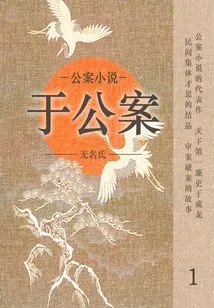
Public Case Novel·yu Public Case 1
General Fiction公案小说·于公案1
Anonymous
"Yu Gongan" is one of the representative works of public case novels, and is listed as the representative work of Chinese public case novels along with "Bao Gongan", "Shi Gongan", "Hai Gongan", "Peng Gongan" and "Di Gongan". The original work was lost in the 1940s. This work was summarized by a storyteller based on various lost books and folklore. The author is unknown. Many storytellers have supplemented and revised it. It is the crystallization of collective folk thinking. This book mainly tells the story of Yu Chenglong, the "most honest official in the world" in the Qing Dynasty, who tried and solved crimes, focusing on portraying Yu Chenglong's image of being honest and resourceful. The storyline in the book has ups and downs and the process of solving the case is full of twists and turns. It contains both real history and artificially processed imagination.
"Yu Gongan" is one of the representative works of public case novels, and is listed as the representative work of Chinese public case novels along with "Bao Gongan", "Shi Gongan", "Hai Gongan", "Peng Gongan" and "Di Gongan". The original work was lost in the 1940s. This work was summarized by a storyteller based on various lost books and folklore. The author is unknown. Many storytellers have supplemented and revised it. It is the crystallization of collective folk thinking. This book mainly tells the story of Yu Chenglong, the "most honest official in the world" in the Qing Dynasty, who tried and solved crimes, focusing on portraying Yu Chenglong's image of being honest and resourceful. The storyline in the book has ups and downs and the process of solving the case is full of twists and turns. It contains both real history and artificially processed imagination.
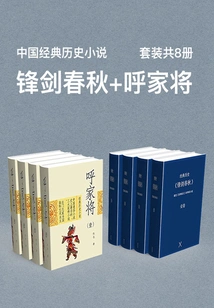
Classic Chinese Historical Novels: Blade of Spring and Autumn + Generals of the Hu Family (set of 8 Volumes in Total)
General Fiction中国经典历史小说:锋剑春秋+呼家将(套装共8册)
Anonymous
This set of books selects ancient literary classics "Jianfeng Chunqiu" and "Hujia Jiang", which is suitable for literature lovers to read. Especially lovers of classical literature will be in for a treat. "Fengjian Chunqiu" is a full-length supernatural novel in the vernacular of the Qing Dynasty. It is roughly similar to "The Romance of the Gods" in that they are both novels that use history to talk about gods and monsters. "Fengjian Chunqiu" draws on the past events of the King of Qin's campaign to conquer the six kingdoms and the six kingdoms' desperate struggle to protect the ancestral temple and the country. It tells the story of two factions of gods setting up battle formations and going down to earth to endure calamities. "The Generals of the Generals of the Hu Family" describes the famous Northern Song Dynasty general Hu Yanzan, whose descendant Hu Yandemo is a hero, and the struggle between the Song Dynasty's relatives and the Pang family in the Song Renzong era. It is a traditional book that promotes patriotism and national spirit and is very popular among the public. Together with "The Generals of the Xue Family" and "The Generals of the Yang Family", it constitutes the famous "Three Great General Novels" in the history of popular novels in my country. It was later changed to storytelling with the same name, and was broadcast by Liu Lanfang. These ancient stories have been passed down to this day, providing people with a lot of creative materials. Therefore, whether it is used as a hobby or as a deliberate study, you can gain something. The plot of the work is vivid and highly readable. The many principles contained in it can also play a role in guiding life for today's readers. The work is extremely readable. The stories and characters told in the book have long been deeply rooted in the hearts of the people, and express the people's emotions and emotions to a certain extent. Their plot structures and narrative methods are also suitable for the masses' appreciation habits. Their content is always exciting.
This set of books selects ancient literary classics "Jianfeng Chunqiu" and "Hujia Jiang", which is suitable for literature lovers to read. Especially lovers of classical literature will be in for a treat. "Fengjian Chunqiu" is a full-length supernatural novel in the vernacular of the Qing Dynasty. It is roughly similar to "The Romance of the Gods" in that they are both novels that use history to talk about gods and monsters. "Fengjian Chunqiu" draws on the past events of the King of Qin's campaign to conquer the six kingdoms and the six kingdoms' desperate struggle to protect the ancestral temple and the country. It tells the story of two factions of gods setting up battle formations and going down to earth to endure calamities. "The Generals of the Generals of the Hu Family" describes the famous Northern Song Dynasty general Hu Yanzan, whose descendant Hu Yandemo is a hero, and the struggle between the Song Dynasty's relatives and the Pang family in the Song Renzong era. It is a traditional book that promotes patriotism and national spirit and is very popular among the public. Together with "The Generals of the Xue Family" and "The Generals of the Yang Family", it constitutes the famous "Three Great General Novels" in the history of popular novels in my country. It was later changed to storytelling with the same name, and was broadcast by Liu Lanfang. These ancient stories have been passed down to this day, providing people with a lot of creative materials. Therefore, whether it is used as a hobby or as a deliberate study, you can gain something. The plot of the work is vivid and highly readable. The many principles contained in it can also play a role in guiding life for today's readers. The work is extremely readable. The stories and characters told in the book have long been deeply rooted in the hearts of the people, and express the people's emotions and emotions to a certain extent. Their plot structures and narrative methods are also suitable for the masses' appreciation habits. Their content is always exciting.
Internet Era
General Fiction互联网时代
Anonymous
Hawaii and the Maldives, in the charming bays, the charm remains the same. These are human leisure resorts that everyone yearns for, and leisure people are still relaxing, but in the gentle and gorgeous light and shadow, they have also become shopping stores, reading rooms, conference rooms, and office rooms that people yearn for. Today, people who can work wherever and whenever they like are describing a new era of work. In the United States, people who do not work in a specific place already account for 1\u002F3 of the entire working population in the United States, and are growing at a rate of 10% every year.
Hawaii and the Maldives, in the charming bays, the charm remains the same. These are human leisure resorts that everyone yearns for, and leisure people are still relaxing, but in the gentle and gorgeous light and shadow, they have also become shopping stores, reading rooms, conference rooms, and office rooms that people yearn for. Today, people who can work wherever and whenever they like are describing a new era of work. In the United States, people who do not work in a specific place already account for 1\u002F3 of the entire working population in the United States, and are growing at a rate of 10% every year.
I Left You Cornered
General Fiction我让你走投无路
Anonymous
Tianrun Company was paralyzed. Tianrun Company specializes in modern office supplies and sells imported office supplies as an agent, such as paper shredders, copiers, binding machines, etc. Tianrun Company rented a 40-square-meter office space in an office building in the High-tech Zone as its business venue. There are two rooms inside and one outside, separated by an aluminum alloy window, which is the office of manager Tian Zongqi. There are several writing desks scattered outside for the use of sales staff. Tianrun Company has been idle for a long time, with few sales staff and not many customers coming to the door. However, today there are so many people that there is no place to get involved, and they are all creditors of Tianrun Company. As if they had made an appointment in advance, the creditors started filing in one by one at 8 o'clock in the morning. They each found a comfortable position and sat down to wait for Tian Zongqi's arrival.
Tianrun Company was paralyzed. Tianrun Company specializes in modern office supplies and sells imported office supplies as an agent, such as paper shredders, copiers, binding machines, etc. Tianrun Company rented a 40-square-meter office space in an office building in the High-tech Zone as its business venue. There are two rooms inside and one outside, separated by an aluminum alloy window, which is the office of manager Tian Zongqi. There are several writing desks scattered outside for the use of sales staff. Tianrun Company has been idle for a long time, with few sales staff and not many customers coming to the door. However, today there are so many people that there is no place to get involved, and they are all creditors of Tianrun Company. As if they had made an appointment in advance, the creditors started filing in one by one at 8 o'clock in the morning. They each found a comfortable position and sat down to wait for Tian Zongqi's arrival.
Qing Dynasty Martial Arts Novel·guo Gongan 2
General Fiction清代武侠公案小说·郭公案2
Anonymous
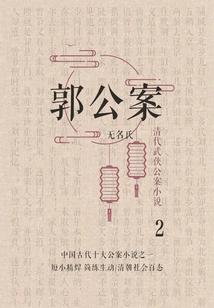
"Guo Gong'an" is a Qing Dynasty martial arts novel with 41 stories in 8 volumes, telling the various cases experienced by Guo Gong. Divided into deception, human life, murder, robbery, deception, justice, adultery, and occupation. This book describes various cases in Qing Dynasty society in the form of stories. Although it is a public case novel, it can also give a glimpse of the social scene of the Qing Dynasty and reflect the various aspects of life in the Qing Dynasty. The stories in the book are short and precise, the text is concise and vivid, and the content covers a wide range of topics.
"Guo Gong'an" is a Qing Dynasty martial arts novel with 41 stories in 8 volumes, telling the various cases experienced by Guo Gong. Divided into deception, human life, murder, robbery, deception, justice, adultery, and occupation. This book describes various cases in Qing Dynasty society in the form of stories. Although it is a public case novel, it can also give a glimpse of the social scene of the Qing Dynasty and reflect the various aspects of life in the Qing Dynasty. The stories in the book are short and precise, the text is concise and vivid, and the content covers a wide range of topics.

Future Career Planning Bureau
General Fiction未来职业规划局
Anonymous
In the science fiction movie "Her" directed by Spike Jonze, the artificial intelligence system Samantha has self-awareness, delicate emotions, and humor. She can not only help the male protagonist Theodore handle various tasks quickly, but also never tire of understanding and tolerating him, gradually becoming his emotional sustenance. Similarly, in the British drama "Black Mirror", Martha fell into despair due to the death of her fiancé, so she purchased a digital version of "Ash" reconstructed from her fiancé's previous social information on the Internet to masturbate. In real life, such assistants are also becoming a reality. With the development of service robots in recent years, their existence has more carriers and functions, such as bank robots that can act cute and cute and medical robots with extremely high diagnostic rates, etc., Making the ideas that originally existed in science fiction movies and television works become true "magic realism."
In the science fiction movie "Her" directed by Spike Jonze, the artificial intelligence system Samantha has self-awareness, delicate emotions, and humor. She can not only help the male protagonist Theodore handle various tasks quickly, but also never tire of understanding and tolerating him, gradually becoming his emotional sustenance. Similarly, in the British drama "Black Mirror", Martha fell into despair due to the death of her fiancé, so she purchased a digital version of "Ash" reconstructed from her fiancé's previous social information on the Internet to masturbate. In real life, such assistants are also becoming a reality. With the development of service robots in recent years, their existence has more carriers and functions, such as bank robots that can act cute and cute and medical robots with extremely high diagnostic rates, etc., Making the ideas that originally existed in science fiction movies and television works become true "magic realism."
熙德之歌(世界英雄史诗译丛)
Anonymous
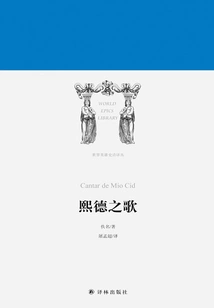
"Song of the Cid" is the most complete piece of troubadour so far preserved. Literary historians often rank it alongside France's "Song of Roland" and Germany's "Song of the Nibelungs" as the three major heroic epics in medieval Europe. Cid is a famous national hero in Spain. He is brave and good at fighting and wins the respect of the Moors. "Song of Cide" is written in the form of a ballad, with powerful words and strong heroic spirit and strong national characteristics. The poem concentrates the temperament of the Spanish people on Cide, and enthusiastically praises the strong will, loyal heart, and sincere love. The poem is full of historical authenticity and has a very wonderful and detailed expression of Spanish history, culture, customs and customs. It is a milestone in the history of Spanish literature.
"Song of the Cid" is the most complete piece of troubadour so far preserved. Literary historians often rank it alongside France's "Song of Roland" and Germany's "Song of the Nibelungs" as the three major heroic epics in medieval Europe. Cid is a famous national hero in Spain. He is brave and good at fighting and wins the respect of the Moors. "Song of Cide" is written in the form of a ballad, with powerful words and strong heroic spirit and strong national characteristics. The poem concentrates the temperament of the Spanish people on Cide, and enthusiastically praises the strong will, loyal heart, and sincere love. The poem is full of historical authenticity and has a very wonderful and detailed expression of Spanish history, culture, customs and customs. It is a milestone in the history of Spanish literature.
Classic Novel of the Qing Dynasty: the Complete Biography of Jintai (set of 5 Volumes in Total)
General Fiction清代经典小说之:金台全传(套装共5册)
Anonymous
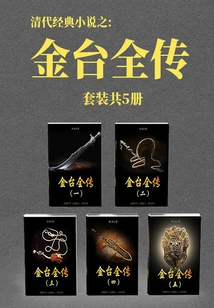
"The Complete Biography of Jintai" tells that the famous prostitutes in Orchid Court are Duohua, Liu Xiaomei and Su Xiaomei, who are famous fireworks women in Yangzhou, with the best appearance and versatile talents. One day, Zhang Qi and Zheng Qian, the sworn brothers of Beizhou's little bully Jin Tai, were joking with three famous prostitutes in the Orchid Garden. They clashed with a hairless insect that came to play - Tantai Leopard, the son of Tantai Hui, the first-grade grand master of the dynasty. With his boxing and kicking skills, Jintai was able to defeat invincible opponents in 72 arenas in the world. His reputation spread far and wide, and he made friends with countless heroes. They agreed to worship Jinshan in the Mid-Autumn Festival in August to support God together. On the rivers and lakes, the thousand-year-old fox fairy saint aunt, Hu Yong'er's mother-daughter monk Hu Yong'er, Zhang Luan and other demons confuse the public, intending to use Jintai and other sworn heroes to fight against the court and seize the country. Hu Yong'er fell in love with Wang Ze, a good friend of Jintai, and proclaimed himself emperor. He occupied Beizhou City, recruited troops, and kidnapped Jintai's mother and sister to threaten him. Jintai was captured several times by the officers and soldiers sent by Tantai Hui, but fortunately, he was rescued by the Holy Aunt and other magicians, and his life was temporarily saved. In the Jinluan Hall, Jintai bravely fights against Nanbang stone monkeys and Japanese boxers. The emperor's favor is so great that he pays homage to the Generalissimo of Pingyang and conquers Wang Ze's lair. Family, friendship, loyalty, filial piety, and righteous deeds, Jintai is in a dilemma. Ancestor Wang Chan, the immortal master of Guigu, gave some advice and gave Xuanyuan the mirror to illuminate the demon. The demons were at a loss and fled into the distance. The false emperor was defeated and committed suicide, and the marshal was granted the title of king and reunited with him.
"The Complete Biography of Jintai" tells that the famous prostitutes in Orchid Court are Duohua, Liu Xiaomei and Su Xiaomei, who are famous fireworks women in Yangzhou, with the best appearance and versatile talents. One day, Zhang Qi and Zheng Qian, the sworn brothers of Beizhou's little bully Jin Tai, were joking with three famous prostitutes in the Orchid Garden. They clashed with a hairless insect that came to play - Tantai Leopard, the son of Tantai Hui, the first-grade grand master of the dynasty. With his boxing and kicking skills, Jintai was able to defeat invincible opponents in 72 arenas in the world. His reputation spread far and wide, and he made friends with countless heroes. They agreed to worship Jinshan in the Mid-Autumn Festival in August to support God together. On the rivers and lakes, the thousand-year-old fox fairy saint aunt, Hu Yong'er's mother-daughter monk Hu Yong'er, Zhang Luan and other demons confuse the public, intending to use Jintai and other sworn heroes to fight against the court and seize the country. Hu Yong'er fell in love with Wang Ze, a good friend of Jintai, and proclaimed himself emperor. He occupied Beizhou City, recruited troops, and kidnapped Jintai's mother and sister to threaten him. Jintai was captured several times by the officers and soldiers sent by Tantai Hui, but fortunately, he was rescued by the Holy Aunt and other magicians, and his life was temporarily saved. In the Jinluan Hall, Jintai bravely fights against Nanbang stone monkeys and Japanese boxers. The emperor's favor is so great that he pays homage to the Generalissimo of Pingyang and conquers Wang Ze's lair. Family, friendship, loyalty, filial piety, and righteous deeds, Jintai is in a dilemma. Ancestor Wang Chan, the immortal master of Guigu, gave some advice and gave Xuanyuan the mirror to illuminate the demon. The demons were at a loss and fled into the distance. The false emperor was defeated and committed suicide, and the marshal was granted the title of king and reunited with him.
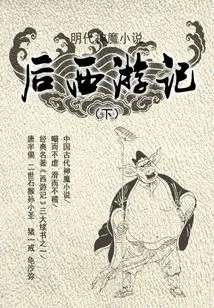
明代神魔小说·后西游记(下)
Anonymous
The novel about gods and demons in the Ming Dynasty tells the story of Monk Tang, who traveled westward for the second time in the Tang Dynasty to seek the true interpretation of Buddhist scriptures because the scriptures he read were obscure. Tang Banjie successively conquered the second-generation stone monkey Sun Xiaosheng who was conceived in the Huaguo Mountain spiritual stone. With the help of Xiaosheng, he conquered the ancient dragon horse that carried the water out of the river, Zhu Yijie, and the Shahe Ninja Turtle Shami. Then, the four masters and disciples traveled westward, first defeating General Heng Ha and then fighting Monk Mei Yin. After that, they dug through the two qi of Yin and Yang, fought against the King of Civilization, and regained the "Spring and Autumn Pen"... The road to learn the scriptures is full of difficulties and dangers. One of the three major sequels to "Journey to the West", the book has a total of forty chapters. Although its influence is not as good as "Journey to the West", it is quite comparable to "Journey to the West" in terms of criticizing current ills and laughing and scolding literary talent.
The novel about gods and demons in the Ming Dynasty tells the story of Monk Tang, who traveled westward for the second time in the Tang Dynasty to seek the true interpretation of Buddhist scriptures because the scriptures he read were obscure. Tang Banjie successively conquered the second-generation stone monkey Sun Xiaosheng who was conceived in the Huaguo Mountain spiritual stone. With the help of Xiaosheng, he conquered the ancient dragon horse that carried the water out of the river, Zhu Yijie, and the Shahe Ninja Turtle Shami. Then, the four masters and disciples traveled westward, first defeating General Heng Ha and then fighting Monk Mei Yin. After that, they dug through the two qi of Yin and Yang, fought against the King of Civilization, and regained the "Spring and Autumn Pen"... The road to learn the scriptures is full of difficulties and dangers. One of the three major sequels to "Journey to the West", the book has a total of forty chapters. Although its influence is not as good as "Journey to the West", it is quite comparable to "Journey to the West" in terms of criticizing current ills and laughing and scolding literary talent.
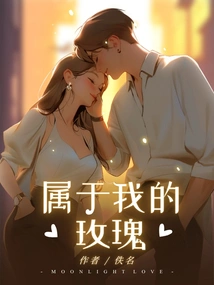
My Rose
Short Fiction属于我的玫瑰
Anonymous
Everyone wonders why the beautiful and outstanding Wu Lanlan is with the ordinary me. I didn't understand it until I saw the photo of her ex-boyfriend. Her ex-boyfriend and I are somewhat similar in terms of height, shape, and appearance. I'm tired and don't want to be a substitute anymore. But Wu Lanlan came back to look for me again. She asked me how long I would continue to make trouble and when I would go back with her. She thought I still loved her. I'm really sorry. I've moved on. My new girlfriend loves me as much as life. I am a hundred times happier than before.
Everyone wonders why the beautiful and outstanding Wu Lanlan is with the ordinary me. I didn't understand it until I saw the photo of her ex-boyfriend. Her ex-boyfriend and I are somewhat similar in terms of height, shape, and appearance. I'm tired and don't want to be a substitute anymore. But Wu Lanlan came back to look for me again. She asked me how long I would continue to make trouble and when I would go back with her. She thought I still loved her. I'm really sorry. I've moved on. My new girlfriend loves me as much as life. I am a hundred times happier than before.
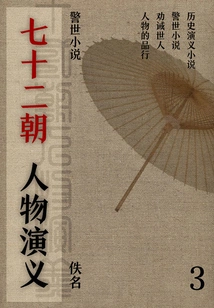
Cautionary Novels: Romance of the Seventy-two Dynasties (3)
General Fiction警世小说:七十二朝人物演义(3)
Anonymous
"The Romance of Characters in the Seventy-Two Dynasties" is also known as "The Romance of Characters in the Four Books of the Seventy-Two Dynasties", with a total of forty volumes. Historical romance novels are a relatively special collection of vernacular novels from the Ming Dynasty. Each volume of the novel contains one article, interpreting a story from ancient times. What is unique is that the characters and events written in these forty texts all originate from the "Four Books", and the titles of each volume are also taken from the original sentences in the "Four Books". Because the characters mentioned in the "Four Books" belong to the Spring and Autumn Dynasties, and "there were seventy-two kingdoms in the world at that time" (Volume 35), they are called "Characters of the Seventy-Two Dynasties". The author intends to exhort the world from both positive and negative aspects through the characters' conduct, so this book can be regarded as a better cautionary novel. There are two versions of this book, the Ming version and the Qing Dynasty Guangxu Dingxi Shanghai Shiwanjuanlou lithograph version. Each volume of the Ming edition has a general comment, a further comment and an eyebrow review, and there is a narrative by Taoist Lei at the front of the book. Li Zhuowu is the author of the "Secret Book of Mr. Li Zhuoxiang" and "Reviews and Portraits of Famous Masters" published by Guangxu and Dingxi in the Qing Dynasty.
"The Romance of Characters in the Seventy-Two Dynasties" is also known as "The Romance of Characters in the Four Books of the Seventy-Two Dynasties", with a total of forty volumes. Historical romance novels are a relatively special collection of vernacular novels from the Ming Dynasty. Each volume of the novel contains one article, interpreting a story from ancient times. What is unique is that the characters and events written in these forty texts all originate from the "Four Books", and the titles of each volume are also taken from the original sentences in the "Four Books". Because the characters mentioned in the "Four Books" belong to the Spring and Autumn Dynasties, and "there were seventy-two kingdoms in the world at that time" (Volume 35), they are called "Characters of the Seventy-Two Dynasties". The author intends to exhort the world from both positive and negative aspects through the characters' conduct, so this book can be regarded as a better cautionary novel. There are two versions of this book, the Ming version and the Qing Dynasty Guangxu Dingxi Shanghai Shiwanjuanlou lithograph version. Each volume of the Ming edition has a general comment, a further comment and an eyebrow review, and there is a narrative by Taoist Lei at the front of the book. Li Zhuowu is the author of the "Secret Book of Mr. Li Zhuoxiang" and "Reviews and Portraits of Famous Masters" published by Guangxu and Dingxi in the Qing Dynasty.
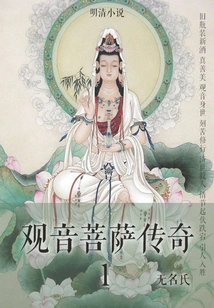
Ming and Qing Novels·the Legend of Guanyin Bodhisattva 1
General Fiction明清小说·观音菩萨传奇1
Anonymous
One of the novels of the Ming and Qing Dynasties, forty chapters, written by: Untitled author, adapted from Zhu Dingchen's "The Life and Practice of Guanyin Bodhisattva in the South China Sea" in the Ming Dynasty, and "The Legend of Guanyin Bodhisattva" by the owner of the Mandala Room in the late Qing Dynasty. It mainly tells the story of Guanyin's life experience, hard practice and saving people. It inherits the original story outline of Guanyin novels from the Yuan, Ming, Qing, and the Republic of China, and creates a new image of the characters in the novel - taking the traditional Guanyin story as the main line, and incorporating a large number of plots about Guanyin from ancient operas, novels, notes and folklore. This Avalokitesvara is not the Great Merciful and Great Compassionate Avalokitesvara Bodhisattva in the Lotus Sutra, but a re-creation of the artistic image that has been collectively created by the people of all ages for more than a thousand years and that combines truth, goodness and beauty in the minds of the Chinese people.
One of the novels of the Ming and Qing Dynasties, forty chapters, written by: Untitled author, adapted from Zhu Dingchen's "The Life and Practice of Guanyin Bodhisattva in the South China Sea" in the Ming Dynasty, and "The Legend of Guanyin Bodhisattva" by the owner of the Mandala Room in the late Qing Dynasty. It mainly tells the story of Guanyin's life experience, hard practice and saving people. It inherits the original story outline of Guanyin novels from the Yuan, Ming, Qing, and the Republic of China, and creates a new image of the characters in the novel - taking the traditional Guanyin story as the main line, and incorporating a large number of plots about Guanyin from ancient operas, novels, notes and folklore. This Avalokitesvara is not the Great Merciful and Great Compassionate Avalokitesvara Bodhisattva in the Lotus Sutra, but a re-creation of the artistic image that has been collectively created by the people of all ages for more than a thousand years and that combines truth, goodness and beauty in the minds of the Chinese people.
Cautionary Novels: Romance of the Seventy-two Dynasties (2)
General Fiction警世小说:七十二朝人物演义(2)
Anonymous
"The Romance of Characters in the Seventy-Two Dynasties" is also known as "The Romance of Characters in the Four Books of the Seventy-Two Dynasties", with a total of forty volumes. Historical romance novels are a relatively special collection of vernacular novels from the Ming Dynasty. This book was written in the late Ming Dynasty, and the author cannot be verified. Each volume of the novel contains one article, interpreting a story from ancient times. What is unique is that the characters and events written in these forty texts all originate from the "Four Books", and the titles of each volume are also taken from the original sentences in the "Four Books". Because the characters mentioned in the "Four Books" belong to the Spring and Autumn Dynasties, and "there were seventy-two kingdoms in the world at that time" (Volume 35), they are called "Characters of the Seventy-Two Dynasties". The author intends to exhort the world from both positive and negative aspects through the characters' conduct, so this book can be regarded as a better cautionary novel. There are two versions of this book, the Ming version and the Qing Dynasty Guangxu Dingxi Shanghai Shiwanjuanlou lithograph version. Each volume of the Ming edition has a general comment, a further comment and an eyebrow review, and there is a narrative by Taoist Lei at the front of the book. Li Zhuowu is the author of the "Secret Book of Mr. Li Zhuoxiang" and "Reviews and Portraits of Famous Masters" published by Guangxu and Dingxi in the Qing Dynasty.
"The Romance of Characters in the Seventy-Two Dynasties" is also known as "The Romance of Characters in the Four Books of the Seventy-Two Dynasties", with a total of forty volumes. Historical romance novels are a relatively special collection of vernacular novels from the Ming Dynasty. This book was written in the late Ming Dynasty, and the author cannot be verified. Each volume of the novel contains one article, interpreting a story from ancient times. What is unique is that the characters and events written in these forty texts all originate from the "Four Books", and the titles of each volume are also taken from the original sentences in the "Four Books". Because the characters mentioned in the "Four Books" belong to the Spring and Autumn Dynasties, and "there were seventy-two kingdoms in the world at that time" (Volume 35), they are called "Characters of the Seventy-Two Dynasties". The author intends to exhort the world from both positive and negative aspects through the characters' conduct, so this book can be regarded as a better cautionary novel. There are two versions of this book, the Ming version and the Qing Dynasty Guangxu Dingxi Shanghai Shiwanjuanlou lithograph version. Each volume of the Ming edition has a general comment, a further comment and an eyebrow review, and there is a narrative by Taoist Lei at the front of the book. Li Zhuowu is the author of the "Secret Book of Mr. Li Zhuoxiang" and "Reviews and Portraits of Famous Masters" published by Guangxu and Dingxi in the Qing Dynasty.
The Romance of Zhaojun
General Fiction昭君艳史演义
Anonymous
The majestic Chinese nation, facing the tyranny of the Chanyu, did not have the courage to deploy elite soldiers, guard the frontiers, advise ministers and strategists, and plan to retreat the enemy. They only sent a woman outside the Great Wall, where she was exposed to the cold wind, her ears heard, and she endured sobs and swallowed her voice. She suffered unspeakably. Isn't this about relying on women to win in the temple? Besides, as the lord of a country or a big country, he should be wise and decisive, and not deceived, so that he can be called the lord of China. Now, instead of appointing a common carnivorous and despicable man to set up a court and take charge of national affairs, so that he has no way to retreat from the enemy, he can find new strategies and beg for mercy from his children to protect the country. Isn't it shameful! Moreover, waiting for the words of the painter, the power of the imperial court to depose was exercised by the humblest and most despicable painter, and a beautiful woman who had conquered the country and was extremely rare was buried alive in the Xiongnu, making her hug the pipa and lament outside the Yumen Pass!
The majestic Chinese nation, facing the tyranny of the Chanyu, did not have the courage to deploy elite soldiers, guard the frontiers, advise ministers and strategists, and plan to retreat the enemy. They only sent a woman outside the Great Wall, where she was exposed to the cold wind, her ears heard, and she endured sobs and swallowed her voice. She suffered unspeakably. Isn't this about relying on women to win in the temple? Besides, as the lord of a country or a big country, he should be wise and decisive, and not deceived, so that he can be called the lord of China. Now, instead of appointing a common carnivorous and despicable man to set up a court and take charge of national affairs, so that he has no way to retreat from the enemy, he can find new strategies and beg for mercy from his children to protect the country. Isn't it shameful! Moreover, waiting for the words of the painter, the power of the imperial court to depose was exercised by the humblest and most despicable painter, and a beautiful woman who had conquered the country and was extremely rare was buried alive in the Xiongnu, making her hug the pipa and lament outside the Yumen Pass!
Combined Biography of Xia and Shang Dynasties (2)
General Fiction夏商合传(二)
Anonymous
"Combined Biography of Xia and Shang", also known as "Unofficial History of Xia and Shang", is a romance-type historical novel in the Ming and Qing Dynasties. "The Combined Biography of Xia and Shang (2)" tells the story of the death of the Xia king and the succession of Kong Jia to the throne. Before the death of the dead king was over, Kong Jia began to drink and eat meat, choose more concubines, have fun day and night, indulge in wine and sex, and ignore political affairs. Kong Jia's various actions caused the rebellion of the people and the decline of the country's fortunes. By the time of Xia Jie, the Shang princes became increasingly dissatisfied with his rule and wanted to rebel. Later, the Xia Dynasty was finally destroyed and the Shang Dynasty was established.
"Combined Biography of Xia and Shang", also known as "Unofficial History of Xia and Shang", is a romance-type historical novel in the Ming and Qing Dynasties. "The Combined Biography of Xia and Shang (2)" tells the story of the death of the Xia king and the succession of Kong Jia to the throne. Before the death of the dead king was over, Kong Jia began to drink and eat meat, choose more concubines, have fun day and night, indulge in wine and sex, and ignore political affairs. Kong Jia's various actions caused the rebellion of the people and the decline of the country's fortunes. By the time of Xia Jie, the Shang princes became increasingly dissatisfied with his rule and wanted to rebel. Later, the Xia Dynasty was finally destroyed and the Shang Dynasty was established.
Combined Biography of Xia and Shang Dynasties (3)
General Fiction夏商合传(三)
Anonymous
"Combined Biography of Xia and Shang", also known as "Unofficial History of Xia and Shang", is a romance-type historical novel in the Ming and Qing Dynasties. "The Combined Biography of Xia and Shang (3)" tells the story of the Shang marquis' army arriving at the city and the fall of the Xia Kingdom. Lu Gui, who had escaped, soon came to fight with nine thousand troops. After many twists and turns, he was caught. Later, Lu Gui was released. In the middle of winter of that year, the princes of the world elected the Marquis of Shang to the throne of Heaven, and became the King of Tang. The Shang Dynasty passed into the hands of King Zhou, who was dissolute and dissolute. Because of Su Daji, everyone rebelled against their relatives. King Wu, with the help of Jiang Ziya and other capable generals, destroyed the Shang Dynasty.
"Combined Biography of Xia and Shang", also known as "Unofficial History of Xia and Shang", is a romance-type historical novel in the Ming and Qing Dynasties. "The Combined Biography of Xia and Shang (3)" tells the story of the Shang marquis' army arriving at the city and the fall of the Xia Kingdom. Lu Gui, who had escaped, soon came to fight with nine thousand troops. After many twists and turns, he was caught. Later, Lu Gui was released. In the middle of winter of that year, the princes of the world elected the Marquis of Shang to the throne of Heaven, and became the King of Tang. The Shang Dynasty passed into the hands of King Zhou, who was dissolute and dissolute. Because of Su Daji, everyone rebelled against their relatives. King Wu, with the help of Jiang Ziya and other capable generals, destroyed the Shang Dynasty.
Combined Biography of Xia and Shang Dynasties (1)
General Fiction夏商合传(一)
Anonymous
"Combined Biography of Xia and Shang", also known as "Unofficial History of Xia and Shang", is a romance-type historical novel in the Ming and Qing Dynasties. "The Combined Biography of Xia and Shang Dynasties (1)" tells that King Yu was the great-great-grandson of the Yellow Emperor, his surname was Si, and he was the son of Gun. He is nine feet two inches long. Gun failed to control the floods, and Yu continued his father's legacy. Yu Shang's father responded to the emperor's order and went to control the flood. Yu Shi married the daughter of the Tushan family and had a son, Qi. After Yu was ordered to do so, he said goodbye to his wife and left home to control the floods. In the process of water control, I really went to heaven and earth. I saw monsters, killed monsters, and subdued monsters. I overcame many difficulties and went through hardships, and finally succeeded in water control. Emperor Shun ordered Yu to be the Great Sikong, the first of the nine officials. After Shun's death, Yu accepted Zen, listened to the people's wishes, and ascended the throne of Yangcheng. His capital was Anyi, and his country was named Xia.
"Combined Biography of Xia and Shang", also known as "Unofficial History of Xia and Shang", is a romance-type historical novel in the Ming and Qing Dynasties. "The Combined Biography of Xia and Shang Dynasties (1)" tells that King Yu was the great-great-grandson of the Yellow Emperor, his surname was Si, and he was the son of Gun. He is nine feet two inches long. Gun failed to control the floods, and Yu continued his father's legacy. Yu Shang's father responded to the emperor's order and went to control the flood. Yu Shi married the daughter of the Tushan family and had a son, Qi. After Yu was ordered to do so, he said goodbye to his wife and left home to control the floods. In the process of water control, I really went to heaven and earth. I saw monsters, killed monsters, and subdued monsters. I overcame many difficulties and went through hardships, and finally succeeded in water control. Emperor Shun ordered Yu to be the Great Sikong, the first of the nine officials. After Shun's death, Yu accepted Zen, listened to the people's wishes, and ascended the throne of Yangcheng. His capital was Anyi, and his country was named Xia.
The Romance of Diao Chan
General Fiction貂蝉艳史演义
Anonymous
By the peony pavilion, I tell my thoughts, and my delicate hands burn incense to tell the world. But I beg Han Zuo to postpone it for now. I don't care about the honor or disgrace of my family. Si Tu was suddenly startled by this remark. What kind of servant could he be? The heroic husband forgets, so why not comment on the affairs of the country in detail. Sure enough, beauty is better than a thousand troops, and a BMW car welcomes Xiaojun. The ingenious plot has been sold since then, and the plan has been carefully planned to build extraordinary achievements. Those who have achieved outstanding achievements and reversed the teachings will be famous throughout the ages. I still recall that when the powerful were treacherous and domineering, all the loyal ministers and righteous men were restrained. Setting up a plan to save the country with red makeup, is it asking a man whether he feels guilty?
By the peony pavilion, I tell my thoughts, and my delicate hands burn incense to tell the world. But I beg Han Zuo to postpone it for now. I don't care about the honor or disgrace of my family. Si Tu was suddenly startled by this remark. What kind of servant could he be? The heroic husband forgets, so why not comment on the affairs of the country in detail. Sure enough, beauty is better than a thousand troops, and a BMW car welcomes Xiaojun. The ingenious plot has been sold since then, and the plan has been carefully planned to build extraordinary achievements. Those who have achieved outstanding achievements and reversed the teachings will be famous throughout the ages. I still recall that when the powerful were treacherous and domineering, all the loyal ministers and righteous men were restrained. Setting up a plan to save the country with red makeup, is it asking a man whether he feels guilty?
Cautionary Novels: Romance of the Seventy-two Dynasties (1)
General Fiction警世小说:七十二朝人物演义(1)
Anonymous
"The Romance of Characters in the Seventy-Two Dynasties" is also titled "The Romance of Characters in the Four Books of the Seventy-Two Dynasties", with a total of forty volumes. The "seventy-two dynasties" in the book are not seventy-two dynasties. Historical romance novels are a relatively special collection of vernacular novels from the Ming Dynasty. This book was written in the late Ming Dynasty, and the author cannot be verified. Each volume of the novel contains one article, interpreting a story from ancient times. What is unique is that the characters and events written in these forty texts all originate from the "Four Books", and the titles of each volume are also taken from the original sentences in the "Four Books". Because the characters mentioned in the "Four Books" belong to the Spring and Autumn Dynasties, and "there were seventy-two kingdoms in the world at that time" (Volume 35), they are called "Characters of the Seventy-Two Dynasties". The author intends to exhort the world from both positive and negative aspects through the characters' conduct, so this book can be regarded as a better cautionary novel. There are two versions of this book, the Ming version and the Qing Dynasty Guangxu Dingxi Shanghai Shiwanjuanlou lithograph version. Each volume of the Ming edition has a general comment, a further comment and an eyebrow review, and there is a narrative by Taoist Lei at the front of the book. Li Zhuowu is the author of the "Secret Book of Mr. Li Zhuoxiang" and "Reviews and Portraits of Famous Masters" published by Guangxu and Dingxi in the Qing Dynasty.
"The Romance of Characters in the Seventy-Two Dynasties" is also titled "The Romance of Characters in the Four Books of the Seventy-Two Dynasties", with a total of forty volumes. The "seventy-two dynasties" in the book are not seventy-two dynasties. Historical romance novels are a relatively special collection of vernacular novels from the Ming Dynasty. This book was written in the late Ming Dynasty, and the author cannot be verified. Each volume of the novel contains one article, interpreting a story from ancient times. What is unique is that the characters and events written in these forty texts all originate from the "Four Books", and the titles of each volume are also taken from the original sentences in the "Four Books". Because the characters mentioned in the "Four Books" belong to the Spring and Autumn Dynasties, and "there were seventy-two kingdoms in the world at that time" (Volume 35), they are called "Characters of the Seventy-Two Dynasties". The author intends to exhort the world from both positive and negative aspects through the characters' conduct, so this book can be regarded as a better cautionary novel. There are two versions of this book, the Ming version and the Qing Dynasty Guangxu Dingxi Shanghai Shiwanjuanlou lithograph version. Each volume of the Ming edition has a general comment, a further comment and an eyebrow review, and there is a narrative by Taoist Lei at the front of the book. Li Zhuowu is the author of the "Secret Book of Mr. Li Zhuoxiang" and "Reviews and Portraits of Famous Masters" published by Guangxu and Dingxi in the Qing Dynasty.
Dream
Literature梦
Anonymous
Wei Yang Yuanzhen was able to interpret dreams. Wang Yuanyuan of Guangyang dreamed of leaning on a locust tree wearing a robe and asked Yuanzhen. Yuan Zhen said that he should win the Three Lords, so he retreated and said: "After death, I will win the Three Lords' ears. The locust tree is close to the ghost." The fruit was killed by Er Zhurong and presented to Situ.
Wei Yang Yuanzhen was able to interpret dreams. Wang Yuanyuan of Guangyang dreamed of leaning on a locust tree wearing a robe and asked Yuanzhen. Yuan Zhen said that he should win the Three Lords, so he retreated and said: "After death, I will win the Three Lords' ears. The locust tree is close to the ghost." The fruit was killed by Er Zhurong and presented to Situ.
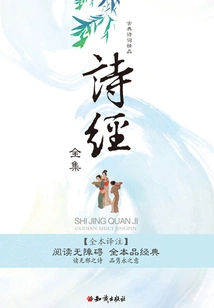
Complete Works of the Book of Songs
Literature诗经全集
Anonymous
There are 305 existing poems in "The Book of Songs", including folk songs and temple music dating from the early Western Zhou Dynasty to the middle of the Spring and Autumn Period, which are divided into three chapters: "Wind", "Ya" and "Song". Generally speaking, it reflects the social outlook of the Zhou Dynasty and the people's thoughts and feelings. Reading it is like reading a history of the development of the Zhou people from Houji to the middle of the Spring and Autumn Period. Han Yu called the outstanding artistic techniques of "The Book of Songs" "pa", and Wang Shizhen said "it is like a painter's portrait", which means that the poet is good at creating many lifelike characters, as vivid and beautiful as flowers. This artistic realm is inseparable from his high achievements in language art. Among them, the commonly used expression techniques summarized by predecessors are Fu, Bi and Xing.
There are 305 existing poems in "The Book of Songs", including folk songs and temple music dating from the early Western Zhou Dynasty to the middle of the Spring and Autumn Period, which are divided into three chapters: "Wind", "Ya" and "Song". Generally speaking, it reflects the social outlook of the Zhou Dynasty and the people's thoughts and feelings. Reading it is like reading a history of the development of the Zhou people from Houji to the middle of the Spring and Autumn Period. Han Yu called the outstanding artistic techniques of "The Book of Songs" "pa", and Wang Shizhen said "it is like a painter's portrait", which means that the poet is good at creating many lifelike characters, as vivid and beautiful as flowers. This artistic realm is inseparable from his high achievements in language art. Among them, the commonly used expression techniques summarized by predecessors are Fu, Bi and Xing.
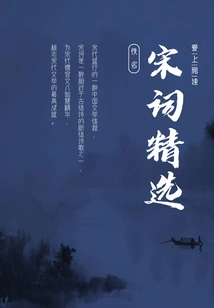
Selected Song Poems
Literature宋词精选
Anonymous
The language of poetry is the best material for people to cultivate their language ability and literary literacy, and to learn and master the art of language. The content of the poems touches on patriotism, love in the boudoir, sorrow of separation during a journey, frontier scenery, chanting of history and objects, pastoral landscapes, and folk customs. They may be exquisitely conceived, poetic or picturesque, have local characteristics, or have profound meanings. It reflects the historical characteristics of the Song Dynasty and the artistic trajectory of the development of Song Ci.
The language of poetry is the best material for people to cultivate their language ability and literary literacy, and to learn and master the art of language. The content of the poems touches on patriotism, love in the boudoir, sorrow of separation during a journey, frontier scenery, chanting of history and objects, pastoral landscapes, and folk customs. They may be exquisitely conceived, poetic or picturesque, have local characteristics, or have profound meanings. It reflects the historical characteristics of the Song Dynasty and the artistic trajectory of the development of Song Ci.
Orchid
Literature兰
Anonymous
Ancient Chinese poetry is the earliest literary genre formed in Chinese literature and the most fully developed.
Ancient Chinese poetry is the earliest literary genre formed in Chinese literature and the most fully developed.
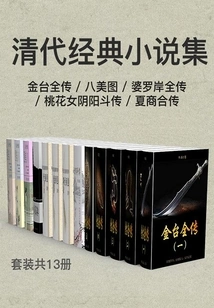
清代经典小说集:金台全传+八美图+婆罗岸全传+桃花女阴阳斗传+夏商合传(套装共13册)
Anonymous
This set of books includes a total of 13 volumes including "The Complete Biography of Jintai in 5 volumes", "Eight Beautiful Pictures", "The Complete Biography of Borneo", "The Peach Blossom Girl's Yin and Yang Fight" and "The Combined Biography of Xia and Shang in 3 volumes". "The Story of Jintai" and "The Complete Story of Jintai" describe that the famous prostitutes in Orchid Court are Duohua, Liu Xiaomei and Su Xiaomei, who are famous fireworks women in Yangzhou, with the best appearance and versatile talents. One day, Zhang Qi and Zheng Qian, the sworn brothers of Beizhou's little bully Jin Tai, were joking with three famous prostitutes in the Orchid Garden. They clashed with a hairless insect that came to play - Tantai Leopard, the son of Tantai Hui, the first-grade grand master of the dynasty. ... "The Eight Beautiful Pictures" has a total of thirty-two chapters. It was published in the Qing Dynasty, and the author cannot be verified. The story of the book revolves around the joys and sorrows experienced by Liu Shuchun, a native of Hangzhou in the Song Dynasty. The plot is tortuous and full of interest. The author has created eight beauties with distinctive images. They are full of personality, rebellious and unyielding, and are different from traditional women. Therefore, they are unforgettable to read, but at the same time they are rejected by people. The book describes many love stories between men and women, and is also full of deviant flavor. Therefore, it was criticized by conservative people at the time and was even burned.
This set of books includes a total of 13 volumes including "The Complete Biography of Jintai in 5 volumes", "Eight Beautiful Pictures", "The Complete Biography of Borneo", "The Peach Blossom Girl's Yin and Yang Fight" and "The Combined Biography of Xia and Shang in 3 volumes". "The Story of Jintai" and "The Complete Story of Jintai" describe that the famous prostitutes in Orchid Court are Duohua, Liu Xiaomei and Su Xiaomei, who are famous fireworks women in Yangzhou, with the best appearance and versatile talents. One day, Zhang Qi and Zheng Qian, the sworn brothers of Beizhou's little bully Jin Tai, were joking with three famous prostitutes in the Orchid Garden. They clashed with a hairless insect that came to play - Tantai Leopard, the son of Tantai Hui, the first-grade grand master of the dynasty. ... "The Eight Beautiful Pictures" has a total of thirty-two chapters. It was published in the Qing Dynasty, and the author cannot be verified. The story of the book revolves around the joys and sorrows experienced by Liu Shuchun, a native of Hangzhou in the Song Dynasty. The plot is tortuous and full of interest. The author has created eight beauties with distinctive images. They are full of personality, rebellious and unyielding, and are different from traditional women. Therefore, they are unforgettable to read, but at the same time they are rejected by people. The book describes many love stories between men and women, and is also full of deviant flavor. Therefore, it was criticized by conservative people at the time and was even burned.
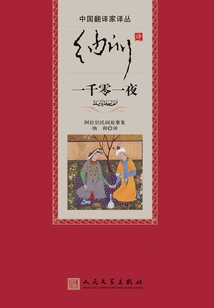
纳训译一千零一夜
Anonymous
"One Thousand and One Nights", also known as "Arabian Nights", is a collection of Arabic folk tales. According to legend, a king hated his queen for being selfish and killed her. From then on, he married a girl every day and killed her the next morning. In order to save the innocent woman, the prime minister's daughter voluntarily married the king and told stories every night to arouse the king's interest. Her story was told for a thousand and one nights, and finally the king was influenced.
"One Thousand and One Nights", also known as "Arabian Nights", is a collection of Arabic folk tales. According to legend, a king hated his queen for being selfish and killed her. From then on, he married a girl every day and killed her the next morning. In order to save the innocent woman, the prime minister's daughter voluntarily married the king and told stories every night to arouse the king's interest. Her story was told for a thousand and one nights, and finally the king was influenced.
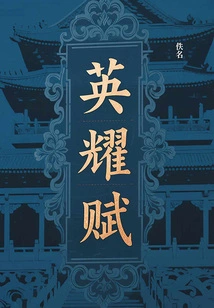
Ying Yao Fu
Literature英耀赋
Anonymous
The "traditional classics" secretly passed down by the magicians of the Ming and Qing Dynasties belong to the category of "Secret Techniques of Scarf Boxes". The article takes the "skill of observing people" as the core and summarizes the skills of manipulating the other party through observing words and emotions and psychological speculation, such as "beautiful first and then frightening" (praising first and then scaring), "questioning and judging" (insinuating others) and other speech strategies. Although they contain political power, they reflect the practical wisdom of ancient social psychology and language manipulation.
The "traditional classics" secretly passed down by the magicians of the Ming and Qing Dynasties belong to the category of "Secret Techniques of Scarf Boxes". The article takes the "skill of observing people" as the core and summarizes the skills of manipulating the other party through observing words and emotions and psychological speculation, such as "beautiful first and then frightening" (praising first and then scaring), "questioning and judging" (insinuating others) and other speech strategies. Although they contain political power, they reflect the practical wisdom of ancient social psychology and language manipulation.
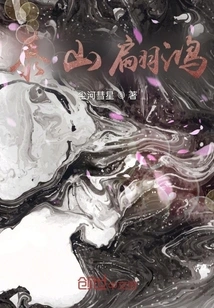
Taishan Pianhong
Martial Arts泰山翩鸿
Anonymous
This is a story caused by four treasure maps, a legend that spans a hundred years; the rise and fall of a dynasty, the rise and fall of a world. The rivers and lakes are not far away, the temples are not high, Mount Tai is not heavy, and feathers are not light. A pot of turbid wine, the hero drinks it slowly.
This is a story caused by four treasure maps, a legend that spans a hundred years; the rise and fall of a dynasty, the rise and fall of a world. The rivers and lakes are not far away, the temples are not high, Mount Tai is not heavy, and feathers are not light. A pot of turbid wine, the hero drinks it slowly.
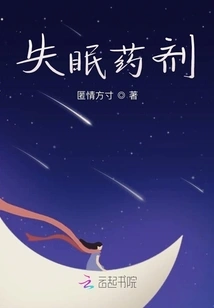
Insomnia Potion
Short Fiction失眠药剂
Anonymous
The store sells medicines to treat insomnia, which are colorless, odorless and have no side effects. Potions are made up of small stories. In the stories, we can become princesses, princes, witches and monsters, we can grow wings and fly, and fly into the universe without breathing. Here there are also joys and sorrows, greed, anger, obsession, love and evil. The shop owner opens her business at ten o'clock. A pair of skillful hands weaves a dream net, ringing the copper bell of this world. The door slowly opens with a crackling sound...
The store sells medicines to treat insomnia, which are colorless, odorless and have no side effects. Potions are made up of small stories. In the stories, we can become princesses, princes, witches and monsters, we can grow wings and fly, and fly into the universe without breathing. Here there are also joys and sorrows, greed, anger, obsession, love and evil. The shop owner opens her business at ten o'clock. A pair of skillful hands weaves a dream net, ringing the copper bell of this world. The door slowly opens with a crackling sound...
Flower Farmer·empty Lantern
General Fiction花农·空灯
Anonymous
The emperor's uncle came to seize the imperial seal. The palace people were panic-stricken and knelt down in the courtyard. The queen called Song Xiaoman into the back room: "Take Yuxi and Hang'er away." The two-year-old prince Lu Yuanhang was fed half a tranquilizing pill by the queen and fell asleep soundly. His biological mother, Concubine Cen, held him in her arms and wept. There was a moment of sadness in the queen's eyes. Her emperor husband had been assassinated, and her son Lu Shunqi, the prince, had been imprisoned. She could not save him. The secret passage is under the lotus pond. When the queen first moved into Beichen Palace, she secretly ordered the craftsmen to dig and build it, but the power was stronger than the others. Song Xiaoman cried and begged the queen to go with him. He was good at water and would protect her even if he died. The queen smiled: "Have you ever seen a queen living among the people? In the forbidden palace, you have to be conscious of death. What's more -"
The emperor's uncle came to seize the imperial seal. The palace people were panic-stricken and knelt down in the courtyard. The queen called Song Xiaoman into the back room: "Take Yuxi and Hang'er away." The two-year-old prince Lu Yuanhang was fed half a tranquilizing pill by the queen and fell asleep soundly. His biological mother, Concubine Cen, held him in her arms and wept. There was a moment of sadness in the queen's eyes. Her emperor husband had been assassinated, and her son Lu Shunqi, the prince, had been imprisoned. She could not save him. The secret passage is under the lotus pond. When the queen first moved into Beichen Palace, she secretly ordered the craftsmen to dig and build it, but the power was stronger than the others. Song Xiaoman cried and begged the queen to go with him. He was good at water and would protect her even if he died. The queen smiled: "Have you ever seen a queen living among the people? In the forbidden palace, you have to be conscious of death. What's more -"
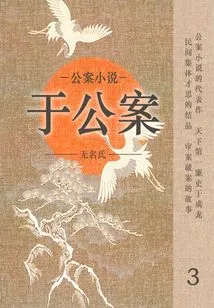
Public Case Novel·yu Public Case 3
General Fiction公案小说·于公案3
Anonymous
"Yu Gongan" is one of the representative works of public case novels, and is listed as the representative work of Chinese public case novels along with "Bao Gongan", "Shi Gongan", "Hai Gongan", "Peng Gongan" and "Di Gongan". This book mainly tells the story of Yu Chenglong, the "most honest official in the world" in the Qing Dynasty, who tried and solved crimes, and repaints the image of Yu Chenglong as an honest and resourceful person. The storyline in the book has ups and downs and the process of solving the case is full of twists and turns. It contains both real history and artificially processed imagination.
"Yu Gongan" is one of the representative works of public case novels, and is listed as the representative work of Chinese public case novels along with "Bao Gongan", "Shi Gongan", "Hai Gongan", "Peng Gongan" and "Di Gongan". This book mainly tells the story of Yu Chenglong, the "most honest official in the world" in the Qing Dynasty, who tried and solved crimes, and repaints the image of Yu Chenglong as an honest and resourceful person. The storyline in the book has ups and downs and the process of solving the case is full of twists and turns. It contains both real history and artificially processed imagination.
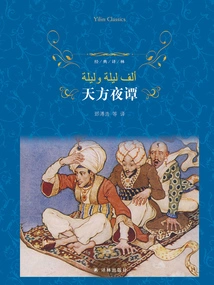
Arabian Nights (classic Translation)
Literature天方夜谭(经典译林)
Anonymous
"The Arabian Nights" is a collection of ancient Arabian folk tales. The origin of the story is that a king wanted to marry a woman every night and kill her the next morning to eliminate his resentment because his queen had an affair. The prime minister's daughter voluntarily married the king in order to save the women in the country, and told the king a story every day, such as "The Fisherman and the Devil", "Alibaba and the Forty Thieves", "The Adventures of Sinbad"... She told the story for a thousand and one nights, and finally influenced the king. The content of this book covers everything, big stories within small stories, the plot is fantastic and strange, and the rhythm is distinct. The book often skillfully combines majestic emperors and ordinary people, common flowers, birds, fish, insects, and imaginary gods, demons, and monsters into philosophical and thought-provoking stories. The protagonist's courageous performance in fighting against fate, dealing with nature, and fighting against various difficulties and obstacles on the road to success is presented to readers. Reading it feels like being there, and you can't bear to put it down. Also translated as "One Thousand and One Nights".
"The Arabian Nights" is a collection of ancient Arabian folk tales. The origin of the story is that a king wanted to marry a woman every night and kill her the next morning to eliminate his resentment because his queen had an affair. The prime minister's daughter voluntarily married the king in order to save the women in the country, and told the king a story every day, such as "The Fisherman and the Devil", "Alibaba and the Forty Thieves", "The Adventures of Sinbad"... She told the story for a thousand and one nights, and finally influenced the king. The content of this book covers everything, big stories within small stories, the plot is fantastic and strange, and the rhythm is distinct. The book often skillfully combines majestic emperors and ordinary people, common flowers, birds, fish, insects, and imaginary gods, demons, and monsters into philosophical and thought-provoking stories. The protagonist's courageous performance in fighting against fate, dealing with nature, and fighting against various difficulties and obstacles on the road to success is presented to readers. Reading it feels like being there, and you can't bear to put it down. Also translated as "One Thousand and One Nights".
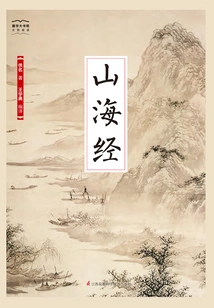
山海经(国学大书院)
Anonymous
The explanation is simple, the annotations are concise, the translation is accurate and vivid, "The Classic of Mountains and Seas" is an ancient book compiled by many people from the Warring States Period to the early Han Dynasty. The records in the book are mainly myths, and the scope is huge. In addition to preserving a large amount of mythological materials, it also touches on all aspects of the academic field, such as religion, philosophy, history, ethnicity, astronomy, geography, animals, plants, medicine and other subjects. The content is all-encompassing and can be called an encyclopedia of daily life at that time.
The explanation is simple, the annotations are concise, the translation is accurate and vivid, "The Classic of Mountains and Seas" is an ancient book compiled by many people from the Warring States Period to the early Han Dynasty. The records in the book are mainly myths, and the scope is huge. In addition to preserving a large amount of mythological materials, it also touches on all aspects of the academic field, such as religion, philosophy, history, ethnicity, astronomy, geography, animals, plants, medicine and other subjects. The content is all-encompassing and can be called an encyclopedia of daily life at that time.
The Legend of White Snake
Slice of Life白蛇传
Anonymous
In the sky, a colorful cloud floated across. Above the colorful clouds, there is a man holding a Buddhist bead and wearing a rough yellow shabby Arhat shirt. While he kept moving the clouds to look down at the world, he was still chanting: I can recite Amitabha Buddha, and twist the beads in my hands. I have traveled all over the sky and the earth, and my high reputation will not change the Dharma Sea Immortal. Take a look, take a look, there are philistines and butchers walking around the streets, and now they are going to save a few of them in front of the Buddha, in front of the Buddha.
In the sky, a colorful cloud floated across. Above the colorful clouds, there is a man holding a Buddhist bead and wearing a rough yellow shabby Arhat shirt. While he kept moving the clouds to look down at the world, he was still chanting: I can recite Amitabha Buddha, and twist the beads in my hands. I have traveled all over the sky and the earth, and my high reputation will not change the Dharma Sea Immortal. Take a look, take a look, there are philistines and butchers walking around the streets, and now they are going to save a few of them in front of the Buddha, in front of the Buddha.
Military Love Letter (1971)
General Fiction军旅情书(1971)
Anonymous
Comrade Xiao Wu: Hello, the training date is getting closer and closer, and time is getting tighter and tighter. I originally wanted to have a good talk with you, but due to time constraints, it is no longer possible. Just write a few sentences and share my opinions. We have met twice, the first time more hastily, the second time more carefully. After coming back, strange to say, your impression always comes to my mind. I wonder, is your image deeply embedded in my mind? It seems a little too fast! Someone had introduced me to people inside and outside the military before, but no matter how good the conditions were, they still failed to tempt me. But since I saw you at the dinner table that night (2nd), a kind of admiration has arisen in my heart.
Comrade Xiao Wu: Hello, the training date is getting closer and closer, and time is getting tighter and tighter. I originally wanted to have a good talk with you, but due to time constraints, it is no longer possible. Just write a few sentences and share my opinions. We have met twice, the first time more hastily, the second time more carefully. After coming back, strange to say, your impression always comes to my mind. I wonder, is your image deeply embedded in my mind? It seems a little too fast! Someone had introduced me to people inside and outside the military before, but no matter how good the conditions were, they still failed to tempt me. But since I saw you at the dinner table that night (2nd), a kind of admiration has arisen in my heart.
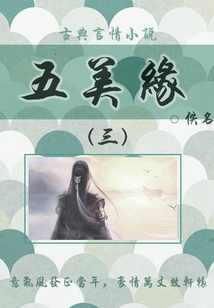
Classical Romance Novels: Five Beautiful Marriages (3)
General Fiction古典言情小说:五美缘(三)
Anonymous
"Five Beauties" is a famous romance novel that was quite famous when it was first published. It was also a novel that had been banned. Readers who are interested in this kind of classical literature must read this book. The book tells the story of the marriage between scholar Feng Xu and five beauties. Among them, the protagonist goes through many twists and turns and hardships, and finally marries the five beauties, achieving the "five beauties". The book is full of praise for women, but at the same time there are also some plot descriptions that exaggerate the love between men and women. In the Qing Dynasty, it was classified as an "obscene book" and was also banned. The work is quite distinctive in terms of artistic expression: the storyline is vivid and fascinating; the characters are numerous and full of personality, especially the description of the five beauties. They have distinct personalities, changing the model of women in previous novels being weak and dependent on others for survival, and writing about their strong characters. The structure of the book is rigorous and dense; the writing style is vivid and rich, and the events, characters and scenes written are as if they were there, and the images are vivid. The writing is simple and interesting, with endless aftertaste, making it hard to put down after reading it.
"Five Beauties" is a famous romance novel that was quite famous when it was first published. It was also a novel that had been banned. Readers who are interested in this kind of classical literature must read this book. The book tells the story of the marriage between scholar Feng Xu and five beauties. Among them, the protagonist goes through many twists and turns and hardships, and finally marries the five beauties, achieving the "five beauties". The book is full of praise for women, but at the same time there are also some plot descriptions that exaggerate the love between men and women. In the Qing Dynasty, it was classified as an "obscene book" and was also banned. The work is quite distinctive in terms of artistic expression: the storyline is vivid and fascinating; the characters are numerous and full of personality, especially the description of the five beauties. They have distinct personalities, changing the model of women in previous novels being weak and dependent on others for survival, and writing about their strong characters. The structure of the book is rigorous and dense; the writing style is vivid and rich, and the events, characters and scenes written are as if they were there, and the images are vivid. The writing is simple and interesting, with endless aftertaste, making it hard to put down after reading it.
Farewell Time
General Fiction告别时分
Anonymous
What a surprise to meet you so far away. Yes, it's like an arranged joke. When was the last time we met? Three years ago, I didn't see you again for three whole years. It was a good time, that's when you remember someone. --Have you ever thought of me for anything in the past three years? I can't remember, but I will always think of you because of something. Do you still remember my name? Yes. But you never called me by my name, especially when I met you so far away. Yes, when I met you three years ago, I never called you by your name. He recalled the situation when they met, but he couldn't think of a very precise impression.
What a surprise to meet you so far away. Yes, it's like an arranged joke. When was the last time we met? Three years ago, I didn't see you again for three whole years. It was a good time, that's when you remember someone. --Have you ever thought of me for anything in the past three years? I can't remember, but I will always think of you because of something. Do you still remember my name? Yes. But you never called me by my name, especially when I met you so far away. Yes, when I met you three years ago, I never called you by your name. He recalled the situation when they met, but he couldn't think of a very precise impression.