"Li Qingying, tell me, what is home?"
"Home is this: if I have to die for it, then you must live on for it."
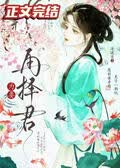
Yun An: Gentle, but stubborn as a nail. [She takes the road less traveled, and fate can't stop her.]
Li Pian: Mercifully mad. [He'd give his life to save the world, and even swallow a dagger for it.]
Bei Gong Rongrong: Sweet, soft, and adorable. [Being a person is so hard.]
Lin Jiaosheng: A young man who pulls the strings behind the scenes. [You can trust him.]
*
Li Pian, Lord of Liangzhou, is said to be shameless, loveless, and utterly without conscience. Perhaps that's why Yun An rejected him three times, and then some.
The first time, she knelt on the ground and begged him to cut all ties with her.
The second time, she chose the women's army over her husband.
The third time, she cast aside her love for him completely and walked toward her own future.
It was only the fourth time that she finally accepted him.
That night, beneath the glow of red candles, they drank their wedding wine and sat facing one another. They agreed that one of them would die, and the other would live.
*
Bei Gong Rongrong never imagined she would make such a reckless choice, wagering everything she had, as well as the boundless kindness Lin Jiaosheng had shown her. Now she often falls into a deep sleep, and no one knows when she'll wake.
"Young Master, don't be angry with Rongrong." She repeats those words in her dreams. But Lin Jiaosheng is outside her dreams, and he can't hear her.
Thankfully, whenever Rongrong wakes, Lin Jiaosheng is there by her side. Being able to accompany each other through this broken life is more than enough for them.
*
Three thousand nights in Dunhuang, ninety thousand days of snow.
Lay the nobleman's bones to rest, before the peaks are buried.
It was Li Pian, only Li Pian, standing alone amid the blazing flames. He endured the pain and looked back at the woman he loved one last time.
"My lady, from now on, let your tears fall only for your homeland. Don't cry for me. I'm not worth it."
Reading Guide
1. Two equally strong leads, with plenty of intense push and pull. Bittersweet, with a touch of sweetness.
2. An ensemble cast. The male and female leads appear in the prologue, and the second leads appear in Chapter One. The fates of all four characters are intertwined. The main couple are endgame; the second leads aren't a secondary couple, but two "monsters" who help each other keep living.
3. A serious historical drama. It doesn't focus solely on the leads or on romance.
4. Historical fiction, not a goofy, lighthearted story, though the author is trying to include some strange jokes to keep the narration from becoming too heavy.
5. Set in the obscure and unusual period of the Wei, Jin, Southern and Northern Dynasties, during the Sixteen Kingdoms and Five Barbarians era. The characters and events are fictional, the timeline differs somewhat from official history, and Dunhuang's fate is different as well.
6. Most references to historical texts, Buddhist scriptures, clothing, food, travel, and daily life have been researched; a few details are invented.
7. 1v1, SC, HE.
Theme: Make the most of a short life










After watching Dun Jiu, I'm going to start talking about my feelings again. For the first time, I felt the difference between "compassion" and "compassion" so intuitively and shockingly. "Compassion" means sacrificing one's life and marching toward death, being gentle and firm, and using one's mortal body to protect three thousand living beings. "Compassion" is the innate softness in the heart, knowing that something can be done and doing it, and rescuing someone. Maybe that's why not everyone can become a Buddha, and maybe that's why everyone can become a Buddha. "Compassion" rises to the level of "universal love", coupled with the missing word "compassion", one sees the suffering of all living beings and feels compassion, and one's heart feels sad for it. I have heard the story of the prince of Sazhuo who sacrificed his life to feed the tiger before, but I was just confused. The prince knew that the tiger was a living being and was saddened that the tiger was about to die. Why didn't he know that he was also a living being and that he would die after making a decision? After watching the Lord of Liangzhou commit suicide on the Burning Tower and all the people sending the prefect off in mourning, I suddenly understood. It is precisely because I know that I am also a living being and a mortal body that I understand the pain of that tiger and those three thousand living beings more deeply. Perhaps when you are about to die, you have already forgotten your own mortality, or you may be more aware that you are about to die, but there is always a firm tenderness in your heart: to protect thousands of living things. At this time, all the pain, abuse and misunderstanding... Are all self-inflicted. And doesn't this firmness come from the compassion that everyone has? Mustard seeds are Sumeru, and Sumeru is mustard seeds. Compassion for an ant struggling in the mire is the same as compassion for thousands of living creatures struggling in the mire. Therefore, compassion for the tiger is compassion for others, and compassion is compassion. I have thought that if Sister Qingming only wrote about Li Liangzhou's self-immolation in order to defeat the tens of thousands of troops, would the story be more shocking and sharper? Later, I thought that Li Pian came back from the dead and obtained an intact body, which was not a kind of self-salvation. Just like the prince of Sazhuo sacrificed his life to feed the tiger, whoever sacrifices his life will be saved, but it is not necessarily certain. The prince who feeds the tiger saves not only the tiger, but also himself. This is like a kind of reincarnation. Saving others means saving oneself, and showing mercy to others means showing mercy to oneself. I think this design gives the story a higher spiritual connotation. The scenes of snow at night in Liangzhou, whether gentle or cold, all leave us deeply moved. After talking about Li Pian in the spotlight, Yun An stopped talking. The same firmness and gentleness are the Qilian Cangxue, even if it melts, it penetrates into the land that gave birth to me and raised me. The promise of "one life, one death" seems so heavy and tragic when you think about it. I particularly like the many girls with different personalities in the Detachment of Women! They may not have a name in history (referring to having a name hhhhh in Sister Qingming's article), but the Detachment of Women is such a warm and steadfast big family! They supported each other, grew up together, and gave each other new life. Why can't a woman draw a sword and stand on horseback? The sound of dragon spring on the wall every night! Yun An said that a woman can also pick up a knife and go out into the world. She should keep moving forward and never look back. I was so moved to see a group of girls laughing and playing, but also resolute and courageous, crossing swords and leaping horses... I am very grateful that there are groups of girls in history who have paved a way for future generations of women and opened new possibilities to more women. Then give our furry another kiss! So cute! The three non-human cats, dogs, and foxes in the book are each cute and lively in their own way. They are thick and honest yet brave, loyal to death, and Sui'er cunningly seeks out the love of the sea of hatred... What is also touching is that our colander brother is really brave in his own way... There is so much rambling, I really like this story... Sister Qingming, don't be tired and don't rest! I will read whatever you write www
Thoughts after reading "Ninety Thousand Snows in Dunhuang" This is a book that makes me feel healed and happy. Although I have little talent and no literary talent, I am worried that what I write will not have any insights, but I still write a little bit to give myself an explanation. Regarding Li Pian, I would like to say that living with tolerance is far more difficult than dying happily. His life has been too tiring, and he has suffered too many misunderstandings, slanders and even injuries, but why would he choose that way? I think it's because his heart is big enough to contain all living things in Dunhuang City. Compared with these, personal reputation, interests and even blessings are nothing. If what you want to do is destined to be questioned, and it may not have good results, then the motivation that can make people persist is faith and mission. Sister Qingming once expressed in her lyrics before that people in the world have limited energy, and they only have enough to live their own grain of ashes. To a certain extent, this may be a blessing, as one does not have to shoulder the family's future, nor does one have to bear heavy social responsibilities; but it is also a kind of sadness, as one will drift with the world from time to time, easily believing in rumors and jumping to conclusions. I wonder if I were one of those people, would I believe the rumors and add fuel to the flames? Many things cannot be based solely on what others say. You need to experience, verify, and form your own judgment. Even if it is just a grain of ashes, we should do our best in this short life. After reading about Yun An, the Detachment of Women and other women, I, a boy, started to think about how to view feminist works. The topic of feminism has been very hot in recent years, and it discusses not only women, but also men, and how the two genders get along with each other. I used to think that respecting every unique person would be great. Why must we emphasize gender? Then I thought about it, women are women, and there are some natural and cultural differences between men and women. We need to recognize the uniqueness of the female gender. If we blindly advocate genderlessness or genderlessness, it may cause greater harm to women. For example, women's fears about marriage and childbirth, and doubts about gender-based abilities. These are issues that men rarely face and need to be discussed and seen. Feminism is not as simple as "who said women are inferior to men", but rather chooses to look at women equally and grasp the complexity of women as human beings. The success of women is not just about doing what men can do. Whether she chooses to pursue a career or become a housewife, whether she comes from a noble or humble background, whether she is an introvert or an extrovert, every woman can control her destiny, get what she wants, and fulfill her wishes. In this book, the author's sister chose to discover the valuable qualities of different women. In addition to the heroine Yun An, she also wrote about Yun An's mother. Her beauty and gentleness are also a beauty in Yun An's heart. Lin Wei's mother, Mrs. Jin, is understanding and tolerant of her son. Song Manhe, who has a gentle and kind personality, chose to accompany Li Pian to grow up when he was grieving, and the strong women in the Detachment of Women who came from humble backgrounds but always chose to make decisions for themselves. When I saw them sitting around drinking and chatting, to be honest, I was quite envious. The friendship between girls is very warm. The women in the book show different beautiful qualities that women can have from different aspects. In such an era, some qualities could not be recognized. As a result, some people were destroyed, while others went to a greater abyss. The book also writes about the alienation of women by the environment. This is the story of Song Chenghe. Originally, she and Yun An were both people who longed for freedom, and in terms of the degree of resistance to the oppression of fate, I think she was not inferior to anyone in the book. Unfortunately, after she had no hope of resisting the patriarchal system, she chose to harm those weaker than her in the environment. She could not accept that her pride was hit, and turned to fight internally. This way of resistance is very embarrassing, and I feel sorry for her. In history and reality, people like Song Chenghe are not uncommon, but the degree is not that extreme. Some people, because of irreparable regrets, incurable pain, and persistence, try to gain a sense of control over their destiny by controlling lower-ranking people. I'm worried that I will become that person, but how can I break it? I remember Sister Qingming once wrote something like this: "It is better to treat suffering as a piece of ashes, don't think about how to wipe it clean, and don't be led by it, just let it exist - pain can make life more vivid." I think only people with compassion can write such words as "Pain can make life vivid." My own thinking is: continue to move forward with the scars, and tell myself not to be afraid; at the same time, go inward and settle myself. Another thing I like about this book is that it writes group portrait stories against a grand historical background. See the small details to see the big things, and combine personal life experiences with the grand issues of the times. On the one hand, it makes the times more concrete, and on the other hand, it also allows readers to see the crux of the individual destiny of the times, such as what happened to Wang Xiaonv in the book. Able to shuttle between macro and micro, personal emotions, family and country righteousness, family politics, and social systems are cleverly integrated together, allowing readers to see a full story. In addition, I have to admire my sister's efforts in historical research. Although it is a novel, it also has a sense of history, which is probably rare among online novels. The story also contains a lot of the author's thoughts on life, which is worth savoring. The setting of spiritualization in the book is also very interesting. It is the first time I have seen this kind of writing. In previous literature, animal spirits were often personified. The animals were determined to cultivate themselves into human beings, and they got used to it just by looking at them. So I was a little surprised when I first saw this setting. I didn't know what effect it would have if I wrote it this way. But it's very good to read it all the way. It can show the nature of animals and let people understand the thoughts of animals themselves rather than humans. Doesn't it also reflect the equality between all things? It also adds interest to the story. Finally, I want to talk about love. Let's talk about the love between men and women first. Love has suffered too much criticism nowadays, and many people no longer believe in love. I read sister Qingming's writing notes before, and one of them mentioned that people do not reach love through love, but through another person to love. Therefore, no matter how the times and people's hearts change, love itself is innocent. Yes, love may make people passionate and sad, but it can also become a person's invincible courage, allowing him/her to explore the beautiful possibilities in life despite fear. Many people have suffered the pain of love in reality and choose to look for pure love in literature and art, which shows that they still believe in "love". "If you don't love your family, why would you come to this world?" People who love each other, as long as they love sincerely enough, will definitely look towards the common ideal and move towards the magnificent world. Just like Yun An finally understood that the Detachment of Women and the Lord of Liangzhou were never contradictory. The decisive female general can also be full of affection. As long as the love is grand enough, she can embrace all the emotions in her arms. This is a powerful and affectionate book. Thanks to Sister Qingming, the love, beauty, and courage in the book will become my spiritual strength, inspiring me to stride forward into this magnificent world with my head held high.
After watching it, I feel very shocked! The most touching thing is the contrast between "If it wasn't for pain, why would we come to this world" and "If it wasn't for love, how would we come to this world" (I don't know if I remember correctly ww). They are both very good people who spend their whole lives to find the most magnificent love. In addition, I went to Gansu a few days ago for Dunjiu! (Hahaha, I ran from the south of the Yangtze River to the northwest. In places like Yumenguan Thousand Buddha Cave, there are layers and layers of desert sand and mountains. It seems that you can see the traces of Chang Ning and the others. Even in the small space in the museum display cabinet, you can guess how people stared at these artifacts thousands of years ago. The Mogao Grottoes are also particularly beautiful. Art from faith can really make people find peace deep in their hearts. However, due to the tight schedule, I could only stay in Dunhuang for two days. I really wanted to see a snow in Dunhuang. However, the weather forecast originally said that it would snow on a certain day, but then it stopped. In the end, I was reluctant to get on the train back to Lanzhou. I bought a sleeper for the night, but it was very bumpy... In the end, I was woken up by the cold in the early morning. I lit the lamp and looked outside. I found that the mountains outside were all white. They were not covered with snow all year round but seemed to be new. It spread all the way to the horizon, like "walking along the river on the snowy seaside." The trees beside the railway tracks were also covered with a layer of blue, and they felt white and cool when they touched the windows. My heart trembled at that time, hahaha. The snow in the northwest is very fine, just like yellow sand - from the inexperienced southerners (I almost slipped on the road several times when I finally went to Lanzhou to catch a plane.
Sister Qingming is really good at everything she writes, and her literary skills are so profound. Whether she is writing lyrics or novels, seeing the clip of Qingqing reading the forty-two chapters of the Sutra immediately reminded me of Liu Mei, the girl in the dream of immortality. I would rather break my heart and bask in the flames than bear it. But this time it is HE, and I like HE even more!
There are three thousand big worlds in Buddhism, but in the eyes of Yun Changning and Li Qingqing, there is only one home in the world. How can it be said that Wuyi and his son share the same clothes? In the Dunhuang night under the heavy snow, two people kneeling opposite each other are wrapped in the same big cloak. How can they say that Wuyi and their sons share the same clothes? General Cui did not After giving birth to thousands of daughters, how can it be said that there are no clothes to wear with them? In front of their home country, a group of people with grudges are twisted into one. In this magnificent and fantasy city of Dunhuang, I believe that there is a small world that once played out their story ❤️ ❤️ ❤️
After working the night shift in the early hours of the morning, I finally finished chasing "Dun Jiu" by Sister Qingming. After reading the entire novel, I returned to the beginning of the introduction, which is the song Rong Rong sang, and I had more feelings... "Three thousand Dunhuang nights and ninety thousand snowy days, please collect the bones of this gentleman and bury him in front of the peaks." The previous "three thousand" and "ninety thousand" are explained in the article. I think the last two sentences not only refer to Li Qingqing's ending, but also an expression of the spirit of the group portrait. The male and female protagonists are not people who give up their little ones in troubled times. At the end of the episode, Yun Changning gave the two adopted children the surname Cui (the surname of Ning Zhi's master). It can be seen that they value the inheritance of the Detachment of Women's Army more than themselves. "Although the light is extinguished, the lamp and furnace will still remain." There are too many loyal bones buried on the land of Yumenguan, but whether they are alive or dead, they are all "gentlemen" in the introduction. "Bone" is a belief, because they have a common spirit of self-sacrifice to protect their homeland. This persistence will eventually affect and be deeply buried in the hearts of future generations. I feel that Sister Qingming really likes the element of snow. The sentence in Sister Lin's fourth story "September 23" is "Because snow is a martyr, only giving, not taking." In this novel, it also fits Chang Ning, Lightness and every creature guarding the city... Be the person who admires flying snow first, Then I become that snow again.
Absolutely 😭 😭 😭 I particularly like Sister Qingming's writing style, some structural techniques, and Sister Qingming's expression of feminism. My sister is super awesome!!!!!
If I were to use one English word to describe Li Qingqing and Yun An, I would choose "desperate" - countless "desperate" moments from the snow in Dunhuang to the misty rain in the south of the Yangtze River, and countless "desperate" (desperate) rescues on this long road. Although their stories are complete, they will be continued by countless people in their lives. I also wish everyone a more successful year in 2025, and by the way, I wish you a great success in the first exam in 2025 (hahaha~)
I finally finished watching it, and my heart became heavier and heavier as I watched it. Fortunately, they all got what they wanted. Thanks to Sister Qingming for the magnificent world she writes about. We will meet again in the next world!
I finished reading "Ninety Thousand Snows in Dunhuang" in one sitting in the past two days. The ingenious narrative sequence has a feeling of thousands of twists and turns, and the spirit conveyed in the book makes people feel breathless after reading it. The best brothers and sisters have gained the happiness they deserve. Dunhuang, which is tolerant and honest, has always been full of vitality. The dead soldiers have returned to bliss, and the Women's Army that has been passed down has always grown and developed in an orderly manner. Thank you Sister Qingming for bringing us such a good work! At the same time, the many annotations in the work also gave me a deeper understanding of Buddhism and the Sixteen Kingdoms period, which I didn't know much about.