A lucky elf decides to run away from home. Her journey brings war, farewells, distant travels, and a calling.
A coming-of-age love story about two kindhearted ordinary people whose dream is to spend centuries traveling all across Middle-earth together.
The ancient and mysterious land of Middle-earth conceals light within its darkness. It teaches travelers the purest of truths: history shapes the future, and choice brings rebirth.
Starlight x Greenleaf
Magic powerhouse x warrior powerhouse
Thranduil's adopted daughter x elven prince
Mature young one x childish older one
*The main plot covers The Hobbit: The Battle of the Five Armies and The Lord of the Rings trilogy. The original plot and original material are split about evenly. My writing skills are limited, so the focus is on growth and romance. I also can't research every detail thoroughly, so please point out any mistakes. I'll fix what I can; otherwise, treat it as a headcanon. Also, the author firmly believes that people can overcome fate, which may conflict with the divine system and some of the "divine will" ideas created by Tolkien.
*Names follow the translations used in the theatrical releases of The Lord of the Rings and The Hobbit. They don't follow Tolkien's translation rules; I'm simply used to them, so consider it a bit of nostalgia. Just read it! As long as you can understand it, that's enough!
*The female lead is a native of Middle-earth, descended from the Light Elves. Her ancestors witnessed the light of Telperion, the male White Tree, and unexpectedly gained an ability called "Insight."
*Characterization: The female lead grows over the course of the story and remains imperfect throughout. Greenleaf's characterization follows The Lord of the Rings series, with some elements from The Hobbit series. His age follows the movies.
*The romance between the female lead and Legolas gets started late, and takes a long time to develop. The female lead has a one-sided crush. The male lead has a one-sided crush. They also have mutual "crushes." Happy ending.
*Thranduil and his adopted daughter don't have a warm, affectionate father-daughter relationship (though their relationship is real, even if it isn't warm). They challenge each other, and he carefully nurtures her. There is some one-sided effort.
A mountain of headcanons, a few of which are listed below:
*"Insight" can be considered a type of elven power. At first, it only allows her to look back into the past. As it grows, it develops into foresight and deduction. It works through sensory impressions, such as sight, sound, smell, or touch. What she gets are only impressions, which she must interpret for herself. It can affect any visible target, except people or things more powerful than she is. It fits the Western Fantasy setting: the greater the power, the greater the cost.
*Clergy. I couldn't find any material on elven clergy, so this idea is inspired by the widespread worship of Varda. The specific details and activities are based on ancient Greek priests.
*Mental communication. In the original setting, all elves can communicate telepathically. For the sake of the plot, this story has only powerful elves, or elves with objects of great power, able to communicate telepathically in one direction.
*Immunity to fatigue. In the original setting, elves are immune to fatigue. For the sake of the plot and characterization, elves here have greater stamina than other beings but still get tired and need rest.
*Elven adulthood. In the original setting, elves marry after the age of 50, which can presumably be considered adulthood. This story changes that age to 100.
*Tauriel's characterization follows the movies, with the headcanon that her bloodline is connected to Thranduil's queen.
*Sindar and Noldor. I couldn't find out whether Thranduil's line had a feud with the Noldor in the original works, so please assume they didn't.
*Names of elven characters. Unless otherwise specified, the names of all original elf characters in this story draw on mythology, drama, and modern meanings, rather than elven naming conventions. Astraea is named after the Greek goddess of justice, stars, and purity. Her name also means "star maiden" in Greek. She is not a deity in this world.
*Languages. Sindarin and Quenya are not distinguished by symbols in the story. Both use corner quotes, and single quotes within double quotes use hollow corner quotes. The language of the Black Men uses square brackets.
Cover artist: Ye Shu
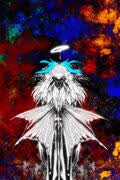
Character card artist: AileenWuornos
Theme: History shapes the future, and choice brings rebirth.







Keep improving, we will wait for the author to bring better stories 🌈
So fat, I like it! Like! I will come to watch it often, although I always forget the previous plot
Is this a great period of ambiguity? It feels like both parties are in a bitter secret love🙏
I have saved a lot of chapters! Take a look
How to face the loss of relatives and friends in a long life 😭 😭 I recently rewatched The Hobbit and the Lord of the Rings movie, and saw that the once young Bilbo has become as old as Gandalf. I feel that the friendship between the long and short species in Middle-earth is really sad 😭 😭
It's so well written [Spread][Spread][Spray] I feel the flavor of Middle-earth.
"Tears came to his eyes, but he said the snow was too dazzling..." I recommend everyone to watch "Murder on the Orient Express" 😣
Tied... What a beautiful text 🤩 I can still read the Chinese-Turkish text in 2026, so touching.
Boromir is really my favorite character (sad)
When will it be updated next?