[Three female leads, no male lead]
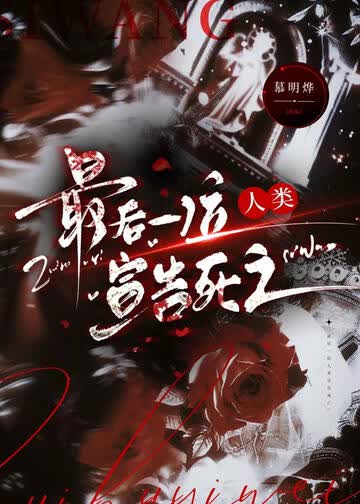
In the 23rd century, only two countries remain in the world: A and B.
Country A is technologically advanced. It implants brain chips in all citizens at age seven, allowing them to acquire all the knowledge taught in middle school within three years.
However, some people suspect that the chips are controlled by technology companies and can manipulate people's consciousness.
This became the subject of Zhao Guanming's thesis: What is the relationship between chips and human consciousness?
A second-year doctoral student in social sciences, Zhao Guanming plans to join a research institute in Country A after graduating from the Institute of Intelligent Machines.
To complete her signature academic work, she must travel to Country B to conduct field research. A handful of unmodified humans still live there, making them possible research subjects.
Zhao Guanming knows this research will be extremely difficult.
Relations between Countries A and B are unstable. Chip-implanted people and unmodified humans have nothing in common, and her personal safety cannot be guaranteed.
She has no money and no staff, only a passionate commitment to research. Fortunately, she finds a solution to the financial problem and reaches the habitat of Country B's unmodified humans with two companions.
What she doesn't expect is that this will bring about the downfall of an entire people...
*
“We look at the present through a rearview mirror, and march backward into the future.”
--Marshall McLuhan, Understanding Media
[Writing Background]
“Media materiality” holds that media have agency just as humans do. In traditional thinking, people treat media as tools or vessels, seeing them as objects that serve us. Media materiality turns this idea on its head, arguing that “media shape, and even produce, human beings.”
For example, with the advent of smartphones, we have become less dependent on the sun's rising and setting to tell time, and instead arrange our lives according to the phone's “cyborg time.” To some extent, we could say that smartphones shape our perception of time.
Classic theorists of media materiality include Latour, with Actor-Network Theory, and Graham, with Object-Oriented Ontology. Of course, the work that has influenced me most is Haraway's A Cyborg Manifesto. It is essential reading for posthumanism, and has the subtitle “Science, Technology, and Socialist-Feminism in the Late Twentieth Century.”
I don't fully agree with Haraway's criticism of communism, but she offers a way of thinking about alliances with things that might provide a breakthrough for advancing socialism in the future.
We can see that, as AI develops, capital and technology are increasingly colluding to drive industrial change. The result is that wave after wave of people are cast out of the system and become surplus populations. AI renders their means of making a living obsolete, leaving them unable to rejoin the division of labor. Under these circumstances, humans and AI are locked in a struggle to the death.
But competition is part of the logic of capitalism, and this kind of competition cannot fundamentally improve workers' lives. Instead, it reinforces the logic that people must fight desperately to “become the rule makers.” This prompts us to consider the question, “In an age of developing media, how is socialism possible?” It is also the central question this book explores.
Haraway's book was published in the 1980s. Many issues we face today were beyond her expectations, and many are questions that our generation must consider.
I will follow the theoretical threads of Haraway, Deleuze, and others, and try to map out a path toward the future. This will take a great deal of thought and study. I've been thinking about it for a while, but still haven't found an answer, so I may need to wait until I have a comprehensive understanding of these issues before I begin writing. This is a book about the future. I hope that after writing it, I will also be able to offer practical advice on governing the country.
Theme: Technology is a double-edged sword
 Writing a Sweet Historical Romance for a Friend, GB
 A Philosophical Ramble
 I Heard I'm the Killer? [Mystery]
 Writing Essays
 The Lock
 Mumu's Reading Notes
 (Short Story Collection) The Watermelon Field Chronicles
 A Novel About an Author Who Can't Write a Novel
 Melon Field Diary, Notes of Inspiration
 Homework, Film Reviews, and Essays
 JX3: Changge Sect's Romance Handbook
 Limbus Company Daily Life [Limbus Company + Library of Ruina + Lobotomy Corporation]