
I Don't Want to Skate Either [Figure Skating]
我也不想滑冰的[花滑]
- Status
- Ongoing
- Length
- 425k Words
- Genre
- Romance
- Era
- Modern Era
- Updated
- 5d ago
- Source
- JJWXC
Synopsis
107Chapters
983Favorites
4.9kNutrient gifts
761Clicks per chapter
977Comments
In booklists 3


Sports Novels I Enjoyed
Some I haven't finished, some I've read many times, some are derivative works, some are originals, and some have sports elements that play a relatively minor role.
12Books0Follows


Competitive Sports Novels
Some well-written competitive sports novels, personal preferences, no guarantees
11Books1Follows
Competitive Sports Novels
Some well-written competitive sports novels, personal preferences, no guarantees
11Books0Follows
More by this author
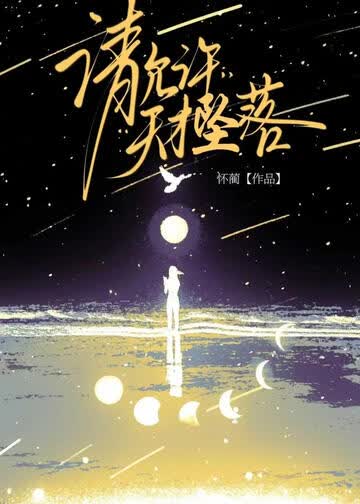 Please Let the Prodigy Fall [Figure Skating]
 Half-Ripe Melon [Badminton]
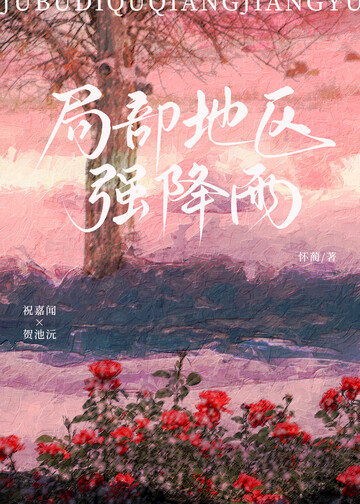 Local Heavy Rainfall [Reborn]
 The Forecast Is Sunny [Entertainment Industry]
 Orange Peels Bloom [Small Town]
 Peonies and Roses [Figure Skating]
 Year After Year, I Never See the Capital
 The Name Left Behind in Summer
 We Got Lost in the River of Time
 Save Me
Reader comments 25
Translated by Google Translate
In this chapter, we can clearly see the difference between Xiao He and Xiao Ye. When they were young, Xiao He and Xiao Ye were both ambitious, optimistic and chattering little girls. Now Xiao He is calm and rational, and will pull away all emotions to look at himself from God's perspective, and feel confused and guilty. However, Xiao Ye suppresses his excitement under his strong ambition and thinks about the feasibility of his victory in his emotions. As an aside, I feel that Xiaohe is very in line with the current psychological situation of contemporary people. (Under the current economic downturn, people from every class of society will be affected. They are confused and passive. After rising up to resist, the effect is very little and then they fall flat. Many industries have even entered a stagnant state, making it difficult to make waves. They are confused and entangled. The stagnant fog lingers over the entire society) (Is this the reason why rental house literature is gradually gaining momentum now?) Especially those in adolescence like Xiaohe, who are both ambitious and struggling with whether their own strength can keep up, are like green branches bent by the dewdrops caused by the heavy fog, struggling to branch out. Xiaoye is very different (the 1980s and 1990s were an era of economic prosperity, and it became even more obvious after 2008. It can be seen from the 2008 Olympics that even though the socio-economics is not very developed, there is a positive social atmosphere). So I privately feel that Xiaoye is affected by this atmosphere and is a positive and reliable big sister. (A digression from the topic, to be honest, I was initially attracted by the strong atmosphere of the northeastern town in Xiaoye. I personally liked the social climate at that time, and even entered the Ajin Northeast Cultural Zone. Later I found out that it was about skating sports competition) (Back to formal digression) Based on these views, the two people are reflections of different eras here, rooted in the same cause, like torches passed down from generation to generation, similar but very different. Maybe it is because at the beginning of this article, I felt that the two were very similar, but now I suddenly realized that they are different, and I sighed a lot. It may also be my own fault. Oh, by the way, if there are friends who see this who don't know Xiaoye, you can read the author's book "Peony Rose" (is it an advertisement?)
Hello, author teacher. I take the liberty of using the comment section of the latest chapter to make some comments that may not be mature or relevant, but I like your work very much. Both the writing style and some of the understanding of figure skating in the work touched me, so I wrote these nonsense. The introduction of this article reminds me of the cross-border pairing in Guangxi. Their difficulty is still lacking but their aura is overflowing. The career of female partner Yang Yixi was like a flash in the pan. It was a pity that she died when everyone was looking forward to making steady progress. (In the introduction, I saw that the teacher was also watching figure skating, so I took the liberty of mentioning real-life athletes. I apologize if it is inappropriate, but you can remind me to delete it). I hope that children who have had similar experiences in this story can have a different ending, and that He Jiasui and Ying Fengnian can shine in every field they choose (not a meal replacement, not an insinuation, just an association with a similar background, please remind me to delete if it is inappropriate) The chapter that touched me the most and decided to subscribe and follow up without hesitation was the chapter "Figure Skating Hurt Me", which portrayed the subtle and complex psychology of athletes very well and hit me deeply. "Competitive sports seem to be a wilderness. But they are bound by results and expectations, and the road is narrowed. They can't see the end point clearly, and they can't help themselves. The only thing they can do is to keep walking." Yes, in competitive sports, the winners have always written history. All transparent, open-minded, positive and optimistic speeches come from interviews with successful people. Although correct, there is always a sense of "hindsight" (no derogatory meaning, just ridicule). The pain, self-pity and even regret behind this are rarely noticed and mentioned. The well-known player himself who made the decent remarks is probably the one who is least willing to elaborate. Strong love and strong hate are one, pure ideals and realistic reputations are intertwined. We understand that the ice is never pure white, but neither is the player's heart. They are most likely not pure white idealists bent only on self-realization. They are not that perfect and are not always shining beacons of ideal light. They are likely to be overwhelmed by their achievements and expectations, feel overwhelmed and confused about the future, and even be swallowed up by these things. "How figure skating does not harm everyone equally. Achievements can give her a taste of the sweetness, and she falls in love with this sport briefly and unconditionally. But in more ordinary days and nights, she will be occupied by radical ideas. When to stabilize the swallow turn, when the edge of the right foot can be as good as the left foot, and when to practice the next triple jump. Greedy and unconvinced, she allows them to run around and wants to tear these bad qualities into pieces. Love and hate dance in her mind every day, and she becomes a tangled person." He Jiasui works hard and is strong, and loves but struggles with it. She pursued her dreams but was held back by her ranking. She is ambitious, but she is also hampered by her ambition. She felt happy because of some benefits, but she also felt resentful of her limited human body and resentful of this project with a very low input-output ratio. She may want to be an undistracted idealist, but reality and love and hate turn her into a tangled person. This may not seem glamorous, but it is exactly what athletes do. This bloody, disgraceful but complex and true psychological analysis moved me. However, just like Trusova said angrily that she hated figure skating but insisted on staying on the ice (only analogy, not innuendo, please remind me to delete if inappropriate), only extreme love and ambition can give birth to such subtle hatred. True heroism is to still love life after seeing its true nature. Even after the players hated it, they still embraced the stained ice without hesitation, trying to make it shiny again with their blades and lives. Just like the chapter title "Figure skating ruined me", the introduction is followed by "But some are friends on the same front." I am never alone on the road, there are always people who share the same path. All in all, it was very moving and emotional. The introduction says that he will switch to solo in the future and compete for the solo world championship, but the most successful double switch can be traced back to Christie Yamaguchi in the 6.0 Era. She had a strong jumping talent, and the difficulty of solo skating in that era had not yet begun to involute. Xiaohe Xiaoying started late, and secondly, when he switched to singles, the women's singles can still use the forbidden background to avoid the environment of inward quadruple jumps (guess first, will this be used in the background? After all, it is better to achieve results by switching to doubles in the singles!), While the men's singles have already completed the difficulty explosion in the Pyeongchang cycle, and have fully entered the era of wholesale quadruple jumps (and the male partner of the double is often tall and is not conducive to results), which is not a small challenge for both children. However, I believe that the teacher's figure skating skills can give a convincing answer, and I am looking forward to it! Children will have a bright future!! PS: Because I like the teacher's works very much, I read the teacher's previous works and pre-collections. In terms of figure skating, the teacher seems to be particularly fond of the theme of "late bloomer", and his writing is quite fluent and self-consistent. In figure skating, an industry that thrives on youth, late bloomers are inherently a one-in-a-million talent. People without talent are completely unworthy of being late bloomers, and will only be stepped on by their predecessors and run over by the new generation. Competitive sports is originally a field that depends on age. The so-called late bloomer is just that the outstanding talent and hard work have finally been realized in the second half of the career... Maybe Rainbow Fart is a bit exaggerated, but the teacher is indeed the author who has written the point of late bloomer best in my mind. In a sense, the two children in this book who are dual-to-single are also late bloomers! They will surely be brilliant in the future. Finally, thank you very much for your creation, teacher!
Happy National Day, boss! (Boss, take a look at wb's private message. Let's discuss the characters and hairstyles of Ye Ji and He Ying 🙏 🐶, I will draw a fanart for you! 🐰)
It is probably a Russian technique to jump out without relying on the male partner but relying on the female partner's own strength. It is completely different from the domestic technology and needs to be relearned... The advantage is that it reduces the male partner's physical consumption and is stable. At present, it is very suitable for Xiaoying's wrist injury. The disadvantage is that it is particularly dependent on the quality of the female partner and the height of the throw and jump is limited, which may affect the GOE... But who would be willing to make a choice and change direction if it is not injured? It's not easy having two kids.
Already waiting for JGP [][][]
In a sense, it is the end of the world line. It overlaps with some absurd rules of reality and still makes people laugh (unintentional misinterpretation of the content and excessive connection with reality, I will delete it if I apologize). There are no heroes who have been verified by international competitions and brought fame and quotas. Coupled with the treatment, the so-called "selection" is just to facilitate secret operations (or even open operations) to serve one's own power. If you can get the reputation, it belongs to your own power. If you don't get the honor, you still get the qualification for the international competition (it can even be said that you have grabbed someone else's opportunity). What Xiaohe and Xiaoying have to face is that the gradually approaching age of seventeen is not only a broader stage for the adult group, but also the ugly and maggoted side of the project that is more blatantly presented to everyone by the adult group...
Coming, coming! It seems like I'm late 🙏
Dear author, can I give you some advice? I saw that your column has opened another pre-collected figure skating article. I would like to make some suggestions, that is, the narrative of the protagonist's youth group is too long. There are dozens of chapters where the male and female protagonists are involved in the youth group, which is too wordy and lengthy. I think everyone should know that what everyone likes to see is the excitement of the protagonists' adult bodies fighting in competition, so using too much space to describe the experiences of the youth group is really too easy for people to read. It is recommended to shorten the narrative of the youth group, try to describe it clearly within three to five chapters, and then switch to the youth group. The larger the narrative is more interesting in the youth group and the adult group [Compare your heart][Compare your heart][Compare your heart] Great support
Are you stuck here? Ahhhhhhhhhhhhhhhhhhhhhhhhhhhh!!
[Purple Sugar] I got it. It's so ambiguous.