In the third month of the thirty-sixth year of Tianyou, under the Great Yue dynasty, the Di Yan invaded from the south, taking city after city with unstoppable force. At last, their armies reached the capital and laid siege to Yujing.
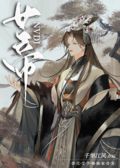
With the dynasty on the brink of collapse, the emperor hurriedly abdicated. The princes all tried to pass the burden to one another, until nineteen-year-old Princess Shaoyi, Zhong Fanwei, ascended the throne, becoming the first empress in one hundred and sixty years.
As the realm teetered and the people panicked, almost no one had faith in this princess, whose name had been little known in her early years.
Yet on the day the new ruler was crowned, an army marched in from the princess's fief, crushed the Di Yan cavalry, and lifted the siege of Yujing.
The empress stood atop the city wall, her calm gaze hidden beneath a twelve-streamer crown. Outside Yujing, the elite troops she had built stood in solemn ranks, their armor and weapons gleaming ominously.
The world stared in astonishment. Where had this princess, driven from the capital and exiled to her fief years ago for angering her father, found an army? Where had she found the grain and money to support it?
The people of the realm did not yet know that this was only the beginning of their amazement.
In her lifetime, the empress reclaimed lost territory, drove out foreign invaders, brought order to the court, reformed corrupt policies, and ushered in an age of peace and prosperity. History would call it the Tiansheng Restoration, an achievement without equal.
Later generations were just as baffled. This empress, raised in the inner palace as a child, never permitted to set foot in court, and practically thrust forward to bear the blame for the dynasty's fall, who had taught her to command armies? Who had taught her to govern?
No one knew. The history books preserved only the empress's cryptic words: "I received instruction from the sages of my ancestors."
.
When Zhong Fanwei was seven, she saw in a dream the future in which her country fell and her family perished when she was twenty-two.
With no one to turn to, she could only save herself.
Fortunately, she had the aid of a treasure of the state, and nine lifetimes in her dreams to draw upon.
In those long dreams, she saw an emperor wage war in every direction and unify the realm; a general win glory and return victorious from campaigns against the Qiang and Yi; a prince of the imperial clan dispel the clouds and restore peace; an empress dowager rule from behind the curtain and keep the state serene; a ruler endure hardship and finally quell a rebellion; an emperor usher in a new golden age and bring peace to the four seas; a princess speak out for the people and the nation; a princess travel thousands of miles to marry for peace and prevent a war; and an imperial descendant rise from nothing to answer the nation's call in its hour of need...
Across eight thousand li of mountains and rivers, and three hundred years of history, she accompanied the ancestors whose names would live on in the annals, sharing their tumultuous lives and witnessing every rise and fall since Great Yue was founded.
When she returned to the beginning, she was seven years old, with a little over fourteen years remaining before the dynasty's fall.
The legends of her ancestors had come to an end. Her own legend would begin now.
.
P.S.
1. This is not a conventional quick transmigration story (or is it slow transmigration?). The heroine transmigrates to different points in time within the same world. The setting is entirely fictional, with plenty of original worldbuilding.
2. The main story is about self-cultivation, putting one's family in order, saving the country, and bringing peace to the world (?). There are nine arcs plus the present-day world. There are a great many supporting characters, and the story spans a very long time. I doubt I can finish it in under a million words; it might even run to two or three million. Each of the nine volumes has three parts: "A Dream's Body" covers the arcs after transmigration; "Fire Within Stone" covers the present-day world; and "A Horse Between the Cracks" fills in the story from supporting characters' points of view and can be considered extra chapters. The main supporting characters will be listed in each chapter's summary. There is no paywall lock percentage, so feel free to skip chapters.
3. There is a male lead, and he is the only one; he doesn't have multiple personalities. He disappears for long stretches from time to time, but remains present throughout the story. As the blurb says at the beginning, the heroine becomes empress. The male lead is her subordinate, and fights alongside her to conquer the realm. You can think of him as marrying into her family. They will have children, who will take the heroine's surname, since her family really does have a throne to inherit. This is a plot-driven story, so romance doesn't take up a large share, but I have put real effort into the romance. I honestly don't recommend this story to readers who don't want to see a male lead or only want to read about women's awakening and struggle...
4. The romance in the first arc has a tragic ending: the heroine marries an ordinary passerby. He barely appears on-page and dies after only a few years, but she can't marry someone without anything happening between them. This passerby really does have several wives and concubines, so if that bothers you, I recommend skipping the story. Readers with specific expectations for the male lead can still give it a try. Aside from the heroine and his mother and older sister, he has little to no relationship with any other women or female creatures.
5. This is a slow-burn, very long story, and it contains a lot of seemingly pointless lyrical passages. The heroine is not a naturally strong, self-aware woman. At the start, she is spoiled and timid, with neither ability nor resolve. She doesn't clearly decide what she wants to do until Chapter 19, and doesn't decide to fight for power until Chapter 34. She won't want to become empress during the first three volumes. The coronation takes place near the end of Volume Nine, so please don't read if that bothers you.
6. This is not a story focused solely on the female lead. There are many supporting-character storylines and scenes, featuring both men and women (see the character profiles). Some characters have official pairings, and others are single. I may get carried away writing supporting-character storylines. I can only promise that the protagonists won't be reduced to foils for the supporting cast, so please don't read if that bothers you.
7. I don't expect to make a living from writing, and I don't have the ability to get rich from it. I'm writing the story I want to write, and it will contain only what I want to write. What I write is what I want, not what others think I ought to write. [I will not accept writing advice except for genuine typos or genuine logical inconsistencies.] If this story isn't for you, you can always find another author and another story. The world is big enough to make room for me and my imagination. After all, my parents and elders, my teachers and classmates, and my friends, both men and women, have all accepted that I have thoughts of my own.
Theme: Rely on yourself rather than others.



Here I go again. The description of psychological activities can be simplified and not too straightforward. In each volume, Shuangqing will have different insights, and more space can be used for those that have a major impact on the state of mind. Or divide the psychological activities into different plots to avoid the concentration of large sections of psychological activities.
Come on come on! Just keep writing!
Dad, are you coming back? 😂
It's 2026, don't you think about giving us a sudden update for the college entrance examination 🥺 🥺
See it! We are finally crossing the river. Wangxiang and the others will become Shaoyi's companions in resisting Di Yan many years later!
I feel that everything else is pretty good. I mainly want to ask if the plot summary in the copy can be arranged in the order of the copy... (Whisper)
There is a small question about the reign name. At present, it seems that each emperor only has one reign name. Hewan lived in the Yuanyou year of Emperor Min's period, and was beheaded in the 30th year of Yuanyou, followed by his migration to the south. But the article says that Zhenghe moved to the south, and the reign name of Emperor Ping was Yuanhe. So when was Zhenghe?
Do I feel okay personally? ... Actually, it's quite interesting to see the background stories behind them... (I just can't tell the difference between the ancestors, emperors, etc.) Maybe there are some irrelevant things that I can add to the story?
First let me put down my little bench
When will you be back?