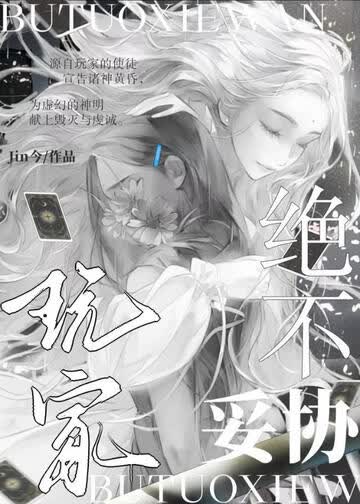
The "Player" took advantage of Steam's lowest-ever sale price and bought an indie game called "Confession of a False God" for 99% off.
It had a Lovecraftian art style and hardcore mechanics. The description was just one line: "Recruit Apostles, purify anomalies, confess to false gods."
The "Player" casually created four character cards, put them together into a team called "Apostles," then clicked [Enter Instance].
The game interface was far too realistic.
The details of Yokohama's map were frighteningly lifelike. The fog drifted, and something seemed to writhe in the shadows of the buildings.
The NPC programming was ridiculously advanced, too
And those monsters called "anomalies" were so distorted that they defied all conventional modeling logic. They drained the "Player's" sanity until their scalp tingled.
The "Player" could only devote all their attention to controlling their four team members.
Fortunately, the cards the "Player" drew were strong!
It's just that the game was far too difficult, almost as if it wasn't made for the "Player" to play
The mission [Contain Anomalies] required the "Player" to precisely locate and seal those indescribable "BUGs" on the streets of Yokohama, where supernatural abilities, cursed spirits, and Nen users all converged.
The final mission, [Confession of a False God], was even more outrageous. The "Player" had to control the Apostles, make contact with the world's most powerful "False God" units, and send them a fixed text notification.
The gaming experience was deeply unsettling
The "Player" followed the walkthrough, but the NPCs reacted differently every time, as if they had minds of their own.
The rewards for completing missions weren't achievement pop-ups. Instead, the game library filled with fragments of diaries, unfamiliar surveillance footage, and recordings of encrypted communications the "Player" couldn't understand.
The "Player" had even received what seemed to be a warning-filled "System error message" from a "False God" unit.
The "Player" just thought the game was incredibly immersive.
The "Player" never wondered why the game had no official website or community, and why they were the only "Player."
The "Player" never looked too closely at what those all-too-real "game graphics" and "NPC reactions" might mean.
After all, it was just a game. Right?
*
Theme: Kindle a spark with a tiny will, and protect humanity's last vestiges of truth and dignity from an ineffable corruption.
 After Cosplaying Paul Verlaine, I Transmigrated into the Original Story
 Can You Fall in Love at First Sight with Another Version of Yourself?
 Can a Test Subject Become a Savior and Save the World?
 Has Melisandre Made a Friend Today?
 Short Story Ideas in Progress
 Keep Fighting to Survive on Meteor Street and in France
 My Monster Lover in a Box
 With a Partner Like Me, What Time Are You Coming Home, Ranpo?
 Rimbaud Once Suspected Verlaine of Running a Pig-Butchering Scam