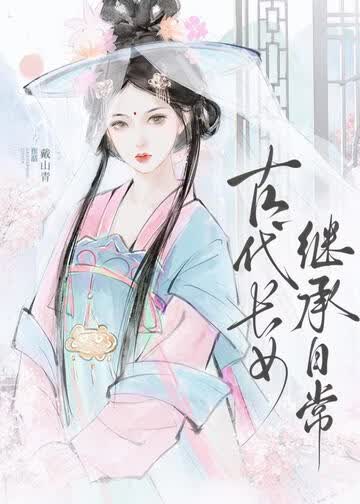
Yang Zhaocheng transmigrated into the eldest daughter of an official family in the Northern Dynasty kingdom of Yan.
Yan was a prosperous, martial state where people of Hu and Han backgrounds mingled and customs were open-minded. The Yang family was a poor Han family from the north. Through his social skills and ability to get along with all kinds of people, her father had secured a foothold in officialdom and served in Bingzhou, Hexi.
Her mother was from the Xuzi people, wealthy in her own right, open-hearted and carefree. She could be a little absent-minded, but doted on Yang Zhaocheng.
"You're the eldest daughter of the Yang family. Everything the Yang family owns should be yours." From the time Yang Zhaocheng could remember, her mother had sworn this to her.
Yang Zhaocheng, who had all sorts of stereotypical ideas about "ancient times": Did I even transmigrate to ancient times?
Half Han and half Hu, Yang Zhaocheng grew up in Bingzhou. The region mixed farming and herding, and its people were tough. As she grew older, she discovered that while it wasn't common for women in this era to inherit the family estate or take a husband into their household, it wasn't unheard of either.
After the Yang family had one daughter after another, her father finally accepted his fate and devoted himself to treating Yang Zhaocheng as his heir.
When Yang Zhaocheng was eight, her father brought a little boy from one of her relatives' homes and said, "This is your cousin. If you think the little fellow is all right, you can marry when you grow up."
Yang Zhaocheng looked down at the little radish who was a head shorter than her and fell silent.
*
Zheng Yinlu was the third son in his family, neither particularly favored nor neglected. His parents didn't think much of him, so when he was five, they arranged a marriage for him in a daze. He was even expected to marry into his wife's family.
Zheng Yinlu in his angsty teenage years: Wasn't this engagement a little too hasty?
When he finally came to his senses, Zheng Yinlu looked at the potential rivals eyeing him from all sides, then at his wife, graceful and charming and impossible to ignore, and couldn't help feeling relieved: Good thing I was precocious as a child. Now I've got a head start and a legitimate place by her side.
As a son-in-law of the Yang family, Zheng Yinlu was ambitious. He planned to make his mark in officialdom and ensure his wife would never want for food or clothing, so she wouldn't regret marrying him.
But his wife, who became the head of the family, proved so capable that she entered the palace and took part in state affairs. She rose from an inner-court official to a court official, received the privileges of a prince of the first rank, and became a prince in her own right. In her lifetime, she raised the Yang clan to become one of the most prestigious families of the age.
Under Yang Zhaocheng's stewardship, the Yang family saw its daughters become marquises, its children become ministers, and its descendants become emperors.
People of the time all said that the third son of the Zheng family was lucky to marry such a noble wife.
"The Yang family has a daughter named Zhaocheng, whose might shakes the four seas and shines across the world."
Reader's Guide:
1. I'm bad at writing blurbs. The early chapters are slice-of-life family scenes, and the heroine will become an official later for various reasons.
2. This is a fictional era with customs blended and invented for the story. The setting is still an ancient, patriarchal society, though its customs are relatively open. It is not a matriarchy.
3. The male lead is a devoted wife-guy who wholeheartedly embraces being a son-in-law. No matter what his social status is, the children take the wife's surname.
4. Older woman-younger man romance. The male lead is three years younger than the heroine.
5. The political situation is unstable. People are born at random and die carelessly. Later parts may involve palace intrigue, political schemes, and regional separatism. The heroine's life is one of social mobility. Power struggles have no regard for good or evil.
6. The cover illustration is a commissioned piece by an artist, not an exclusive character design. If you'd like to see the heroine's character design, visit the author's Weibo.
Theme: Everything has its place. Let life take its course.
 The Grudge of the Pepper Chamber
 Why Did the Empress Rebel?
 The King Hui
 Concubine Dowry
 A Hall Full of Fine Clothes, Whiter Than Snow
 The Study of Love Triangles
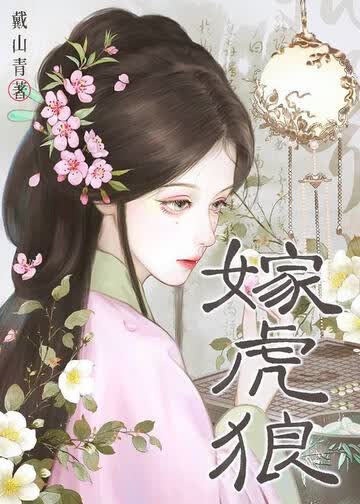 Married to a Wolf
 I Could Tell at a Glance That You're Not Human
 He's Just Sincerely Shipping the Couple [Entertainment Industry]
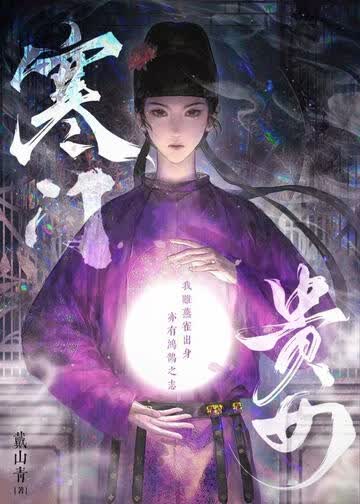 The Noble Daughter from a Humble Family