Fanqie library
Browse
- Titles
- 8
Every Fanqie book we index, searchable by title, author or tag.
-
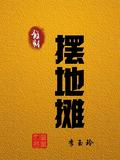 Set up a Street Stall
After three years of epidemic prevention and control, the epidemic prevention and control was finally relaxed in 2023. I don't want to recall these three years of control, because this will be an indelible page in human history. I just want to talk about how we at the bottom are struggling to survive after these three years of control. The protagonist, Lou Yi, dreams of becoming a great writer one day. He has drifted north for 10 years and achieved nothing. After three years of the epidemic, he
880Reads—Score240Shelves
Set up a Street Stall
After three years of epidemic prevention and control, the epidemic prevention and control was finally relaxed in 2023. I don't want to recall these three years of control, because this will be an indelible page in human history. I just want to talk about how we at the bottom are struggling to survive after these three years of control. The protagonist, Lou Yi, dreams of becoming a great writer one day. He has drifted north for 10 years and achieved nothing. After three years of the epidemic, he
880Reads—Score240Shelves
-
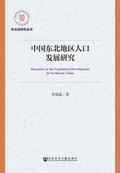 Research on Population Development in Northeast China
Based on several years of research accumulation, this book takes the three Northeastern provinces as a whole to study the development level of the population in the region; it analyzes basic demographic characteristics such as the fertility level, population death level, population migration and mobility, population gender structure, and population age structure; it also discusses two special population phenomena in the region. One is the phenomenon of "migratory bird-style" remote care of the e
—Reads7.7Score—Shelves
Research on Population Development in Northeast China
Based on several years of research accumulation, this book takes the three Northeastern provinces as a whole to study the development level of the population in the region; it analyzes basic demographic characteristics such as the fertility level, population death level, population migration and mobility, population gender structure, and population age structure; it also discusses two special population phenomena in the region. One is the phenomenon of "migratory bird-style" remote care of the e
—Reads7.7Score—Shelves
-
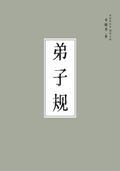 Disciple Rules
"Disciples' Regulations" is a Confucian enlightenment classic with only more than a thousand words. In the form of three characters, one sentence, two sentences and one rhyme, it comprehensively explains the etiquette and norms that disciples should have at home, going out, dealing with others, and studying. It has concise language and profound meaning. It is a must-read for educating children and developing good moral character.
—Reads9.3Score—Shelves
Disciple Rules
"Disciples' Regulations" is a Confucian enlightenment classic with only more than a thousand words. In the form of three characters, one sentence, two sentences and one rhyme, it comprehensively explains the etiquette and norms that disciples should have at home, going out, dealing with others, and studying. It has concise language and profound meaning. It is a must-read for educating children and developing good moral character.
—Reads9.3Score—Shelves
-
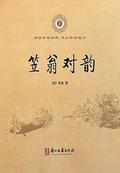 Li Weng's Dual Rhymes (Chinese Classic Reading)
"Recitation of Chinese Classics: Li Weng's Rhyme" was compiled by the author after the Qing Dynasty scholar Che Wanyu's "Rhythm Enlightenment". It helps readers expand their horizons and transform knowledge into abilities. By reciting regularly, you can further understand our country's long history, be influenced by the splendid culture, and get training in pronunciation, vocabulary, rhetoric and other aspects.
—Reads9.4Score—Shelves
Li Weng's Dual Rhymes (Chinese Classic Reading)
"Recitation of Chinese Classics: Li Weng's Rhyme" was compiled by the author after the Qing Dynasty scholar Che Wanyu's "Rhythm Enlightenment". It helps readers expand their horizons and transform knowledge into abilities. By reciting regularly, you can further understand our country's long history, be influenced by the splendid culture, and get training in pronunciation, vocabulary, rhetoric and other aspects.
—Reads9.4Score—Shelves
-
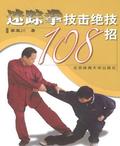 108 Stunts of Mizong Boxing
Mizong Quan integrates health preservation and martial arts, and is indeed an excellent type of boxing in traditional Chinese martial arts. There have been many outstanding figures practicing Mizong Quan throughout the ages, including Zhou Tong, Lu Junyi and others in the Song Dynasty, Sun Tong in the Qing Dynasty, and Huo Yuanjia in modern times. Mizong Quan is famous in Chinese martial arts for its long history, rich content, internal and external training, emphasis on practicality and unique
—Reads8.4Score—Shelves
108 Stunts of Mizong Boxing
Mizong Quan integrates health preservation and martial arts, and is indeed an excellent type of boxing in traditional Chinese martial arts. There have been many outstanding figures practicing Mizong Quan throughout the ages, including Zhou Tong, Lu Junyi and others in the Song Dynasty, Sun Tong in the Qing Dynasty, and Huo Yuanjia in modern times. Mizong Quan is famous in Chinese martial arts for its long history, rich content, internal and external training, emphasis on practicality and unique
—Reads8.4Score—Shelves
-
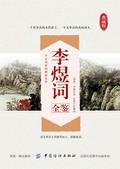 A Complete Collection of Li Yu's Ci Poems
Li Yu, known as "Empress Li" in history, is one of the most outstanding poets in ancient China and is known as the "Eternal Ci Emperor". Most of Li Yu's poems are combined with his unique life experience and become a lyrical style that shows real life and expresses his own emotions. "Li Yu's Ci Poems" covers the important poetry chapters of Li Yu's life, and annotates and interprets them. It also includes Li Yu's doubtful poems, classic books and texts written by Li Yu, Li Jing's poems and Feng
—Reads9.4Score—Shelves
A Complete Collection of Li Yu's Ci Poems
Li Yu, known as "Empress Li" in history, is one of the most outstanding poets in ancient China and is known as the "Eternal Ci Emperor". Most of Li Yu's poems are combined with his unique life experience and become a lyrical style that shows real life and expresses his own emotions. "Li Yu's Ci Poems" covers the important poetry chapters of Li Yu's life, and annotates and interprets them. It also includes Li Yu's doubtful poems, classic books and texts written by Li Yu, Li Jing's poems and Feng
—Reads9.4Score—Shelves
-
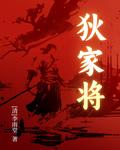 Di Family General
Di Qing, a famous general in the Northern Song Dynasty, was brave and good at fighting, good at using troops, and managed the army in a strict manner. His deeds were widely circulated in later generations. The story of the Di family generals, in chronological order, includes three parts: "The Romance of Wanhua Tower", "Five Tigers Conquering the West", and "Five Tigers Conquering the South". What is presented to readers is a complete story of Di Qing's five tiger generals.
—Reads9.5Score—Shelves
Di Family General
Di Qing, a famous general in the Northern Song Dynasty, was brave and good at fighting, good at using troops, and managed the army in a strict manner. His deeds were widely circulated in later generations. The story of the Di family generals, in chronological order, includes three parts: "The Romance of Wanhua Tower", "Five Tigers Conquering the West", and "Five Tigers Conquering the South". What is presented to readers is a complete story of Di Qing's five tiger generals.
—Reads9.5Score—Shelves
-
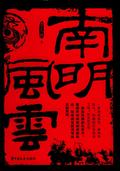 Nanming Fengyun
This book is a popular work about the history of the Southern Ming Dynasty. It is written in a humorous way and is similar in style to "Those Things in the Ming Dynasty". The full text generally begins with the chaos after the death of Emperor Chongzhen in 1644 and ends with the murder of Emperor Yongli in 1662. It mainly tells the history of the three periods of Hongguang, Longwu and Yongli in the Southern Ming Dynasty, and incidentally mentions the regimes of King Lu and Shaowu. While describi
—Reads9.2Score—Shelves
Nanming Fengyun
This book is a popular work about the history of the Southern Ming Dynasty. It is written in a humorous way and is similar in style to "Those Things in the Ming Dynasty". The full text generally begins with the chaos after the death of Emperor Chongzhen in 1644 and ends with the murder of Emperor Yongli in 1662. It mainly tells the history of the three periods of Hongguang, Longwu and Yongli in the Southern Ming Dynasty, and incidentally mentions the regimes of King Lu and Shaowu. While describi
—Reads9.2Score—Shelves