Fanqie catalogue
Browse
- Matches
- 7
Every Fanqie book we index, searchable by title, author or tag.
-
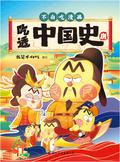 Mastering Chinese History: The Tang Dynasty 吃透中国史.唐
To truly understand Chinese history, read Don’t Eat for Nothing. Don’t Eat for Nothing: The Tang Dynasty is the opening work in Don’t Eat for Nothing’s comic series on the grand sweep of Chinese history. The cultured Don’t Eat for Nothing takes on the roles of historical figures, leading readers deep into the events themselves and letting them witness major moments in history firsthand: the rise of the “Reign of Zhenguan” and the “Kaiyuan Prosperity,” the beginning and end of the “An Lushan Rebe
2.7kReads9.5Score325Shelves
Mastering Chinese History: The Tang Dynasty 吃透中国史.唐
To truly understand Chinese history, read Don’t Eat for Nothing. Don’t Eat for Nothing: The Tang Dynasty is the opening work in Don’t Eat for Nothing’s comic series on the grand sweep of Chinese history. The cultured Don’t Eat for Nothing takes on the roles of historical figures, leading readers deep into the events themselves and letting them witness major moments in history firsthand: the rise of the “Reign of Zhenguan” and the “Kaiyuan Prosperity,” the beginning and end of the “An Lushan Rebe
2.7kReads9.5Score325Shelves
-
 The History of China, Drawn by Bu Baichi 不白吃漫画中国史
A deep dive into Chinese history: the Tang, Song, and Ming dynasties, and the Spring and Autumn and Warring States periods. A comic-book encyclopedia of Chinese history by I Am Not a Glutton, part of the I Am Not a Glutton Comics series.
211Reads9.2Score104Shelves
The History of China, Drawn by Bu Baichi 不白吃漫画中国史
A deep dive into Chinese history: the Tang, Song, and Ming dynasties, and the Spring and Autumn and Warring States periods. A comic-book encyclopedia of Chinese history by I Am Not a Glutton, part of the I Am Not a Glutton Comics series.
211Reads9.2Score104Shelves
-
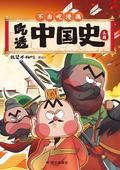 Understand the History of China·three Kingdoms 吃透中国史·三国
At the end of the Eastern Han Dynasty, the Han Dynasty collapsed, heroes rose up, and the world was in chaos. From the Yellow Turban Uprising to the Battle of Chibi, after countless wars and countless intrigues and intrigues, the world formed the "Three Kingdoms" of Wei, Shu, and Wu. This is an era of chaos and heroes. Many familiar historical figures have emerged, such as Cao Cao, Yuan Shao, Lu Bu, Liu Bei, Zhang Fei, Guan Yu, Zhuge Liang, Zhou Yu, etc. What was the real Three Kingdoms era like
185Reads8.4Score—Shelves
Understand the History of China·three Kingdoms 吃透中国史·三国
At the end of the Eastern Han Dynasty, the Han Dynasty collapsed, heroes rose up, and the world was in chaos. From the Yellow Turban Uprising to the Battle of Chibi, after countless wars and countless intrigues and intrigues, the world formed the "Three Kingdoms" of Wei, Shu, and Wu. This is an era of chaos and heroes. Many familiar historical figures have emerged, such as Cao Cao, Yuan Shao, Lu Bu, Liu Bei, Zhang Fei, Guan Yu, Zhuge Liang, Zhou Yu, etc. What was the real Three Kingdoms era like
185Reads8.4Score—Shelves
-
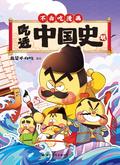 Mastering Chinese History: The Ming Dynasty 吃透中国史.明
Eat Your Way Through Chinese History: Ming is the third installment in the Don’t Eat That comic history series. The Ming dynasty was one of the few unified feudal dynasties founded by commoners. It lasted 276 years and had 16 emperors. Its history is full of stories that are stirring, sad, hilarious, and even absurd. There was the Hongwu Emperor, who went from herding cattle to founding a dynasty; the Yingzong Emperor, who was captured after a military defeat but managed to make a comeback; and
103Reads9.3Score—Shelves
Mastering Chinese History: The Ming Dynasty 吃透中国史.明
Eat Your Way Through Chinese History: Ming is the third installment in the Don’t Eat That comic history series. The Ming dynasty was one of the few unified feudal dynasties founded by commoners. It lasted 276 years and had 16 emperors. Its history is full of stories that are stirring, sad, hilarious, and even absurd. There was the Hongwu Emperor, who went from herding cattle to founding a dynasty; the Yingzong Emperor, who was captured after a military defeat but managed to make a comeback; and
103Reads9.3Score—Shelves
-
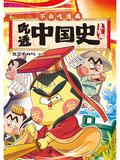 A Deep Dive into Chinese History: Xia, Shang, and Zhou 吃透中国史:夏商周
Eat Your Way Through Chinese History: Xia, Shang, and Zhou is the eleventh book in Bubaichi's comprehensive Chinese history series. It tells the history of the three ancient dynasties of Xia, Shang, and Zhou, covering the formation of the Huaxia political order, the spread of pre-Qin literature and customs and ideas, and the legends of emperors, ministers, heroes, and beauties. It brings a thousand years of history into focus through a series of gripping key stories. Famous tales such as Yu the
99Reads8.1Score—Shelves
A Deep Dive into Chinese History: Xia, Shang, and Zhou 吃透中国史:夏商周
Eat Your Way Through Chinese History: Xia, Shang, and Zhou is the eleventh book in Bubaichi's comprehensive Chinese history series. It tells the history of the three ancient dynasties of Xia, Shang, and Zhou, covering the formation of the Huaxia political order, the spread of pre-Qin literature and customs and ideas, and the legends of emperors, ministers, heroes, and beauties. It brings a thousand years of history into focus through a series of gripping key stories. Famous tales such as Yu the
99Reads8.1Score—Shelves
-
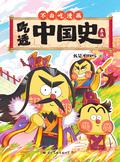 Understand the History of China·qin and Han Dynasties 吃透中国史·秦汉
"Understanding the History of China: Qin and Han Dynasties" is the fifth volume in the Big History Series of Bui Chi Comics. The Qin and Han Dynasties were two consecutive unified dynasties, and they were also the first powerful period in Chinese history. In more than four hundred years, the land area, military strength, population, economy, and culture all achieved unprecedented development. The national governance system created by the Qin Dynasty and optimized by the Han Dynasty has profoundl
77Reads8.6Score—Shelves
Understand the History of China·qin and Han Dynasties 吃透中国史·秦汉
"Understanding the History of China: Qin and Han Dynasties" is the fifth volume in the Big History Series of Bui Chi Comics. The Qin and Han Dynasties were two consecutive unified dynasties, and they were also the first powerful period in Chinese history. In more than four hundred years, the land area, military strength, population, economy, and culture all achieved unprecedented development. The national governance system created by the Qin Dynasty and optimized by the Han Dynasty has profoundl
77Reads8.6Score—Shelves
-
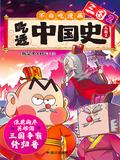 Understand the History of China·three Kingdoms 2 吃透中国史·三国2
The Three Kingdoms was an era of tripartite confrontation and intertwined events. The book continues from the previous chapter. After the Battle of Chibi, Wei, Shu, and Wu each occupied one side. The three parties launched a sharp, complex, and protracted fierce struggle. For a long period of time, no party was able to completely annex the other two parties and reunify China. The Wei State was based in the Central Plains and was relatively powerful. Several northern expeditions to Shu and Wu end
28Reads8.3Score—Shelves
Understand the History of China·three Kingdoms 2 吃透中国史·三国2
The Three Kingdoms was an era of tripartite confrontation and intertwined events. The book continues from the previous chapter. After the Battle of Chibi, Wei, Shu, and Wu each occupied one side. The three parties launched a sharp, complex, and protracted fierce struggle. For a long period of time, no party was able to completely annex the other two parties and reunify China. The Wei State was based in the Central Plains and was relatively powerful. Several northern expeditions to Shu and Wu end
28Reads8.3Score—Shelves