These are all good [please pay attention] Traveling through another world, hiding a profession, you can say you are invincible or invincible, you can say food or food, you can be the first person to ask for money but not life, but he is the most cowardly chosen person with the name of Shura. He accidentally won a big prize, but suddenly traveled through time and became the emperor.
Have you been so beaten down by life recently that you just want to lie down? Go read these two books! It's really life-saving. The laughs are so dense. When I watched it last night, I laughed as hard as my mother was killing a chicken next to me. My face froze with laughter. I forgot all about it. Rush! 🤣🪶
Eunuch: Your Majesty, the pilgrims are on their way. Li Shimin: How many times is this this year? Eunuch: Your Majesty, this is the 66th Buddhist monk. Empty Monkey Cave at the foot of Five Elements Mountain, Buddhist Buddhist No. 66: Where is the monkey? Where is my monkey? Tugong: I was taken away by Buddhist pilgrims at the beginning of the year. Learner No. 66: What should I do? Hh
This is an infinite story with lots of funny jokes. The front part is a bit cruel, so I don't want to jump straight into it. But it's not an invincible article, so please proceed with caution.
The ratings have just been released and will probably go up. The protagonists are peers of Ash and Red in the parallel world. They have their own stories, their own combinations, and their own path to being a Pokémon master. There is no system here, no rebirth, and no time travel (if traveling from this world to Xi Cui counts, pretend I didn't say it), the original world view is added with some personal settings. The Pokémon in it are all humane, and the protagonist is full of passion. The story is absolutely wonderful and absolutely funny. Please support it and watch it.
Abstract and funny, non-traditional cultivation, leaning towards daily life, the main theme is relaxed and joyful, I am happy looking at the pictures, but I will still be serious when I should be serious, I recommend it to myself, princesses and princes, please give it a try hehe [full] [full]
Brothers, please recommend a mind-blowing Grammar novel! The male protagonist Ji Ye has awakened the "Abyss Filter" and sees everything as daily necessities. 👉 When others see the Headless Horseman, they are so frightened that they feel weak in the legs. He thinks he is a dedicated courier and even gives them tips! 👉 Others were frightened when they saw the deep-sea siren. He thought it was a girl who had fallen into the water. After rescuing him, he forced them to perform a square dance! 👉 The most outrageous thing is that the King in Yellow came to make trouble. He regarded him as a performance artist and forcibly dragged him into the room to kill him with a script. He even disliked the script for being illogical! Now in his yard, demigods are guarding the door, ghost kings are mopping the floor, and S-class monsters are clearing the sewers... All of them are evil (crossed out), and all of them are beating workers! Do you want to see how the protagonist uses a mop to physically transcend the entire universe? "I handed over the unspeakable thing", you won't lose money if you invest in it, you will laugh all the time!
"Anthology of Funny Morals": When absurdity shines into reality, humor is the most profound allegory. Have you ever had such a moment - hesitating in front of the garbage sorting point, wondering whether the garbage will be sorted better by themselves? Drifting on the subway during morning and evening rush hours, feeling like a migratory animal? Have a headache when you hear square dance music, but never thought that aunts might hold the secrets of the universe? After circling the parking lot for half an hour and unable to find your car, are you wondering if the building is playing a trick on you? If the answer is yes, then The Funny Moral Anthology is the book you've been waiting for. This is no ordinary collection of workplace humor stories. When you open this book, you will enter a seemingly absurd but extremely familiar parallel world. Here, garbage is quietly reclassified at midnight because they can't stand human clumsiness; the square dance aunt is actually a community energy regulator, using dance to maintain neighborhood harmony; the parking lot has self-awareness, seeking to be understood by letting people get lost; and the commuters in the morning and evening rush hours are unknowingly participating in a collective ritual of millions of people. But don't be fooled by the word "funny" - these stories will make you laugh and at the same time quietly plant the seeds of thinking in your heart. The narrative of more than 9,000 words in each chapter constructs not only a plot, but also a mirror to modern life. Chapter Four Preview: When Everyday Things Become Extraordinary "Garbage Sorting Battle" - Who is the real "garbage"? When Li Wei discovers that garbage is conscious and can be classified more accurately, a fable about responsibility and dependence unfolds. The garbage people said: "If we always correct humans' mistakes, they will never truly learn." This sentence not only points to environmental protection, but also points to the deepest dilemma of our time: when technology thinks for us, when the system decides for us, how should human beings' own sense of responsibility and ability be placed? "Morning and Evening Peak Migration" - We are all urban migratory birds. Chen Mo recorded commuting data just like biologists record the behavior of species, and finally discovered: "Migration is not only forced labor, but also an independent space; it is not a waste of time, but a creation of time." This chapter makes you re-examine the time "wasted" on the road - maybe they are not the gaps in life, but life itself. "Square Dance Universe" - The Hidden Community Guardian When programmer Li Wei discovers that square dancing mothers use dance to regulate the energy of the community, the intergenerational barriers melt in front of a shared secret. The most touching revelation of this chapter is: "True wisdom is often hidden in the least valued corners." Those daily routines that we are accustomed to or even bored with may be the invisible thread that maintains the community. "Parking Lot Maze" - Dialogue with Architectural Intelligence Wang Ming got lost in the changing parking lot, and finally discovered: "The real maze is not a place that traps you, but a place where you find yourself." In a world that pursues efficiency first, allowing yourself to "get lost" may be the most rebellious and necessary wisdom. Unique reading experience: looking for hidden codes There is another fascinating feature of this book - the word play hidden in two chapters of the author's name. Like an ancient acrostic poem, only the most attentive readers will discover the secret. This is not a simple anti-counterfeiting, but an invitation: inviting you to slow down your reading speed, savor the multiple layers of the text, and find deeper connections beyond laughter. When you discover this secret, you will get a unique sense of accomplishment - you are not a passive reader, but an active explorer, engaging in a hide-and-seek with the author across the text. Why is it worth your time to read this book? Because it makes you laugh, and then makes you think. Real humor is never just about making people laugh, but loosening our rigid cognitive framework in laughter. Behind every absurd setting in "Anthology of Funny Meanings" is an accurate metaphor for real-life dilemmas. The confusion of garbage classification, the exhaustion of commuting, intergenerational misunderstandings, and the loss of control of technology—these everyday things we face every day are amplified, distorted, and rewoven in the book, and finally present an alarming truth. Because it redefines "meaning." Traditional fables are often too straightforward, like sugar-coated pills. "Anthology of Funny Morals" is different - its moral is not a conclusion, but a question; it is not a warning, but an invitation. The "Core Warning and Educational Implications and Deep Thoughts" at the end of each chapter is not the end of the story, but the starting point for your thinking. The author doesn't tell you what to think, but opens up a variety of possibilities for you to think. Because it connects absurdity and reality. The best absurd stories are those that make you think "this is actually not absurd at all" after reading it. When you close the book and return to reality, you may suddenly discover: There are indeed various "workplace species" in the office, just like the description in "Morning and Evening Rush Migration"; the square dance in the community may really regulate neighborhood relations invisibly; and does the parking lot where you always get lost also tell something in its own way? Who should read it? · Urban office workers: you will see your own shadow and gain relief and insight · Curious observers of social phenomena: the metaphors in the book provide you with new analytical tools · Readers who like smart humor: the jokes here require a little thinking, but the rewards are richer · Everyone struggling between tradition and modernity: the book is full of exploration of balance · People who want to "treasure hunt" in reading: the hidden author's name is waiting for you to discover More than a book, it is a way of viewing the world. The most precious gift of "Anthology of Funny Meanings" is that it provides a dual lens for viewing the world: not only the absurdity on the surface, but also the deep logic; both the problems and the potential contained therein. After reading this book, you won't get easy answers, but you will get something even more valuable - better questions. You begin to ask: Where does personal autonomy lie in this highly systematized world? In an era of increasingly intelligent technology, what is the uniqueness of human beings? In a culture where efficiency is paramount, what's the point of those "useless" things? These stories are like carefully designed psychological experiments that put us in extreme situations and observe the interaction of human nature, society and technology. They prove that the most advanced humor never avoids heaviness, but carries profundity in lightness; the most effective warning never relies on preaching, but allows the truth to reveal itself in stories. Start your reading adventure. Open "Anthology of Funny Meanings" and prepare to enter a world that is both strange and familiar. Here, garbage talks, parking lots have souls, square dancing is magic, and commuting is a ritual. Here, laughter is the entrance, thinking is the journey, and insight is the destination. Be careful - because you're not just looking for the moral of the story, but the secrets hidden within. And when you find that carefully hidden name in a certain chapter, you will understand: this book is having an intelligent dialogue with you from the first page. The best fables never tell you where to go, but let you see where you are standing. "Anthology of Funny Meanings" is such a book - it is a funny mirror that reflects our absurdity; it is also a bright mirror that reflects our reality. From garbage sorting to parking lot mazes, from morning and evening rush hours to the square dance universe, these stories are waiting for your reading, laughter, thinking and discovery. Your copy is waiting—not just a book, but an invitation to reconnect with the world.
Meet the best in the era? The heroine turns on the lunatic mode backhand, scolding the villain to the point of being autistic, and torturing the scumbag to the point where he is looking for teeth on the ground. The villain is hilarious, and the plot is explosive and the more you watch, the more you watch!
 The Little Boss Hates Dogs and Cats, so He Hides It from His Parents and Becomes a Household Worth Ten Thousand Yuan
25.6kReads9.1Score1.4kShelves
The Little Boss Hates Dogs and Cats, so He Hides It from His Parents and Becomes a Household Worth Ten Thousand Yuan
25.6kReads9.1Score1.4kShelves
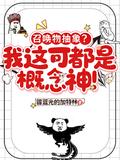 Who Said My Summons Are Abstract? Stand Up!
14.6kReads8.0Score1.8kShelves
Who Said My Summons Are Abstract? Stand Up!
14.6kReads8.0Score1.8kShelves
 Start Cultivating Immortality from the Root of Heaven
57Reads5.8Score—Shelves
Start Cultivating Immortality from the Root of Heaven
57Reads5.8Score—Shelves
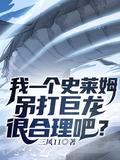 Is It Reasonable for a Slime to Defeat a Giant Dragon?
222.7kReads9.7Score28kShelves
Is It Reasonable for a Slime to Defeat a Giant Dragon?
222.7kReads9.7Score28kShelves
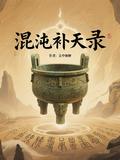 Chaos Patching the Sky Record
6.7kReads8.6Score945Shelves
Chaos Patching the Sky Record
6.7kReads8.6Score945Shelves
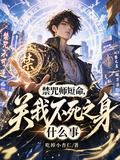 The Forbidden Curse Master Has a Short Life, What Does It Have to Do with My Immortality?
358.5kReads8.7Score28.1kShelves
The Forbidden Curse Master Has a Short Life, What Does It Have to Do with My Immortality?
358.5kReads8.7Score28.1kShelves
 Prime Minister, the Supplies for the Northern Expedition Have Arrived.
8.7kReads9.3Score759Shelves
Prime Minister, the Supplies for the Northern Expedition Have Arrived.
8.7kReads9.3Score759Shelves
 The Three-And-A-Half-Year-Old Villain Arrives to Take His Father to Rebuild the Glory of the Palace
44.6kReads8.9Score5.1kShelves
The Three-And-A-Half-Year-Old Villain Arrives to Take His Father to Rebuild the Glory of the Palace
44.6kReads8.9Score5.1kShelves
 I Just Drove a Car and the Audience Laughed?
78.2kReads9.2Score7.6kShelves
I Just Drove a Car and the Audience Laughed?
78.2kReads9.2Score7.6kShelves
 Laugh at All the Jokes in Hell, and the Merit Will Be Mine
9.6kReads8.6Score1.1kShelves
Laugh at All the Jokes in Hell, and the Merit Will Be Mine
9.6kReads8.6Score1.1kShelves
 The Female Stars All Fell into Trouble with Their Words and Deeds at the Beginning.
24.7kReads7.6Score2kShelves
The Female Stars All Fell into Trouble with Their Words and Deeds at the Beginning.
24.7kReads7.6Score2kShelves
 I Warn You! I'm Not Irresponsible If You Laugh.
4.4kReads7.4Score302Shelves
I Warn You! I'm Not Irresponsible If You Laugh.
4.4kReads7.4Score302Shelves
 After Being Hacked to Death by the Lady, He Will Be Automatically Reborn.
1.3kReads8.3Score109Shelves
After Being Hacked to Death by the Lady, He Will Be Automatically Reborn.
1.3kReads8.3Score109Shelves
 Huang Pizi Asks for a Title, I Reveal My Purple-Robed Celestial Master's Dharma Body
32.7kReads8.9Score3.2kShelves
Huang Pizi Asks for a Title, I Reveal My Purple-Robed Celestial Master's Dharma Body
32.7kReads8.9Score3.2kShelves
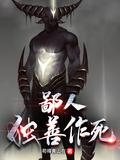 I Seek Death Alone
43.1kReads9.3Score5.1kShelves
I Seek Death Alone
43.1kReads9.3Score5.1kShelves
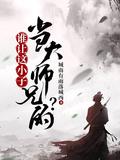 Who Asked This Boy to Be the Senior Brother?
182.2kReads9.4Score21kShelves
Who Asked This Boy to Be the Senior Brother?
182.2kReads9.4Score21kShelves
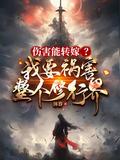 Can the Harm Be Passed On? I Want to Harm the Entire Spiritual World
40.8kReads8.4Score4.2kShelves
Can the Harm Be Passed On? I Want to Harm the Entire Spiritual World
40.8kReads8.4Score4.2kShelves
 Online Dating: the Rich Woman Is Actually a Male Anchor?
2kReads8.2Score115Shelves
Online Dating: the Rich Woman Is Actually a Male Anchor?
2kReads8.2Score115Shelves
 Just Open Your Mouth and Squirt, Chasing the Top Stream to Death
1.7kReads8.0Score120Shelves
Just Open Your Mouth and Squirt, Chasing the Top Stream to Death
1.7kReads8.0Score120Shelves
 Awakening the Horoscope of Mountains and Rivers, My Superpower Is a Joke
897Reads7.5Score—Shelves
Awakening the Horoscope of Mountains and Rivers, My Superpower Is a Joke
897Reads7.5Score—Shelves
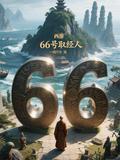 Journey to the West: Bible Learner No. 66
54.7kReads8.4Score8.6kShelves
Journey to the West: Bible Learner No. 66
54.7kReads8.4Score8.6kShelves
 Do Whatever It Takes to Cultivate Immortality
8.9kReads8.8Score800Shelves
Do Whatever It Takes to Cultivate Immortality
8.9kReads8.8Score800Shelves
 One Person: the Club Died at the Beginning, and Sister Baoer Forcibly Kissed Chu Lan
5Reads5.8Score—Shelves
One Person: the Club Died at the Beginning, and Sister Baoer Forcibly Kissed Chu Lan
5Reads5.8Score—Shelves
 Sky-Swallowing Toad
9kReads8.7Score913Shelves
Sky-Swallowing Toad
9kReads8.7Score913Shelves
 Carrying a Coffin to Cultivate Immortality
47.9kReads8.5Score4.1kShelves
Carrying a Coffin to Cultivate Immortality
47.9kReads8.5Score4.1kShelves
 Cultivation, I Have a Dzi Swallowing Pearl
8.3kReads8.7Score640Shelves
Cultivation, I Have a Dzi Swallowing Pearl
8.3kReads8.7Score640Shelves
 Mortal Cultivation Starts from Starlight
1.8kReads7.3Score169Shelves
Mortal Cultivation Starts from Starlight
1.8kReads7.3Score169Shelves
 A Layman's Infinite Journey
6.4kReads7.8Score711Shelves
A Layman's Infinite Journey
6.4kReads7.8Score711Shelves
 Father and Son Drove a Rolls-Royce Through 1980
1.4kReads—Score—Shelves
Father and Son Drove a Rolls-Royce Through 1980
1.4kReads—Score—Shelves
 Zhang Yida's Tenth Life Time Travel
5Reads—Score—Shelves
Zhang Yida's Tenth Life Time Travel
5Reads—Score—Shelves
 I Am a Fisherman, Who Slanders Me as Regent?
43.1kReads8.5Score3.7kShelves
I Am a Fisherman, Who Slanders Me as Regent?
43.1kReads8.5Score3.7kShelves
 Pokémon: Start with a Big Brother and a Charcoal
10kReads8.2Score1.2kShelves
Pokémon: Start with a Big Brother and a Charcoal
10kReads8.2Score1.2kShelves
 Blind Corn! Rotten Potatoes! the Best Children Kneel Aside
200.9kReads9.2Score9.2kShelves
Blind Corn! Rotten Potatoes! the Best Children Kneel Aside
200.9kReads9.2Score9.2kShelves
 I Dominate the World of Immortality by Watching Advertisements
10Reads5.8Score—Shelves
I Dominate the World of Immortality by Watching Advertisements
10Reads5.8Score—Shelves
 A Girl from a Small Tribe Who Can Become a Real Daughter
57.3kReads9.2Score7.4kShelves
A Girl from a Small Tribe Who Can Become a Real Daughter
57.3kReads9.2Score7.4kShelves
 Is the World of Immortality so Abstract?
57Reads5.8Score—Shelves
Is the World of Immortality so Abstract?
57Reads5.8Score—Shelves
 The Tyrant's Killing List
506Reads9.6Score—Shelves
The Tyrant's Killing List
506Reads9.6Score—Shelves
 In Another World, I Used Taoism to Empty the Enemy's Warehouse
1.2kReads5.8Score—Shelves
In Another World, I Used Taoism to Empty the Enemy's Warehouse
1.2kReads5.8Score—Shelves
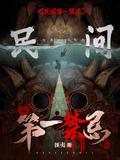 The First Taboo Among the People
367.5kReads9.3Score36.2kShelves
The First Taboo Among the People
367.5kReads9.3Score36.2kShelves
 The School Beauties All Have a System, and I Am Forced to Eat Soft Food.
25.2kReads7.1Score2.4kShelves
The School Beauties All Have a System, and I Am Forced to Eat Soft Food.
25.2kReads7.1Score2.4kShelves
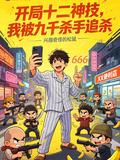 Twelve Magical Skills at the Beginning, I Was Chased by Nine Thousand Killers
15kReads8.8Score1.7kShelves
Twelve Magical Skills at the Beginning, I Was Chased by Nine Thousand Killers
15kReads8.8Score1.7kShelves
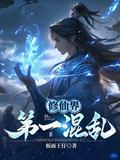 The Greatest Chaos in the World of Immortality
170kReads9.5Score20kShelves
The Greatest Chaos in the World of Immortality
170kReads9.5Score20kShelves
 One Wanted Criminal a Day, Classmate, Don't You Take a Day Off?
32.9kReads9.0Score4kShelves
One Wanted Criminal a Day, Classmate, Don't You Take a Day Off?
32.9kReads9.0Score4kShelves
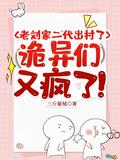 Horror, I Am a Holy Father in a Strange World
9.5kReads9.2Score1.4kShelves
Horror, I Am a Holy Father in a Strange World
9.5kReads9.2Score1.4kShelves
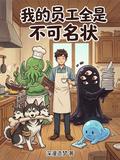 My Employees Are All Nameless
1.2kReads6.3Score118Shelves
My Employees Are All Nameless
1.2kReads6.3Score118Shelves
 Anthology of Funny Meanings
3Reads—Score—Shelves
Anthology of Funny Meanings
3Reads—Score—Shelves
 Empty the Ancestral Property and Kill Indiscriminately at the End of the World, the Big Boss Sixty
19kReads8.1Score2.5kShelves
Empty the Ancestral Property and Kill Indiscriminately at the End of the World, the Big Boss Sixty
19kReads8.1Score2.5kShelves
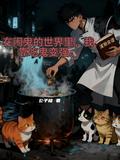 The Recipe for Bo Gang at the Beginning, I Became Hannibal in the Ghost World
3.1kReads6.6Score288Shelves
The Recipe for Bo Gang at the Beginning, I Became Hannibal in the Ghost World
3.1kReads6.6Score288Shelves
 The Abandoned Daughter of a Miracle Doctor Returns and Is Reborn
18.7kReads8.8Score1.9kShelves
The Abandoned Daughter of a Miracle Doctor Returns and Is Reborn
18.7kReads8.8Score1.9kShelves
 I Have 36524 Folk Horror Stories
38.9kReads8.8Score3.3kShelves
I Have 36524 Folk Horror Stories
38.9kReads8.8Score3.3kShelves