🔥The Tang Dynasty🔥Suspense🔥A truly immersive story about the Tang Dynasty. The master-disciple dual-travel setting is so tense. The mysterious and mysterious text is both shocking and hilarious. It's really good-looking. Don't worry! !
Recommended preface: Only when you can't laugh can you really understand this book. If you always feel that something is wrong - the inexplicable panic you feel when your mobile phone is out of battery; the inexplicable panic when a child asks "Why do you need to memorize these historical eras?"; The blanks of being unable to remember any details after taking photos and checking in at the museum; the confusion of having a vaguer understanding of history after watching a costume drama... Congratulations, you have an antidote to your "disease of the times". "Anthology of Funny Implications" is precisely for this widespread but unspeakable anxiety of modernity, and provides an antidote that uses absurdity as a guide and thoughtfulness as a remedy. This is not a casual read that you can laugh at and forget about. Its four core stories are like four well-designed thought experiments, wrapped in a hilarious shell with a sharp scalpel of reality. Chapter 1 "The Ancients Played with Cell Phones": A Mirror that Shines on Technology Dependence The moment Li Shimin fell into silence while holding his dead iPhone, all readers will feel a chill in their hearts. We laugh at the various embarrassments of the ancients when faced with smartphones. We laugh and laugh, but find that we are smiling reluctantly - because every absurd scene is a precise satire of ourselves. This chapter allows you to see yourself in laughter: the you who stays up late to watch short videos, the you who gets lost after leaving the navigation, the you who uses emoticons instead of real expressions. At the end of the story, when the mobile phone screen goes black forever and the ancients return to their simple lives, you suddenly understand: the extent to which the technology we call "tools" has reversely shaped our personality and relationships. The core warning is like a wake-up call: If the world is disconnected tomorrow, how much integrity of your personality is left? Is it fair if future generations judge your life based solely on your social media traces? Chapter 2 "Self-Save Guide for History Exams": A Gentle Rebellion against Educational Alienation When historical figures personally set the key points for the candidates, but asked them to write on the test paper, "On the day of the Xuanwu Gate Incident, what I feared most was that the Qingming politics promised to the people would not be realized." The authority of the standard answers collapsed. This chapter allows you to re-understand the nature of "learning": Are we memorizing knowledge, or are we domesticating our thinking? When Yue Fei calmly said, "Qin Hui is the sword, and Gaozong is the hand holding the sword," you suddenly realize: the simplistic narrative of loyalty and traitor has obliterated how much complexity and reality of history. Deep thinking points directly to people's hearts: If an education system rewards the ability to retell rather than think, are we cultivating independent people or sophisticated question-answering machines? Chapter 3 "Cultural Relics Complaint Conference": A sad elegy for civilization's memory. Late at night in the museum, the cultural relics held a meeting to complain about tourists' flash lights, wrong labels and entertainment adaptations - this may be the most humorous and saddest chapter in the book. When you hear the Dunhuang Scripture say, "This page of mine is here, and the other page is in the British Museum," laughter suddenly gets stuck in your throat. This chapter allows you to re-examine the truth about "cultural craze": Are we inheriting civilization, or are we consuming symbols? When the cultural relics said, "Don't treat us as a background for checking in," everyone who only took pictures in the museum felt a little ashamed. The core meaning is inspiring: When the memory of civilization is packaged into Internet celebrity products, and when thousands of years of history are reduced to the background of short videos, what we lose is not only the weight of history, but also the ability to empathize with our ancestors. Chapter 4 "The Truth about Costume Dramas": A desperate counterattack against historical consumerism. When Wu Zetian watched the encounter between herself and Li Zhi in the petal rain in the TV series, and said lightly, "I was a nun at the time, and he came to pay homage to the late emperor, with only sandalwood and Buddha's name", all romantic imagination was shattered. But what the fragments reflect is a more real, complex and shocking historical texture. This chapter completely reshapes your perception of history: Wang Zhaojun's sentence "There are many choices in life, and it is about choosing a slightly better path among limited possibilities." This may be the most profound interpretation of the historical situation of ordinary people. It makes you understand: history is not a one-man show of heroes, but the limited choices made by countless ordinary people in the torrent of the times. Final thoughts on sublimating the book: If we allow entertainment logic to rewrite history, if we only accept simplistic narratives, we will eventually live in a flat, distorted world of simulations and lose the mental ability to understand complex reality. Why must you read this book? Because in this era of information overload and scarce meaning, "Anthology of Funny Meanings" provides a rare reading experience: it first makes you laugh, then pokes your pain points, and finally activates your thinking points. It's not the kind of book that you put down after you finish it and say, "That's really interesting." It is the kind of book that makes you close the page late at night, look at the charging phone on the bedside, think of the silent cultural relics in the museum, think of the simplified characters in the history books, and then be unable to fall asleep for a long time. The author uses his most wild imagination to build four seemingly bizarre parallel time and spaces. But when you walk in, you will find that every time and space is a clinic, diagnosing the collective symptoms of our era - technological alienation, educational rigidity, cultural shallowness, and historical nihilization. What's even more rare is that it doesn't prescribe bitter medicine, don't inject chicken blood, and doesn't pretend to be a scholar. It is like a wise and humorous friend who tells you a few absurd and funny stories in a teahouse, and then pats you on the shoulder after telling you: "What I just said is actually our own business." So, if you: · Are aware of the "wrongness" of the times but can't explain why · Still long for in-depth spiritual dialogue in the torrent of entertainment to death · Hope that your children will understand the history of more than just the era and test points · Feel awe in the museum but don't know where this awe comes from · I vaguely feel that while technology is empowering, it is also taking away something. Then, "Anthology of Funny Meanings" is written for you. It will keep you awake in laughter, recognize truth in absurdity, and touch reality deeper than reality in fiction. In the end, you will find that the best part of this book is not what the author wrote, but what it stirred up in you. Those silences after laughter, those thoughts beyond the story, those seemingly absurd but straight-to-the-core questions - these are the gifts this book really wants to give you. Just turn it over. Then get ready: your laughter will slowly become less and your thinking will quietly increase. And when you can truly understand why these stories are "funny," you have become an observer, a thinker, and perhaps a changer in a more sober era.
Six stories, six lives. They all happen in the same technology company called "Infinite Tomorrow", but every story may have your name written on it. --- Chapter 1: "Sensory Exchange Experiment" - When a completely opposite soul lives in your body. Tao Xiaoke, the man from the legal department who carved "Do you have data to support it" into his DNA, and Xie Xiaoyu, the intern at the front desk who could cry with the dead potted plant, were forced to have their senses exchanged by a ridiculous experiment. Tao Xiaoke could suddenly smell the hypocrisy in his boss's cologne, and Xie Xiaoyu could suddenly label every lie with credibility. This is a workplace version of "Your Name." It makes you laugh until your stomach hurts, and also makes you suddenly fall silent in the laughter - because you will find that the person around you that you dislike the most may just be perceiving the world at a completely different frequency than you. The four words "empathy" never allow you to get into other people's bodies, but let you try to use other people's history to understand the same thing. Part 2: "Perceptual Dependence" - When you rely too much on your talent, your talent will become a cage. Zhao Yiming from the marketing department has a pair of ears that can hear everything. He can hear budget caps in a client's breath and lies in a boss's tone of voice. He thought he was a pioneer in evolution, until he met a new colleague Chen Mo who was always in his ears as a "silent zone", until his talent allowed him to hear in advance that he was about to be "reformed". This story will make you mistakenly think that it is written about you - the person who was once held on the altar for a certain ability and was regarded as an alien because of the same ability. It asks you: When your talent is both your crown and your shackles, do you dare to take it off with your own hands? Chapter 3: "Sensory Restoration Hospital" - When someone wants to transform you into a "normal person" The most frightening place in the company is not the boss's office, but the sensory restoration hospital. Lao Qin, whose sense of touch was too sensitive, was modified so that he could not touch paper, Tian Xiaoye, whose sense of taste was too developed, was modified so that he could not taste the quality of food, and Wang Ruyi, whose sense of smell could smell other people's emotions, was modified so that all emotions had only one smell - chlorine-containing disinfectant. This is a story that will make you break into a cold sweat while reading it late at night. Because it is not about science fiction, it is about reality - those systems that want to grind everyone into the same shape, those systems that transform you in the name of "for your own good". And the only question you have to answer is: Do you want to be yourself when "normal" is defined as the average of a stranger you don't even know? Article 4: "Multidimensional Perception Training" - When you are developed into potentials that you don't even know you have. Cheng Moli from the training department has developed a course that claims to "make each of your senses a door to another dimension." Four people with abnormal senses were locked in the same classroom - Li Hai, who could smell lies, Xie Xiaoyu, who could feel emotions, Lao Qin, whose sense of touch was good and bad, and Tao Xiaoke, who vowed to falsify all this. The moment they were picked up together, they collectively saw a vision that did not belong to the four of them - a man wearing gold-rimmed glasses, sitting in an office in the 1970s, saying to them: "You have finally touched this level." This story will give you goosebumps. You think you are participating in a potential development class, but in fact you are being developed as part of someone else's assets. Chapter 5: "Sensory Retirement Plan" - When your senses decide not to work anymore. Lao Qin from the Finance Department has touched more than eight million pieces of paper throughout his life. One day, his finger suddenly sent him a message: "I'm tired and don't want to do it anymore." Then Li Hai's nose stopped working, and Tielin's eyes submitted a retirement application. They discovered that the senses are not perpetual motion machines. They also get tired and want to retire. And they never say "thank you" to their senses. This story will make everyone who has overstretched themselves in the workplace for a long time feel sore in the nose. You use your ability every day, but you never take a look at it. It's not until it raises its hand and says "I don't want to do it anymore" that you realize that you didn't even say "Thank you for your hard work" to it. Chapter 6: "Diffuse Fear of Hypophobia" - When you shed tears for a future that does not exist Su Damiao, 26 years old, single, with a monthly salary of 5,000, and a deposit of more than 30,000. Her nails are painted with avocado green nail polish, and she doesn't even know where to put her broom. But she suffered from the phobia of being scum, the phobia of domestic violence, the phobia of free nannies, the phobia of fertility machines, the phobia of being prostituted for free, and the phobia of being cheated on. She used infinite fear to defend against a zero-harm reality. This story will make every female reader think that they are being monitored - the videos you have viewed, the articles you have read, and the anger you forwarded to your circle of friends late at night are creating a life for you that will never come, but you have paid all the anxiety for it in advance. It won't teach you not to be afraid. It will only make you see clearly: your non-existent lovers are betraying your non-existent feelings, beating your non-existent body, squeezing your non-existent hard work, and persecuting your childless belly. The only thing you need to do is to turn off your phone and answer the question that a real person is asking you - "What milk tea do you want to drink?" Six stories, one world. They all take place in the same company called "Tomorrow is Unlimited", and the characters are intertwined with each other. You can read any of them individually, or you can read them in order to see how the fates of these people intersect, overlap, and redeem each other in each other's stories. Tao Xiaoke and Xie Xiaoyu came out of the absurdity of the day they exchanged senses, and continued to grow in other people's stories. Lao Qin went from rehabilitation hospital to multi-dimensional perception training all the way to sensory retirement. His fingers went through the whole journey of being repaired, trained, retired and re-employed. Finally, he signed an exit interview for himself with his fingertips that no one asked him to write. Director He and the man with gold-rimmed glasses confronted each other in the first and last articles, going from fear-driven to quietly changing the wording in the entire management document. Meng Lang, who always hurried past the front desk, connected the biggest phobia patient and the most low-key empath in the whole series with a cup of soy milk. On the surface, these stories talk about sensory abnormalities and the absurdity of the workplace, but what they really talk about is the same thing - how to protect the unique parts of you in a world that always wants to make you "normal". They will make you laugh, make your nose sore, and make you suddenly feel at a certain moment: Isn't this about me? The good news is that this set of stories has been officially launched on Tomato Bookstore. You can open Tomato Bookstore and search for user 26182811 to find all the works of our own author, Mr. Fu Shuiheng. The process is very smooth and you can search in just a few seconds. Look for user 26182811, Mr. Fu's only home in Tomato Bookstore. If you have read any of them, please leave a message for Mr. Fu Shuiheng in the comment area. That sentence can be your feelings after reading it, it can be the name of one of your favorite characters, it can be what you think of yourself when you read a certain paragraph, or even a simple sentence "It's so well written." Your words are the charge that Mr. Fu picks up his pen to write a story. It is the only echo he can hear when he faces a blank screen late at night. Sincerely thank you to every friend who took time out of your busy schedule to read Mr. Fu Shuiheng's works. Every page you turn is the best compliment for the work; every message you leave is the brightest light on the author's desk. Thank you for your appreciation. The story continues, see you in the book.
This book "Feng Shen Ke" is a collision between scientific cultivation and traditional cultivation of immortality. It has a grand world view and cured my years of insomnia because I stayed up all night chasing it. Recommended
The most suffocating symbiosis is that I am alive but no longer belong to myself. Qian Xunwu will never forget that moment. When she woke up from the edge of death, what she encountered was not a new life, but an invasion. Two strange souls broke into her body, divided her life, and dominated her life and death. She could clearly feel everything in her body, but she couldn't control it at all. She could only watch others live for her. Rui Xianzhi's domineering power took away the dominance of the body; Lou Shuying's gentle mediation maintained a strange balance. She was the only one who was the real owner of this body, but she became the most unnecessary bystander. The strange sound deep in the bones and blood lingers, it is a family taboo and a fateful curse. During the long journey of exile and the mist, the three of them were tied together. Suspicion and warmth were intertwined, and confrontation and symbiosis coexisted. One day, will three people coexist in this body, or will only one be left to live alone? The ultimate tug-of-war story of fateful abuse, full of atmosphere and huge stamina!
Chu Xuanhun traveled to another world, used the power of the blood mirror to travel to the zombie star field, and embarked on a legendary road to reverse his fate. As a demonic monk who was being hunted by the righteous, he accidentally discovered that the world littered with corpses was actually an omission in the way of heaven - by using blood sacrifice to refine the zombies, he could not only avoid the punishment of the way of heaven, but also be blessed with the golden wheel of merit. He actually reached the state of rebellious practice such as "accumulating merit by killing".
 The King of Feng Shui, the Nine-Tailed Fox Master Can't Bear It
39.1kReads9.4Score4.6kShelves
The King of Feng Shui, the Nine-Tailed Fox Master Can't Bear It
39.1kReads9.4Score4.6kShelves
 Sign in to the Body of the Supreme God and Demon, I Am the Number One Person in the Demonic Path
31.8kReads8.9Score3.8kShelves
Sign in to the Body of the Supreme God and Demon, I Am the Number One Person in the Demonic Path
31.8kReads8.9Score3.8kShelves
 The God Returns and Washes the City with Blood for His Daughter
49.1kReads9.5Score12.7kShelves
The God Returns and Washes the City with Blood for His Daughter
49.1kReads9.5Score12.7kShelves
 City: After Ten Years of Cultivating Immortality, You Will Become Invincible When You Come Down from the Mountain.
162.2kReads9.1Score17kShelves
City: After Ten Years of Cultivating Immortality, You Will Become Invincible When You Come Down from the Mountain.
162.2kReads9.1Score17kShelves
 The Strongest Choice: Start with a Porsche 911
17.4kReads9.0Score1.6kShelves
The Strongest Choice: Start with a Porsche 911
17.4kReads9.0Score1.6kShelves
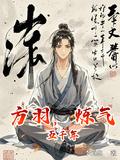 Fang Yu, Five Thousand Years of Refining Qi
107.4kReads9.1Score10.6kShelves
Fang Yu, Five Thousand Years of Refining Qi
107.4kReads9.1Score10.6kShelves
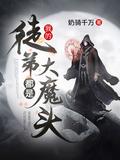 My Apprentices Are All Big Devils
21.8kReads9.0Score3.1kShelves
My Apprentices Are All Big Devils
21.8kReads9.0Score3.1kShelves
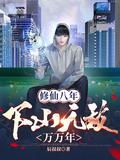 After Eight Years of Cultivation, He Will Be Invincible for Tens of Millions of Years.
34.3kReads9.0Score3.7kShelves
After Eight Years of Cultivation, He Will Be Invincible for Tens of Millions of Years.
34.3kReads9.0Score3.7kShelves
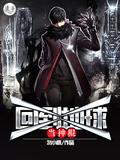 Return to Earth and Become a Magician
21kReads8.9Score2.3kShelves
Return to Earth and Become a Magician
21kReads8.9Score2.3kShelves
 The King of the Country
25.4kReads9.2Score2.5kShelves
The King of the Country
25.4kReads9.2Score2.5kShelves
 Codename: Greedy Wolf
295.7kReads9.2Score34.1kShelves
Codename: Greedy Wolf
295.7kReads9.2Score34.1kShelves
 Village Miracle Doctor
20.7kReads9.1Score2.9kShelves
Village Miracle Doctor
20.7kReads9.1Score2.9kShelves
 Legend of the Tang Dynasty: Our Master and Apprentice Turned into Enemies
5Reads5.8Score—Shelves
Legend of the Tang Dynasty: Our Master and Apprentice Turned into Enemies
5Reads5.8Score—Shelves
 Anthology of Funny Meanings
3Reads—Score—Shelves
Anthology of Funny Meanings
3Reads—Score—Shelves
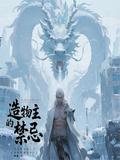 The Creator's Taboo
5.6kReads9.0Score592Shelves
The Creator's Taboo
5.6kReads9.0Score592Shelves
 Senses Retirement Plan.
—Reads8.5Score—Shelves
Senses Retirement Plan.
—Reads8.5Score—Shelves
 Multidimensional Perception Training.
—Reads8.5Score—Shelves
Multidimensional Perception Training.
—Reads8.5Score—Shelves
 Sensory Restoration Hospital.
—Reads8.4Score—Shelves
Sensory Restoration Hospital.
—Reads8.4Score—Shelves
 Sensory Dependence Disorder.
—Reads8.5Score—Shelves
Sensory Dependence Disorder.
—Reads8.5Score—Shelves
 Sensory Swapping Experiment.
1Reads8.6Score—Shelves
Sensory Swapping Experiment.
1Reads8.6Score—Shelves
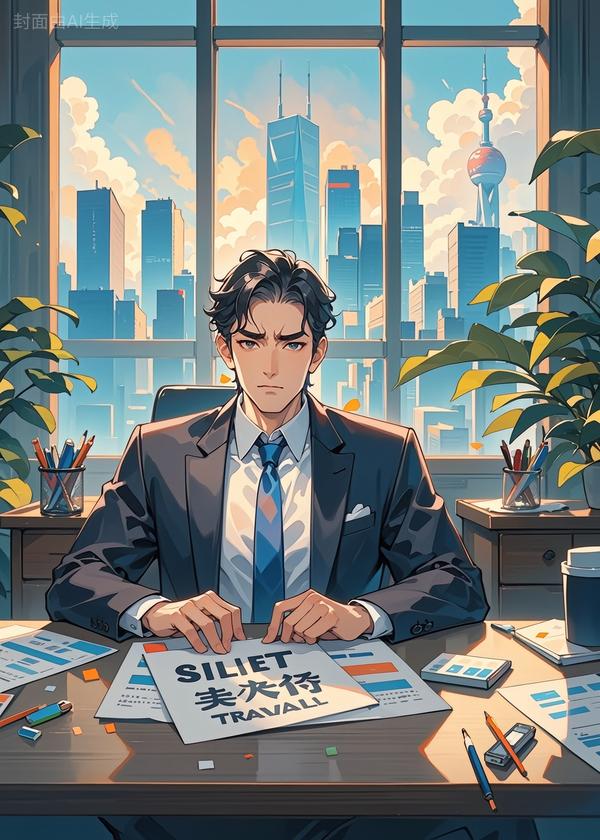 Silent Tour Group.
—Reads8.5Score—Shelves
Silent Tour Group.
—Reads8.5Score—Shelves
 After Escaping from Her Adoptive Parents' Home, Her Life Was Ruined
6.5kReads8.3Score758Shelves
After Escaping from Her Adoptive Parents' Home, Her Life Was Ruined
6.5kReads8.3Score758Shelves
 After Rebirth, He Married a Cold Military Doctor from an Aristocratic Family with His Child.
2.2kReads8.9Score169Shelves
After Rebirth, He Married a Cold Military Doctor from an Aristocratic Family with His Child.
2.2kReads8.9Score169Shelves
 After Rebirth, She Became an Unattainable Woman
82Reads6.8Score—Shelves
After Rebirth, She Became an Unattainable Woman
82Reads6.8Score—Shelves
 Blood Moon Sequence: from Social Animal to Divine Controller
—Reads5.8Score—Shelves
Blood Moon Sequence: from Social Animal to Divine Controller
—Reads5.8Score—Shelves
 Blood Ancestor System, Establishing an Empire in Demon Slayer: Kimetsu No Yaiba
1Reads5.8Score—Shelves
Blood Ancestor System, Establishing an Empire in Demon Slayer: Kimetsu No Yaiba
1Reads5.8Score—Shelves
 The Infinite Extraction System of the End of the World
—Reads5.8Score—Shelves
The Infinite Extraction System of the End of the World
—Reads5.8Score—Shelves
 Sign in to Farm, the Sickly Fortune Teller Stirs up the World of Cultivation
—Reads5.8Score—Shelves
Sign in to Farm, the Sickly Fortune Teller Stirs up the World of Cultivation
—Reads5.8Score—Shelves
 The Buddhist System Traveled Through Time and I Became a Temporary Worker in the Underworld
—Reads5.8Score—Shelves
The Buddhist System Traveled Through Time and I Became a Temporary Worker in the Underworld
—Reads5.8Score—Shelves
 The Adventures of Po
61Reads—Score—Shelves
The Adventures of Po
61Reads—Score—Shelves
 Flow into the City Yesterday
20.2kReads9.2Score2.3kShelves
Flow into the City Yesterday
20.2kReads9.2Score2.3kShelves
 Break Through Time Travel and Rebirth Research Laboratory
1.3kReads7.1Score—Shelves
Break Through Time Travel and Rebirth Research Laboratory
1.3kReads7.1Score—Shelves
 Scientific Cultivation of Immortality: from Loser to Creator God
33Reads5.8Score—Shelves
Scientific Cultivation of Immortality: from Loser to Creator God
33Reads5.8Score—Shelves
 Since There Is No Way to Go on Earth, Then Take the Road to Heaven
123Reads5.8Score—Shelves
Since There Is No Way to Go on Earth, Then Take the Road to Heaven
123Reads5.8Score—Shelves
 Alpha Wolf Ⅱ Covers the Sky with One Hand
30.8kReads9.1Score3.3kShelves
Alpha Wolf Ⅱ Covers the Sky with One Hand
30.8kReads9.1Score3.3kShelves
 Three Souls Dwell in the Fog: Mountains and Rivers Return Together
3Reads5.8Score—Shelves
Three Souls Dwell in the Fog: Mountains and Rivers Return Together
3Reads5.8Score—Shelves
 Watery Poplar
303Reads8.6Score—Shelves
Watery Poplar
303Reads8.6Score—Shelves
 The Heroine Is Mine, What the Hell Is the Cutting-Off System?
121.3kReads8.3Score16.2kShelves
The Heroine Is Mine, What the Hell Is the Cutting-Off System?
121.3kReads8.3Score16.2kShelves
 The Yandere Empress Forced Me to Marry Me, and My Master Turned Black with Anger.
14.4kReads7.9Score1.1kShelves
The Yandere Empress Forced Me to Marry Me, and My Master Turned Black with Anger.
14.4kReads7.9Score1.1kShelves
 There Are Too Many Love Partners, and the Master Turns into a Yandere
55.7kReads8.6Score7.1kShelves
There Are Too Many Love Partners, and the Master Turns into a Yandere
55.7kReads8.6Score7.1kShelves
 Fantasy: Nine Fairy Masters at the Beginning
25.5kReads9.1Score3.3kShelves
Fantasy: Nine Fairy Masters at the Beginning
25.5kReads9.1Score3.3kShelves
 Cold on the Changfeng River
39.1kReads8.7Score3.9kShelves
Cold on the Changfeng River
39.1kReads8.7Score3.9kShelves
 Nine Yangs Tongtian
17.6kReads8.8Score1.6kShelves
Nine Yangs Tongtian
17.6kReads8.8Score1.6kShelves
 Want! Insanity? Fairy!
17.5kReads8.9Score1.9kShelves
Want! Insanity? Fairy!
17.5kReads8.9Score1.9kShelves
 Poison Cauldron
20.9kReads8.0Score2.4kShelves
Poison Cauldron
20.9kReads8.0Score2.4kShelves
 Huang Liang Yi Meng, Crazy Criticism of the Heroine Actually Hates Me to the Bone
61.6kReads8.9Score4.8kShelves
Huang Liang Yi Meng, Crazy Criticism of the Heroine Actually Hates Me to the Bone
61.6kReads8.9Score4.8kShelves
 Fairy, Don't Do It!
120.5kReads9.0Score14.6kShelves
Fairy, Don't Do It!
120.5kReads9.0Score14.6kShelves
 Invincible! It Started When the Stunning Master Tricked Me into Becoming a Cauldron
35.5kReads8.6Score3.3kShelves
Invincible! It Started When the Stunning Master Tricked Me into Becoming a Cauldron
35.5kReads8.6Score3.3kShelves
 The World's Morality Has Regressed for Three Hundred Years. What Does It Have to Do with Me?
539.1kReads9.1Score65.8kShelves
The World's Morality Has Regressed for Three Hundred Years. What Does It Have to Do with Me?
539.1kReads9.1Score65.8kShelves
 I Don't Know How to Get Drunk Even If I Drink from the Sword
89.3kReads9.1Score7.4kShelves
I Don't Know How to Get Drunk Even If I Drink from the Sword
89.3kReads9.1Score7.4kShelves