The posthumous title of the Zhou Dynasty said: "The saint and the good Zhou heard that he was called Xuan". It emphasizes that the monarch is famous for his benevolence and good governance, but even Xuanzong in history cannot escape the historical cycle at the beginning of his decline. When a small transparent person in the modern system time-traveled to Tang Xuanzong Li Chen who was about to be supported by the eunuchs. How will he save the declining Tang Empire, and how will he break out of the historical cycle at the beginning of its decline? (The author recommends himself, the first volume has been updated)
The emperor protects the king, and the king dies in the country. The prince Li Zhi watched helplessly as the emperor's concubine was killed in the palace, and was then forced to succeed to the throne in front of the emperor's body. He did not dare to change his reign name and fainted.
This book is suitable for the late Tang Dynasty and the early period of the Five Dynasties and the Later Liang Dynasty! The Zhongwu Army Jiedu envoys separatist forces! In the land of four battles, it is difficult to survive!
Blow up the power of the late Tang Dynasty in this chapter! Textbook-level three-party game, the textual research party will immediately kneel down😭 (The best single chapter of the year in Tomato history, I will regret it for a year if I don't read it!) Family members, who understands! I originally thought that the time travel stories in the late Tang Dynasty were all about the old routine of holding the emperor hostage at the beginning and pushing forward all the way, but this chapter just made me look stupid! There are no system cheats, no villains who subdue their intelligence, and no brainless fun. There are only three top-level IQs of three troubled heroes competing against each other. Every word is a trap, and every look is a calculation. After watching it, my palms are all sweaty! ✅ This chapter is so cool that you can fill it up immediately, and there is no need to urinate in the whole process 1. Li Zhen becomes a god! The "Owl of the Tang Dynasty" in history turned into the God of Diplomacy. Who would have thought that Li Zhen, the "treacherous minister" who masterminded the disaster of Baimayi in history and was scolded for thousands of years, would become the most dazzling protagonist of this chapter! - Riding alone into the Khitan camp: killing seven horses in six days and six nights, crossing thousands of miles of snow, and going deep into the camp of 30,000 Khitan cavalry alone. Even Yelu Abaoji was stunned by his courage - A verbal battle with Li Keyong: Exposing Li Keyong's lie of "painting cakes to satisfy hunger" in one sentence, which made Li Keyong vomit blood and fainted on the spot, directly disrupting Hedong's alliance plan - White Wolf with Empty Gloves: Without having to cede an inch of land, with only the conditions of mutual trade and canonization, the life-and-death covenant between Li Keyong and Yelu Abaoji was broken up, and the Khitan became an "ally" of the Tang Dynasty. The most amazing thing is that the author did not write Li Zhen as a perfect saint. He still doesn't believe in "supporting the Tang Dynasty" and is still full of resentment towards this decadent dynasty, but he chooses to temporarily believe in Wang Zuo. This complex character arc is ten thousand times more real than those flat "loyal ministers"! 2. The three-party IQ is online throughout the entire process, and there is no fool. This is the real Machiavellian article! No villain is a tool for subduing intelligence, and everyone's actions have their own logic and motivations: - Li Keyong: He is not a reckless man who only loses his temper. He led the Khitans into the country as a desperate act. His anger, unwillingness, and despair are all vividly written - Yelu Abaoji: the real hero of the grassland! He never thought about sincerely helping Li Keyong from the beginning, and deliberately delayed the alliance just to wait for Wang Zuo's envoy, let the two sides compete for bids, and reap the benefits - Wang Zuo: Although he did not appear directly, all the games revolved around him. He accurately calculated Yelu Abaoji's ambition, Li Keyong's dilemma, and Li Zhen's ability, and strategized to win a decisive victory thousands of miles away. The three people calculated and used each other, forming a perfect closed loop. You think you are on the first level, but in fact the opponent is on the fifth level. This kind of IQ crushing is a hundred times more enjoyable than watching the protagonist chop melons and vegetables! 3. There are so many foreshadowings, and they are full of echoes. This chapter contains N foreshadowings at once, and every one of them is amazing: - The signs of Yelu Lage's rebellion: The author did not say it directly, but through Li Zhen's eyes, he observed Yelu Abaoji's "play hard to get" plan little by little, which laid the groundwork for the subsequent civil strife in Khitan - Li Zhen's inner struggle: His final doubts about the "pure minister line" paved the way for the subsequent ideological conflict between him and Wang Zuo - the century-old game between Khitan and Datang: This alliance not only solved the immediate crisis, but also established the pattern of the northern frontier for more than a hundred years 📜 Hard-core historical research! The author is definitely a major in Tang history. What shocked me the most about this chapter was not the tactics, but the author's historical research skills. The details were so rigorous that it was outrageous. As a lover of Tang history, I kneeled down directly to the author! 1. The true history of the Yunzhou Huimeng. Historically, Li Keyong and Yelu Abaoji did make a treaty as brothers in the Yunzhou Huimeng in the second year of Tang Tianyou (905) and agreed to jointly attack Zhu Wen. But later Yelu Abaoji betrayed the alliance and defected to Zhu Wen, which led to Li Keyong's defeat and death, which became Li Keyong's lifelong regret. The author cleverly advanced this historical event to the third year of Guanghua (900), and adapted it into the plot of a three-party game. It not only respects history, but also creates new ideas. I give this adaptation full marks! 2. Yelu Abaoji pacified the rebellion of his brothers. In the story, Yelu Abaoji deliberately condoned the Yelu Lage rebellion, which completely restored history! Historically, in order to abolish the rotation system of the eight Khitan tribes and establish centralized rule, Yelu Abaoji put down the rebellions of his younger brother Yelu Lage and others three times. He deliberately allowed his brothers to reveal their strength, and then eradicated all the old nobles who opposed him in one fell swoop, laying the foundation for the unification of Khitan. The author perfectly integrates this period of history into the plot, making Yelu Abaoji's character more three-dimensional and greatly enhancing the historical quality of the entire story. 3. Accurate calculation of the mileage of post roads in the Tang Dynasty. The article mentioned that "the total distance from Huazhou to Yunzhou is 1,310 miles, and it would take six days and six nights to reach it by light horse at the fastest in winter." This number is completely consistent with the records in Yan Gengwang's "Transportation Illustration of the Tang Dynasty"! One Tang Rio in the Tang Dynasty was equal to 531 meters today, and 1310 Tang Rio was equal to 696 kilometers today. In winter, the snow is knee-deep in Saibei, and the post roads are icy. A light bike can travel 218 Tangli (about 116 kilometers) a day, and the round trip takes exactly 12 days. This detail cannot be accomplished in 99% of historical texts! 4. Accurate restoration of the Khitan military system. The "Pishi Army" and "Oruduo" mentioned in the article are both the real military systems of the Khitan: - Pishi Army: Yelu Abaoji's personal army, composed of selected warriors from various ministries, is the most elite force of the Khitan - Orudo: The Khitan "palace guard" system is the emperor's private tribe. It not only has the army, but also households, land and slaves, and is the core pillar of the Khitan imperial power. Although these details are inconspicuous, you can see the author's intentions. They are completely different from those historical articles that just make up "Khitan Iron Cavalry" to fool readers! 5. The rigor of the clothing system of the late Tang Dynasty. The clothing of all characters in the article strictly follows the records in the "Old Tang Book·Yufu Zhi": - Officials of the third rank and above wear purple robes and gold fish bags - Officials of the fifth rank and above wear scarlet robes and silver fish bags - Wear silk cotton robes in winter instead of cotton robes that do not conform to the times (cotton was only widely cultivated in the Song Dynasty) 🆚 Compared with other historical articles, this article directly reduces the dimensionality Nowadays, most of the historical articles on Tomato are based on the old formula of starting system, flat promotion all the way, three thousand harems, villains outwit, and plot suspension. After reading two chapters, you will get tired of it. But this article is different: - It has no system, the protagonist's golden finger only has an understanding of history - It does not outwit the villain, every opponent is a real hero - It has no brainless cool points, all victories are obtained by IQ and strategy - Its historical research is rigorous to the details, allowing you to truly experience the troubled times of the late Tang Dynasty. The quality of this chapter not only beats 99% of Tomato's historical articles, but is even comparable to the first-line historical articles of Qidian! 💬 A few final words. After reading this chapter, I was really impressed by the author's talent. He not only wrote a wonderful game of power, but also wrote about the complexity of human nature in troubled times. Li Keyong's unwillingness, Yelu Abaoji's ambition, Li Zhen's struggle, Wang Zuo's perseverance, every character has flesh and blood, which is impressive. If you are tired of reading the same cool articles, if you like historical articles with real depth and texture, you must read this book! Brothers and sisters who have read this chapter, are there any fans of Li Zhen like me? Deduct 1 in the comment area! Author update soon! Can't wait to read the next chapter! 🔥
It writes about the Tang Dynasty from an unexpected perspective, which is different from the previous rich and powerful novels. It ranks among the top five Tang Dynasty novels in Tomato.
An imaginary historical text, super high quality, excellent for both listening and reading. The logic is clear, the characters are full, the plot is rich, and the writing is compact. It's a non-conventional and cool article, please appreciate it! [Bookshelf plus one][Bookshelf plus one]
This new book is really good to read. The author has a good writing style and the writing is very smooth. It is a good book about the late Tang Dynasty. It is very good to read and worth a try! ! ! You can also rate this book as a good one!
The new book I just picked up recently is about a genius doctor who travels through the Tang Dynasty to save the Anshi Rebellion. It is not exaggerated and logical. It has various developments after the war. The protagonist even has a little superpower. I think it has great potential. The author has a rich reserve of knowledge in all subjects. I am very addicted to reading it.
Still looking for historical texts about the late Tang Dynasty that can't be fooled? "Dreams of the Broken Tang Dynasty" starts from the funeral ten miles away from Tongchang, the scandal in the palace, the eunuchs' seizure of power, the uprising of Huang Chao, and the chaos in the feudal town. It is written step by step until the fall of the Li Tang Dynasty. The official history turns to realism, and all tomatoes are free!
🔥In the middle and late Tang Dynasty, he tried his best to turn the tide, save the Tang Dynasty from fire and water, rebuild the Tang Dynasty, and continue the glory of the Tang Dynasty. The fourth book, master the last elite rebel army of the Tang Dynasty, go against the current, save the building from collapse. The fifth book, reborn as Emperor Ai of the Tang Dynasty, in the chaotic situation, use violence to fight violence, and rebuild the Tang Dynasty.
Standard middle and late Tang Dynasty. At the beginning, the defeated troops of the Western Region Protectorate were collected and slowly developed. It is a cool article.
During the Five Dynasties and Ten Kingdoms period and the Later Tang Dynasty, Wu Ming and Shi Jingtang fought for the world, conquered Central Asia, and penetrated Europe.
The latest new book that travels through the Tang Dynasty: ① In August of the 26th year of Kaiyuan, Tuoyun Castle at Tuoyun Pass in Shule Town, the Anxi Protectorate of the Tang Dynasty, was in midsummer outside, but it was freezing and windy here. Gao Jingxuan, who traveled through time, became a very capable cavalryman of the Tang Army. The Tang Empire was at its peak of glory. And he, Gao Jingxuan, is standing at the turning point of history, preparing to write his own legendary chapter.
Was the late Tang Dynasty terrible? The Heavenly Khan Li Shimin was reborn as Li Zhi and directly changed his fate against the will of heaven! Clear up the powerful officials, eliminate Zhu and Wen, sweep away the feudal towns, and recreate the prosperous Tang Dynasty! "Emperor of the Late Tang Dynasty: The Return of Taizong", history travels through the ceiling of Shuangwen! #Latentang # #historical time travel #turn the tide #shuangwen
🍀Reborn as the son of Li Chengqian, the prince was deposed at the beginning. The protagonist relied on his wisdom to gain Taizong's trust and got out of the crisis. Step by step, he defeated the Fourth Uncle and the Ninth Uncle and became the great treasure. 🍀Reborn as the second son of Emperor Taizong, he relied on his knowledge to launch epoch-making products one after another, bringing Tang Zao into a prosperous age. 🍀In the turmoil at the end of the Tang Dynasty, various Jiedu envoys fought in melee, and the people were displaced. Li Ye took advantage of Taizong's bloodline to fight in all directions to protect the people's stability.
The only non-time-travel historical novel on the Internet, from the prosperous Tang Dynasty to the middle Tang Dynasty, the timeline spans Tang Xuanzong, Tang Suzong and Tang Daizong
 Daming: Whoever Seizes the Throne of Eldest Brother Will Be Beaten
41.9kReads8.8Score2.6kShelves
Daming: Whoever Seizes the Throne of Eldest Brother Will Be Beaten
41.9kReads8.8Score2.6kShelves
 I! the Great Uncle of the Emperor of the Tang Dynasty Became an Emperor Through the Ages!
130Reads6.9Score—Shelves
I! the Great Uncle of the Emperor of the Tang Dynasty Became an Emperor Through the Ages!
130Reads6.9Score—Shelves
 I Traveled Through Ancient Times and Wanted to Lie Down, but Was Forced to Become a Regent.
208Reads6.9Score—Shelves
I Traveled Through Ancient Times and Wanted to Lie Down, but Was Forced to Become a Regent.
208Reads6.9Score—Shelves
 At the Beginning of the Tang Dynasty, the King Fell. I Chose to Resist with a Sword.
204Reads—Score—Shelves
At the Beginning of the Tang Dynasty, the King Fell. I Chose to Resist with a Sword.
204Reads—Score—Shelves
 Da Qin: I Asked You to Go to the Northern Expedition, and You Go to North America.
8.5kReads9.2Score975Shelves
Da Qin: I Asked You to Go to the Northern Expedition, and You Go to North America.
8.5kReads9.2Score975Shelves
 Records of the Zhongwu Army: Disputes Among the Eight Tribes
17Reads—Score—Shelves
Records of the Zhongwu Army: Disputes Among the Eight Tribes
17Reads—Score—Shelves
 1950S: Entered University and Became Factory Director
19.3kReads8.9Score990Shelves
1950S: Entered University and Became Factory Director
19.3kReads8.9Score990Shelves
 The Heroes in the Late Tang Dynasty
6Reads5.8Score—Shelves
The Heroes in the Late Tang Dynasty
6Reads5.8Score—Shelves
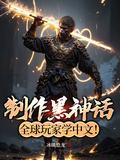 Make Black Myths and Let Players Around the World Learn Chinese!
6.6kReads8.3Score684Shelves
Make Black Myths and Let Players Around the World Learn Chinese!
6.6kReads8.3Score684Shelves
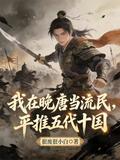 I Was a Refugee in the Late Tang Dynasty and Promoted the Five Dynasties and Ten Kingdoms Equally.
103.5kReads5.8Score10.3kShelves
I Was a Refugee in the Late Tang Dynasty and Promoted the Five Dynasties and Ten Kingdoms Equally.
103.5kReads5.8Score10.3kShelves
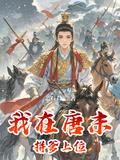 Martial Arts Equal the Sky
140Reads—Score—Shelves
Martial Arts Equal the Sky
140Reads—Score—Shelves
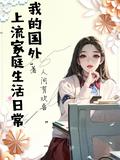 In My Next Life, I Was Adopted by an Upper-Class Foreign Family
17.7kReads9.3Score2.4kShelves
In My Next Life, I Was Adopted by an Upper-Class Foreign Family
17.7kReads9.3Score2.4kShelves
 1959: with the Achievement System, She Rolled
41.1kReads9.3Score3.7kShelves
1959: with the Achievement System, She Rolled
41.1kReads9.3Score3.7kShelves
 Zhaozong Xingtang
15Reads5.8Score—Shelves
Zhaozong Xingtang
15Reads5.8Score—Shelves
 Xitang
149kReads9.4Score16.5kShelves
Xitang
149kReads9.4Score16.5kShelves
 He Is Really Not Fierce! I'm so Naughty!
8.6kReads9.3Score1.5kShelves
He Is Really Not Fierce! I'm so Naughty!
8.6kReads9.3Score1.5kShelves
 The Tang Dynasty's Struggle for Hegemony in the Western Regions
1.7kReads6.4Score177Shelves
The Tang Dynasty's Struggle for Hegemony in the Western Regions
1.7kReads6.4Score177Shelves
 Is Your Fiancée Also Obedient and Soft-Spoken?
5.9kReads9.3Score911Shelves
Is Your Fiancée Also Obedient and Soft-Spoken?
5.9kReads9.3Score911Shelves
 Stepping into the Dragon Clan Brought Eri Back to Reality.
7.7kReads8.5Score1.3kShelves
Stepping into the Dragon Clan Brought Eri Back to Reality.
7.7kReads8.5Score1.3kShelves
 Tyrant of the Southern Tang Dynasty: Poisoned Zhao Kuangyin at the Beginning
947Reads5.8Score—Shelves
Tyrant of the Southern Tang Dynasty: Poisoned Zhao Kuangyin at the Beginning
947Reads5.8Score—Shelves
 Peak of Power: Super Civil Servant
54.9kReads9.2Score4.8kShelves
Peak of Power: Super Civil Servant
54.9kReads9.2Score4.8kShelves
 Soul Crossing Daqi: I Just Want to Survive
10kReads8.2Score687Shelves
Soul Crossing Daqi: I Just Want to Survive
10kReads8.2Score687Shelves
 You Are a Small Country and You Have Become a Permanent Member of the Security Council.
53.1kReads9.3Score4.3kShelves
You Are a Small Country and You Have Become a Permanent Member of the Security Council.
53.1kReads9.3Score4.3kShelves
 In the Late Tang Dynasty, the Emperor Changed His Destiny Against Heaven
201Reads8.9Score—Shelves
In the Late Tang Dynasty, the Emperor Changed His Destiny Against Heaven
201Reads8.9Score—Shelves
 Building a Novice Village from Scratch
8.7kReads8.8Score855Shelves
Building a Novice Village from Scratch
8.7kReads8.8Score855Shelves
 The Story of Taizong: Starting from Ming Dynasty Chengzu
5.3kReads8.6Score245Shelves
The Story of Taizong: Starting from Ming Dynasty Chengzu
5.3kReads8.6Score245Shelves
 I Killed Gods and Buddhas in the Tang Dynasty!
5.3kReads8.1Score307Shelves
I Killed Gods and Buddhas in the Tang Dynasty!
5.3kReads8.1Score307Shelves
 Genshin Impact: in Order to Win the Dragon, I Sold Myself
3.4kReads9.1Score338Shelves
Genshin Impact: in Order to Win the Dragon, I Sold Myself
3.4kReads9.1Score338Shelves
 The Prosperous Age of the Tang Dynasty: Continued by a Ph. D. in Physics
2Reads—Score—Shelves
The Prosperous Age of the Tang Dynasty: Continued by a Ph. D. in Physics
2Reads—Score—Shelves
 The System Ran Away, and I Built an Aviation Empire on My Own.
6.9kReads9.1Score393Shelves
The System Ran Away, and I Built an Aviation Empire on My Own.
6.9kReads9.1Score393Shelves
 Broken Dreams and Lost Tang Dynasty
48Reads5.8Score115Shelves
Broken Dreams and Lost Tang Dynasty
48Reads5.8Score115Shelves
 A Capable Minister in the Late Tang Dynasty: Supporting the Emperor at the Top, Stepping on the Feudal Lord at the Bottom
1Reads—Score—Shelves
A Capable Minister in the Late Tang Dynasty: Supporting the Emperor at the Top, Stepping on the Feudal Lord at the Bottom
1Reads—Score—Shelves
 Traveling Through the Tang Dynasty: Anshi Is Not Too Chaotic
3.3kReads7.5Score169Shelves
Traveling Through the Tang Dynasty: Anshi Is Not Too Chaotic
3.3kReads7.5Score169Shelves
 Fragrant Accumulation Without Promise
—Reads5.8Score—Shelves
Fragrant Accumulation Without Promise
—Reads5.8Score—Shelves
 Detective Di Renjie Part 5: the Wind Rises in the City of Gods
2.4kReads8.8Score173Shelves
Detective Di Renjie Part 5: the Wind Rises in the City of Gods
2.4kReads8.8Score173Shelves
 Let Me Save This Tang Dynasty
5Reads—Score—Shelves
Let Me Save This Tang Dynasty
5Reads—Score—Shelves
 Huazhang in the Late Tang Dynasty
177Reads5.9Score—Shelves
Huazhang in the Late Tang Dynasty
177Reads5.9Score—Shelves
 Female County Lieutenant of the Tang Dynasty
46Reads5.8Score—Shelves
Female County Lieutenant of the Tang Dynasty
46Reads5.8Score—Shelves
 During the Prosperous Tang Dynasty, I Built an Empire in the Western Regions
8Reads—Score—Shelves
During the Prosperous Tang Dynasty, I Built an Empire in the Western Regions
8Reads—Score—Shelves
 Bandits in Prosperous Times, Heroes in Troubled Times
6.9kReads8.0Score488Shelves
Bandits in Prosperous Times, Heroes in Troubled Times
6.9kReads8.0Score488Shelves
 Ming Shizu, Resurgence of Ming Dynasty
47.8kReads9.3Score4.2kShelves
Ming Shizu, Resurgence of Ming Dynasty
47.8kReads9.3Score4.2kShelves
 Flying Dragon Flag: from the Five Dynasties and Ten Kingdoms to the New World
7Reads5.8Score—Shelves
Flying Dragon Flag: from the Five Dynasties and Ten Kingdoms to the New World
7Reads5.8Score—Shelves
 There Was No Three Kingdoms After Han Dynasty
28.6kReads9.4Score2.6kShelves
There Was No Three Kingdoms After Han Dynasty
28.6kReads9.4Score2.6kShelves
 Datang: I Am in Suiye City, My Younger Brother Li Taibai?
8.2kReads8.7Score690Shelves
Datang: I Am in Suiye City, My Younger Brother Li Taibai?
8.2kReads8.7Score690Shelves
 The Indomitable Fighting Spirit of the Tang Dynasty
—Reads5.8Score—Shelves
The Indomitable Fighting Spirit of the Tang Dynasty
—Reads5.8Score—Shelves
 Splendid Tang Dynasty: My Father Is Li Shimin
21.1kReads9.2Score1.7kShelves
Splendid Tang Dynasty: My Father Is Li Shimin
21.1kReads9.2Score1.7kShelves
 Emperor of the Late Tang Dynasty: Emperor Taizong Returns
3.5kReads—Score312Shelves
Emperor of the Late Tang Dynasty: Emperor Taizong Returns
3.5kReads—Score312Shelves
 Family Ancestor Li Shimin
3.3kReads8.8Score179Shelves
Family Ancestor Li Shimin
3.3kReads8.8Score179Shelves
 Traveling Through the Tang Dynasty, Others Signed in and I Copied the Book
—Reads5.8Score—Shelves
Traveling Through the Tang Dynasty, Others Signed in and I Copied the Book
—Reads5.8Score—Shelves
 People in the Prosperous Tang Dynasty
31Reads—Score—Shelves
People in the Prosperous Tang Dynasty
31Reads—Score—Shelves