The male protagonist in the first book is the grandson of Li Longji. Li Longji thought he was rebelling and was in power, so he was very afraid of his descendants. In the beginning, the male protagonist did not dare to reveal too much, and gradually accumulated his own power, allowing An Lushan to rebel in advance.
These Late Tang Dynasty novels are pretty good, you can read them [Send Your Heart] ①The protagonist is from the Tang Dynasty clan, he followed Liu Bei's route in the early stage, and probably followed Liu Xiu's route in the later period. The writing is very good, you can read it [Send Your Heart] ②The protagonist became the grandson of Li Longji, and with the Anshi Rebellion, the protagonist took Li Shimin's route again [Adoration]
This book "The Tang Dynasty" is very good and has never been popular. The author has profound knowledge, good writing style and solid history. It's just a classical Chinese style, which may dissuade many people. Finally, a reminder that the author has stopped updating. If anyone can find it on other platforms, there will be a big prize. The second starting point is "Floating Life in the Late Tang Dynasty" by Shao Thie. Needless to say, the pronunciation is vivid and vivid. The third starting point is "Shang Ming Zhao Tang", the protagonist Li Ye's spirit has passed through the Tang Dynasty Zhaozong, and the lines show a man-eating man in the late Tang Dynasty. There is a paragraph in it that is very emblematic. It is roughly that troops were sent out in one Jiedu, but Jiedushi defeated the army. The generals in the rear thought that Jiedu stayed behind, so they were called Li Liuhou for the time being. Soon Li Liuhou fell out of favor. While he was out, Governor Wang boasted a lot, and was praised by everyone as a stay-at-home queen. When Li Liuhou returned to the base camp, a leading soldier said, "Li Liuhou, no, Governor Li, hurry up and go in to negotiate military affairs, or we will kill you." Real military democracy. After reading so many books, this one reflects it vividly. The fourth book, "Rebuilding the Tang Dynasty after Taizong," begins with the decline of the imperial family, and the plot is touching. Are there historical novels that are very ancient in Chinese, like "Elegant Sao" and "High-grade Poor Scholar"? Many of them are too childish. Rather than being a happy novel, they actually write ancient times as if they were modern, and there is no feeling at all.
"End of the Tang Dynasty + Five Dynasties + Struggle for Hegemony + Strategy + Love + Research", traveling through Emperor Ai of the Tang Dynasty, how to fight for hegemony step by step from a prisoner to the Tang Dynasty after the Five Dynasties? 🥕
☆① Xie Xie traveled to Tianbao for five years in the Tang Dynasty, defeated the Tufan army, killed the Zhou family in Shanzhou City, suppressed the rebellion, destroyed Tufan, and headed for the road of rebellion ② Qi Shen traveled through the late Tang Dynasty and became the son of Qi Kerang, raided the homes of Shu Xu and Sun Yong, killed the Huang Chao army, defeated the Tianping army and other separatist forces, and became the king of Wei. Finally, follow me and don't get lost in the book wasteland.
The first two are novels that recreate the Tang Dynasty in the late Tang Dynasty, and the last one is from the mid-Tang Dynasty. It contains the "Xuanwumen Incident" and the Anlu Mountain Rebellion.
①The male protagonist is immortal. He has assisted Li Shimin since Li Yuan was in power. He has been a minister of Tuogu for many times. He sincerely cares about Li Tang. Even Wu Zetian was eliminated by the male protagonist. Now it is written in the late Tang Dynasty. ② He is full of time travel and becomes the son of Emperor Xuanzong of the Tang Dynasty.
☀️Traveling through the late Tang Dynasty, Zhang Yansi went upstream to revive the glory of the Tang Dynasty. Return to the rebel army! Illuminating the last highlight moment of the late Tang Dynasty! ☀️Chang'an fell six times and the emperor escaped nine times! As a clan member of the Tang Dynasty, how should I use my sword to bring peace to the world, revitalize the country, and rebuild the Tang Dynasty?
It is said that there are no two days in heaven and no two kings in the people. Aye, you are the prince and the marshal of the army. I am the king of Qin and the general of Tiance. Who should I listen to, my subjects of the Tang Dynasty?
The first book is the famous generals of the late Tang Dynasty, the second book is the era of Li Longji, and the third book is the demise of Li Longji in the late Tang Dynasty.
The prosperity was gone, the prosperous age was no longer there, and the sky of the late Tang Dynasty was shrouded in gloom. Here is the helpless sigh of the emperor, watching how the hero rises in adversity and writes his own legend.
🍁 Traveling through the late Tang Dynasty, he became the ninth grandson of Li Shimin. He was supposed to be a nobleman, but he could only sell straw mats in Chang'an due to his downfall. However, facing the six traps of Chang'an and the nine escapes of the emperor, as a descendant of Taizong, he resolutely decided to pick up the sword in his hand to create a prosperous world, rejuvenate the country, and recreate the prosperous Tang Dynasty where thousands of dynasties surrendered!
New book is online. Please recommend! The Five Dynasties and Ten Kingdoms are slow-moving, unsystematic, not brainless, and not time-traveled. They have history and characters. The adopted son usurps power to control the feudal towns, and then unifies the world, and continues the prosperity of the Tang Dynasty for another five hundred years!
Both books are from the middle and late Tang Dynasty. They face the timeline of Li Longji, who is old and dim, dotes on eunuchs, and kills three sons in one day. The protagonist is the cuckold king Shou Wang Li Xuan. In order to change himself from being cuckolded, he planned for a long time to ascend to the throne and prevent the Anshi Rebellion. The second book is about Li Longji's first prince Li Ying, who traveled back to the road before he was killed, and finally regained the motivation for being killed.
If you like to read fictional stories about the Tang Dynasty, you must read this book. The time is in the middle and late Tang Dynasty. The protagonist is an Anxi army. After helping Chang'an to rescue the siege, he will develop the Western Regions, manage the Western Regions, and then plot Central Asia and West Asia to recreate the prosperous Tang Dynasty. I highly recommend it. Moreover, this book respects history and does not make random changes. The plot development is also very logical, rigorous and not brainless.
Searching for novels about the late Tang Dynasty and Five Dynasties on the platform, there are really almost no good ones. They are all defective products. I searched and searched for these two books, and the only two they wrote were passable. The first book's rating was a bit low, but it was actually pretty good, except that the first heroine was a little bit toxic. The last part is a bit unfinished and not explained clearly. The second book is rare. It is about traveling back in time and becoming the last emperor in the late Tang Dynasty. It is more novel, but there are some unexplained meanings at the end of the article.
An unpopular historical novel with a chaotic Chinese background. The author is careful in his research and writes passionately about the battle, not a mindless piece of writing.
"While others are writing about "proclaiming emperor", he is writing about "establishing people" - a northern epic that reconstructs China with potatoes and laws." If you open this work and expect to see the protagonist fighting for three years and proclaiming himself emperor for three years, please close the page. But if you are willing to witness a revolution that does not wash away the palace gates with blood, but completely reshapes the world; if you believe that the true kingship does not lie in burning books and harassing Confucian scholars, but in opening women's colleges, abolishing slave registration, and setting up orphanages; then, please enter this world where the sun hangs in the sky - there are no cool writing routines here, only how a potato can influence the national destiny for three hundred years. With amazing writing power, the author transforms the darkest moment after the Anshi Rebellion into an experimental field for the reconstruction of civilization. Li Qingtian did not rely on the system to defy heaven, but used the peace he had gained in exchange for the lives of four thousand soldiers to fulfill a promise: "Under my rule, the old will not be left homeless, and the young will not be left without food." So we see: Others write about war, but he writes about collecting the souls after the war: the corpses of the Yan army were burned to prevent plague, and the bones of the common people were wrapped in brocade and buried together in the "Anmin Tomb"; others wrote about power and strategy, but he wrote about establishing trust in the system: detailed public trials, dissemination of the "Edict of Loyal Ministers", and shaking up the scholarly community with "the commoner Yang family"; Others write about farming, but he writes about the recovery of people's hearts: children burying seeds beside graves, Hu Shang shouting "Peace in the north is better than Chang'an", old farmers kneeling with earth in front of them and saying "the spirit of the earth is not dead". The most shocking thing was not that the Red Flame Dragon Cavalry defeated the enemy, but that the 50,000-strong army circled the field ridge without stepping on a single spring wheat seedling. The character creation is even more unforgettable: Guo Ziyi is loyal but not stupid, and would rather borrow soldiers from the north than let He enter the pass; Pugu is gracious and sad but refuses to rebel, raising troops to clear the emperor's side but refusing to surrender to the north; Yang Mi writes in the name of "the common people of the world", and an edict can be written faster than a knife; Daizong abdicated on his deathbed, not because of coercion, but because he could not bear to shed another drop of blood in Chang'an. This book also hides a grand vision: from the Yingzhou Rebellion to the Anshi War, from Longyou and Tubo to the eastward expansion of food, the author reveals that the decline of the Tang Dynasty was not due to one thief, but because the entire system lost the ability to "make the people dare to believe in tomorrow." Li Qingtian's new policy was a response to this: opening women's colleges, abolishing slave registration, imposing potato taxes, setting up Changping free warehouses... Each policy directly targeted the root causes of the old world. Fantasy elements? The Buddha lotus in the left eye, the demon pattern in the right eye, the light sword hiding the devil's whisper - but these have never taken over the spotlight. They are just mirrors that reflect human nature: the greatest devil is never in the abyss, but in the human heart's despair for order. Finally, when Li Qingtian ascended the throne, he did not sit on the dragon throne. Instead, he stood under the jade steps and announced the five new policies. But the devil asked for a blood sacrifice, so he pushed open the palace door - outside the door was not a mountain of corpses and a sea of blood, but the lights of the Wenhua Academy, the music of the night market, and the fresh green of the potato fields. "This is my blood sacrifice - to sacrifice the death of the old world in order for all people to live in peace." This is not a cool article, this is a tragic epic about mortals remaking China. It tells us: The real destiny does not lie in the prophecies of Tui Meibi, but in the moment when children dare to bury the seeds beside the grave; the real Great Wall does not lie in the bricks and stones, but in the people's aspiration that "the northern border is the Great Wall". If you long for a work that has the coldness of "Zi Zhi Tong Jian" and the warmth of "The people are tired, but they can be well-off" in the Book of Songs; if you believe that the turning point in history often begins with a bowl of hot porridge, a new seedling, and the sentence "The north is here, the people have no worries" - then, please open this book. Because here, the gods and demons will eventually exit, but the human heart will never die...
This novel at the end of the Tang Dynasty begins with the spirit of an unknown soldier. See how he can stand firm in troubled times and strive for world domination.
✨The protagonist is the grandson of Li Longji [please pay attention][please pay attention][please pay attention] ✨The protagonist is Li Huo, a famous civil and military prince in history. He is also known as Xiao Li Shimin. Li Heng was afraid of following the same path of Li Yuan and killed him. In order to change history, the protagonist has to do nothing every day, thereby paralyzing Li Heng and Li Longji o(*^_^*) o(*^_^*) ✨Follow Mo Ran and not get lost^ω^ ^ω^
The first two books should meet the requirements, and the later ones are also quite good (。・ω・。)ノ♡ If you are short on books, you can give it a try (・ω・)
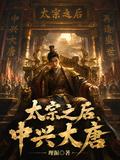 After Taizong, the Tang Dynasty Was Rebuilt
202.6kReads9.3Score24.8kShelves
After Taizong, the Tang Dynasty Was Rebuilt
202.6kReads9.3Score24.8kShelves
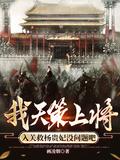 I Lay Flat in the Tang Dynasty
22.3kReads8.9Score1.8kShelves
I Lay Flat in the Tang Dynasty
22.3kReads8.9Score1.8kShelves
 Travel Through Time as Li Longji and Make the Tang Dynasty Great Again
56Reads—Score—Shelves
Travel Through Time as Li Longji and Make the Tang Dynasty Great Again
56Reads—Score—Shelves
 Save the Tang Dynasty
381Reads—Score—Shelves
Save the Tang Dynasty
381Reads—Score—Shelves
 Overturning the Tang Dynasty: Traveling Through the Zen Emperor Tang Aizong
269Reads5.8Score—Shelves
Overturning the Tang Dynasty: Traveling Through the Zen Emperor Tang Aizong
269Reads5.8Score—Shelves
 The Master Is so Great That I Will Rise up Immediately
1.8kReads8.2Score—Shelves
The Master Is so Great That I Will Rise up Immediately
1.8kReads8.2Score—Shelves
 The Hunter of the Tang Dynasty
4.1kReads7.5Score297Shelves
The Hunter of the Tang Dynasty
4.1kReads7.5Score297Shelves
 Returned to the Late Tang Dynasty and Became Emperor
370Reads5.4Score—Shelves
Returned to the Late Tang Dynasty and Became Emperor
370Reads5.4Score—Shelves
 Datang: My Clan Is Bullying Me? Assassinate the Emperor with a Backhand
2.3kReads8.2Score137Shelves
Datang: My Clan Is Bullying Me? Assassinate the Emperor with a Backhand
2.3kReads8.2Score137Shelves
 A Vassal Town in the Late Tang Dynasty, the Best Military Envoy in the World
136.7kReads8.9Score10.8kShelves
A Vassal Town in the Late Tang Dynasty, the Best Military Envoy in the World
136.7kReads8.9Score10.8kShelves
 Eternal Life! the Emperor of the Tang Dynasty, for Taizong, Always Protects the Mountains and Rivers
6.1kReads8.7Score348Shelves
Eternal Life! the Emperor of the Tang Dynasty, for Taizong, Always Protects the Mountains and Rivers
6.1kReads8.7Score348Shelves
 Datang: Only Three Days Left Before the Fall of Chang'an
27Reads6.3Score—Shelves
Datang: Only Three Days Left Before the Fall of Chang'an
27Reads6.3Score—Shelves
 Datang: Return to the Anshi Rebellion and Become a Prince
22Reads—Score—Shelves
Datang: Return to the Anshi Rebellion and Become a Prince
22Reads—Score—Shelves
 At the Beginning of the Game, Yang Guifei Was Raped and the Tang Dynasty Was Given a Peaceful Year.
31.6kReads7.9Score3.5kShelves
At the Beginning of the Game, Yang Guifei Was Raped and the Tang Dynasty Was Given a Peaceful Year.
31.6kReads7.9Score3.5kShelves
 Five Dynasties: Iron Cavalry Zongheng
2.8kReads8.5Score154Shelves
Five Dynasties: Iron Cavalry Zongheng
2.8kReads8.5Score154Shelves
 The Heroes Are Vying for the Throne, and the Tang Dynasty Is in Danger!
—Reads5.8Score—Shelves
The Heroes Are Vying for the Throne, and the Tang Dynasty Is in Danger!
—Reads5.8Score—Shelves
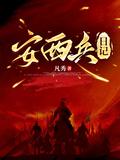 Diary of Anxi Soldier
18.4kReads9.4Score2.3kShelves
Diary of Anxi Soldier
18.4kReads9.4Score2.3kShelves
 The Rebellious Emperor of the Tang Dynasty
59Reads6.5Score—Shelves
The Rebellious Emperor of the Tang Dynasty
59Reads6.5Score—Shelves
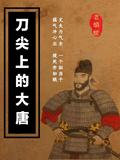 Zhujinou
4.2kReads8.2Score359Shelves
Zhujinou
4.2kReads8.2Score359Shelves
 Iron-Blooded Tang Dynasty
571Reads7.2Score—Shelves
Iron-Blooded Tang Dynasty
571Reads7.2Score—Shelves
 Return to Tang Dynasty
1.1kReads8.9Score101Shelves
Return to Tang Dynasty
1.1kReads8.9Score101Shelves
 Tang Dynasty: My Father, Xuanzong, Shines Through the Ages
58Reads—Score—Shelves
Tang Dynasty: My Father, Xuanzong, Shines Through the Ages
58Reads—Score—Shelves
 The Dragon Rises from Jinling and Continues the Tang Dynasty for Another Five Hundred Years
453Reads5.8Score—Shelves
The Dragon Rises from Jinling and Continues the Tang Dynasty for Another Five Hundred Years
453Reads5.8Score—Shelves
 Longevity King Li Long: Please Return to Heaven for Li Longji
5.6kReads8.5Score309Shelves
Longevity King Li Long: Please Return to Heaven for Li Longji
5.6kReads8.5Score309Shelves
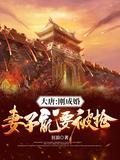 Datang: as Soon as You Get Married, Your Wife Will Be Robbed?
68Reads—Score—Shelves
Datang: as Soon as You Get Married, Your Wife Will Be Robbed?
68Reads—Score—Shelves
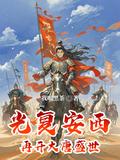 Tang Dynasty Anxi Army
10.1kReads9.0Score975Shelves
Tang Dynasty Anxi Army
10.1kReads9.0Score975Shelves
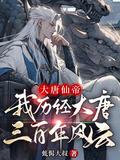 The Immortal Emperor of the Tang Dynasty, I Have Experienced the Three Hundred Years of the Tang Dynasty
24Reads—Score—Shelves
The Immortal Emperor of the Tang Dynasty, I Have Experienced the Three Hundred Years of the Tang Dynasty
24Reads—Score—Shelves
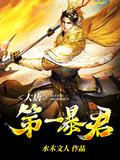 The First Tyrant of the Tang Dynasty
2.3kReads8.2Score204Shelves
The First Tyrant of the Tang Dynasty
2.3kReads8.2Score204Shelves
 Kaiyuan Grand Scene
62Reads5.8Score—Shelves
Kaiyuan Grand Scene
62Reads5.8Score—Shelves
 Tang Gui: with Millions of Troops, the Emperor Wants to Withdraw His Military Power?
5Reads5.8Score—Shelves
Tang Gui: with Millions of Troops, the Emperor Wants to Withdraw His Military Power?
5Reads5.8Score—Shelves
 Lychees from Chang'an: I Was Demoted to Lingnan with Millions of Troops
1.9kReads7.0Score182Shelves
Lychees from Chang'an: I Was Demoted to Lingnan with Millions of Troops
1.9kReads7.0Score182Shelves
 The First Rebel in the Prosperous Tang Dynasty
37.3kReads8.1Score3.6kShelves
The First Rebel in the Prosperous Tang Dynasty
37.3kReads8.1Score3.6kShelves
 I Use Mo Dao as a Javelin, and You Are Trying to Become a Minister of Tang Dynasty
13.8kReads8.4Score1.1kShelves
I Use Mo Dao as a Javelin, and You Are Trying to Become a Minister of Tang Dynasty
13.8kReads8.4Score1.1kShelves
 I'll Go Up, I'll Go Up!
10Reads—Score—Shelves
I'll Go Up, I'll Go Up!
10Reads—Score—Shelves
 On the Day of the Wake, I Was Promoted to the Throne by My Sisters-In-Law
4.2kReads8.8Score232Shelves
On the Day of the Wake, I Was Promoted to the Throne by My Sisters-In-Law
4.2kReads8.8Score232Shelves
 The Largest Warlord in the Late Tang Dynasty
5.4kReads7.7Score296Shelves
The Largest Warlord in the Late Tang Dynasty
5.4kReads7.7Score296Shelves
 Nanming Rebel Army
19.2kReads9.0Score1.6kShelves
Nanming Rebel Army
19.2kReads9.0Score1.6kShelves
 Ancient History and Present 3
215Reads5.8Score—Shelves
Ancient History and Present 3
215Reads5.8Score—Shelves
 Chaos
2.4kReads7.6Score266Shelves
Chaos
2.4kReads7.6Score266Shelves
 Coming to Nanming, Engineering Students Swept Across the Qing Dynasty and Restored China
741Reads5.8Score100Shelves
Coming to Nanming, Engineering Students Swept Across the Qing Dynasty and Restored China
741Reads5.8Score100Shelves
 An Engineering Boy Made His Mark in the Late Ming Dynasty
3.1kReads7.8Score277Shelves
An Engineering Boy Made His Mark in the Late Ming Dynasty
3.1kReads7.8Score277Shelves
 Wuhu: Starting with 31,000 Yuan, Fu Jian Will Be Guaranteed to Death.
1.9kReads8.2Score—Shelves
Wuhu: Starting with 31,000 Yuan, Fu Jian Will Be Guaranteed to Death.
1.9kReads8.2Score—Shelves
 Following the Bloody Tang Dynasty, the Chess Game Comes to an End
3Reads5.8Score—Shelves
Following the Bloody Tang Dynasty, the Chess Game Comes to an End
3Reads5.8Score—Shelves
 Tianqing in the Late Tang Dynasty
7Reads—Score—Shelves
Tianqing in the Late Tang Dynasty
7Reads—Score—Shelves
 Datang: After Time Travel, I Will Just Start Playing
4.5kReads8.5Score193Shelves
Datang: After Time Travel, I Will Just Start Playing
4.5kReads8.5Score193Shelves
 Datang: Starting from the Guiyi Army
1.8kReads8.8Score132Shelves
Datang: Starting from the Guiyi Army
1.8kReads8.8Score132Shelves
 I Originally Wanted to Assist the First Emperor, but Was Forced to Become the Chanyu of the Huns.
10.8kReads9.1Score1.3kShelves
I Originally Wanted to Assist the First Emperor, but Was Forced to Become the Chanyu of the Huns.
10.8kReads9.1Score1.3kShelves
 The Smoke and Clouds of the Prosperous Tang Dynasty
209Reads8.8Score—Shelves
The Smoke and Clouds of the Prosperous Tang Dynasty
209Reads8.8Score—Shelves
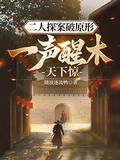 The Two Men Investigated the Case and Uncovered the Truth, and the Whole World Was Shocked.
12kReads9.2Score1.9kShelves
The Two Men Investigated the Case and Uncovered the Truth, and the Whole World Was Shocked.
12kReads9.2Score1.9kShelves
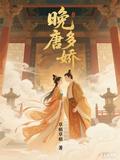 Duojiao in the Late Tang Dynasty
3Reads—Score—Shelves
Duojiao in the Late Tang Dynasty
3Reads—Score—Shelves