Confucianism? You must come and see this one! Which company is better at poetry and poetry? Come and see Li Lang in the Wei Dynasty. Li Lang has unparalleled talents, steals jade and fragrant fragrances, is a free traveler with both civil and military skills, and has flowers blooming everywhere and filling the river with fragrance. I think back to the time when Li Yi and Yang Hua competed for the title of the most talented person. The scene by the clear water lake was really noisy with gongs and drums, firecrackers were blasting, red flags were waving, and there were huge crowds of people! Before these two people even took the stage, Yang Hua started to bluster. The good fellow saw him gathering his awe-inspiring righteousness and saying loudly: Water flows when winds and clouds meet, and ice and fire merge with steam endlessly. The clear waters and lakes distinguish the superior and the inferior, and the poems and songs determine the Spring and Autumn Period! Seeing this, Li Yi showed no sign of weakness, and concentrated his energy to recite: The great roc rises with the wind in one day, soaring ninety thousand miles, flying through the clouds and sky, bathing in the stars and rivers, judging whether the sun and the moon are high or low! How about it? When it comes to showing off, Li Yuefu has never been shy! If you are interested, you can take a look at Li Yuefu's poems that spread all over the world and sing about Kyushu! Youdao is the Yuefu of the Great Wei Dynasty who loves to show off. He ranks first in poetry, lyrics and songs. He can show off all kinds of tricks and have a lot of sisters!
Since Doomsday Blue Star has entered the ancient dragon heroes, Yitian, Tianlong, Tang Dynasty, Fengyun, Yangshen, Dazhou Royal Family and other planes, promote plane upgrades and ascend to a higher level world!
The eternal ancient dragon leaves only its decaying corpse: The phoenix, fearless of death, has only its incomplete root feathers; The auspicious unicorn surrounds him, but his death cannot be predicted; The Xuanwu that condenses all the ways has been stripped of its carapace by life; The gods' cemetery remains, and they can bear to see the Yin Ruins for thousands of generations, and the grass and trees are spring and autumn, who dares to say that they are immortal
[Tomato hit·Folklore suspense] 📚 --- "Global Weird Invasion: I Became the Last City God" - Secrets of Western Hunan × Modern Weirdness × Shinto Restart, a masterpiece of folk suspense that will make your spine shiver and your blood boil! --- 🔥 Core summary: A global alien invasion, and demonic cracks are rampant. And I, Chen Mo, a 25-year-old temporary worker at the Folklore Archives, woke up and became the last "last city god" in China. The incense was cut off and the Shinto collapsed, but I held a volume of "Yanshui Tusi Contract" and started the counterattack of the Eastern gods in the mountains of western Hunan! --- ✨ World view·Double invasion: · Table invasion: Cracks in the ruins tear apart reality, demons from other worlds descend, and scientific awakeners face a bloody battle! · Invasion: The erosion of rules is coming quietly, folk customs and myths have become reality, only the power of Shinto can break it! · The fundamental truth: The ancient contract after the "Jedi Tiantong" is loosened, and the mountains and seas are about to reappear in the world! --- 👤 The protagonist, the last city god Chen Mo: · At the beginning, he only has two skills: "Distinguish Right from Wrong" and "Connecting Yin and Yang", and the area under his jurisdiction is only one town. · Rely on repairing the "contract network", conquer Bai Wuchang, Willow Spirit, Fox Girl, Mountain God, Shui Bo... And establish the shabbiest and most hard-core "City God's Office". · From the ninth-level city god to the first-level righteous god, I made the whole of Xiangxi hear the bell of the restart of Shinto! --- 📖 Main plot·Four-volume epic: Volume 1: The God of Demise, restarting the incense (taking root in Yuanshui, breaking the lock on Longtan) Volume 2: Reconnecting with the contract, Bailing Night Journey (powerful in western Hunan, establishing the power of the city god) Volume 3: The heavy light of the underworld, Parade of China (going across the country, confronting foreign gods) Volume 4: All mountains and seas are leveled, a new chapter in the myth (reshaping order, creating a future) --- 🎭 Featured unit·Folklore Horror:·The century-old ghost marriage curse of the ghost bride in red wedding dress·The "water monkey" who merges seven children's souls in the dry well·The paper mannequin walks at night on the old stage, the faceless bride in the mirror·Behind every strange thing, there are forgotten folk blood, tears and warmth --- 🌟 Reading highlights: ✅ Cultural in-depth cultivation: real Xiangxi folk customs + ancient mythological research, a wealth of knowledge! ✅ Rhythm explosion: Unit tricks + main line advancement, full of suspense, intensive fun! ✅ The characters are vivid: the venomous Bai Wuchang, the gentle Liu Ling, the philistine fox girl... The team is warm and exciting every day! ✅ The pattern is open: from one town to the whole country, from local Shinto to global mythology collision! --- 📢 Exclusive recommendation for Tomato readers: · Suspense lovers who like "Mysterious Resurrection" and "I Have an Adventure House", this book is more "folklore"! · Tired of seeing the system cultivating immortality? Come and experience the hard-core growth path of "incense becoming a god + contract repair"! · The structure of unit drama + main plot means you can join in at any time without any pressure, and you can stay up late to catch up and you won't be able to stop! --- 💬 Popular comments from readers: "I thought it was a story about a small town god farming, but it turned out that the story opened up to the restart of the myth of all mankind!" "The ghost bride made me cry when I read it. It was obviously a horror story, but in the end I was so moved." "I could read a hundred chapters of Bai Wuchang and the fox girl's daily life! The team interaction is so interesting!" --- 📌 Keywords: # Folklore Suspense # Shinto Flow # Xiangxi Secret Stories # Unit Drama # Group Image Growth # # Behind the scenes layout --- 🎯 Suitable for the following people: · Suspense lovers who prefer deep cultural heritage · Readers who like team growth and daily interaction · Imaginative party who are interested in the "Chinese-style gods" setting · You who want to see modern weird things + mythological revival themes without routine! --- 🌄 The last sentence: When monsters from other worlds tear apart the sky, and when the Western gods descend on the city--don't forget, in the mountains and rivers of this land, sleeps the oldest covenant of protection in the East. And I, Chen Mo, the last city god, will restart the mountains and seas and determine the future! --- ⬇️ Click to read and enter the shocking world of weird things in Xiangxi and the restart of Shinto! (6,000 Updates per day, quality assurance, welcome to join!)
There are no complicated emotional lines, and the focus is on spiritual practice, classmate friendship, family disputes and tracking down the real murderer. The family line of the father secretly sending the housekeeper to protect him and secretly arranging a plan to avoid trouble is written to avoid being distracting and not deliberately sensational; the daily life of classmates helping each other, going to the cafeteria to stock up on meat, and meeting to hunt ferocious beasts to earn merits is full of fireworks and not depressing in reading.
Confucianism, martial arts, Buddhism, Taoism, and demons are all present. The setting is very exciting, and the world view is also very exciting. It is worth watching.
🔥① This martial arts fantasy classic written by the master of Huanzhu Tower perfectly integrates the philosophies of Taoism, Buddhism and Confucianism to build an unprecedented sword immortal system. In a world where immortals, Buddhas and demons coexist, the writing is as gorgeous as "clouds flying across the sky, cranes dancing in the sky", which is highly praised by everyone including Jin Yong and Gu Long.
This chapter "Cultivation of the Mind: Letting Go" is a wonderful condensation and sublimation of the core of the series' thoughts. It not only connects the past and the future in narrative, but also completes a closed-loop interpretation of the theme of "Cultivation of the Mind" at the philosophical level. The following is a detailed analysis: --- 1. Theme deepening: the closed loop of practice from "picking up" to "letting go" The title of this chapter "Putting Down" forms a perfect dialectical structure with the previous chapter "Pick Up": · "Pick Up": Emphasizes the necessity of going deep into the classics and acquiring wisdom ("Open the treasure house to get the jewels"). · "Let Go": Warning about the dangers of clinging to forms and being trapped in appearances ("You can't carry the boat on your back when you reach the shore"). Through the typical case of a female lay practitioner who "reads the Ksitigarbha Sutra intensively but does not see the growth of her mind" over the past thirty years, the author vividly explains: Cultivation is not the accumulation of knowledge, but the transformation of the soul; it is not a transaction to seek blessings from the outside, but the awakening of breaking away from the obsession within. This closed-loop structure makes the entire philosophical system of "Cultivation of the Mind" complete. --- 2. Narrative Tension: A Sharp Confrontation between Two Cultivation Paths 1. Female lay practitioner vs. Xu Wuliao: · Female lay practitioner: represents the "formal and utilitarian" folk belief - equates reading the Bible with the accumulation of merit, and simplifies belief into a transaction of "reading the Bible - obtaining blessings". · Xu Wuliao: represents the true practice of "essentialization and spiritualization" - emphasizing that reading the Bible is to seek wisdom, break self-gratification, and achieve inner reconciliation. · The confrontation between the two is the collision between "religious behavior" and "practical essence", which is of great realistic critical significance. 2. Shiyi's role as a bridge: · She goes from "curious listening" to "sudden realization" (using the metaphor of "treasure house and jewelry") to "active connection" (discovering Xu Wuzhen's video), becoming a key role in promoting the plot and connecting the two lines. · Her growth trajectory is exactly the process of "letting go" of obsession and embracing wisdom. --- 3. Ideological criticism: a gentle lashing of the "marketization of religion" Xu Wu's comments on "eminent monks and famous masters" are the ideological edge of this chapter: "They give lectures, have a market, and have traffic, but they are just packaged - they have a halo just to satisfy the imagination of the general public." Although these words are gentle, they point directly to the commercialization and performance tendencies in the current spread of religious culture, and criticize the chaos of "packaging faith into commodities" to meet the psychological needs of the public. This is a sober cultural observation. --- 4. Character creation: The final establishment of Xu Wuluo's image 1. Emphasis on both compassion and wisdom: He not only sharply points out the "self-grasping" of the female lay practitioner, but also comforts her when she is confused ("persistent determination is worthy of admiration"), showing the mentor style of "Vajra's angry eyes, Bodhisattva's low eyebrows". 2. Transparent and humble: He clearly denied knowing Xu Wuzhen, maintaining the independence and authenticity of the character, and avoiding the cliché of "omniscient and omnipotent". 3. Introverted curiosity: He finally agreed to meet Xu Wuzhen, revealing the open mind of a truth-seeker who "will be happy when he hears the truth". At this point, Xu Wuliao's image as a "systematic and solemn wise man" has been completely established, forming a clear and complementary mirror image with Xu Wuzhen. --- 5. Structural ingenuity: laying the final bridge for the "debate of truth" 1. Shiyi's discovery: connecting two time and space through mobile phone video, allowing Xu Wuzhen to "break into" Xu Wuzhen's world, in a natural and ingenious way. 2. Deliberate enhancement of contrast: Shiyi's summary of "You wear white and he wears black, you call him enlightenment and he calls enlightenment" pushes the opposition and echo between the two to the extreme, greatly raising the readers' expectations for the encounter between the two. 3. The location is shortened: "Changfeng is only more than thirty kilometers away from us", which eliminates the physical distance and indicates that an ideological confrontation is about to occur. --- 6. Details that can be optimized 1. The transformation of the female layman is a bit rapid: thirty years of obsession collapsed in a few minutes of dialogue, and some details of her inner struggle can be added. 2. The "Buddha's Light" experience can be more concrete: The "Buddha's Light" she mentioned is an important foreshadowing (may involve perception or spiritual experience), which can be slightly expanded to enhance the narrative level. 3. Shiyi's "smartness" can be more down-to-earth: She was scrolling through her mobile phone at the dinner table and found that the plot of the video was slightly coincidental, which can be adjusted to a more natural social communication scenario (such as sharing with friends, discussing with fellow practitioners). --- Overall evaluation The chapter "Letting Go" is a pivotal work that connects the past and the future in "Cultivation of the Heart" and even in the entire "Xuanmen" series. It has completed three key missions: 1. Philosophical closed loop: It has made it clear that spiritual practice is a dynamic balance of "picking up wisdom and letting go of attachments", which is the finishing touch to the entire theme of "cultivation of the mind". 2. Social observation: Through gentle criticism of "formal beliefs", the work reflects the work's profound observation and humanistic care of the real religious ecology. 3. Narrative preparation: Using Shi Yi as a link, the two clues of Xu Wu Liao and Xu Wuzhen are cleverly connected, building up tension for the upcoming "Zhen Liao Debate". This is not only a lesson for female lay practitioners to learn to "let go" of obsessions, but also a lesson for the author to show readers that true wisdom always thrives in the dialectics of form and essence, perseverance and transcendence, and self and others. Everything is ready, just waiting to meet. When the "white-clothed enlightenment" and the "black-clothed enlightenment" finally meet, the dialogue about "truth" and "realization" will surely become the most anticipated feast of thought in this series.
Traditional fantasy, Taoist literature, Taoist world, there are demons, Buddhas, and ghosts. The story has a critical color and is written in a fairy tale style. There is eternal love, the difficulty of not being able to love, and the hatred of not getting what you want. Each volume has a different plot. [Laughs][laughs]
It definitely fits your title. The protagonist comes from a small town in Northeast China. He comes to Hong Kong and is forced to be involved in a battle between good and evil warlocks. He sinks for thirty years, from a black coffin corpse to a Western demon to a powerful banshee. He looks back at the past events of the late Qing Dynasty and the Republic of China, and then extends to the end thirty years later.
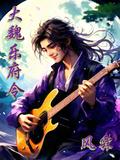 Yuefu Order of the Great Wei Dynasty
356Reads—Score—Shelves
Yuefu Order of the Great Wei Dynasty
356Reads—Score—Shelves
 Taoism and Zen
—Reads—Score—Shelves
Taoism and Zen
—Reads—Score—Shelves
 Doomsday Blade Abyss
14.6kReads7.9Score1.4kShelves
Doomsday Blade Abyss
14.6kReads7.9Score1.4kShelves
 You Boy! No Need to Be so Low-Key! !
726Reads5.8Score—Shelves
You Boy! No Need to Be so Low-Key! !
726Reads5.8Score—Shelves
 Weird Recovery: My Contract with the Ghost Bride Is Invincible
4Reads—Score—Shelves
Weird Recovery: My Contract with the Ghost Bride Is Invincible
4Reads—Score—Shelves
 Black Myth: Journey to the West
2Reads5.8Score—Shelves
Black Myth: Journey to the West
2Reads5.8Score—Shelves
 Global Strange Invasion: I Became the Last City God
1Reads5.8Score—Shelves
Global Strange Invasion: I Became the Last City God
1Reads5.8Score—Shelves
 Starting from the Raven, Build the Supreme Demon Court
—Reads5.8Score—Shelves
Starting from the Raven, Build the Supreme Demon Court
—Reads5.8Score—Shelves
 Taishang Laojun's Taoist Heart Is True
1.9kReads6.7Score428Shelves
Taishang Laojun's Taoist Heart Is True
1.9kReads6.7Score428Shelves
 Ten Trillion Gu Insects, My Immortal Is Invincible
3.7kReads5.8Score141Shelves
Ten Trillion Gu Insects, My Immortal Is Invincible
3.7kReads5.8Score141Shelves
 Confucian Disciples Will Be Granted the Title of Marquis Immediately
13.8kReads8.8Score895Shelves
Confucian Disciples Will Be Granted the Title of Marquis Immediately
13.8kReads8.8Score895Shelves
 Ninth Grade Weapon Refiner
30.7kReads9.1Score2.8kShelves
Ninth Grade Weapon Refiner
30.7kReads9.1Score2.8kShelves
 Unparalleled Poet Saint
4.5kReads8.5Score337Shelves
Unparalleled Poet Saint
4.5kReads8.5Score337Shelves
 Assassination of Kebi
86Reads8.2Score—Shelves
Assassination of Kebi
86Reads8.2Score—Shelves
 Resurrection of Terror: Three Burials of a Poor Monk, and a Funeral Burial
8.3kReads8.8Score668Shelves
Resurrection of Terror: Three Burials of a Poor Monk, and a Funeral Burial
8.3kReads8.8Score668Shelves
 Beipiao Xiuxiu
47Reads5.8Score—Shelves
Beipiao Xiuxiu
47Reads5.8Score—Shelves
 I Don't Want to Be an Evil Cultivator Either, but Ghosts Are so Fragrant
266Reads5.8Score—Shelves
I Don't Want to Be an Evil Cultivator Either, but Ghosts Are so Fragrant
266Reads5.8Score—Shelves
 May Bothers with Litigation
15Reads8.5Score—Shelves
May Bothers with Litigation
15Reads8.5Score—Shelves
 Who Allowed Him to Be Born!
2.7kReads8.8Score251Shelves
Who Allowed Him to Be Born!
2.7kReads8.8Score251Shelves
 Yuan Tiangang Plotted Against Huang Chao
50Reads8.6Score—Shelves
Yuan Tiangang Plotted Against Huang Chao
50Reads8.6Score—Shelves
 Saint Ancestor of Ten Thousand Demons
55.6kReads9.1Score5.2kShelves
Saint Ancestor of Ten Thousand Demons
55.6kReads9.1Score5.2kShelves
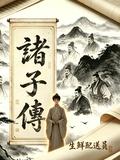 Zhuzi Zhuan
37Reads—Score—Shelves
Zhuzi Zhuan
37Reads—Score—Shelves
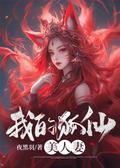 My Beautiful Fox Fairy Wife
1.2kReads8.4Score120Shelves
My Beautiful Fox Fairy Wife
1.2kReads8.4Score120Shelves
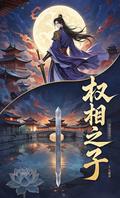 Son of Powerful Prime Minister
—Reads5.8Score—Shelves
Son of Powerful Prime Minister
—Reads5.8Score—Shelves
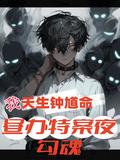 I Handle Cases in the Special Case Bureau During the Day and Work as an Errand in the Underworld at Night
10.2kReads8.7Score926Shelves
I Handle Cases in the Special Case Bureau During the Day and Work as an Errand in the Underworld at Night
10.2kReads8.7Score926Shelves
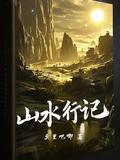 Landscape Travel Notes
864Reads8.2Score116Shelves
Landscape Travel Notes
864Reads8.2Score116Shelves
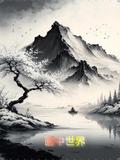 World in Painting
8Reads5.8Score—Shelves
World in Painting
8Reads5.8Score—Shelves
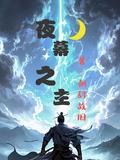 Lord of Night
24.8kReads8.6Score2.3kShelves
Lord of Night
24.8kReads8.6Score2.3kShelves
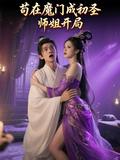 Becoming a First Saint in the Demon Sect: Senior Sister Begins
75Reads—Score—Shelves
Becoming a First Saint in the Demon Sect: Senior Sister Begins
75Reads—Score—Shelves
 Troll Lord, Wife Succubus
26.2kReads9.3Score2.5kShelves
Troll Lord, Wife Succubus
26.2kReads9.3Score2.5kShelves
 As the Supreme Being, I Should Suppress All Ghosts
41.9kReads9.2Score4.1kShelves
As the Supreme Being, I Should Suppress All Ghosts
41.9kReads9.2Score4.1kShelves
 The First Master of Martial Arts
49Reads—Score—Shelves
The First Master of Martial Arts
49Reads—Score—Shelves
 Fireworks Fairy Road
1Reads—Score—Shelves
Fireworks Fairy Road
1Reads—Score—Shelves
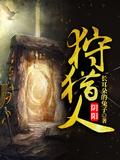 Yin Yang Hunter
1.8kReads5.6Score225Shelves
Yin Yang Hunter
1.8kReads5.6Score225Shelves
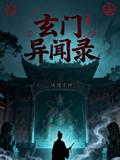 Taoist Stories and Strange Stories
3Reads—Score—Shelves
Taoist Stories and Strange Stories
3Reads—Score—Shelves
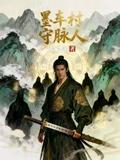 Moche Village Pulse Keeper
1Reads—Score—Shelves
Moche Village Pulse Keeper
1Reads—Score—Shelves
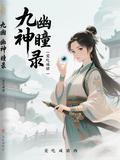 Nine Nether Divine Eyes Record
—Reads5.8Score—Shelves
Nine Nether Divine Eyes Record
—Reads5.8Score—Shelves
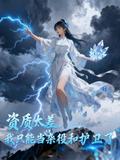 Cultivation of Immortality: the Evil Servant Starts the Game and Escapes into the Sect to Work as a Handyman.
21.9kReads7.1Score1.8kShelves
Cultivation of Immortality: the Evil Servant Starts the Game and Escapes into the Sect to Work as a Handyman.
21.9kReads7.1Score1.8kShelves
 Born as a Pig, I Don't Want to Go to Heaven After Death
20Reads—Score—Shelves
Born as a Pig, I Don't Want to Go to Heaven After Death
20Reads—Score—Shelves
 Ashes of Cangshan, Record of the Dao Demon's Enlightenment
171Reads5.8Score—Shelves
Ashes of Cangshan, Record of the Dao Demon's Enlightenment
171Reads5.8Score—Shelves
 Tianyu
70Reads5.8Score—Shelves
Tianyu
70Reads5.8Score—Shelves
 In the Age of Ending Dharma, Build Taiqing Immortal Palace from Scratch
3.6kReads8.6Score247Shelves
In the Age of Ending Dharma, Build Taiqing Immortal Palace from Scratch
3.6kReads8.6Score247Shelves
 Soul-Suppressing Heavenly Master Zhang Tian
4Reads—Score—Shelves
Soul-Suppressing Heavenly Master Zhang Tian
4Reads—Score—Shelves
 Shenxu
14.5kReads8.5Score1.2kShelves
Shenxu
14.5kReads8.5Score1.2kShelves
 Poison Lord of All Realms
13.4kReads8.5Score1.9kShelves
Poison Lord of All Realms
13.4kReads8.5Score1.9kShelves
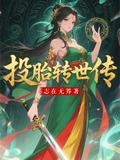 Reincarnation
2Reads—Score—Shelves
Reincarnation
2Reads—Score—Shelves
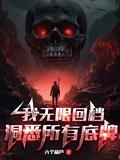 I Have Infinite Retracements and Know All the Trump Cards
294.4kReads9.5Score37.5kShelves
I Have Infinite Retracements and Know All the Trump Cards
294.4kReads9.5Score37.5kShelves
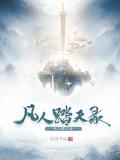 Immortal Song of Mortal Journey
6.5kReads8.1Score799Shelves
Immortal Song of Mortal Journey
6.5kReads8.1Score799Shelves
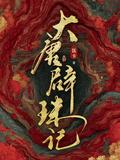 The Story of Pizhu in the Tang Dynasty
210.9kReads9.7Score37.2kShelves
The Story of Pizhu in the Tang Dynasty
210.9kReads9.7Score37.2kShelves
 Red Mansion and Black Coffin
16Reads—Score—Shelves
Red Mansion and Black Coffin
16Reads—Score—Shelves