Absolutely authentic and hard-core Taoism, absolutely real cultivation, and absolute Taoism. Although the content of the novel has been processed, the author of this book is a Taoist priest. It is full of real things about cultivation. It is full of practical information and full of sincerity. It is different from any "Taoist novel" you have read before. The plot is also very interesting. If you are interested, come and watch [Blow a kiss]
The autobiography of a Taoist priest from Qingcheng Mountain tells the story of how he and his three senior brothers went to solve supernatural events, spirits, monsters, ghosts, etc. There is no heroine, no emotional line, the storyline is too detailed, the spells, and the techniques are quite professional, and it also involves some consecration, ordinary people training, spell teaching, etc. You can judge the authenticity of the story by yourself.
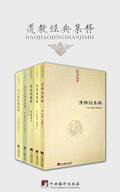
These books are pretty good.
1This novel is the most, most, most, most, most, most, most, most, most, most, most, most, most, most, most, most, not least, not bad novel that I have ever read. It's strange!
2Author, can you write a book like One Piece? Because this kind of book has great potential. Or maybe Pokémon.
[3] The presence of pig's feet is a bit weak. I think the title of the book can be changed to, I, the Jade Emperor, is planning behind the scenes. After all, I have never faced an enemy head-on.
It tells the story of a pure cultivator who entered the mortal world from Taoism. When learning about various supernatural events, discovering the complexity of relationships between people is a hundred times more difficult than practicing spiritual practice. The story involves Feng Shui, folk customs, scientific explanations, Qimen Dunjia, various Yili, etc. It also uses metaphysics and science to explain some seemingly unscientific and bizarre events. .
Understanding the "Book of Changes" will help you avoid detours in life. In the long history of Chinese culture, the "Book of Changes" is undoubtedly the brightest pearl, known as "the first of the scriptures and the source of the great road." It carries the wisdom of the Chinese nation for thousands of years. After years of baptism, it still exudes charming charm and profoundly affects our way of thinking, philosophy of life and understanding of the world. The "Book of Changes" was originally a book used for divination, helping ancient people predict the future and seek good fortune and avoid misfortune. But with the passage of time, its connotation has been continuously enriched and deepened, and it has gradually transformed from a simple book of divination into a profound philosophical masterpiece. The Book of Changes believes that everything in the universe is composed of the interaction of the two basic forces of yin and yang. The balance and coordination of yin and yang are the basis for the stable development of things. This concept of yin and yang runs throughout the "Book of Changes" and is reflected in the symbol system of the Bagua and the Sixty-Four Hexagrams. The Bagua, namely Qian, Kun, Zhen, Xun, Kan, Li, Gen, and Dui, respectively symbolize the eight natural phenomena of heaven, earth, thunder, wind, water, fire, mountain, and lake. These eight hexagrams are combined with each other to form sixty-four hexagrams. Each hexagram contains six lines. Through different arrangements and combinations, it shows the changes and development laws of all things in the universe. The hexagrams and lines in the "Book of Changes" are explanations and explanations of these hexagrams and lines. They reveal various situations in life and ways to deal with them in concise and profound language, and contain rich philosophy and wisdom of life. The wisdom of the "Book of Changes" is not only at the abstract philosophical level, but also closely related to our daily lives, providing us with valuable life guidance: - Stay humble: Among the sixty-four hexagrams of the "Book of Changes", only the six lines of the "Qian" hexagram are auspicious. "A humble gentleman is humble enough to shepherd himself" reminds us that we must maintain a humble attitude in dealing with others and not be proud or complacent, so that we can continue to make progress and win the respect and support of others. - Adapt to changes: "If you are poor, you will change, if you change, you will be successful, and if you are flexible, you will last." The world is constantly changing. When we encounter difficulties, we should not be stubborn and conservative, but should learn to be flexible and adapt to the development trend of the times, so that we can seize opportunities and achieve breakthroughs in changes. - Be prepared for danger in times of peace: "A gentleman is safe but never forgets danger, survives without forgetting death, and governs without forgetting chaos." It tells us that in a comfortable environment, we must always be vigilant, foresee potential dangers, and prepare in advance so that we can nip them in the bud and avoid disasters. - Constant self-improvement: "Heaven moves vigorously, and a gentleman keeps improving himself." The celestial bodies move vigorously and never stop. Gentlemen should also imitate the way of heaven, work hard, constantly improve themselves, and move forward courageously on the road of life. In modern society, the wisdom of the "Book of Changes" still has strong vitality and guiding significance. Whether it is in terms of personal self-cultivation, career development, business management and decision-making, or in the governance of the country, the harmonious development of society, etc., We can draw rich nutrition and inspiration from the "Book of Changes". "The Book of Changes" is a treasure book containing endless wisdom. It spans time and space, connects ancient and modern times, and reveals to us the mysteries of the universe and the true meaning of life. Let us enter the world of "I Ching", appreciate the light of wisdom in it, and use it to guide our lives to make life smoother and more complete. Wisdom spanning thousands of years: The philosophy of life in "The Analects" In the long history of Chinese civilization, "The Analects" is undoubtedly a classic work with far-reaching influence and shining with the light of wisdom. It was born in the Spring and Autumn Period and the Warring States Period. It was compiled by Confucius's disciples and his re-disciples. It records the words and deeds of Confucius and his disciples. It embodies the political opinions, ethical thoughts, moral concepts and educational principles of the Confucian school, and has a profound impact on later generations. Ren: The Glory of Core Values "Ren" is the core idea of "The Analects" and the core value of Confucianism. "Fan Chi asked Ren. Confucius said: 'Love.'" These two simple words contain endless profound meanings. It advocates that people should be kind, care for others, and respect life. In life, "benevolence" manifests itself in understanding, tolerance and help for others. When we see others in trouble, we can lend a helping hand; when we have differences with others, we can put ourselves in their shoes. This is the embodiment of "benevolence". "Do not do to others what you do not want others to do to you." This familiar saying conveys the idea of "benevolence" in an easy-to-understand way. Don't impose things on others that you don't want to encounter. This is a basic moral principle and the cornerstone of building harmonious interpersonal relationships. Ritual: the cornerstone of social order "Ritual" occupies an important position in "The Analects". It is the norm of social order and the code of people's behavior. "The purpose of etiquette is harmony. The way of the ancient kings is beautiful. Small and large things are useful." The implementation of etiquette aims to pursue social harmony and stability. From a personal level, observing etiquette is a manifestation of self-cultivation. In interpersonal interactions, words and deeds that conform to etiquette standards can show a person's good qualities and family education. For example, polite language when talking to others, appropriate dress when participating in social activities, etc. From a social perspective, etiquette is an important guarantee for maintaining social order. In ancient times, various etiquette systems regulated people's behavior and enabled all classes of society to get along in an orderly manner. In modern society, although the form of etiquette has changed, it is still an important factor in maintaining social harmony, such as observing public order and respecting the privacy of others. Learning: The Ladder of Continuous Progress The discussion of learning in The Analects of Confucius guides us to a path of continuous progress. "Isn't it true to say that you should always practice when you learn?" It emphasizes that learning requires constant review and practice, so as to gain happiness and growth from it. Learning is not only the acquisition of knowledge, but also a process of self-improvement. "Reviewing the past and learning the new can serve as a teacher." It tells us that in the process of reviewing old knowledge, we can have new insights and discoveries, which not only helps consolidate knowledge, but also cultivates our innovative thinking. At the same time, Confucius also advocated the learning attitude of "being sensitive and eager to learn, and not ashamed to ask questions". Regardless of status, as long as we have knowledge and strengths, it is worth learning. This humble and studious spirit is an indispensable quality in our pursuit of knowledge. Self-cultivation: the only way to become a gentleman. Self-cultivation is a very important content in "The Analects". It is the key to a person's growth and development. "I examine myself three times every day: Have I been unfaithful in my plans? Have I not believed in my friends? Have I not been accustomed to teaching?" Through daily self-reflection, we examine our own behavior and attitudes in dealing with others, studying, etc., And discover problems in time and correct them. Only by constantly cultivating one's moral character can one improve one's moral character and self-cultivation and become a true gentleman. "A gentleman is magnanimous and magnanimous, while a villain has long-term worries." A gentleman has a broad heart and is upright, while a villain is often worried and careless. We must follow the example of gentlemen, constantly cultivate our hearts, be open-minded, and not be troubled by trivial matters. In modern society, the wisdom in "The Analects" still has strong vitality and guiding significance. When we encounter problems in interpersonal relationships in life, we might as well think from the perspective of "benevolence" and "propriety", treat others with benevolence, and use etiquette and norms to restrain our behavior. In study and work, we should be guided by the learning attitude and self-cultivation methods advocated in The Analects of Confucius, and constantly improve our abilities and qualities. "The Analects of Confucius" is like a treasure house of wisdom, containing endless treasures waiting for us to explore. Let us open this classic, listen to the teachings of the sages, absorb the power of wisdom, and let the wisdom in "The Analects" shine more brilliantly in our lives. Exploring the "Tao Te Ching": the code to unlock the wisdom of life. Among the vast cultural classics of China, the "Tao Te Ching" is like a dazzling pearl. Although it is only more than 5,000 words, it contains profound and boundless wisdom. It spans more than 2,000 years and still exudes charming charm, profoundly influencing generations of people. The "Tao Te Ching" was written by Laozi, the founder of the Taoist school. It is divided into two parts, the "Tao Jing" and the "De Jing". Its core revolves around "Tao" and "De". "Tao" is the source and essential law of all things in the universe. It is an existence that transcends human cognition and verbal description. "Tao can be Tao, but it is not Tao; it can be named, but it is not named." It is the fundamental law of the operation of the universe, and everything in the world is born from it and develops according to it. "Morality" is the embodiment of "Tao" in human society and specific things. It is the moral character and behavioral norms displayed by people following the principles of "Tao". The wisdom in the Tao Te Ching has profound implications in all aspects of life. In terms of dealing with people, it advocates "the best is like water". Water nourishes all things but does not compete with all things. It is in a low position that no one likes. This kind of character is close to "Tao". We should do the same as human beings, with the qualities of tolerance, humility, and altruism. In life, when you have conflicts with others, if you can be as tolerant as water and not be tit-for-tat, many conflicts can be easily resolved; when helping others, do not expect anything in return and uphold a pure altruistic heart, which can not only bring warmth to others, but also make yourself richer inside. When facing a complicated world, the Tao Te Ching reminds us to "be less selfish and have few desires" and "be content with what we have". In modern society, people are often driven by endless desires and blindly pursue material, fame and fortune, but in the process they lose themselves and fall into anxiety and pain. "There is no greater disaster than dissatisfaction, and no greater fault than desire." Lao Tzu pointed out the harm of desire thousands of years ago. We should learn to restrain our desires and cherish what we have now, so that we can gain true inner peace and satisfaction. When we no longer blindly compare and are no longer burdened by material things, we can discover the simple and pure beauty in life. Its dialectical thinking is even more amazing. "Existence and non-existence arise from each other, difficulty and ease complement each other, long and short complement each other, high and low lean towards each other, sounds harmonize with each other, and front and back follow each other." Everything in the world is interdependent and transforms into each other. There is no absolute good or bad, gain or loss. In the journey of life, we will experience good times and bad times. When we are in good times, we should not be complacent, because there may be crises hidden in the good times; when we encounter adversity, we do not need to be discouraged. Adversity is often the beginning of growth and turning point. Just like a blessing in disguise, only by looking at the ups and downs of life with a peaceful mind can you remain calm in a changing world. The wisdom in the Tao Te Ching also provides the direction for our personal cultivation, emphasizing "reaching the extreme of emptiness and maintaining tranquility." In this noisy and impetuous era, people's hearts are filled with all kinds of information and desires, and it is difficult to remain calm. And Lao Tzu tells us that only by returning to a state of tranquility and abandoning distracting thoughts and impetuosity can we gain insight into the nature of things and gain true wisdom. Through meditation, reading, solitude, etc., We can cultivate our hearts so that we can stay calm and make correct judgments and choices when facing various challenges in life. "The Tao Te Ching" is a treasure book containing endless wisdom. It reveals to us the true meaning of the universe, life, and society in concise and profound language. Whether it is personal cultivation, conduct in life, or when facing confusions and challenges in life, we can draw strength and wisdom from the Tao Te Ching. Let us open this classic and have a dialogue with Lao Tzu that spans time and space. Under the wisdom guidance of the Tao Te Ching, we can start a more intelligent and calm life journey. Unlocking Wang Yangming's Theory of Mind: Exploring the Power of the Inner In the long river of history, many schools of thought have shone like stars, and Wang Yangming's Theory of Mind is undoubtedly one of the most dazzling ones. It was born in the Ming Dynasty and founded by Wang Yangming. After hundreds of years of baptism, it still exudes unique charm and profoundly affects people's thoughts and lives. Wang Yangming, named Shouren and courtesy name Bo'an, was a famous thinker, military strategist and educator in the Ming Dynasty. His career was bumpy throughout his life, but he was tireless in his studies and made outstanding achievements in the field of philosophy. The birth of his spiritual system stems from his profound thinking about life and his unremitting pursuit of truth. In that era when Cheng-Zhu Neo-Confucianism was dominant, Wang Yangming dared to break through tradition and put forward a series of unique and profound views. "The heart is reason" is the cornerstone of Wang Yangming's philosophy of mind. He believes that the heart is the origin of all things in the universe, and "principle" is not outside the heart, but in the human heart. "The way of the sage is that our nature is self-sufficient, and it is wrong to seek truth from it." This view breaks people's blind reliance on external authority and dogma, and emphasizes inner self-awareness and self-understanding. In real life, we often get lost in the complicated world and constantly look outside for answers and recognition. However, Wang Yangming tells us that the real answer lies deep in our hearts. When we face a choice in life, instead of asking for advice, we should calm down and listen to our inner voice, because our inner intuition can often guide us in the right direction. "Unity of knowledge and action" is an important core of Wang Yangming's philosophy of mind. In his view, knowledge and action are integrated and inseparable. True "knowledge" must include "action", and "action" is also the verification and deepening of "knowledge". "Knowledge is the beginning of action, and action is the completion of knowledge." This idea has great inspiration for modern people. In today's society, many people have the habit of procrastinating. They have many ideas and plans in their minds, but they are slow to act on them. For example, we all know that reading is beneficial. We have made detailed reading plans, but we always fail to implement them due to various excuses. According to Wang Yangming's idea of "unity of knowledge and action", when we have the knowledge of reading, we should take action immediately and continue to deepen our understanding and perception of knowledge in the process of reading. Only by closely integrating knowledge and action can we truly achieve self-improvement and growth. "Towards conscience" is the highest state of Wang Yangming's philosophy of mind. Conscience is the moral principle and light of wisdom inherent in everyone's heart. "Everyone has his or her own needle, and the root of all changes is always in the heart." What we have to do is to remove the shadow of selfish desires through constant reflection and practice, so that the light of conscience can emerge. In life, when we face moral dilemmas, our conscience will make a voice in our heart to remind us what is right and what is wrong. However, sometimes we ignore the guidance of conscience due to external temptations and our own selfish desires. For example, when facing the temptation of money, some people may violate their moral bottom line and behave dishonestly. But if we always maintain awe of our conscience and stick to our inner moral principles, we can keep a clear mind and make the right choices in a complicated world. Wang Yangming's philosophy of mind not only has profound connotations at the philosophical level, but also has practical guiding significance for our daily lives. It can help us improve our personal cultivation, let us know ourselves better, and pay attention to our inner needs and growth. When we learn to listen to our inner voice and follow the guidance of our conscience, we can maintain firm faith and a positive attitude in the face of difficulties and setbacks. At the same time, the idea of "unity of knowledge and action" can also allow us to pay more attention to practice, apply the knowledge we have learned to real life, improve our ability to solve problems, and achieve better results in career and life. In this fast-paced, high-pressure modern society, Wang Yangming's Psychology is like a clear spring that nourishes our dry souls; it is also like a bright light that illuminates our way forward. Let us enter the world of Wang Yangming's philosophy, absorb the wisdom and power, continue to cultivate our hearts, and become better selves. [Laugh][like]
 The End Is Coming? I Will Become an Immortal!
273Reads5.8Score—Shelves
The End Is Coming? I Will Become an Immortal!
273Reads5.8Score—Shelves
 Cultivation? Pindao Himself Is an Immortal!
14kReads8.7Score1.4kShelves
Cultivation? Pindao Himself Is an Immortal!
14kReads8.7Score1.4kShelves
 Taoist Priest, Stop Pretending, I Know You Know Magic
184.1kReads9.1Score18.4kShelves
Taoist Priest, Stop Pretending, I Know You Know Magic
184.1kReads9.1Score18.4kShelves
 Little Taoist Priest from Tianshi Mansion
10.9kReads6.9Score1.8kShelves
Little Taoist Priest from Tianshi Mansion
10.9kReads6.9Score1.8kShelves
 Taoist Priests in Modern Society
22.6kReads8.5Score1.3kShelves
Taoist Priests in Modern Society
22.6kReads8.5Score1.3kShelves
 The Struggle of a Taoist Priest
3.6kReads9.0Score385Shelves
The Struggle of a Taoist Priest
3.6kReads9.0Score385Shelves
 Taoist Landlord, Open the Door Quickly
5.6kReads8.8Score912Shelves
Taoist Landlord, Open the Door Quickly
5.6kReads8.8Score912Shelves
 Taoist Priest
1.5kReads8.2Score126Shelves
Taoist Priest
1.5kReads8.2Score126Shelves
 Genius**
—Reads5.8Score—Shelves
Genius**
—Reads5.8Score—Shelves
 The Taoist Temple Is Bankrupt! the Little Taoist Priest Went Down the Mountain to Seek Refuge with the Bamboo Horse
27.8kReads9.3Score3.7kShelves
The Taoist Temple Is Bankrupt! the Little Taoist Priest Went Down the Mountain to Seek Refuge with the Bamboo Horse
27.8kReads9.3Score3.7kShelves
 Blame the Taoist Priest
—Reads8.4Score—Shelves
Blame the Taoist Priest
—Reads8.4Score—Shelves
 Memoirs of a Folk Taoist Priest
4kReads9.3Score943Shelves
Memoirs of a Folk Taoist Priest
4kReads9.3Score943Shelves
 Happy Taoist Priest
1.6kReads8.3Score147Shelves
Happy Taoist Priest
1.6kReads8.3Score147Shelves
 Tales of Taoist Immortals
541Reads6.4Score—Shelves
Tales of Taoist Immortals
541Reads6.4Score—Shelves
 After Receiving Taoist Inheritance, I Finally Became Prosperous
271.2kReads9.1Score43.4kShelves
After Receiving Taoist Inheritance, I Finally Became Prosperous
271.2kReads9.1Score43.4kShelves
 Qingshan Little Taoist Priest
4.4kReads9.2Score751Shelves
Qingshan Little Taoist Priest
4.4kReads9.2Score751Shelves
 Real Life Record
846.2kReads9.6Score211.5kShelves
Real Life Record
846.2kReads9.6Score211.5kShelves
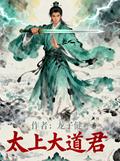 Taishang Daojun
4kReads6.7Score570Shelves
Taishang Daojun
4kReads6.7Score570Shelves
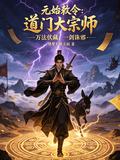 Yuanshi Edict: Great Master of the Taoist Sect
4.4kReads6.7Score227Shelves
Yuanshi Edict: Great Master of the Taoist Sect
4.4kReads6.7Score227Shelves
 Involved in Disputes, I Use the Academy to Disrupt the Secrets of Heaven
—Reads—Score—Shelves
Involved in Disputes, I Use the Academy to Disrupt the Secrets of Heaven
—Reads—Score—Shelves
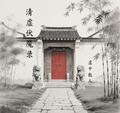 Qingxu Fumolu
7kReads9.5Score1.2kShelves
Qingxu Fumolu
7kReads9.5Score1.2kShelves
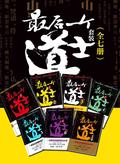 The Last Taoist Priest (Seven Volumes)
90.3kReads9.6Score—Shelves
The Last Taoist Priest (Seven Volumes)
90.3kReads9.6Score—Shelves
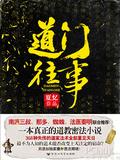 Taoist Past Events
27.1kReads9.1Score5.5kShelves
Taoist Past Events
27.1kReads9.1Score5.5kShelves
 A Generation of Heavenly Masters
11.9kReads9.2Score1.7kShelves
A Generation of Heavenly Masters
11.9kReads9.2Score1.7kShelves
 Three Essentials of Yangzhai in Vernacular
4.4kReads9.4Score—Shelves
Three Essentials of Yangzhai in Vernacular
4.4kReads9.4Score—Shelves
 Golden Policy
347Reads8.5Score—Shelves
Golden Policy
347Reads8.5Score—Shelves
 The Complete Book of Ziwei Dou Shu
5.8kReads9.4Score—Shelves
The Complete Book of Ziwei Dou Shu
5.8kReads9.4Score—Shelves
 Three Essentials of Yangzhai
1.2kReads9.3Score—Shelves
Three Essentials of Yangzhai
1.2kReads9.3Score—Shelves
 Guiguzi's Modern Lessons: Contemporary Social Survival Rules
—Reads8.7Score—Shelves
Guiguzi's Modern Lessons: Contemporary Social Survival Rules
—Reads8.7Score—Shelves
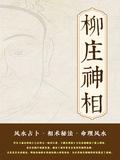 Liuzhuang Shenxiang
1.7kReads9.4Score—Shelves
Liuzhuang Shenxiang
1.7kReads9.4Score—Shelves
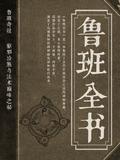 The Complete Book of Lu Ban
3.9kReads9.4Score—Shelves
The Complete Book of Lu Ban
3.9kReads9.4Score—Shelves
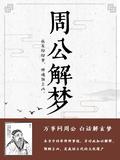 Duke Zhou Interprets Dreams
1.3kReads8.8Score—Shelves
Duke Zhou Interprets Dreams
1.3kReads8.8Score—Shelves
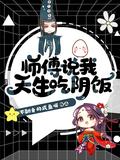 The Master Said That I Was Born to Eat Yin Food
1.5kReads8.9Score193Shelves
The Master Said That I Was Born to Eat Yin Food
1.5kReads8.9Score193Shelves
 Xuanzhen***
—Reads5.8Score—Shelves
Xuanzhen***
—Reads5.8Score—Shelves
 The Age of Ending Dharma: I Fought from the White Mountains and Black Waters to Ascending
40Reads5.8Score—Shelves
The Age of Ending Dharma: I Fought from the White Mountains and Black Waters to Ascending
40Reads5.8Score—Shelves
 Tao Te Ching (Chunmei Collector's Edition)
—Reads9.4Score—Shelves
Tao Te Ching (Chunmei Collector's Edition)
—Reads9.4Score—Shelves
 Prehistoric**
—Reads5.8Score—Shelves
Prehistoric**
—Reads5.8Score—Shelves
 At the Beginning, Zhen Yuanzi Was Tricked into Occupying the Holy Throne of Zixiao Palace.
7.7kReads8.1Score464Shelves
At the Beginning, Zhen Yuanzi Was Tricked into Occupying the Holy Throne of Zixiao Palace.
7.7kReads8.1Score464Shelves
 Honghuang: I, the Jade Emperor, Will Never Be a Puppet!
2.4kReads7.6Score197Shelves
Honghuang: I, the Jade Emperor, Will Never Be a Puppet!
2.4kReads7.6Score197Shelves
 Tao Te Ching
—Reads9.5Score—Shelves
Tao Te Ching
—Reads9.5Score—Shelves
 The Way of the World
2.1kReads8.0Score294Shelves
The Way of the World
2.1kReads8.0Score294Shelves
 Taoist Priest Enters the World
324Reads7.4Score—Shelves
Taoist Priest Enters the World
324Reads7.4Score—Shelves
 Ten Gods***
—Reads5.8Score—Shelves
Ten Gods***
—Reads5.8Score—Shelves
 Ternary Consciousness and Memory Mapping Principle
1.4kReads9.2Score485Shelves
Ternary Consciousness and Memory Mapping Principle
1.4kReads9.2Score485Shelves
 Full Translation of I Ching in Vernacular
—Reads9.5Score—Shelves
Full Translation of I Ching in Vernacular
—Reads9.5Score—Shelves
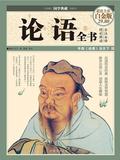 The Analects of Confucius (Chinese Studies Collection)
—Reads9.5Score—Shelves
The Analects of Confucius (Chinese Studies Collection)
—Reads9.5Score—Shelves
 Qing Jing Sutra
—Reads9.4Score—Shelves
Qing Jing Sutra
—Reads9.4Score—Shelves
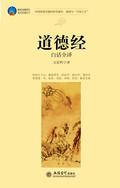 Tao Te Ching (Full Vernacular Translation)
—Reads9.6Score—Shelves
Tao Te Ching (Full Vernacular Translation)
—Reads9.6Score—Shelves
 Too Much *****
—Reads5.8Score—Shelves
Too Much *****
—Reads5.8Score—Shelves
 Taoism**********
—Reads5.8Score—Shelves
Taoism**********
—Reads5.8Score—Shelves