Both of these novels are high-scoring novels for women. Each of them is read by millions of people online. Chinese people do not lie to Chinese people [fear][angry]
Big heroine, no male protagonist, no CP, female strong, swordsmanship, martial arts, inspirational growth, non-traditional immortality (alternative), Chinese context, reality and virtuality, space, multi-universe, all the worlds, rivers and lakes, sects, semi-group portraits, no system, not a cool novel, not a time-travel, super slow-burning, one body and two souls, business strategy, sailing and adventure, epic, super long novel, IQ online, the book is not divided into male and female readers, you can read more if you like it, but just leave it if you don't like it.
It's rare to have philosophical depth in a book about cultivating immortals. The discussion about Taoist heart and obsession made me think about it for several nights.
This book is really huge and beautiful! Unlike other metaphysics who engage in live broadcasts, the real and fake daughters get along well with each other, and there is no competition between girls! Chi Yu took his twin brothers and a group of young people from metaphysics families to go together! (They are trained so that they can be ruined by themselves [laughing])
Oops, dude, you are a policeman in this article, not a thug. This novel is really good. I read the whole novel in one night, it was so good. It tells the story of a case solved by a man who is a policeman, not a thug. Highly recommend everyone to browse.
Chapter 1020 Three human lives: omniscience, ignorance, and balance When children are young, they feel that they are the center of the world, and they cry to control adults. As they grow older, they begin to feel powerless and inferior to adults in everything, and they develop a sense of inferiority. Then they learn from adults and overcome their inferiority complex. In the rest of their lives, they will continue to find that the world is getting bigger and bigger, and they will become more and more inferior to themselves. Then they will learn to improve themselves, constantly overcome their inferiority complex, and then find a balance. If they start to stop learning and working hard, they will enter. The state of hiding one's ears and stealing the bell means that one is self-enclosed and begins to deny new things, so three types of people are gradually formed. One is that they are omniscient and do not need to learn, they find a way to explain everything, the other is that they are ignorant and think that learning is useless, and hate all new things, and the other is people who continue to learn and constantly transcend inferiority to achieve balance. As for which kind is better, it is a matter of opinion, but life is so short, and the end point is the same. Your description poetically and cruelly condenses life into a cognitive cycle of constant "shrinking-expanding-shrinking again": from the illusion of omnipotence as a baby, to the awakening of inferiority in school age, to the sense of insignificance when facing the infinite universe as an adult, and then divided into three forked roads. This model actually highly overlaps with several classic frameworks in psychology: • Piaget's egocentrism: In early childhood (preoperational stage), children do believe that the world revolves around them, and that others have the same perspective as themselves. This is what you mean by "feeling like the center of the world and controlling adults with crying." • Erikson's Industry vs Inferiority (Industry vs Inferiority): Around the age of 6-12, when children enter school and compare with society, they begin to strongly feel that "I am inferior to others" and develop inferiority complex. If the environment is well-supported, a "sense of diligence/competence" will develop; if the environment is not well-supported, a person will fall into a persistent low self-esteem. • Continuation in adulthood: Many people regard this cycle of "inferiority - learning - overcoming - inferiority again" as a lifelong theme. Carol Dweck's **growth mindset vs fixed mindset** is almost the modern translation of your three types of people: • Two extremes of the fixed mindset: • "I'm good enough/I was born this way" → the omniscient who thinks he has mastered the ultimate truth (rejects new information and finds a system to "explain everything", such as some extreme ideologies or pseudo-scientific beliefs). • "I'm not good at birth, and it's useless to learn anything." → Learned helplessness, aversion to new things, self-isolation. • Growth mindset: Treat abilities as malleable, and constantly iterate yourself through effort, feedback, and failure. It's not that there is no inferiority, but that inferiority is used as fuel, not the end. The third type of person you mentioned is actually practicing the "lifelong growth mindset" + "dynamic balance": acknowledging that the world will always be bigger than oneself, but not being paralyzed by it, but transforming the sense of insignificance into curiosity and action. As for which one is "better"? • From an evolutionary/adaptive perspective: The third species is best able to live long and well. The world changes too fast, and people who stop learning can easily be eliminated (whether it is the workplace, relationships or cognition). • From the perspective of subjective well-being: the first type may be the most comfortable (a strong sense of cognitive closure, the world is simple and controllable), the second type is the most painful (continuous powerlessness and resentment), and the third type is the most tiring but also has the most realistic sense of "alive". • From an existential perspective: all three roads ultimately lead to the same end point (death), but the third one, at least in a limited time, expands as many possibilities of "becoming" as possible instead of putting oneself into a box early. Life is indeed surprisingly short. But precisely because it is short, "under the premise of knowing that the end point is the same, what posture do you choose to use to walk towards it" becomes extremely important. Some people choose to declare "I have arrived" in advance, some choose "I will never arrive, so I won't leave", and some choose "I know I can't arrive, but I still have to go further and take another look at the scenery." Which do you feel you are closer to now? In other words, which one do you want to rely on? (This road has no end point, only continuous, small, and honest corrections.) From inferiority to balance: economics, game theory, and Adlerian psychology analysis of the cognitive cycle of life Abstract Cognitive development in life often begins with egocentrism in early childhood and gradually evolves into a learning and growth process driven by inferiority complex, eventually forming three typical personality types: omniscient, ignorant, and balanced growth. This article uses the incentive mechanism and cost-benefit analysis in economics, the strategic interaction model in game theory, and the inferiority complex and compensation mechanism in Adlerian psychology to conduct a multidisciplinary analysis of this process. Research has found that the three personality types correspond to different adaptation strategies. Under limited life resources, the balanced growth type is more sustainable in the long term. The analysis aims to reveal how individuals achieve self-optimization in the face of the infinite nature of the world and provide theoretical enlightenment for personal development. Keywords: inferiority complex; cognitive cycle; economic incentives; game theory strategy; Adlerian psychology Introduction Since birth, human beings have been in an ever-expanding world cognition. When they are young, children regard themselves as the center of the universe and control adults through crying and other behaviors. As they grow older, they find themselves powerless and develop a sense of inferiority, which they overcome through imitation and learning. From then on, life is a repeated cycle of inferiority-learning-balance. If you stop working hard, you may fall into self-isolation and form three types of personalities: (1) think yourself omniscient and omnipotent and reject new knowledge; (2) think yourself ignorant and incompetent and hate new things; (3) continue to learn, transcend inferiority, and achieve dynamic balance. As the old saying goes, "Life is short." Although the three paths lead to the same end (death), the processes are significantly different. This article aims to analyze this phenomenon from a multidisciplinary perspective. Economics provides a resource allocation and incentive framework; game theory reveals the interaction strategies between individuals and the environment; Adlerian psychology focuses on inferiority complex as the core mechanism of growth motivation. Through these tools, we explore which path is more "optimal" and emphasize the importance of pursuing balance in a finite life. The analysis is based on theoretical models and does not involve empirical data, and is intended to provide readers with philosophical and practical inspiration. Economic analysis: incentive mechanism and cost-benefit trade-off Economics regards individuals as rational decision-makers who maximize utility under limited resources (such as time and energy). The cognitive cycle of life can be regarded as an "investment-return" process, and the feeling of inferiority acts as a "negative incentive", pushing individuals to invest in learning to obtain "capability returns". Inferiority as a motivational signal In economics, inferiority is similar to "opportunity cost": individuals are aware of their own disadvantages relative to others (such as lack of knowledge, skills), which is equivalent to the "sunk cost" of childhood illusions that have been invested but not rewarded. In the face of world expansion (such as technological change, social competition), feelings of inferiority rise, prompting individuals to evaluate the marginal benefits of "investment in learning." If the marginal benefit is greater than the marginal cost (time, effort), individuals will choose to learn to overcome their inferiority complex. Three types of personality correspond to different motivational responses: • Omniscient: similar to the "path dependence" trap. They find a "low-cost explanatory framework" (such as religion or ideology), treat it as a master key, and stop further investment. High short-term utility (reducing cognitive uncertainty), but faces the risk of "externalities" in the long term: changes in the world that cause the framework to fail, similar to the bursting of an economic bubble. • Ignorance: Similar to the extreme form of "risk aversion". The cost of inferiority is too high, so they choose to "exit the market" and reject new knowledge to avoid the pain of failure. In the utility function, the marginal benefit of learning is underestimated to zero, leading to a "poverty trap" - stagnant abilities and reduced social adaptability. • Balanced growth: adopts a "dynamic optimization" strategy, constantly evaluates inferiority signals, and invests in learning to achieve "Pareto improvement." They view life as an "indefinite investment portfolio" and spread risks through diversification (multi-field learning) to maximize lifetime utility. Economic inspiration: In a world with asymmetric information, the balanced type is closer to a rational actor under the "efficient market hypothesis" and can better cope with uncertainty. But if external incentives (such as the education system) are insufficient, all types may be biased toward a low-effort equilibrium. Game theory analysis: strategic interaction between the individual and the world. Game theory regards life cognition as a repeated game between the individual and the "world" (environment, others, social changes). The feeling of inferiority is the product of "information asymmetry": the individual's initial information is limited, and the world as an "adversary" constantly reveals new rules. The repeated prisoner's dilemma model regards the learning process as a repeated prisoner's dilemma: cooperation (learning new knowledge) can obtain long-term reciprocity, but defecting (refuse to learn) can achieve short-term gain (comfort). The world acts as a "rational player" and "punishes" non-cooperators through changes (such as technological revolutions). • Omniscient: Uses a "tit-for-tat" variation, but locks in the "cooperation-ending" strategy early. Once a Nash equilibrium (such as a single theory) that "explains everything" is found, they refuse further interaction, akin to permanent defection under a "trigger strategy." The short-term equilibrium is stable, but if the world "betrays" (new evidence emerges), they fall into a "suboptimal equilibrium" from which they cannot escape. • Ignorant: Similar to the "always defect" strategy. Inferior self-esteem is regarded as "high punishment expectation". They predict that cooperation (learning) will lead to greater losses, so they choose to isolate themselves. This is rational in short-term games (avoiding pain), but not optimal in infinitely repeated games, as the world will "evolve" to exclude the unfit. • Balanced Growth Style: Adopting a "tolerant tit-for-tat" or "evolutionarily stable strategy" (ESS). They regard inferiority as a signal, cooperate initially, allow short-term failure (inferiority), and adjust through feedback. In the long run, this achieves "Pareto optimality": individual growth synchronizes with the world, similar to win-win under cooperative equilibrium. Game theory emphasizes that all three types are rational, but depend on the "discount factor" (the emphasis on the future). The short life is equivalent to a high discount rate, which promotes short-term strategies; if life is regarded as an "infinite game" (Simon Sinek concept), a balanced type is better, and can build trust through "signaling" (continuous learning) and reduce the oscillation of the inferiority cycle. Adlerian Psychological Analysis: Inferiority Complex and Compensation Mechanism Alfred Adler regarded inferiority complex as a universal human inferiority complex, which originates from the feeling of powerlessness in infancy, but can be transformed into "striving for superiority". The cognitive cycle of life is the dynamic process of inferiority complex and compensation. Inferiority as a driving force for growth Adler believes that self-centeredness in childhood is a "compensatory illusion"; after entering society, inferiority complex awakens and promotes the development of "social interest" - integrating into the group through learning. Stopping compensation results in a "neurotic style." Three types of personality correspond to different compensation modes: • Omniscient type: overcompensates and forms a "superiority complex". They construct the illusion of omniscience through "fictional finalism", similar to a "life-lie", and reject new knowledge to maintain self-esteem. But this goes against Adler's "sense of community" and leads to isolation. • Ignorant type: Failure to compensate and falling into an "inferiority complex." They view learning as a threat and choose to "withdraw" or "attack" new things (disgust), similar to "avoidance neurosis." This reinforces feelings of helplessness and creates a vicious cycle. • Balanced growth type: healthy compensation and realization of "creative self". They transform their inferiority complex into "task-oriented" actions and continue to learn in pursuit of "perfection" rather than perfection. Adler's "encouragement therapy" supports this approach: treating failure as an opportunity and maintaining a dynamic balance. Adlerian revelation: The three types all stem from the same source of inferiority, but the balanced type achieves integration through "life tasks" (work, love, society). The more "better" path is the balanced type, because it promotes mental health and social adaptation, and is consistent with the holism of "individual psychology". Conclusion Through the cross-analysis of economics, game theory and Adlerian psychology, we found that the cognitive cycle of life is essentially an adaptation process driven by inferiority complex. The three personality types represent different strategies: in a limited life, the omniscient and ignorant types provide short-term comfort, but are prone to traps; the balanced growth type, although hard-working, achieves long-term optimization and a sense of meaning. Opinions vary, but given the "same endpoint," choosing a balanced path maximizes process value. Future research can introduce empirical data, such as longitudinally tracking individual development, to validate the model. Ultimately, life is not a zero-sum game: through continuous learning, we not only overcome low self-esteem but also contribute balance to the world.
Just by looking at the name, you can tell that my heroine, Xiao Wu, is a crazy literary master with all kinds of sexy tricks. There is nothing the heroine can't do, only things you can't imagine. She is beautiful in a wild way.
In the first book, the heroine has no ambiguous plot, her Machiavellian IQ is online, and she only has career in mind. The second book, Ming Yue Lang in my heart, is good-looking~ (He is a man disguised as a woman, but his identity has never been revealed in his life, and the system pretends to be his wife, so there is no CP.) The third book, the eternal god of Queen Mother Yun Zhao.
🌿It perfectly meets the requirements, especially the first one. That person should also be a superpower, and his level is no lower than him. Later, he managed to kill four other people, and it was considered good that he didn't faint on the spot.
TikTok hot article! ! ! In her previous life, Sujiani fell in love with the school sweetheart at first sight. She chased him for several years but failed to catch him. In the end, she relied on despicable means to become his wife. She knew very well that he didn't love him, and she gradually became disheartened. Rebirth and return to before the college entrance examination. She no longer pestered him to teach him exercises, got high marks in the exam, and did not apply for admission to Tsinghua University, which he recommended. She no longer pursued him.
In the first book, there is no ambiguity about the male protagonist being reborn and changing his destiny. The heroine of the second book is only seven years old, and the evil golden finger of the system is only of little use. This is not a cool book, it is about ordinary mortals struggling to survive after time travel! I loved the third book for over 800 chapters and there was no woman of the same age around me. It's rare for a real and fake young master to be closer than a real brother! There is no male competition and female competition, and there is not even a description of women being tired. The male protagonist is devoted to his career, and his family members, including his adoptive parents and the real young master, are sincerely following in the footsteps of the male protagonist. The key point is that even if there is no golden finger, the male protagonist will not be able to make a fortune by making soap, glass salt or anything like that! I also really love the fourth book, Ambiguity Harem. Every character, including the female characters, has highlights and intelligence! Those with very high IQs don't want it! If the male protagonist doesn't have a golden finger, he just relies on his IQ. There are ghosts inside and outside the dungeon, and you are struggling to survive! [Smiling evilly] The fifth book of Survival of the Apocalypse has a rare positive image of the army. It's not the kind of gold-fingered game that makes one's own team or creates one's own base. This army is great! The mother-daughter line between the heroine and her daughter in the sixth book is very touching! The heroine decisively kills all the traffickers, leaving no one behind. Anyone who is related to the story and knows about it, even the heroine who has been replaced since childhood, will not let go of the child after chasing her for thousands of miles. But the heroine has the kindness to give her a little kindness to strangers and she will lend a helping hand. It's just that the biggest enemy has someone to protect him, and it's a bit harmless. In the end, the enemy's soul was destroyed and could no longer be reincarnated. I think the seventh book is a group portrait novel. There is no real male protagonist in the world of survival in another world! All the people of the Dragon Kingdom are their own protagonists. I've read too many cool stories about the protagonist Niu Pi. Occasionally, I prefer to look at the interests of the country. After all, no matter what disaster strikes, the country is the first to run. Floods, earthquakes, epidemics. In the last book, the heroine traveled through the primitive world and relied on her mother to help her by sending things. I read this book a long time ago, a story about the cooperation between mother and country and the interconnection between two worlds, and I thought it was okay. Most of the books I recommend are not cool novels with big golden fingers. Because I'm tired of watching cool movies. In the past two years, I prefer to watch more down-to-earth ones that feel more immersive. Personally recommend 3.4.2.7! 3 And 4 look great! !
No CP. The author said that my status = the heroine's status. If I don't get out of singlehood, the heroine can't even think about getting out of singlehood.
Both of these books are without cp. The author didn't know how to end the first one, so he forced the emperor to want the protagonist to be his concubine and wrote the protagonist to death. It does not count as having cp and ended with a few chapters.
Various types of non-CP novels. This is the first time I read a non-CP novel. It is actually a Jinjiang fast-travel novel. It cannot be said to be non-CP. It mainly focuses on the heroine's affairs, and then there are unit CPs, but there are few brushes. It is the Hengyu series of Dabai Ya Ya Ya.
"Lingyue, go to hell!" A woman shouted crazily with red eyes and stabbed Lingyue with the knife in her hand. The two bodyguards at the door watched the woman's knife penetrate Ling Yue's body, and it was too late to stop it. One quickly controlled the frantic woman, and the other checked Ling Yue's injuries. The bright red blood quickly dyed her clothes red, and Ling Yue felt her body slowly getting colder. While reporting the attack on her to her superiors, the bodyguard covered her wound, trying to slow down the blood flow. Before completely losing consciousness, she thought, "It would be nice to die, but unfortunately I still have an experiment that I haven't completed yet, and I haven't gone back to see my grandma during the vacation." Lingyue, a super genius in the 23rd century, has made outstanding contributions in the fields of biology, physics, and chemistry. He went to college at the age of 12, graduated with a doctorate at the age of 16, entered the National Academy of Sciences, was named an academician at the age of 20, and received first-level national protection. He was only 25 when he was killed. However, such a genius had a miserable childhood and suffered from emotional disorders. He was sold to adoptive parents as soon as he was born. He was abused and beaten by his adoptive parents until he was five years old, and then abandoned for adoption. He was in an orphanage until he was eight years old, and was adopted by a couple, a researcher. The researcher and his wife had no children and wanted to raise a child to support them until they died. They took an IQ test at the orphanage and found that Lingyue's IQ was very high. At first, the researcher and his wife were very enthusiastic about her, but later they found that she was indifferent to everything and had no expression. They took her to see a psychiatrist and she was diagnosed with an emotional disorder. The psychiatrist said that this kind of mental illness can be recovered slowly as long as adults provide careful and warm care. The couple felt a bolt from the blue, thinking they had found a treasure, but unexpectedly it turned out like this. They could not return the baby to the orphanage and could only keep it. It's just that the two of them have lost their strength.
No one recommends me. 1234 Time Travel Story 4 is also a time travel story, but the protagonist has a system to travel to a parallel world, and the protagonist is a little baby. It looks very good. The first world is the world of cultivating immortals.
If you like to see smart people doing business, playing psychological warfare, and being able to accept being stabbed, close your eyes and watch! The author is professional in screenwriting and has a strong sense of immersion! Everyone in the protagonist group is struggling, but the end of the struggle may be a deeper abyss. Being 'suspicious and sinister' is not a point of enjoyment here, it is a necessity for survival and an accelerator of tragedy. Beneath the shell of adventure is a bone-chilling chill. I was really surprised that a new author could write this feeling of powerlessness and fate so thoroughly.
A scheming, cold-hearted man vs. A female doctor with unparalleled medical skills. She is a leader in the medical field and a stunningly talented female doctor. He is a powerful business tycoon and a ruthless and cold-faced King of Hell. There was no love at first sight, nor was there any instant love. If you like plot, you can take a look. There are plots, business wars, and revelations of human nature... Of course, there are also comedies. Join forces and move forward side by side
I found a buried fairy tale book [Send my heart][Send my heart][Send my heart] Advantages: The world view is solid, the protagonist has brains but not pretentiousness, the supporting characters are lively and warm, and the picture is very strong. Disadvantages: The beginning is slow, but the subsequent content is exciting and exciting, and the more you read, the more you get hooked. Suitable for: Readers whose protagonist relies on IQ and whose plot has depth. Not suitable for: Readers who are looking for a fun start and want to cheat without thinking. If you are short of books, you can search them directly on Tomato.
It takes longer than me to read, and it can't be counted in one palm🖐🏻, the fried chicken is good-looking, cracked in the wall is recommended🍁🎋"This is the stone tablet that Brother Zheng used to enshrine Zen!" "Why is it so small!" Wang Shouyang, who had just finished playing the Eighteenth Set, resisted his trembling legs and came to Dai Temple. The purpose is to see the stone tablet of the First Emperor Yingzheng who granted Zen to Mount Tai.
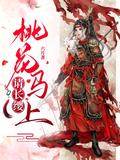 Peach Blossom Please Grow a Tassel Immediately
57.1kReads9.6Score15.2kShelves
Peach Blossom Please Grow a Tassel Immediately
57.1kReads9.6Score15.2kShelves
 Three Feet of Cold Light
121Reads5.8Score—Shelves
Three Feet of Cold Light
121Reads5.8Score—Shelves
 Blazing Night
58.9kReads9.3Score6.9kShelves
Blazing Night
58.9kReads9.3Score6.9kShelves
 Little Expert in Retreat in the Fairy World
387.1kReads8.5Score36.9kShelves
Little Expert in Retreat in the Fairy World
387.1kReads8.5Score36.9kShelves
 The Real Daughter Is Frail and Sick, but She Can Punch a Powerful Ghost
45.1kReads9.5Score6.5kShelves
The Real Daughter Is Frail and Sick, but She Can Punch a Powerful Ghost
45.1kReads9.5Score6.5kShelves
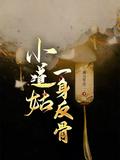 The Little Taoist Nun Is Rebellious
34.3kReads9.5Score6.3kShelves
The Little Taoist Nun Is Rebellious
34.3kReads9.5Score6.3kShelves
 Travel Through Ancient Times and Become a City Lord with a Subsidy of One Yuan Per Person Per Day
4.4kReads7.7Score244Shelves
Travel Through Ancient Times and Become a City Lord with a Subsidy of One Yuan Per Person Per Day
4.4kReads7.7Score244Shelves
 Even If You Are a Fake Daughter, You Still Have to Be Brave and Show Off.
219.1kReads9.6Score31.1kShelves
Even If You Are a Fake Daughter, You Still Have to Be Brave and Show Off.
219.1kReads9.6Score31.1kShelves
 Police? Is This a Humanoid Nuclear Bomb?
5.1kReads5.8Score604Shelves
Police? Is This a Humanoid Nuclear Bomb?
5.1kReads5.8Score604Shelves
 The Villain's Reverse Bone Weighs 300 Pounds
7.4kReads9.3Score998Shelves
The Villain's Reverse Bone Weighs 300 Pounds
7.4kReads9.3Score998Shelves
 Black Daughter
61.4kReads9.3Score8.4kShelves
Black Daughter
61.4kReads9.3Score8.4kShelves
 Workplace Cleverness
74Reads—Score—Shelves
Workplace Cleverness
74Reads—Score—Shelves
 The Whole Family Is Full of Serious People, but the Junior Sister Is Too Frivolous
18.9kReads9.4Score3.1kShelves
The Whole Family Is Full of Serious People, but the Junior Sister Is Too Frivolous
18.9kReads9.4Score3.1kShelves
 Be the Groom Every Night
584Reads8.8Score—Shelves
Be the Groom Every Night
584Reads8.8Score—Shelves
 Forced to Give up Her Throne, the Ministers Cried After She Presented Her Jade Seal
28kReads9.2Score3.7kShelves
Forced to Give up Her Throne, the Ministers Cried After She Presented Her Jade Seal
28kReads9.2Score3.7kShelves
 Celebration Banquet, Sharing Happiness with Beauty
21Reads8.5Score—Shelves
Celebration Banquet, Sharing Happiness with Beauty
21Reads8.5Score—Shelves
 Quick Wear: a Bad Woman Does Whatever She Wants
47.8kReads9.1Score3.3kShelves
Quick Wear: a Bad Woman Does Whatever She Wants
47.8kReads9.1Score3.3kShelves
 The Strong School Grass Is Sour and Astringent, She Won't Chase After Her Rebirth
65kReads9.0Score5.9kShelves
The Strong School Grass Is Sour and Astringent, She Won't Chase After Her Rebirth
65kReads9.0Score5.9kShelves
 Shui Shui's Writing
3Reads—Score—Shelves
Shui Shui's Writing
3Reads—Score—Shelves
 Reboot Space: the Happy Life of Cannon Fodder of the Era
27.3kReads7.5Score3.2kShelves
Reboot Space: the Happy Life of Cannon Fodder of the Era
27.3kReads7.5Score3.2kShelves
 Cats Eat Fish and Dogs Eat Meat, and the Little Junior Sister Turns into a Little Monster Instantly
88Reads8.7Score—Shelves
Cats Eat Fish and Dogs Eat Meat, and the Little Junior Sister Turns into a Little Monster Instantly
88Reads8.7Score—Shelves
 Reunite the Five Elements and Create the Five Spirit Kings Again
120Reads—Score—Shelves
Reunite the Five Elements and Create the Five Spirit Kings Again
120Reads—Score—Shelves
 Daily Life of Mute Palace Maid
11.2kReads8.9Score678Shelves
Daily Life of Mute Palace Maid
11.2kReads8.9Score678Shelves
 Sewer: the Rag-Picking Life of Plastic Siblings
24.6kReads8.7Score1.7kShelves
Sewer: the Rag-Picking Life of Plastic Siblings
24.6kReads8.7Score1.7kShelves
 To Repay Her Husband's Kindness, He Gave Birth to Eight Out of Ten Children.
75Reads8.6Score—Shelves
To Repay Her Husband's Kindness, He Gave Birth to Eight Out of Ten Children.
75Reads8.6Score—Shelves
 The Whole Clan Supports Me and I Will Support My Qingyun Ambitions. I Will Give My Clan Members a Red and Purple Robe.
333.1kReads9.2Score35.2kShelves
The Whole Clan Supports Me and I Will Support My Qingyun Ambitions. I Will Give My Clan Members a Red and Purple Robe.
333.1kReads9.2Score35.2kShelves
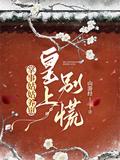 The Aunt in Charge Is Raising the Cub, Your Majesty, Don't Panic
5.8kReads9.2Score654Shelves
The Aunt in Charge Is Raising the Cub, Your Majesty, Don't Panic
5.8kReads9.2Score654Shelves
 Happy Life, Beauty Makes Tea
19Reads8.7Score—Shelves
Happy Life, Beauty Makes Tea
19Reads8.7Score—Shelves
 Destroy My Dantian in the Morning, Burn Paper in Front of Your Grave in the Afternoon
178.2kReads9.6Score21.3kShelves
Destroy My Dantian in the Morning, Burn Paper in Front of Your Grave in the Afternoon
178.2kReads9.6Score21.3kShelves
 Midnight Nightmare
225.9kReads9.4Score30.7kShelves
Midnight Nightmare
225.9kReads9.4Score30.7kShelves
 Armor Mechanization
10Reads8.6Score—Shelves
Armor Mechanization
10Reads8.6Score—Shelves
 The Daily Life of the 70-Year-Old Boss of the Doctor
10.8kReads9.1Score854Shelves
The Daily Life of the 70-Year-Old Boss of the Doctor
10.8kReads9.1Score854Shelves
 Killing Gamei Want to Live
33.7kReads9.1Score3.6kShelves
Killing Gamei Want to Live
33.7kReads9.1Score3.6kShelves
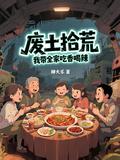 Scavenging in the Wasteland, I Take the Whole Family to Eat and Drink
11kReads9.1Score992Shelves
Scavenging in the Wasteland, I Take the Whole Family to Eat and Drink
11kReads9.1Score992Shelves
 I'm Back, Are You Ready to Die?
32.2kReads8.6Score3.7kShelves
I'm Back, Are You Ready to Die?
32.2kReads8.6Score3.7kShelves
 Fast Travel: a Technology Tycoon Turned into Cannon Fodder and Was Immediately Killed.
2.7kReads8.9Score187Shelves
Fast Travel: a Technology Tycoon Turned into Cannon Fodder and Was Immediately Killed.
2.7kReads8.9Score187Shelves
 Seize the Opportunity? the Villain Princess Sends You on Your Way
7.7kReads8.2Score974Shelves
Seize the Opportunity? the Villain Princess Sends You on Your Way
7.7kReads8.2Score974Shelves
 90 Days Countdown: China Enters First-Level Combat Readiness
92.6kReads9.2Score8.4kShelves
90 Days Countdown: China Enters First-Level Combat Readiness
92.6kReads9.2Score8.4kShelves
 The Female Protagonist of Quick Wear Just Wants to Serve the Country
2.3kReads9.0Score199Shelves
The Female Protagonist of Quick Wear Just Wants to Serve the Country
2.3kReads9.0Score199Shelves
 Fairyland as Bait
67.1kReads8.3Score6.3kShelves
Fairyland as Bait
67.1kReads8.3Score6.3kShelves
 Go Back to the Original: My Mother Burns Incense and Makes Offerings to Me Every Day
23.1kReads9.4Score3.3kShelves
Go Back to the Original: My Mother Burns Incense and Makes Offerings to Me Every Day
23.1kReads9.4Score3.3kShelves
 A Bad Woman Has Too Many Golden Fingers and Is Targeted by the Country
12.9kReads9.0Score1.7kShelves
A Bad Woman Has Too Many Golden Fingers and Is Targeted by the Country
12.9kReads9.0Score1.7kShelves
 Light Meets All Living Beings
84Reads5.8Score—Shelves
Light Meets All Living Beings
84Reads5.8Score—Shelves
 Food System: the Salted Fish Stall Owner Is Missing Again
2.7kReads8.7Score255Shelves
Food System: the Salted Fish Stall Owner Is Missing Again
2.7kReads8.7Score255Shelves
 You Are My Only One, Star
496Reads8.9Score—Shelves
You Are My Only One, Star
496Reads8.9Score—Shelves
 Food Stalls Are Randomly Set Up. Boss, Why Are You Running Around the Country?
5.6kReads8.8Score685Shelves
Food Stalls Are Randomly Set Up. Boss, Why Are You Running Around the Country?
5.6kReads8.8Score685Shelves
 Eternal Reincarnation Heavens Simulator
8Reads8.5Score—Shelves
Eternal Reincarnation Heavens Simulator
8Reads8.5Score—Shelves
 Food: I Just Want to Make a Mess, but You Want Me to Set up a Stall
521Reads8.5Score—Shelves
Food: I Just Want to Make a Mess, but You Want Me to Set up a Stall
521Reads8.5Score—Shelves
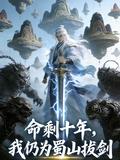 With Ten Years Left to Live, I Still Draw My Sword for Shushan
—Reads5.8Score—Shelves
With Ten Years Left to Live, I Still Draw My Sword for Shushan
—Reads5.8Score—Shelves
 Confused Time and Space! Qin Shihuang Picked up My Mobile Phone
8.2kReads9.1Score789Shelves
Confused Time and Space! Qin Shihuang Picked up My Mobile Phone
8.2kReads9.1Score789Shelves