When a young man ascended the throne, the echoes of the Six States’ alliance still reverberated beyond Hangu Pass. In twenty-five years, he painted the map of the realm a single color.
He unified the written script, standardized the tracks of carts, and established common weights and measures. He thought this was the end, so he built the Great Wall, paved straight roads, and burned the words of the Hundred Schools, hoping to carve the words “ten thousand generations” into stone. But he forgot: an empire’s foundations are not bronze and iron, but white bones.
Fifteen years later, on a rainy night in Daze Township, a band of conscripts cried out, “Are kings and generals born to a special kind of stock?” Xianyang Palace burned for three months, and the First Emperor’s dream of an eternal empire turned to ash.
But those ashes never quite cooled. It took two thousand years for people to realize that what the Qin Dynasty burned had all become the foundation of China.
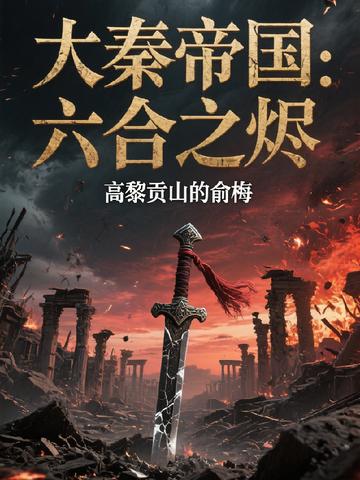
In 1.2 million words, this novel spans from the aging King Zhaoxiang of Qin after the Battle of Changping to an old woman singing Qin opera amid the ruins of Xianyang. It is a story of the Six States reduced to ashes, and of those ashes catching fire again.