When love takes root in your very bones, separation becomes an organic disease.
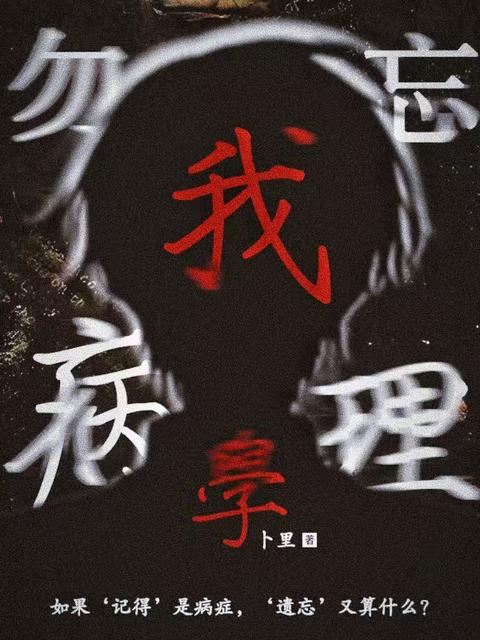
“They say I’m sick because I can still see him. But if ‘remembering’ is an illness, what is ‘forgetting’?
Is it recovery, or a more complete kind of death?”
At seventeen, Zhou Jin was diagnosed with a rare psychological disorder.
He could still see, hear, and even touch Ling Qinghong, who had died a year ago. Not a ghost, not an illusion, but a vivid presence carrying every memory and detail from the past sixteen years. In medical records, it was called “complicated grief with dissociative hallucinations.” In Zhou Jin’s world, it meant Ling Qinghong was still alive, living in a parallel reality his brain had created to keep him from completely falling apart.
Wugang City, an old seaside town steeped in memory. Fog hangs over it year-round, plane-tree leaves blanket the old streets, and the damp air seems to crystallize time. In this natural hothouse of memory, Zhou Jin’s condition found the ideal place to grow. Every week, he buys a bouquet of forget-me-nots and presses them into dried flowers.
It is a small, stubborn ritual of immortality he performs for Ling Qinghong.
When a deep bond carves a physical pathway into the nervous system, how can the brain restore order after loss?
Does extreme suffering possess a kind of wholeness that must not be profaned?
If “recovery” means betraying the one you love, does a lucid person have the right to choose to “live with the illness”?
“I finally understand. Death is not the end of love.
Forgetting is.
And I will remember until my own river reaches the sea.
Until then, I will live well,
carrying your share of life, too.”

Beautiful, heartbreaking, and tear-jerking.