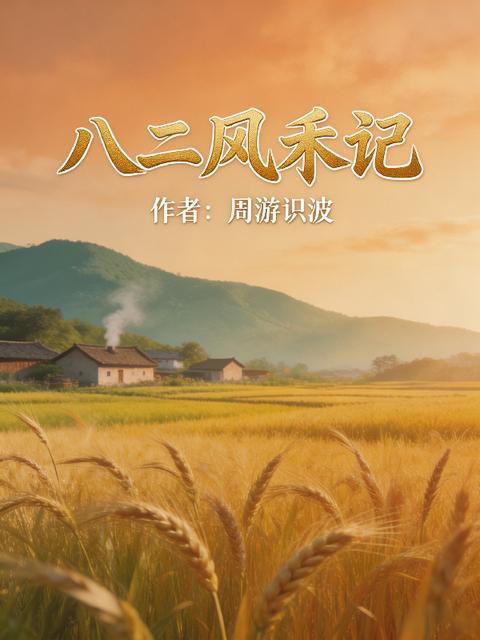
In the spring of 1982, Cheng Sui, a young woman from Anhui, failed the college entrance exam. That night, she dreamed of herself forty years later: a woman who had gone from factory assembly-line worker to elderly city dweller, still thinking of the wheat fields from when she was seventeen as she lay on her deathbed.
When she opened her eyes again, she was back on the morning land was being divided among the villagers.
In Fengqi Village, the three-room mud-brick house leaked wind and rain. Her mother was bedridden, her younger brother needed tuition money, and her father had just signed a contract. But her uncle had invoked the duty to support their grandmother and forcibly taken three-tenths of the best land. In her past life, she had accepted it. This time, she wouldn't.
It started with a litter of long-haired rabbits bought on credit. The whole village mocked her for a girl who was messing around. The rabbit-fur purchasing station was the first to offer her the premium rate, and in three years she had turned their mud-brick house into a brick-built home. From street vending to leasing the township's feed factory, from being reported for "speculation and profiteering" to becoming the county's first registered female private business owner, she built a processing network in the cracks of the dual-track pricing system.
But this isn't a story of one woman clearing the game alone. Chen Wangshan, a discharged reconnaissance soldier who retook the college entrance exam for three years and always appeared at crucial moments, seemed to remember something too. Two people left behind by time stood shoulder to shoulder amid the dust of the 1980s. What they had to fight wasn't poverty, but the hearts of people long accustomed to being poor: her aunt poured pesticide into the rabbit cages, the credit union director waited for a bribe before approving a loan, and Aunt Zhao, who treated her like her own daughter, sold her recipe to a rival to pay her son's bride price.
Standing in front of the new two-story house she had built, Cheng Sui thought: I want to win, but I don't want to end up all alone.
This is a story about having enough to eat, being warmly dressed, and standing tall. In the dusty early days of reform, an ordinary young woman made herself into someone others had never dared imagine becoming.

 The Seal-Bearing Heiress
 Never Landing
 All-A Performance Reviews, Freedom After Work
 Digital Deities
 The Nine Abysses Prison-Suppressing Art
 A Century of the Green Satchel
 My Life as a God of War
 Spring Returns to Shixigou
 Dragonflame Strikes: Disbanding the Wolf Fangs from the Start
 Dragonflame Special Police
 Years of Youth: Watching Over the Wheat Fields of Beidahuang
 The Phoenix Hidden in the Palace