


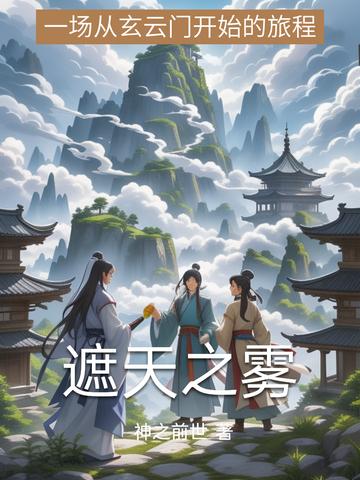
The Mist That Shrouds the Heavens
遮天之雾
- Status
- Ongoing
- Length
- 1.2M Words
- Genre
- Eastern Fantasy
- Subgenre
- Eastern Cultivation
- Updated
- 19h ago
- Source
- Fanqie
Stats
509Chapters
1.8kReads
8.9Score
135Shelves
423Listens
176.1kReads · all time
Tags
Synopsis
In booklists 7

Tomato’s Top Six Masterpieces! Ranked! Number One: Immortal Martial Emperor
690Books18.4MViews16hUpdated

A 9.9-Rated Masterpiece!! So Good
I'm looking for books like The Ten Days of the End.
695Books70.1MViews19hUpdated

Tomato’s 9.9-Rated Masterpieces
748Books85MViews1dUpdated
No Romance, Cultivation, Rated 9 or Higher
490Books11.4MViews3dUpdated
Are There No Traditional Eastern Cultivation Fantasy Stories Like This?
I'm looking for books like *The Record of Heavenly Treasures and Mystic Powers*. I can't find any good traditional Eastern fantasy or xianxia novels lately. I don't like Systems, transmigration, or romance. I want to follow the protagonist as they grow, overcome hardships, and gradually become stronger. I've only found one decent one recently.
540Books15.4kViews5dUpdated
Meng Ru Shen Ji's Masterpieces
471Books37.6MViews8dUpdated
Any Traditional Fantasy Novel That Really Hits You in the Heart?
Looking for something like Treading the Heavens. I've been really into Treading the Heavens lately. I practice along with the protagonist every day, and I feel like I've gotten really strong.
297Books23.5kViews1moUpdated
Reader comments 104
Google Translate
The novel is an enduring "Oriental dream" that does not rely on fast-food-style excitement. Instead, it uses a worldview rooted in traditional Chinese culture, a spiritual philosophy that probes one's own heart, and the romantic feelings hidden in Riding a Sword and Riding the Wind to build an immersive and memorable spiritual mystery for readers. This unique charm allows it to firmly occupy the C position of countless people's book lists even today when the subject matter is flourishing. Its amazingness lies first in its world view that is engraved with Eastern wisdom. Different from the Western fantasy of "magic and knights", traditional immortality cultivation is based on the Taoist idea of "the unity of heaven and man", and combines fragments of myths from "The Classic of Mountains and Seas" and "Huainanzi" to build a logically consistent and imaginative practice system - From the caution of a mortal breathing and practicing Qi, to the solidity and thickness of the golden elixir building a cauldron, to the detachment and freedom of the Nascent Soul becoming a god, and finally to the heaven-defying stroke of overcoming the tribulation and ascending, every breakthrough in the realm is not only a leap in strength, but also coincides with the true meaning of practice of "following the path will lead to being ordinary, and going against the will will lead to immortality". What's even more rare is that the author never lets the world view become a mere empty frame. He uses scenes with ink and wash artistic conception to describe the world of immortality, which makes the world of immortality both ethereal and realistic. What really makes traditional immortality transcend "upgraded Shuangwen" is its in-depth portrayal of the "Tao Heart". The protagonist is never a born "king of trouble". He starts from the bottom, with the struggle and persistence of ordinary people, but always sticks to the bottom line of "not deceiving one's heart". Even if he is the enemy of the entire world of cultivation, he is unwilling to betray his Taoist heart. The novel is never about "how to become stronger", but about "how to not lose yourself on the way to becoming stronger". This persistence in one's true heart is the spiritual resonance point that can best strike a chord with readers. What is even more touching is the "human warmth" hidden in the path of cultivating immortality. There is no "heartless Tao" of being alone here. There is only the inheritance between masters and disciples, the sincerity between Taoist friends, and the mutual support between Taoists, which interprets the romance of "cultivating immortals is also sentimental". These emotions add warmth to the cold "Heaven-defying Cultivation" - it turns out that cultivating immortality is not to isolate yourself from the world of mortals, but to be able to protect the people you want to protect; it turns out that the road to seeking the Tao is not to be walked alone, but to have relatives and friends side by side. Even if the road ahead is a mountain of swords and a sea of fire, you can still say with a smile, "Fellow Taoist, please stay." It is not only a story, but also a carrier that carries the Chinese people's millennium "Xianxia dream" - what we yearn for is never the magical power of flying into the sky and escaping from the earth, but the courage to pursue the truth "knowing that you can't do it", the persistence of the original intention of "doing something and not doing something", and the romance and character hidden in Eastern culture. This cultural resonance engraved in the bones is the secret of traditional immortality novels that can travel through time and always touch people's hearts.
This is a non-refreshing novel that needs to be read with concentration. The pace of the story is slowed down and there are no deliberately slap-in-the-face moments. Instead, it focuses on depicting the cruelty of the world of cultivating immortals and the difficulty of survival. From practicing the art of hiding to breaking through the abyss of demons, from meeting Yuwen Guangrong to fighting the frost and snow monster, the protagonist takes every step carefully, appropriately restoring the dangers and unknowns on the road to immortality. For readers who are tired of reading fast-paced and refreshing novels, such a narrative can make people feel the original charm of the immortal novel and immerse themselves in pure cultivation and adventure.
Judging from the writing style and temperament, "The Fog Covering the Sky" is an affectionate return to the classical aesthetics of immortality. It strips away the common banter, Internet sense and straightforward system flow settings commonly found in online literature, leaving a traditional and implicit oriental charm lingering between the lines. The understanding of the nature of Taoism and the exploration of the interaction between heaven and man are all expressed through elegant yet powerful words. The protagonist's change of mind and improvement of state of mind are often reflected in the observation of each scene and object, which is full of the aesthetic taste of "supporting objects to express aspirations" and "situation blending" in classical literature. This makes the novel go beyond simply "killing monsters and upgrading" and possessing rare literary quality and lasting aftertaste.
The most touching thing about "The Fog Covering the Sky" is its "quiet" writing style. The author does not rely on gorgeous words and intensive sensory bombardment, but uses a calm, simple and highly textured language to advance the story. This is just like the protagonist's steps - down to earth, neither slow nor slow. The depiction of landscapes, vegetation, and trees has an ancient meaning and blank space, like an ink painting; the depiction of cultivation and state of mind is restrained and subtle, often surprising in the smallest details. This calm writing power builds a classical world of immortality that is real and palpable and needs to be immersed in. The creation of artistic conception far exceeds the pleasure brought by the plot itself, making reading itself a spiritual practice.
The story started from Xuanyunmen and now reaches the second volume "Survival in Troubled Times", with just over two hundred chapters, has laid out a concrete picture of the troubled times of cultivating immortals: the monsters in the Ten Thousand Demon Abyss, the plans of the Valley of Ten Thousand Demons, the killing array of the Yuwen family, the young master of the Bai family, and the pursuit of Faceless Shura. Many forces are intertwined, and the situation is chaotic and full of variables. Not only the protagonist's way of survival, but also character tragedies such as the death of Wu Yidao, make the world of cultivating immortals no longer a one-man show of the protagonist, but more vivid with all living beings. Although the author is too modest to control a grand story and admits that his writing style is still deficient, his intentions in story arrangement can be seen - he refuses clichéd plots. From the treasures in Shuangfeng Mountain to the trip to Moon Moon Mountain, from the disputes in Ice Cliff City to the escape from Ten Thousand Demonic Abyss, every plot node is paving the way for a troubled world, with clues and foreshadowing hidden in it. What's even more rare is the author's creative sincerity. As a novice writing a book for the first time, he is willing to revise and polish the plot repeatedly. This seriousness makes it possible for this grand world of immortality to slowly grow.
The most touching thing about the novel is its delicate portrayal of "human feelings and sophistication", which brings a scalding warmth to the cold world of cultivating immortals. Different from the black and white character creation in many fantasy works, each character in "The Fog that Covers the Sky" has his own position and persistence. A good deed done by a sect leader decades ago has turned into a half-life obsession for the younger generation; the confrontation between the monks is not only about life and death, but also about sympathy and perseverance. The author uses a relaxed and measured rhythm to interweave the strictness of sect rules with the softness of friendship in the world, the coldness of power games and the glorious warmth of human nature, making each of the group characters vivid and three-dimensional. The protagonist Cao Yifan's characteristics of being "self-aware, knowing how to proceed step-by-step, and being down-to-earth" break the "Long Aotian" protagonist template. Every improvement he makes comes from the accumulation of time, and every decision is full of insights into the world. This sense of reality makes people empathize, and also allows the story to go beyond simply "fighting monsters and upgrading" to have a deeper literary character.
This book abandons impetuosity and focuses on the practice itself. The rhythm is as slow as a stream, the characters are vividly drawn, and the real details can be seen in the details. It is suitable for quiet reading, accompanying the protagonist to understand the way of heaven through the accumulation of time.
The stars popped out! ! Good reviews! The male protagonist is self-aware, knows how to proceed step by step, and is also down-to-earth. This is a good prospect that is bound to succeed. The author went a long way in making the male protagonist flesh-and-blood and good-looking. Read on. Mei Mei Sang! ! Keep chasing! !
This traditional novel about cultivating immortals is extremely well written, with smooth and natural writing style and an ups and downs of plot that is fascinating. The author's construction of the world of cultivating immortals is extremely detailed, from the system of exercises to the disputes between sects, everything shows a profound foundation. The characters are vividly drawn, and the protagonist's growth journey contains both hardships and epiphanies, making it empathetic. The supporting characters also have their own characteristics, either good or evil, interweaving a vivid picture of cultivation. The description of the fighting scenes is particularly exciting. The collision between moves is like flowing water, majestic yet delicate. The setting of the cultivation system is rigorous and reasonable. It has both traditional charm and new ideas, and there is no sense of violation when reading it. The emotional line is handled just right, not taking over the main role, but adding warmth to the story. The rhythm of the whole work is well controlled, with both tense and exciting conflicts and soothing and profound insights, making it a hearty read. The author has a profound understanding of traditional culture, and the unique oriental charm is revealed between the lines. It can be called a masterpiece on the traditional theme of cultivating immortals.
This novel is really well written, with a compact plot and vivid characters.