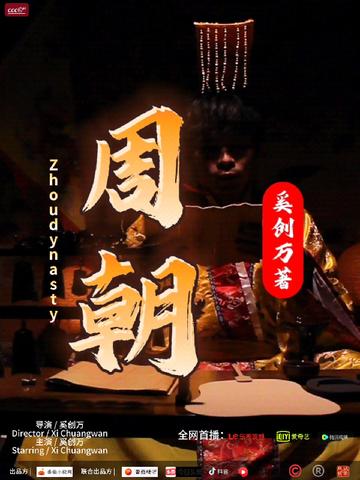
After the rule of the Xia and Shang dynasties came to an end, the Zhou dynasty rose to become the third slave-owning dynasty in Chinese history. Its founding began with King Wu of Zhou, Ji Fa, who established his capital at Haojing, in present-day Xi'an, Shaanxi. The Zhou dynasty had 32 generations of rulers, comprising 37 kings, and lasted a total of 790 years.
The Zhou dynasty is divided into the Western Zhou and Eastern Zhou periods. The Western Zhou ruled from 1046 to 771 BC, while the Eastern Zhou lasted from 770 to 256 BC. During the reign of King Cheng of Zhou, the capital was moved from Haojing to Chengzhou, in present-day Luoyang, Henan, where a series of sacrificial ceremonies and rewards for ministers were held. Later, King Mu of Zhou built a palace in Nanzheng, and King Yi of Zhou moved the capital to Quanqiu, in present-day Xi'an, Shaanxi.
However, in 771 BC, Haojing fell, bringing the Western Zhou to an end. The following year, in 770 BC, King Ping of Zhou moved east and established his capital at Chengzhou. From then on, this period of the Zhou dynasty became known as the Eastern Zhou. The Western and Eastern Zhou periods are collectively called the Two Zhou. The Eastern Zhou is further divided into the Spring and Autumn period and the Warring States period, with the division marked by the Partition of Jin by the Three Families.
During the Zhou dynasty, the Huaxia people's sense of shared identity and their name originated with the term