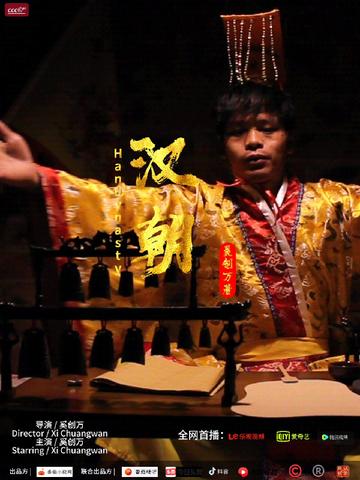
During the Han Dynasty, China was divided into two periods: the Western Han and the Eastern Han. Liu Bang overthrew the Qin Dynasty during the peasant uprisings at the end of the Qin era and was made Prince of Han. He later defeated Xiang Yu in the Chu-Han Contention, became emperor in 202 BCE, and founded the Han Dynasty, establishing its capital at Chang'an. In the early Western Han, the rulers followed Huang-Lao teachings and adopted policies that allowed the people to recover and rebuild, ushering in the Rule of Wen and Jing. After Emperor Wu took the throne, however, central authority was strengthened, the Favoring Decree was introduced, and Confucianism was elevated above the other schools of thought. Emperor Wu also campaigned against the Xiongnu in the north and sent Zhang Qian on a mission to the Western Regions, opening the Silk Road.
In the late Western Han, the imperial in-laws interfered in government, and social tensions mounted. During this period, the powerful Wang Mang deposed the child emperor Ruzi and established the Xin dynasty, bringing about the fall of the Western Han. Near the end of the Xin dynasty, the Lulin and Chimei rebellions broke out. Liu Xiu, a member of the Han imperial house, restored the Han Dynasty and made Luoyang its capital, beginning the Eastern Han. After unifying the realm, Liu Xiu implemented policies to end military campaigns and allow the people to recover, ushering in the Guangwu Restoration. Emperors Ming and Zhang lowered taxes and labor demands, creating the Rule of Ming and Zhang. Online Drama Distribution License: Screening Permit (Drama Review Online No.)
(Disclaimer: This is a film work, published solely as a historical dramatization and not directed at any national administration. Registration No.: Guozuo Dengzi-2023-I-00028721. Audiovisual work, certified by a trusted timestamp authority. Certificate No.: TSA-01-20221226471286857. Filing No.: 0105097240105003)