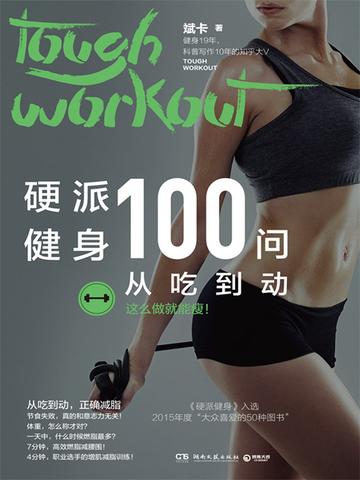
100 Questions About Hardcore Fitness: from Eating to Moving
硬派健身100问:从吃到动
- Status
- Completed
- Length
- 133k Words
- Updated
- 3y ago
- Source
- Fanqie
Stats
Tags
Synopsis
Reader comments
In booklists 15
Study Books
Are there any books that are helpful for studying? Please recommend! ! ! ! ! !
Which Chinese Medicine Book Is the Best?
Looking for the Shortest Book About Tomato
Note that tomatoes are the shortest
Now I Am so Broken That I Read the "Marrow Cleansing Sutra"...
Are there any particularly boring novels? Please, the child really can't sleep😫
Books That Can Be Used in Real Life
It's not the kind of storyline that just tells discussions, or the kind of writing that's very good, like Das Kapital
Books for College Students to Read
What books are worth reading for high school graduates?
Recipes, Recipes, Gourmet Dishes, Home-Cooked Dishes, Cold Dishes, Stewed Dishes, Stews
I want to read a book similar to "My Breakfast Is Different (Leyou Life Part 1 Part 3)". The best taste in the world is pure joy, only good food can soothe people's hearts

You Can Learn Some Useful Knowledge
You can learn some novels about learning, such as writing and so on
It Is Realistic and Feasible for Real People to Cultivate Immortality
Qigong Method
To be more popular
About Women's Health Series ~ Traditional Chinese Medicine ~ Advance
Come and Read Some Books for Learning. Welcome, as Long as It's Not a Novel.
For example, divination, exercise, memory, cultivating immortals, classic stories, social interaction, programming Python, (。ò ∀ ó。)
Fitness and Health Books
I want to read a book similar to "Mysterious Qigong". Books on similar Daoyin techniques, modern aerobics, etc.
Calisthenics Books
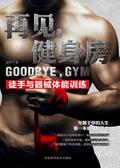
Books and training methods for fitness without equipment and freehand fitness
I Want to Learn, but I Have No Motivation, and I Haven't Finished Reading the Novel I Want to Learn.
Not brainless, no cp, not very demanding, right?
Now I have discovered the misunderstandings about weight loss in the past. Fortunately, I read this book, but now I have decided not to lose weight [awkward laugh]
It is a very good book for ordinary people who want to get fit and lose weight, who have not studied systematically or have only watched fragmented videos of fitness bloggers. It systematically explains that losing weight cannot be about dieting or aerobics. The best way is strength training and hitting. There is data and research to prove it. It explains all the misunderstandings and pitfalls of weight loss in detail, including if you have already fallen into the trap. After dieting for a long time, the basal metabolism has been reduced. What should I do to make up for it? How to exercise correctly to lose weight, how to scientifically lose weight without rebounding, how to exercise during menstruation, and refuting rumors about menstrual weight loss methods, dieting weight loss methods, etc. It is a very good book, and this is a book for learning knowledge. If you don't have a heart to learn, have a high self-esteem, and are not modest and thirsty for knowledge, then don't read it. Go out and turn left to the cool article area.
The writing is very detailed, and the support of relevant research data makes the article more reasonable and rigorous, and the language is easy to understand. I have only now learned about many common weight loss misunderstandings, and I have learned it.
Because it is inconsistent with some mainstream ideas. For example, some articles will suggest that breakfast must be eaten in the morning, otherwise it will increase the risk of cholecystitis. Some books recommend eating smaller meals more frequently. Of course, most of them have a great impact on mainstream dieting ideas, low-fat diets, and low-carbohydrate diets. The book also mentions that aerobic exercise is not as effective as high-intensity interval and resistance training for weight loss. These views inspired me a lot, so I rated it four stars for the time being, because there is still a lot that I need to try in practice.
Many of the problems mentioned in this book were encountered by me in the process of losing weight, such as dieting and weight loss. I have tried skipping meals before, thinking that I would lose weight quickly, but not only did I regain weight, it also affected my health. The "Five Sins of Dieting" in the book really made sense and made me understand that dieting to lose weight is not feasible. Moreover, the book also contains many practical suggestions on diet and exercise. If I had read this book earlier, I might not have taken so many detours. Recommended to friends who want to lose weight healthily!
This article points out common misconceptions about diet during exercise and fat loss, and proposes that a fat loss diet should be high in carbohydrates and protein. According to some studies, the best fat-loss exercise currently is strength + aerobic (or strength + HIIT) (do not change the order). It should be noted that some of the movements included are not suitable for beginners to practice. It states that consuming high GI carbohydrates and high protein within half an hour after exercise can help muscle recovery. The protein intake on training days is 1.2G~1.8G/kg, on non-training days it is 0.9G/kg, and during the fat loss period it is 2.0G~2.4G/kg. (Memory version)
I want to know if these research data are real?
It's very good. It has explanations about daily fitness, some daily weight loss pills, and daily supplements. Pregnant women can exercise. Adults who skip breakfast will reduce their caloric intake. The key to losing weight is to move, not to eat.
Everyone says it takes 30% to practice and 70% to eat. This book believes that exercise has a greater impact on obesity than diet. But if your daily diet is always balanced and not overly nutritious, how can you become fat? One thing I personally find difficult to understand is that it is always emphasized that if the intake is less than the consumption, it will not necessarily lead to weight loss. It cannot be greater than the intake. How should this intake be kept constant, but it is not said. For novices, it is not practical to weigh each meal. It would be better if you could tell them about your daily diet and what you should eat for each meal (such as 3 eggs, 4 slices of braised beef) and achieve high protein.
Calling is really friendly to Xiaobai and I took a lot of notes.
Useful guidance on fitness misunderstandings
To sum up, you should eat more immediately after exercising, and then eat less as usual.
I won't talk about the good books on weight loss. I changed my weight loss plan. It turns out that you can gain moderate amounts of muscle during weight loss. Cool
The analysis is quite good, and it is suitable for newcomers to lose weight. [Chigua] [Chigua]
It feels good, very useful
Not bad. Careful analysis and data.
Excellent books should be like this. They have something of their own and don't follow the crowd. They are worth reading.
Learn some fitness knowledge
Combination of data and theory
Very practical and worth recommending
Has high learning value and application value
You can also learn some useful knowledge
Great, I probably know why I can't lose weight.
Very useful, now I have to put it into practice
This book is informative and can answer some questions
I'll give it a try first, and I think it sounds pretty good [laughs]
I have learned a lot of hard knowledge and seem to be more motivated to lose weight quantitatively.
It is inspiring for novices, men and women who are in the process of losing fat and building muscle.
A good book worth recommending. If you want to lose weight, you can read it.
I have a question, why is whole wheat bread a high GI food?