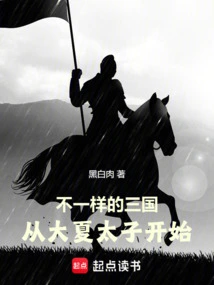
A Different Three Kingdoms, Starting with the Prince of Daxia
About This Novel
A modern cultural relic restorer traveled through time and became Li Renai, the prince of Xixia. He used the memories of his past life and modern strategies to change his fate against the will of heaven, breaking the tragic fate of "sacrifice to the prince" sworn by the Xia Jin alliance, and realizing the counterattack of a small country and unifying the world. "My country's name is 'Xia'! Do you understand? The 'Xia' of China!"
Official Sources
What Readers Think
Rating
Community(0)
Official(1)Scraped 2mo ago
The protagonist has an imperial-Han mentality. The book mentions many times that the Song people captured from the Central Plains were both officials and craftsmen. The Khitan party Xiang Duxiang was a reckless man who only knew how to wield swords and guns. Song soldiers were also reused. The Song soldiers were very good at defending the city. Aren't Dang Xiang and the Khitan very good at defending the city? Did Zhao Er defeat Youzhou? Besides, defending and attacking the city relied on courage and endurance. It is recorded in the books of the Song Dynasty that the Jurchens were not afraid of death, had extraordinary courage and amazing endurance. No matter how many times they charge with casualties, they will not be defeated and the formation will be chaotic (the first generation Jurchen). Furthermore, the concept of nationalism arose in the 18th century and reached its peak in the 19th century before reaching the beginning of the 20th century. In the past, people were struggling to survive and only had class antagonism. There was no nationality. For example, after the Yuan Dynasty fell, many local officials fled north with Emperor Shun of the Yuan Dynasty, and some of them died for their country. For example, in the Northern Song Dynasty, people lost their families and became party members but remained loyal to the Northern Song Dynasty. And the Khitan who surrendered turned to fight with their hometown Daliao. There are no ethnic conflicts, only class conflicts. I don't know why your book always emphasizes the Han people. Han people are educated when they are officials, but the Khitan party items are uneducated? Can't they be officials? Daliao and Khitan both have imperial examinations, both have scholar-bureaucrats and have cultural heritage, so why are they all barbarians and uneducated?
Rating
Community(0)
Official(1)Scraped 2mo ago
The protagonist has an imperial-Han mentality. The book mentions many times that the Song people captured from the Central Plains were both officials and craftsmen. The Khitan party Xiang Duxiang was a reckless man who only knew how to wield swords and guns. Song soldiers were also reused. The Song soldiers were very good at defending the city. Aren't Dang Xiang and the Khitan very good at defending the city? Did Zhao Er defeat Youzhou? Besides, defending and attacking the city relied on courage and endurance. It is recorded in the books of the Song Dynasty that the Jurchens were not afraid of death, had extraordinary courage and amazing endurance. No matter how many times they charge with casualties, they will not be defeated and the formation will be chaotic (the first generation Jurchen). Furthermore, the concept of nationalism arose in the 18th century and reached its peak in the 19th century before reaching the beginning of the 20th century. In the past, people were struggling to survive and only had class antagonism. There was no nationality. For example, after the Yuan Dynasty fell, many local officials fled north with Emperor Shun of the Yuan Dynasty, and some of them died for their country. For example, in the Northern Song Dynasty, people lost their families and became party members but remained loyal to the Northern Song Dynasty. And the Khitan who surrendered turned to fight with their hometown Daliao. There are no ethnic conflicts, only class conflicts. I don't know why your book always emphasizes the Han people. Han people are educated when they are officials, but the Khitan party items are uneducated? Can't they be officials? Daliao and Khitan both have imperial examinations, both have scholar-bureaucrats and have cultural heritage, so why are they all barbarians and uneducated?
Featured in 1 Booklist

You Might Also Like
Reborn Female General
Qianshan Tea Guest
Gou Qin
Mi Muli
Jinting Han People
Chen Ruicong
Li Ming
Goxi
Guiyi is Not the Tang Dynasty
North City Two Thousand
Xielu Lang of Tang Dynasty
Well Dressed
Beginning at the End of Jin Dynasty
Liaodong Cavalry Shadow
Late Jin Dynasty: from Two-legged Sheep to Human Emperor
Believe It Or Not
Nanming, This Emperor is a Bit Stable
Blue Meets Green
Ji Han
Dongjun Taking Off