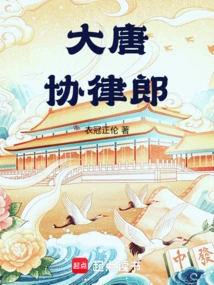
Xielu Lang of Tang Dynasty
by Well Dressed
About This Novel
Recalling the heyday of Kaiyuan in the past, there were still thousands of families in the small town. The rice is dripping with fat and the corn is white, and both the public and private warehouses are abundant. In the thirteenth year of Kaiyuan, the Emperor of Tang Dynasty made an eastward tour of Mount Tai and completed the enshrinement of Zen, marking the beginning of the heyday of the Kaiyuan rule. However, in the following fourteenth year of Kaiyuan, disputes in the court and natural and man-made disasters occurred one after another. At this time, a soul from the next generation came to this world. Revitalize the country internally and defeat powerful enemies externally; Xie Lü Lang of the Tang Dynasty, wrote a glorious chapter in the prosperous times; The beautiful dance of mountains and rivers has not yet finished, but a majestic song leads to peace!
Official Sources
What Readers Think
Rating
Community(0)
Official(34)Scraped 1mo ago
Average character
If you accept money from others at the beginning but don't do anything for them, you can see that there is something wrong with the protagonist's low character. If you don't want to make progress but follow sideways, what people value is Zhang Shuo's reputation, not your literary talent. Even if your literary talent is higher than Zhang Shuo, so what? Self-righteous and lackluster.
How about novels? But I hate this kind of author and like to delete bad reviews. I deleted only five out of 15 reviews. It's obvious whether the book is good or not.
It looks good, but it's not good enough. Come on, hurry up and code.
Author, let me calculate for you that you can code 3,600 words per second per hour. 24 Hours a day gives you 6 hours to sleep, and an hour to eat and wash gives you an hour longer. The idea is to give you an hour, and there are still 15 hours to code 54,000 words. Two chapters are updated in a day. These few words are enough for anyone to look like code words.
Obviously worse than the previous two books
The plot at the beginning is a bit toxic. In terms of governance, Zhou Liang did nothing wrong. The key is that he didn't do much good. The problem was not solved. The dike breach caused a greater negative impact, and it was a sudden impact. Farms were destroyed and people died. He should have been held accountable. He directly wrote a report saying "Inability to solve the problem of water resources caused public conflicts and led to the breach." No matter how he was judged, it was because of his poor work ability that exacerbated the problem. If you want to express something, just write it as being framed and tricked to death. Otherwise, is there any difference between the way you write it and the logic of "the starting point is good" and "I am doing it for your own good" that only focuses on attitude and does not care about specific things? Since when has grassroots officials been judged based on their attitude rather than their ability? What kind of white lotus are you putting here? It fully embodies the protagonist's two ends, pretending to be a moral saint. At the beginning, I wanted to run away, and the money I saved was not divided, and it was all released to Zhou Liang's family. I knew that this guy was going to cause trouble, and I didn't want to get involved. It was reasonable. If something happened, don't be angry like a fool. And you were also angry at Henan Yin for taking the blame. It's wrong to take the blame, but you can't ask your colleagues in the officialdom to be saints, right? It's Zhou Liang who wants to be a right-wing man, but he doesn't act in unison and then blame others. I don't understand why he blames others from a high point. How can there be corruption if they are all role models of integrity? In reality, you wouldn't even dare to say anything if you were asked to do so. You didn't stand up to plead for the people in the first place. There is also the idea of giving up half of your money to protect Zhou Liang's wife, which is fine emotionally, but as a time-traveling protagonist, it's like playing a game. It's not fun in the early stage and you only think about playing in a group when your teammates die. What did you do earlier?
Nine years old, nine years old, this book is really written blindly. Shen Zhezi was a young hero in the first book, but now the protagonist is getting more and more oily. Xiang Zong still feels a bit like Wei Xiaobao. There was only a small staff in the first book. This book can already be described as wretched. Don't write about the Tang Dynasty anymore. There is one book about Wuzhou Futang, one book about the former Tang Dynasty, and this one is about the prosperous Tang Dynasty. My brothers are tired of aesthetics. Isn't it good to write about Liu Song, Nan Qi, and Nan Liang before Xiao Bodhisattva's death? Who hasn't been scolded in recent years for writing about people before the An-Shi Rebellion?
I have incorrect outlook on life. I feel like a primary school student who has traveled through time. He does things without thinking.
The main thing is whether I can stop writing cool articles. . You can just study like your son-in-law. In the early stage, it will be dull and warm, in the middle stage, it will be more passionate and passionate, with some goals and tasks, and in the later stage, you will learn some principles. Isn't there a very cool article? Do you have to be like this ten years ago to bully young people into poverty? How popular are the settings in the first three chapters? I think you have to be of a certain age to read most history books. If you are just doing it for grades and making more money, don't write exciting articles. It's really a headache to read a novel where the main character is obviously a young boy, but he still pretends to be a scheming one. There are novels written in a literary and artistic style, and these young people's novels are also pretty good written by this young boy. At least it's not hard-core, and it grows along with it. Do you know how to write "Growing Up"?
There are really very few authors who can write well about the historical area. The author is very strong if he can stick to the ancient texts and the historical events of the time (the writing also puts a lot of effort into it). I hope the author can break through in the historical area! But after reading the first one, I didn't read it again. It's true that the author's several books are too similar. I've read all the previous ones except for the high-sounding ones. I feel that the female protagonist (should not only be the female protagonist, but the ones who have emotional scenes with the male protagonist are just tools) are dispensable and are just props to promote the plot, and the emotional scenes are half-written and have no characteristics ( It feels like a role based on a template), which makes me feel awkward when reading emotional scenes and daily life (and this is unavoidable in a novel, either the female characters are extremely compressed and ignored, or the female characters are shaped better). And this book has a historical background, which means that it has no political achievements and can only write about daily life (just It's farming quietly) I think if the protagonist is a time traveler, if he travels to the prosperous age and has such a life experience, he can combine his own knowledge to promote it (after all, people in the prosperous age who can leave their names in the history books always have some filters), and then during this, Li Longji was quickly corrupted because of the arrival of the prosperous age, and the protagonist also saw in the prosperous age that there is no cruelty in the history books. And Li Longji's failure to behave and resist (it's not that he didn't prepare in the early stage, he just rushed to rebel as soon as he came). In the end, the biggest joy of the prosperous Tang Dynasty was to write about Li Longji's panic after conquering Chang'an without the people having to suffer too much.
He is obviously a bastard who has been suppressed by his mistress since he was a child. He has no guidance from famous teachers. I wonder where Pig's Foot's literary talent comes from? Is it really a modern society to go out and make money on your own? Big families have big family rules, and even the pig's feet themselves are family property. Why does the author think he can keep the money he earns from the pig's feet? He also said that the family property would rather be passed on to a nephew than to a concubine. I really don't understand where the author got these messy information from.
It's an old problem that has recurred...
I got to know the author from Guan Mian Tang Huang. The previous books, including Han Zuo Gaomen, are all pretty good. But this one is really too slow... Everything has to be talked about a little bit, and everything has to be discussed in depth. It seems quite exciting. Nearly 2.7 Million words, but the story was written in less than four years. The most speechless thing is the disappearance of a young man in Henan. It covers nearly 100 chapters from 749 to 836. I am quite speechless. Although there are small plots of Turkic Khitans and other fanhus interspersed in the middle, I am still speechless. I am afraid that after 1200+, it will be like a few old books, and the plot will suddenly be like a rocket ride and a new dynasty will be established suddenly... It is very fascinating to watch. Can the sensational part be less watery? It is really difficult to empathize, and you yourself have expressed the hypocrisy of the protagonist several times in the article. He is just better than the rich men of the current era. Can you not be like a stallion? He goes into heat when he sees a girl, that's pretty much it. If he doesn't care at all, why not write more plots about plots... Feng Yue is just an adjustment, plots about plots are the mainstream, okay...

Rating
Community(0)
Official(34)Scraped 1mo ago
Average character
If you accept money from others at the beginning but don't do anything for them, you can see that there is something wrong with the protagonist's low character. If you don't want to make progress but follow sideways, what people value is Zhang Shuo's reputation, not your literary talent. Even if your literary talent is higher than Zhang Shuo, so what? Self-righteous and lackluster.
How about novels? But I hate this kind of author and like to delete bad reviews. I deleted only five out of 15 reviews. It's obvious whether the book is good or not.
It looks good, but it's not good enough. Come on, hurry up and code.
Author, let me calculate for you that you can code 3,600 words per second per hour. 24 Hours a day gives you 6 hours to sleep, and an hour to eat and wash gives you an hour longer. The idea is to give you an hour, and there are still 15 hours to code 54,000 words. Two chapters are updated in a day. These few words are enough for anyone to look like code words.
Obviously worse than the previous two books
The plot at the beginning is a bit toxic. In terms of governance, Zhou Liang did nothing wrong. The key is that he didn't do much good. The problem was not solved. The dike breach caused a greater negative impact, and it was a sudden impact. Farms were destroyed and people died. He should have been held accountable. He directly wrote a report saying "Inability to solve the problem of water resources caused public conflicts and led to the breach." No matter how he was judged, it was because of his poor work ability that exacerbated the problem. If you want to express something, just write it as being framed and tricked to death. Otherwise, is there any difference between the way you write it and the logic of "the starting point is good" and "I am doing it for your own good" that only focuses on attitude and does not care about specific things? Since when has grassroots officials been judged based on their attitude rather than their ability? What kind of white lotus are you putting here? It fully embodies the protagonist's two ends, pretending to be a moral saint. At the beginning, I wanted to run away, and the money I saved was not divided, and it was all released to Zhou Liang's family. I knew that this guy was going to cause trouble, and I didn't want to get involved. It was reasonable. If something happened, don't be angry like a fool. And you were also angry at Henan Yin for taking the blame. It's wrong to take the blame, but you can't ask your colleagues in the officialdom to be saints, right? It's Zhou Liang who wants to be a right-wing man, but he doesn't act in unison and then blame others. I don't understand why he blames others from a high point. How can there be corruption if they are all role models of integrity? In reality, you wouldn't even dare to say anything if you were asked to do so. You didn't stand up to plead for the people in the first place. There is also the idea of giving up half of your money to protect Zhou Liang's wife, which is fine emotionally, but as a time-traveling protagonist, it's like playing a game. It's not fun in the early stage and you only think about playing in a group when your teammates die. What did you do earlier?
Nine years old, nine years old, this book is really written blindly. Shen Zhezi was a young hero in the first book, but now the protagonist is getting more and more oily. Xiang Zong still feels a bit like Wei Xiaobao. There was only a small staff in the first book. This book can already be described as wretched. Don't write about the Tang Dynasty anymore. There is one book about Wuzhou Futang, one book about the former Tang Dynasty, and this one is about the prosperous Tang Dynasty. My brothers are tired of aesthetics. Isn't it good to write about Liu Song, Nan Qi, and Nan Liang before Xiao Bodhisattva's death? Who hasn't been scolded in recent years for writing about people before the An-Shi Rebellion?
I have incorrect outlook on life. I feel like a primary school student who has traveled through time. He does things without thinking.
The main thing is whether I can stop writing cool articles. . You can just study like your son-in-law. In the early stage, it will be dull and warm, in the middle stage, it will be more passionate and passionate, with some goals and tasks, and in the later stage, you will learn some principles. Isn't there a very cool article? Do you have to be like this ten years ago to bully young people into poverty? How popular are the settings in the first three chapters? I think you have to be of a certain age to read most history books. If you are just doing it for grades and making more money, don't write exciting articles. It's really a headache to read a novel where the main character is obviously a young boy, but he still pretends to be a scheming one. There are novels written in a literary and artistic style, and these young people's novels are also pretty good written by this young boy. At least it's not hard-core, and it grows along with it. Do you know how to write "Growing Up"?
There are really very few authors who can write well about the historical area. The author is very strong if he can stick to the ancient texts and the historical events of the time (the writing also puts a lot of effort into it). I hope the author can break through in the historical area! But after reading the first one, I didn't read it again. It's true that the author's several books are too similar. I've read all the previous ones except for the high-sounding ones. I feel that the female protagonist (should not only be the female protagonist, but the ones who have emotional scenes with the male protagonist are just tools) are dispensable and are just props to promote the plot, and the emotional scenes are half-written and have no characteristics ( It feels like a role based on a template), which makes me feel awkward when reading emotional scenes and daily life (and this is unavoidable in a novel, either the female characters are extremely compressed and ignored, or the female characters are shaped better). And this book has a historical background, which means that it has no political achievements and can only write about daily life (just It's farming quietly) I think if the protagonist is a time traveler, if he travels to the prosperous age and has such a life experience, he can combine his own knowledge to promote it (after all, people in the prosperous age who can leave their names in the history books always have some filters), and then during this, Li Longji was quickly corrupted because of the arrival of the prosperous age, and the protagonist also saw in the prosperous age that there is no cruelty in the history books. And Li Longji's failure to behave and resist (it's not that he didn't prepare in the early stage, he just rushed to rebel as soon as he came). In the end, the biggest joy of the prosperous Tang Dynasty was to write about Li Longji's panic after conquering Chang'an without the people having to suffer too much.
He is obviously a bastard who has been suppressed by his mistress since he was a child. He has no guidance from famous teachers. I wonder where Pig's Foot's literary talent comes from? Is it really a modern society to go out and make money on your own? Big families have big family rules, and even the pig's feet themselves are family property. Why does the author think he can keep the money he earns from the pig's feet? He also said that the family property would rather be passed on to a nephew than to a concubine. I really don't understand where the author got these messy information from.
It's an old problem that has recurred...
I got to know the author from Guan Mian Tang Huang. The previous books, including Han Zuo Gaomen, are all pretty good. But this one is really too slow... Everything has to be talked about a little bit, and everything has to be discussed in depth. It seems quite exciting. Nearly 2.7 Million words, but the story was written in less than four years. The most speechless thing is the disappearance of a young man in Henan. It covers nearly 100 chapters from 749 to 836. I am quite speechless. Although there are small plots of Turkic Khitans and other fanhus interspersed in the middle, I am still speechless. I am afraid that after 1200+, it will be like a few old books, and the plot will suddenly be like a rocket ride and a new dynasty will be established suddenly... It is very fascinating to watch. Can the sensational part be less watery? It is really difficult to empathize, and you yourself have expressed the hypocrisy of the protagonist several times in the article. He is just better than the rich men of the current era. Can you not be like a stallion? He goes into heat when he sees a girl, that's pretty much it. If he doesn't care at all, why not write more plots about plots... Feng Yue is just an adjustment, plots about plots are the mainstream, okay...
Featured in 6 Booklists
Official(6)
[80·Historical Imagination] The story takes place at the end of the prosperous period of Emperor Xuanzong of the Tang Dynasty. As soon as the gongs and drums for Fengchan Taishan sounded, there was an undercurrent surging inside and outside the court. The protagonist is a young man who traveled from modern times and became a minor official in Chang'an City. He neither has a golden finger in the system nor is he a genius academic master. He relies on his common sense and observation ability to navigate the complicated officialdom. For example, when he discovered that civilian grain transportation was severely damaged, he thought about improving transportation tools; when he saw that the nobles were addicted to pleasure, he quietly promoted some inconspicuous reforms. There are also many historical figures interspersed in the plot. Names like Li Linfu and Zhang Shuo appear in flesh and blood in the book. The author has a thorough study of the system and culture of the Tang Dynasty, and details such as the imperial examination process and official grades are clearly written. The protagonist's way of solving problems is also very down-to-earth. There is no routine of "just take out a modern technology and crush the ancients", but slowly advance by integrating resources and wisdom. However, there are also shortcomings. The pace of the first dozen chapters is a bit slow, and the relationships between the characters are too spread out, so you have to read it calmly. In addition, some of the descriptions of official struggles are a bit blunt, and readers who are not too fond of power and intrigue may find it tiring.
Four stars Traveling through the early period of Emperor Xuanzong of the Tang Dynasty, an experienced author with very professional and solid historical background

The pacing is very well controlled and the writing is also good. It is the one that suits me the most among the new books I have read recently. Recommended.

Serializing During time travel, the concubine and grandson of Zhang Shuo, the famous prime minister of the Tang Dynasty, was not favored because his biological mother Wu died early. After the time traveler seizes the house, step by step he gets in touch with Concubine Wu and Gao Lishi, and becomes famous in Luozhong in order to advance. It is still in the developmental stage, and it seems that the author means to take the line of being a powerful official or even usurping the country, but he is still young and needs time. The author is a veteran of historical writing, and has a deep understanding of the political ecology and human customs of the Middle Tang Dynasty. The writing style is sophisticated and the storyline is vivid. It is a masterpiece worth looking forward to.
You Might Also Like
Reborn Female General
Qianshan Tea Guest
Prime Minister of a Poor Family
Happiness Knocks On The Door
Depose the Dragon
Grenades Are Afraid Of Water
Prime Minister is on Top
Bean Sprouts For Soup
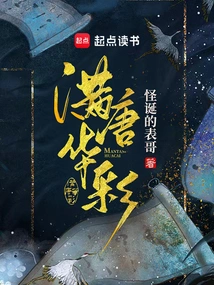
Mantang Huacai
Weird Cousin
Jinting Han People
Chen Ruicong
Li Ming
Goxi
Taipingji
Chris Webber
The Fierce Ministers of the Song Dynasty
Rat Cat Dog Pigeon
Entrepreneurship in the Late Tang Dynasty
Crazy Chen