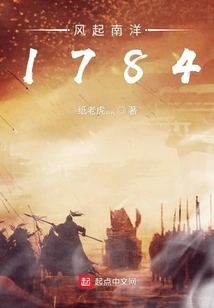
The Wind Rises in Nanyang 1784
About This Novel
In 1784, Nanyang was on the eve of a storm. Nguyen Phuc Anh of Vietnam was doing everything possible to seek restoration of his country. King Rama I of Thailand had just succeeded in usurping the throne. Western colonists were about to arrive in large numbers. Traveling through Keye Kai, we arrived at this era. He started by controlling Vietnam. He rejected the white barbarians and fought with the natives along the way, and established a powerful Nanyang Empire. But he was not satisfied, because when he looked north, the survivors shed tears in Hu Chenli, and looked south to Wang Shi for another year! The new book "The Return of Tang'er in the Vast Sea" has been uploaded. This time it is about the story of the Gu Zhonggui rebels in the northwest. I hope all book friends will like it.
Official Sources
What Readers Think
Rating
Community(0)
Official(64)Scraped 2mo ago
big bug
Song Yingxing's "Tiangong Kaiwu" records the method of making white sugar, and this was at the end of the 18th century. How could foreigners not know this? Tiangong Kaiwu has been introduced to Europe and is considered a sacred book. Many technologies are imitated from it. If you want to make a fortune from white sugar, it is delusional. It is better to create an industrial chain of soap. This process can also make candles and nitroglycerin.
Let me tell you my evaluation
I was very persuaded to quit in the past. I couldn't stand it after reading more than ten chapters. Ye Kaidu and Ruan Guozhu had a falling out. They still bowed their heads in the past (there were many people who protected Ye Kai and resisted by decentralizing power) and were still waiting to be escorted. They gave money and guns and said that they should not offend Ruan Guozhu. They were so offended that they even went over to give money and guns. I was speechless. That's how it was to persuade them to quit.
I can't understand something
The protagonist's family clearly left China for Nanyang at the end of the Ming Dynasty. Only the Chinese who went to Nanyang during the Qing Dynasty wore braids. The protagonist's family was not that mean, and no one in Nanyang did it. Keep your hair but not your hair. Leave your hair but not your hair. Why do you have to keep your braids?
Isn't the protagonist planning to establish his own organization, like Luo Fangbo?
Build your own country, then continue to learn Western technology, and then fight back after ten or twenty years
Can anyone recommend some good novels about the late Qing Dynasty and early Ming Dynasty? I don't want to overthrow the Qing Dynasty in three years and dominate the world in ten years. I still have some brains when reading.
Will the protagonist become emperor and fight back to the Qing Dynasty?
The subject matter is great
Don't be a eunuch, it's very interesting, comparable to the Frozen Empire, developing one south and one north to unify the Central Plains
About the protagonist described by the author
The author describes the protagonist's image, which reminds me of a sentence from Stephen Chow's movie: He is like a dog.
It is still recommended that you write less insignificant chapters.
Everything is based on the main plot. I hope the author can understand this, otherwise no one will read your book.
Well written and fully described
I really like this book about the founding of a country in the South Seas. I found that although it is slow, it is true. The writing description is better. After reading this book, I really like the book about the founding of a country in the South Seas. I searched for others. The description is too simple. The first few dozen chapters are about founding a country, building a fleet, and completing industrialization. Chapters three to four hundred are about conquering China, and soon completing the mechanization of farmers to develop the land. This is ridiculous. Even in the 21st century, few countries have completed complete industrialization, and modern China does not have fully mechanized land.
Rating
Community(0)
Official(64)Scraped 2mo ago
big bug
Song Yingxing's "Tiangong Kaiwu" records the method of making white sugar, and this was at the end of the 18th century. How could foreigners not know this? Tiangong Kaiwu has been introduced to Europe and is considered a sacred book. Many technologies are imitated from it. If you want to make a fortune from white sugar, it is delusional. It is better to create an industrial chain of soap. This process can also make candles and nitroglycerin.
Let me tell you my evaluation
I was very persuaded to quit in the past. I couldn't stand it after reading more than ten chapters. Ye Kaidu and Ruan Guozhu had a falling out. They still bowed their heads in the past (there were many people who protected Ye Kai and resisted by decentralizing power) and were still waiting to be escorted. They gave money and guns and said that they should not offend Ruan Guozhu. They were so offended that they even went over to give money and guns. I was speechless. That's how it was to persuade them to quit.
I can't understand something
The protagonist's family clearly left China for Nanyang at the end of the Ming Dynasty. Only the Chinese who went to Nanyang during the Qing Dynasty wore braids. The protagonist's family was not that mean, and no one in Nanyang did it. Keep your hair but not your hair. Leave your hair but not your hair. Why do you have to keep your braids?
Isn't the protagonist planning to establish his own organization, like Luo Fangbo?
Build your own country, then continue to learn Western technology, and then fight back after ten or twenty years
Can anyone recommend some good novels about the late Qing Dynasty and early Ming Dynasty? I don't want to overthrow the Qing Dynasty in three years and dominate the world in ten years. I still have some brains when reading.
Will the protagonist become emperor and fight back to the Qing Dynasty?
The subject matter is great
Don't be a eunuch, it's very interesting, comparable to the Frozen Empire, developing one south and one north to unify the Central Plains
About the protagonist described by the author
The author describes the protagonist's image, which reminds me of a sentence from Stephen Chow's movie: He is like a dog.
It is still recommended that you write less insignificant chapters.
Everything is based on the main plot. I hope the author can understand this, otherwise no one will read your book.
Well written and fully described
I really like this book about the founding of a country in the South Seas. I found that although it is slow, it is true. The writing description is better. After reading this book, I really like the book about the founding of a country in the South Seas. I searched for others. The description is too simple. The first few dozen chapters are about founding a country, building a fleet, and completing industrialization. Chapters three to four hundred are about conquering China, and soon completing the mechanization of farmers to develop the land. This is ridiculous. Even in the 21st century, few countries have completed complete industrialization, and modern China does not have fully mechanized land.
Featured in 3 Booklists
Official(3)
One of the rare novels about the rise from Southeast Asia is the young master of the Ye family in [Nanyangtang (more than 10 surnames, I checked)]. The author is very skilled. It seems that he is familiar with the history of modern Southeast Asia and character allusions. He is not a tyrant. He relies on the original history, characters, and events. It is very authentic and readable! The disadvantages may be that it changes quickly and is a bit slippery, and it occasionally makes dramas, which does not conform to some people's mentality of superiority that the protagonist should be proud or tough in everything he does (for example, he should not be grateful towards the down-and-out leader of Vietnam). . However, I think part of it is a recognition of reality and a bit fractious, but it may make some readers slightly uncomfortable because of the fast transition and lack of explanation. What some readers criticize the most is [Late Decision], which is said to be procrastinating and unclear. But I just think it's normal. Who can travel through time and immediately want to establish a country in Southeast Asia? Do I want to defy heaven? Do I want to counterattack the mainland from Southeast Asia (during the Qianlong period)? Mentality, process, transformation, and goals should be consistent with reality and the changing situation. The mentality is different at each stage, and the control of power is also different. It is normal for goals and directions to change. But many readers don't care. After all, Internet articles are still required to be fast-food, and they have the problem of impatience! The article also hurriedly set the final goal in the early stage! It feels a bit abrupt!

He had an accurate grasp of the world trends at that time, was very sophisticated in various genres in Southeast Asia, and his writing skills were mellow and non-astringent, which can be regarded as a masterpiece. Rating: Ready for review
Starting from the Song Dynasty, "going to Southeast Asia" began to occur in the southern coastal areas. This has also led to an increasing number of Chinese in Southeast Asia. Especially after the Qing army entered the customs, many southerners fled to Southeast Asia and took root there in order not to "cut off their hair and change their clothes." This book is one of the few historical texts that focuses on the Chinese community in Southeast Asia. The protagonist unites the Nanyang Chinese to regain Jiaozhi, and based on this, he finally goes north to overthrow the Qing Dynasty. The perspective is relatively new. Suitable for the crowd: This book is more suitable for book lovers who want to read about resisting the Qing Dynasty, expanding its territory, and promoting our country's prestige in the world. Work rating: 7 (It focuses on the Chinese group in Nanyang and uses it as a basis to resist the Qing Dynasty. The setting is relatively novel. However, after occupying Annan, it is not realistic to go north to defeat the Qing Dynasty soon. The writing and plot can only be said to be satisfactory) Personal review: The setting is novel and reasonable. Jumping out of the scope of the Qing Dynasty (unlike the general Qing Dynasty literature that is located in the mainland), based on Nanyang, defeated the Qing Dynasty. Moreover, there are many Chinese in Nanyang, and most of them dislike the Qing Dynasty. It provides the basis for the protagonist to later occupy Nanyang and go north to crusade against the Qing court. Some book friends feel that there are too many plots in Nanyang and it is quite depressing. On the contrary, I think this is normal. Because the protagonist was very weak at the time, and the Chinese were outsiders after all. Even if they were economically powerful, they were still squeezed out. That's why the protagonist's early stage is so difficult. This is logical. Personal complaints: Going north to conquer the Qing court is too fast. We had just occupied Nanyang and were already unstable, so why did we go north so quickly? Moreover, it is not very realistic to defeat the Qing court like a snake swallowing an elephant. If this is the case, then why is the plot of the occupation of Nanyang so depressing and long?
You Might Also Like
Reborn Female General
Qianshan Tea Guest
1635 Han Style Returns
Chongqing Old Q
Ming Shizu
Flying Cable Car
Eastern European Eagle
Kalmar Alliance
Anti-qing: Starting from the Reincarnation of the Ming Dynasty
Listen To The Wind And Cook The Rainy Night
Anti-qing 1850
The Three Fat Men By The River
Lanfang
Yuyan
The Ming Dynasty Was Not Revolutionary
Wang Zixu
Anti-qing: Starting from the Jintian Uprising
Listen To The Wind And Cook The Rainy Night
Nanyang Fengyun 1864
Grape Toothless