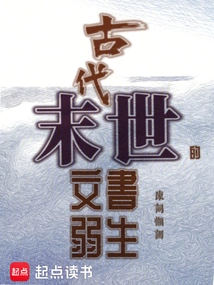
A Weak Scholar in the Last Days of Ancient Times
by Lazy Speech
About This Novel
"He's a weakling!" "You bitch lied to me!" "Curly dogs! They're all curly dogs!" ... Hello, Juanwang sincerely invites you to join Xinzhou Working Group -------- Note: No special powers, purely based on ancient times. Because it does not involve any real historical dynasties or characters, and contains apocalyptic elements, it is not classified as historical and is classified as fantasy.
Official Sources
What Readers Think
Rating
Community(0)
Official(58)Scraped 1mo ago
Fatten and then eat
I saw it in Intangible Cultural Heritage. I clicked on the introduction and saw that it was Ci Miao. I quickly collected it and watched it again.
Can I watch this? Of course, I'm not doubting the writing style, but I'm afraid of the update speed.
Let's take a walk, and wait until I'm mentally prepared before I start reading. I'll slowly follow you through it, and at least I'll finish every book.
I'm still reviewing Huimao for the fifth time, and DaDa unexpectedly released a new book.
Ha, is it the Chinese New Year? I can actually see the new book "Old Rules" published by Dada. I want to save it and read it again in a year!
A bit brainless, he invents and contributes selflessly every day. No reason, just do it
Everyone has seen Hui Mao. This book is also in that tone. The pace is brisk, there is no pressure, and the writing is very relaxed. A story that flows naturally. In order to survive in the last days, the protagonist goes on a study tour, but in fact he brings the technology from his previous life. The story of defeating monsters with the help of technology. A good book to pass the time, very comfortable writing. There is a feeling that the protagonist is pretending, but pretending very naturally. The supporting characters of several younger brothers also fought with each other in order to get ahead. The characterization of the Taoist priest was very good, and the actions of the several overlords were also very comfortable. The pace is lively and not depressing. Beautiful, a masterpiece.
Is it reasonable to produce exquisite products in troubled times?
After Chapter 59, I feel a little weird. To put it simply, other ancient literature can rely on refined salt and white sugar to get ahead, but you are in troubled times. Shouldn't ancient literature rely on quantity and quality?
Woohoo, it's finally synchronized here, okay (๑•̀ω•́๑) The first comment here is mine.
A very interesting novel with a niche theme
The sense of flowing and flowing reading reflects the author's handling of how the protagonist copes with some things in the apocalypse, but there are very few updates.
I have been saving for half a year, and when I look back, there are more than 150 chapters😊🖐️
Rating
Community(0)
Official(58)Scraped 1mo ago
Fatten and then eat
I saw it in Intangible Cultural Heritage. I clicked on the introduction and saw that it was Ci Miao. I quickly collected it and watched it again.
Can I watch this? Of course, I'm not doubting the writing style, but I'm afraid of the update speed.
Let's take a walk, and wait until I'm mentally prepared before I start reading. I'll slowly follow you through it, and at least I'll finish every book.
I'm still reviewing Huimao for the fifth time, and DaDa unexpectedly released a new book.
Ha, is it the Chinese New Year? I can actually see the new book "Old Rules" published by Dada. I want to save it and read it again in a year!
A bit brainless, he invents and contributes selflessly every day. No reason, just do it
Everyone has seen Hui Mao. This book is also in that tone. The pace is brisk, there is no pressure, and the writing is very relaxed. A story that flows naturally. In order to survive in the last days, the protagonist goes on a study tour, but in fact he brings the technology from his previous life. The story of defeating monsters with the help of technology. A good book to pass the time, very comfortable writing. There is a feeling that the protagonist is pretending, but pretending very naturally. The supporting characters of several younger brothers also fought with each other in order to get ahead. The characterization of the Taoist priest was very good, and the actions of the several overlords were also very comfortable. The pace is lively and not depressing. Beautiful, a masterpiece.
Is it reasonable to produce exquisite products in troubled times?
After Chapter 59, I feel a little weird. To put it simply, other ancient literature can rely on refined salt and white sugar to get ahead, but you are in troubled times. Shouldn't ancient literature rely on quantity and quality?
Woohoo, it's finally synchronized here, okay (๑•̀ω•́๑) The first comment here is mine.
A very interesting novel with a niche theme
The sense of flowing and flowing reading reflects the author's handling of how the protagonist copes with some things in the apocalypse, but there are very few updates.
I have been saving for half a year, and when I look back, there are more than 150 chapters😊🖐️
Featured in 40 Booklists
Official(40)
Ci Miao's new book has guaranteed quality. His soul traveled through the apocalypse of ancient times and became a weak scholar in the eyes of everyone. In order to survive, he made a picture of a fort in the village, deceived the Taoist priest, and went north with the Orions.
Ci Miao has released a new book. This is one of my favorite authors. The writing is excellent and I highly recommend it.
Madam, I like you very much
[82 points·The end of the world] A composite genre work that combines elements such as apocalyptic escape, fictional history, and infrastructure strategy. Its core background is set in an imaginary dynasty similar to the ancient Jin Dynasty. The "evil poison" (actually a deadly parasite) donated by foreign countries caused a large-scale epidemic, leading to the collapse of society and rampant monsters, forming a unique worldview intertwined with ancient times and the end of the world. The protagonist Wen Gu was originally a hunter for cultural relics in the wasteland world of the future. After his soul traveled to the body of a deceased scholar, he took his naive cousin to visit his relatives in the north. On the way, he gathered survivors and used modern knowledge to solve ancient dilemmas. The main plot line includes survival exploration (fighting against monsters and diseases), civilization reconstruction (using cultural relic knowledge to develop technology), and the hidden thread revealing the truth about time travel and the nature of the world. This work takes "non-supernatural survival" as its core highlight, abandons the supernatural setting of common apocalyptic novels, and instead relies on the protagonist's cultural relic research background and scientific thinking to solve problems, showing unique logical rigor. The author cleverly balances the narrative tension between "literary" and "military" - the scholar's identity not only constitutes a survival disadvantage (physical limitations), but also becomes the key to solving the problem (cultural resourcefulness). This contrast creates a highly recognizable character. In the construction of a grand world view, the apocalyptic crisis caused by parasites not only drives the plot, but also serves as a metaphor for the fragility of civilization and the struggle of human nature. For example, the spread of epidemics coincides with the corruption of the ancient bureaucratic system, and the mutation of monsters reflects the collapse of ethics in troubled times. Although the work is a mixture of many themes, it is able to achieve organic unity through light and dark dual-line narratives (survival action and truth pursuit), demonstrating the author's ability to control complex narratives.

You Might Also Like
Extradimensional Warlock
Muhu
Reborn Female General
Qianshan Tea Guest
Ring of Fate
Squid That Loves Diving
Suzaku
Tricky
Lord of Puro
Salagus
Ryuzo
Misty Jiangnan
Leisure Fairy Travel
Bookworm Bubbling
Day and Night Wandering God
Green Mountains Are Full Of Ink
Alienation Border
Zhao Buqie
Sequence: Eight Paths Running Wildly
Domestic Dawenxi