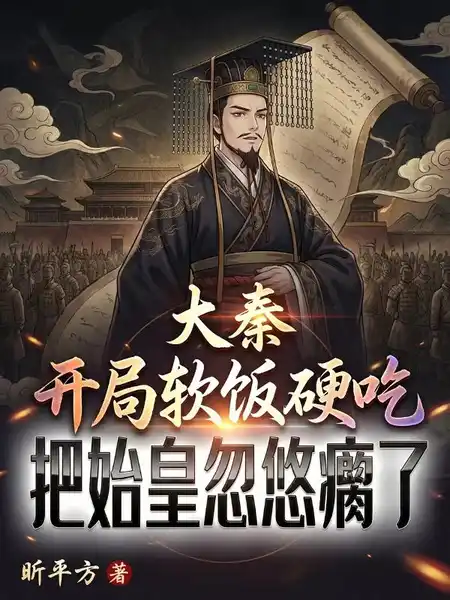
Great Qin: From the Start, I Lived Off Women and Fooled the First Emperor into a Stupor
大秦:开局软饭硬吃,把始皇忽悠瘸了
- Status
- Completed
- Length
- 1.1M Words
- Genre
- Historical
- Subgenre
- Historical Transmigration
- Updated
- 3mo ago
- English
- Request a translation

Also on Zongheng
Synopsis
Stats
All-time: Popularity, Must-read votes.
441Chapters
44kPopularity
911Readers
8.8Score
839Must-read votes
Readers also read
 Great Tang: Li Er Forces Me to Marry Changle
 From the Start, I Fought for the Crown Prince's Seat: Starting with a Tigress of a Wife
 First-Rank Son-in-Law
 The Dashing Heir
 Restoring the Kingdom
 Illegitimate Son of a Noble House
 The Greatest Hero of the Sui and Tang Dynasties
 After Transmigrating, I Got Three Wives. Refusing Them Is Illegal!
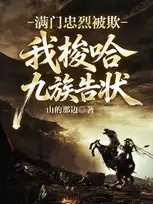 My Loyal Family Was Bullied, So I Went All In and Sued the Entire Clan
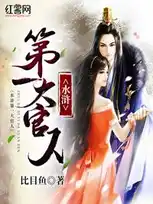 The Greatest Official in Water Margin
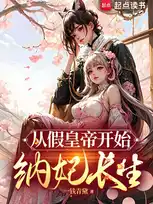 I Began Taking Concubines and Pursuing Immortality as a Fake Emperor
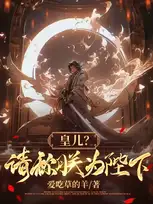 My Son? Call Me Your Majesty
 The Tang Dynasty Crown Prince Is So Arrogant
 The Greedy Wolf of the Great Ming
 Three Kingdoms: I’m No Mere Pig or Dog
 The Borderlands' Soldier King
 Starting by Rescuing Lü Bu at Xiapi
 Three Kingdoms: From the Start, I Summon Li Kui
 The Tang Dynasty's Prince Consort
 Fierce General at the End of the Ming: Tartars, You Shall Not Cross Shanhai Pass!
Reader comments 10
Google Translate
I suggest you update soon!
It's quite interesting. It's rare to see books that start from when Ying Zheng was a child. The few that do are historically accurate and haven't gone off on tangents.
This book tells the story of the protagonist, Chu Yun Shen, who travels back to the Warring States period. He encounters Zhao Ji by chance and later returns to the Qin state with Yi Ren, Ying Zheng, Lü Buwei, and Zhao Ji. Because his words are constantly interpreted by others, the protagonist's status rises. Before his death, Yi Ren entrusts his son to the protagonist, bestowing upon him the title of "Uncle" and upon Lü Buwei the title of "Second Uncle." Then, the protagonist's casual remarks are always interpreted in different ways, influencing history. Before his death, Ying Zheng bestows upon him the title of "Supreme Emperor." One day, in a dream, he travels back to the modern world, as if it were all a dream. The book is quite good, with many humorous moments, but some historical figures mysteriously disappear in the later stages, such as Zhao Ji and Han Feizi, which is the biggest problem. Towards the end, it becomes clear that the author is struggling to continue writing. In the last chapter, the author mentions that this is his first time writing, so flaws are normal. Therefore, I'm giving it a mediocre rating.
Is there a female lead?
Nice
Although the protagonist is a lazy bum who doesn't want to work, and others excessively fantasize about him as a god, this is the core of the novel. However, if the protagonist is always like this, he will seem stupid. It is necessary to have a proper balance between tension and relaxation. For example, for irrigation and farming, we can directly use waterwheels and curved plows, and occasionally offer suggestions based on history. Some things, like wheelbarrows, could be used for manual labor. The protagonist didn't think much of it at first, but later others used them for military purposes. The protagonist doesn't want to do anything but eat and sleep, and his achievements are all imagined by others, making him seem very stupid.
Overall, this book is quite good, better than any I've read before. The plot is also quite exciting.
It started off very interesting, but after about a hundred chapters of imaginative writing, it became a bit tiring to read. I revised it a bit around chapter 200, and it's still a gem from the First Emperor. Around chapters 300-400, the First Emperor was portrayed as cold and aloof towards the protagonist, and around chapter 430, Fusu was again depicted as a Confucian wastrel, and the First Emperor wanted the protagonist to teach him. Didn't the protagonist teach Fusu, Jianglu, and Huhai for a long time before that? Oh well, I'm almost at the end anyway.
Chapter 50: Not a single person died. This is the Spring and Autumn and Warring States periods, not a modern business war... Goodbye!
Some things are written and then disappear after only a few chapters.