


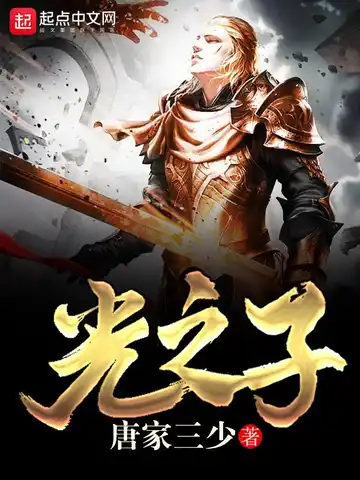
Son of Light
光之子
- Status
- Completed
- Length
- 770k Words
- Genre
- Fantasy
- Subgenre
- European Fantasy
- Updated
- 2y ago
- Source
- Qimao
Stats
All-time: Popularity, Must-read votes.
355Chapters
273kPopularity
1kReaders
2.2kMust-read votes
9.3Score
1.3kRatings
Tags
Synopsis
More by this author
Readers also read
 Heaven-Destroying Technique
 Eternal God Emperor
 My Yuling Comes from China
 Martial Breaking the Sky
 Obtain the Lord's Artifact at the Beginning and Fuse the Blood of All Beasts
 Immortality Begins with the Dog Official
 The Taoist Couple Is a Reborn Person, and I Overheard His Thoughts
 Top Abandoned Shao Er
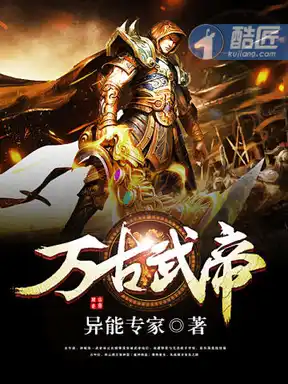 Eternal Martial Emperor
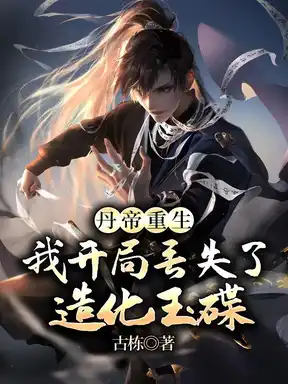 Emperor Dan Was Reborn, I Lost the Jade Disc of Creation at the Beginning
 Hong Kong Island Fit People
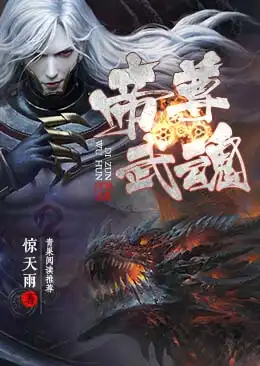 Emperor Martial Spirit
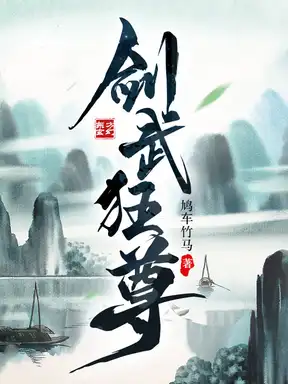 Sword Martial Mad Lord
 Nine Immortals Emperor Technique
 Fantasy: Become Invincible Starting from the Chaos Sword Body
 Super Exotic Beast Breeding System
 Heaven Devouring Supreme
 Evening Bell Church
 Wu Ni Jiuchongtian
 Spirit Realm Apostle
Reader comments 12
Google Translate
When the title page of the first "Children of Light" opens in front of readers, a fantasy world about the intertwining of light and darkness, divinity and humanity slowly unfolds. On the surface, this work is a growth story about a young man searching for himself in a magical world, but in fact it contains a profound metaphor for the spiritual dilemma of modern people. In this era of advanced technology but poor spirituality, "Children of Light", with its unique narrative charm and profound ideological connotation, provides us with a magic mirror that reflects the inner world of contemporary people. Through the protagonist's journey from confusion to awakening, the work explores an eternal proposition: In a reality where divine brilliance and human weakness coexist, how do we find our true selves? Self-identity is not about denying weaknesses, but choosing to move forward based on recognizing weaknesses. "Children of Light" is particularly profound in its dialectical thinking about light and darkness. The work does not simply equate light with good and darkness with evil, but shows the interdependence and mutual transformation between the two. One of the most moving scenes is when the protagonist discovers in complete darkness that it is the darkness that allows him to see the stars - an image that perfectly illustrates the philosophical insight that "light comes from the acceptance of darkness." In contemporary society, we often fall into the trap of black-and-white thinking, viewing opinions that are different from our own as "darkness" that must be eliminated. The work tells us through the fables of the magical world: true wisdom is not to eliminate darkness, but the ability to still see light in darkness; not to become pure light, but to find a balance in the interweaving of light and darkness. This transcendence of binary opposition provides a spiritual way out for modern people trapped in ideological opposition. It is not about conquering and being conquered, but about symbiosis and co-prosperity. "Children of Light" ultimately points to an existential conclusion: the meaning of life is not given, but created through choice and action. When the protagonist gives up looking for a ready-made "destiny" and instead creates his own path, he completes the transformation from passive acceptance to active creation. This ending has profound implications for contemporary people - in an era full of uncertainty, we cannot rely on traditional deterministic guides. Only through constant trying, reflection, and adjustment can we find our own "light". This emphasis on subjectivity is not selfish individualism, but the highest affirmation of the dignity of life. "Children of Light" ultimately tells us: becoming a "child of light" is not about acquiring a special identity, but the courage to still love life after recognizing the whole truth of life; it is not about becoming a light in the eyes of others, but about maintaining an immortal fire in one's heart. In this sense, every modern person who lives seriously and constantly renews himself is a potential "child of light." The value of the work lies not only in the fact that it tells a good story, but also in the fact that it rekindles readers' eternal pursuit of meaning, truth, and a better self. This may be the true power of great fantasy literature—it talks about magic and adventure on the surface, but actually explores the most profound spiritual propositions of mankind.
"Son of Light" written by Tang Jia San Shao is his early work and is also a classic fantasy enlightenment work in online literature. The story tells the story of how a young man with mediocre qualifications, Longgong Wei, grew up step by step from a ridiculed "waste" to a powerful light magician, and finally shouldered the mission of saving the world. 1. The thrill of counterattack and the resonance of growth Longgong Wei's starting point was extremely low, and he was even judged as "light magic is useless", but with persistence and opportunities (such as the Holy Sword of Light that he unexpectedly obtained), he gradually broke through himself. This "waste counterattack" setting makes it easy for readers, especially young readers, to find inspiration in the protagonist's growth - talent is not the only thing, hard work and opportunity are equally important. 2. Young love and passionate friendship Although the emotional description of Longgong and Muzi Mo is simple, it is full of the purity of young people. From acquaintance, misunderstanding, acquaintance, and sharing life and death, this idealized love is particularly precious in fantasy novels. In addition, the bond between him and his partners is also impressive, and the portrayal of teamwork and brotherhood adds a sense of passion to the story. 3. Slightly immature but full of sincerity As the debut work of the third son of the Tang family, the writing style and worldview structure of "Child of Light" are simpler than his later works (such as "Douluo Dalu"), and the magic system is not rigorous enough. But because of this, it has a simple appeal, without overly complicated settings, and pays more attention to the smoothness of the plot and the growth of the characters, making it easy and enjoyable to read. Conclusion "Child of Light" may not be the most mature work of the Tang family, but it carries the youthful memories of many readers. It tells us that even the faintest light can illuminate the world with persistence. If you like traditional fantasy and teenage growth stories, this book is still worth reading.
I feel like this protagonist is so stupid
I don't know why I just like watching this kind of thing
San Shao's first book😅
This is an early book. Not to mention the immature writing style, the three views are not very correct (specifically, moving to chapters 42-43). The plot is too deliberate, and the recommendation index (1 star/5 stars)
Nice
The fifth part of the Tang family's third young master's supplement plan It's really not pretty here
There is one less card in the middle
San Shao's early articles did not reflect his expected level.