Interpretation of Fine Novels on Chinese History and Traditional Culture
演译中国历史与传统文化精品小说
Whether it is fiction, time travel, or fantasy, this novel alone contains some of the essence of Chinese culture and history. Of course, the novel is not a history book, and the interpretation is not a documentary. My selection criterion is that they have a deep understanding of Chinese history and traditional culture, and some books even have corresponding historical records. This will help us understand some history and remember some ancient poems while reading easily!
 1
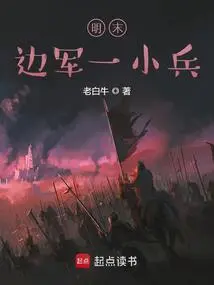
1明末边军一小兵
Old White Cow
In March of the seventh year of Chongzhen, there was a severe drought in Shanxi and Shaanxi. The land was bare for thousands of miles and the people were severely hungry. In April, Li Zicheng entered Henan and joined forces with Zhang Xianzhong to capture Chengcheng. In July, the Hou Jin army besieged Xuanfu and looted Datong. Many castles along the border were lost. The Ming Dynasty was in turmoil due to internal and external troubles! In July of this year, Wang Dou unexpectedly came to the Ming Dynasty and became an ordinary soldier in Shunxiang Fort, Baoan Prefecture, Xuanfu Town... ... The new book "Continuation of Nanming" has been released. You can click on the author's information or the grand recommendation below to find and read it.
In March of the seventh year of Chongzhen, there was a severe drought in Shanxi and Shaanxi. The land was bare for thousands of miles and the people were severely hungry. In April, Li Zicheng entered Henan and joined forces with Zhang Xianzhong to capture Chengcheng. In July, the Hou Jin army besieged Xuanfu and looted Datong. Many castles along the border were lost. The Ming Dynasty was in turmoil due to internal and external troubles! In July of this year, Wang Dou unexpectedly came to the Ming Dynasty and became an ordinary soldier in Shunxiang Fort, Baoan Prefecture, Xuanfu Town... ... The new book "Continuation of Nanming" has been released. You can click on the author's information or the grand recommendation below to find and read it.
A good fictional historical novel about the late Ming Dynasty. The protagonist has no golden fingers and no background in science and engineering. He relies on his grasp of the general direction of history and his understanding of survival to lead the ordinary people around him to achieve extraordinary achievements. The writing is not very good, but the structure is clear and the reading is smooth. It is worth recommending!
 2
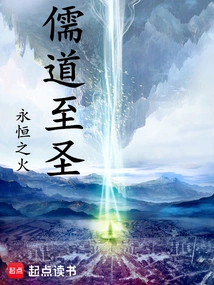
2儒道至圣
Eternal Fire
This is a world where scholars control the power of heaven and earth. If you have talent, your poems can kill your enemies, your words can destroy your armies, and your articles can bring peace to the world. Scholars pick up pens and talk about military affairs on paper; they kill enemies and speak in clear words; Jinshi become angry and talk with each other. The sage comes and criticizes with words and writings, he can kill people, he can judge the emperor to be unrighteous and make an enemy country. At this time, the Holy Court controls the literary position, the king controls the official position, the ten kingdoms are fighting, the barbarians are watching, and the monsters are causing chaos. At this time, there was no great rise in poetry in the Tang Dynasty, no poetry in the Song Dynasty, no innovative articles, and no new saints in a century. An unknown boy from a poor family, after his head was smashed, embarked on the road to holiness with poems handed down from ancient times and articles that shocked the saints. Thank you to China Literature's official book review team for providing book review support!
This is a world where scholars control the power of heaven and earth. If you have talent, your poems can kill your enemies, your words can destroy your armies, and your articles can bring peace to the world. Scholars pick up pens and talk about military affairs on paper; they kill enemies and speak in clear words; Jinshi become angry and talk with each other. The sage comes and criticizes with words and writings, he can kill people, he can judge the emperor to be unrighteous and make an enemy country. At this time, the Holy Court controls the literary position, the king controls the official position, the ten kingdoms are fighting, the barbarians are watching, and the monsters are causing chaos. At this time, there was no great rise in poetry in the Tang Dynasty, no poetry in the Song Dynasty, no innovative articles, and no new saints in a century. An unknown boy from a poor family, after his head was smashed, embarked on the road to holiness with poems handed down from ancient times and articles that shocked the saints. Thank you to China Literature's official book review team for providing book review support!
Use traditional cultural genes to write fantasy and poetry battles, a very good setting! The setting of Wen Xin Wen Dan is very clever. From Jicai to Confucianism, from literary giant Wen Zong to semi-sage and sub-sage, they all have the characteristics of traditional Chinese culture. It feels very good!
 3
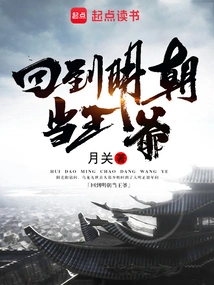
3回到明朝当王爷
Yueguan
[Animation adapted from "Hui Ming: Beacon Fire March" is currently on the air] By a strange combination of circumstances, Zheng Shaopeng, a good man from Oolong IX, returned to the Zhengde period of the Ming Dynasty. It was a colorful era, with the evil of the Eight Tigers of the Capital, the fashion of the four great talents in the south of the Yangtze River, the mentality of the great Confucian Wang Yangming, and the absurd and righteous emperor Zhu Houzhao. The protagonist who steps into this world in confusion has to deal with all kinds of characters for his own destiny. The disputes between the East Factory, the West Factory, the Inner Factory, and the Outer Court; the story of the Daitian Patrol to eliminate corrupt officials; the suppression of Japanese pirates, the expulsion of the Tatars, the destruction of the capital barbarians, the battle with the Folangji; the establishment of a sea ban, immigration to Siberia..., Wonderful stories come one after another... The fate of a country and an individual is like a ship in the long river of history. Because of his unexpected appearance, will this giant ship that was destined to sail towards decline deviate from its direction?
[Animation adapted from "Hui Ming: Beacon Fire March" is currently on the air] By a strange combination of circumstances, Zheng Shaopeng, a good man from Oolong IX, returned to the Zhengde period of the Ming Dynasty. It was a colorful era, with the evil of the Eight Tigers of the Capital, the fashion of the four great talents in the south of the Yangtze River, the mentality of the great Confucian Wang Yangming, and the absurd and righteous emperor Zhu Houzhao. The protagonist who steps into this world in confusion has to deal with all kinds of characters for his own destiny. The disputes between the East Factory, the West Factory, the Inner Factory, and the Outer Court; the story of the Daitian Patrol to eliminate corrupt officials; the suppression of Japanese pirates, the expulsion of the Tatars, the destruction of the capital barbarians, the battle with the Folangji; the establishment of a sea ban, immigration to Siberia..., Wonderful stories come one after another... The fate of a country and an individual is like a ship in the long river of history. Because of his unexpected appearance, will this giant ship that was destined to sail towards decline deviate from its direction?
Classics about the Ming Dynasty, starting the climax of fictional history!