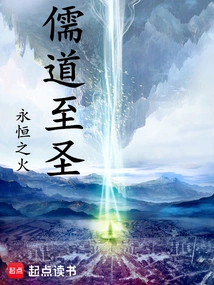
The Sage of Confucianism and Taoism
by Eternal Fire
About This Novel
This is a world where scholars control the power of heaven and earth. If you have talent, your poems can kill your enemies, your words can destroy your armies, and your articles can bring peace to the world. Scholars pick up pens and talk about military affairs on paper; they kill enemies and speak in clear words; Jinshi become angry and talk with each other. The sage comes and criticizes with words and writings, he can kill people, he can judge the emperor to be unrighteous and make an enemy country. At this time, the Holy Court controls the literary position, the king controls the official position, the ten kingdoms are fighting, the barbarians are watching, and the monsters are causing chaos. At this time, there was no great rise in poetry in the Tang Dynasty, no poetry in the Song Dynasty, no innovative articles, and no new saints in a century. An unknown boy from a poor family, after his head was smashed, embarked on the road to holiness with poems handed down from ancient times and articles that shocked the saints. Thank you to China Literature's official book review team for providing book review support!
Official Sources
What Readers Think
Rating
Community(0)
Official(10007)Scraped 16d ago
Let's talk more briefly about Lao Huo Duan
Anyone who reads Confucianism and Taoism at the starting point knows that Lao Huo said at the end of the previous chapters that he needs to be cured and may not be able to update for more than two months. If you like it, you can wait. If you don't like it, please don't maliciously slander or curse others. Please be literate and let everyone read the book in peace. Thank you!
A noble son from a poor family, canonized by poetry
It is said that a scholar is useless, unable to carry it on his shoulders or lift it with his hands. Some even say, "It is better to be a centurion than a scholar." But even this weak scholar with no power in people's minds is actually a top-notch person in the Holy Yuan Continent. An article or a poem can stop thousands of troops, and the real victory can be achieved thousands of miles away. A pen can defeat an enemy country, destroy a country with one person's power, and an article can bring peace to the world, and decide the outcome by talking on paper. This is a world where true scholars rule, and sainthood can control heaven and earth. However, it is difficult to become a saint, and the resources for learning are all in the hands of famous families and aristocratic families. Most of the children from poor families have a slim future and bleak hopes. However, Fang Yun broke out of this circle. A boy from a poor family, his poems shocked the world, his articles were passed down through the ages, and the boy from a poor family was canonized. Fang Yun traveled from the earth to this poor boy named Fang Yun. This Fang Yun's biggest wish was to become a child, the lowest level that can control vitality. However, it was extremely difficult for these children from a poor family. However, Fang Yun discovered that the history after the Sui and Tang Dynasties was very different from that of the earth, and there were no famous masterpieces handed down after the Sui and Tang Dynasties. This was his opportunity. Relying on the poems and articles passed down from generation to generation, Fang Yun gradually went from a poor boy with no future to a sub-sage. When the continent was in turmoil, the barbarians were looking at him, and the monsters were in chaos, he became the only new saint in the past hundred years. [Slot] The shortcoming of this book is that some holes have not been filled in. Maybe the content of the book is relatively long and the time span of the book is relatively large, so there are some holes dug in the front that were not filled in until the end of the full text, and they were forgotten. It's just a little regretful and feels a little incomplete, but it doesn't affect the reading of the entire book, but after all, it still makes the reader feel that something is missing.
So cool, great writer!
You haven't updated for 6 days. To be honest, you are the most personable person I have ever seen. When you didn't have to pay to read novels before, you never defaulted. Now that you pay, you stop updating. Are you trying to dampen our enthusiasm for following books or are you being spoiled? I can understand asking for leave and not updating, but you can give me a reason and stop without saying a word. You are really awesome.
I've read dozens of novels with the worst endings
Only talk about the shortcomings and not the advantages. Please don't leave a message if you scold me. 1. The preliminary preparation is too long-winded, down to the details of every day's meals and literary meetings. Tens of thousands of words only take a day or two to explain the process, and hundreds of thousands of words only take a month to write the protagonist. The other hundreds of thousands of words can be used to form a novella. 2. The story in the early stage is a bit monotonous. In order to upgrade, you have to go to various valleys, secret places and dangerous places to continue this routine, and the connection between the secret places is very small. For example, the existence of the Shihan Ancient Land is very low. 3. The protagonist has cheats and pretends to be his own poems and articles without feeling ashamed. The protagonists of other fantasy novels who have cheats at least work hard to make themselves strong. In this book, the protagonist directly plagiarizes poems and articles without any pressure and I feel ashamed that he is the ancestor of Xusheng poetry. 4. You didn't even mention Marry Your Wife or The Fox in the last 1,500 chapters or so, and they had no sense of existence at all. It was so hard to write these in the early stages to add some human touch, joy, and warmth to the boring story. Alas, I was very disappointed in the later stages. 5. The demon world is so awesome, why is your process of defeating the demon world so poor in the later period? I am not complaining. You canonize yourself and upgrade in the Kunlun Ancient Realm to kill hundreds of demon world semi-saints in seconds, and then use the final dragon-slaying knife to kill them all in seconds. You are so awesome that no one else has to worry about it. 6. The upgrading of the protagonist in the front is reasonable, but it is just crazy in the back. He reaches the peak as soon as he reaches the semi-saint level, reaches the peak in seconds as soon as he reaches the sub-saint level, and can kill the strongest supreme being as soon as he reaches the saint level. It takes hundreds of years for others to reach the first level, and thousands of years for the demon. The protagonist can take up to three or four years. It takes 3,000 chapters to upgrade the protagonist to the tenth level in the front. The most difficult level 3 in the back can only be completed in three or two hundred chapters. 7. You wrote so long about all aspects of the Holy Yuan Continent, including reforms and creations, and boasted that it was the only hope to defeat the demon world. However, after there was no one else to defeat the demon world, you simply didn't mention the Shengyuan Continent. It's useless. In short, I think you went off topic the more you wrote. Sometimes fantasy doesn't mean the bigger the scene, the better. I suggest the author read The Shepherd God of Zhai Zhu, which is somewhat similar to yours. His scenes are also large, but I think he has a good and compact storyline and setting. 8. You mentioned Nao Yuwei at the beginning, and I thought she was one of the heroines. You kept mentioning her and laying the groundwork later on, but after more than 3,000 chapters, she didn't meet the protagonist. It's like the girl next door. She has something to do when you come home, and you are busy when she comes home. We went to the same secret place to practice and pass the level together, but unfortunately we didn't meet. Oh my god, is the author kidding me? Also, what a great joke Ao Huang was. The appearance rate in the middle was so high that the author had to write it off in the later stages. He lost contact and never appeared again. I was so impressed. 9. What nonsense did you write in the finale, a boss in one chapter, and is the boss a bastard? , I let you fight without saying a word, and there is no ups and downs in the plot. I still don't know what the BOSS is. How can the protagonist's strange book be summoned? And in the end there are so many most awesome characters. What the hell is this? 10. Protagonist, who is your ancestor on earth? Why did you time travel? Why did your jade pendant become so magical? Alas, it's baffling to say nothing. Alas, I'll give you 5 points for the first 1000 chapters, 4 points for after Burial of the Holy Valley, and 3 points for the completion of the chapter "Destroy the Demon Realm with One Hand, Destroy Huang Tian Da Appendix". There are too many places to complain, welcome to add.
Bad review
First, the villain in this novel will definitely not die unless the author is really bad. Liu Shan has survived for more than 2,000 chapters. It was clear that a thorough investigation would lead to death, and it took more than 2,000 chapters of life and death. The country is about to be destroyed or the protagonist must listen to whatever the villain says. Where is your subjective initiative? There are also all kinds of problems with the protagonist. Only the villain can take the initiative to cause trouble. The protagonist solves the trouble by writing various poems and articles. Then the villain's supporting role becomes dusty and cracks. As long as you don't trouble the protagonist three times or more. He will definitely not die. The author of Life and Life will kill the villain if he really can't stand it. Maybe he can't even kill him and will have to deal with it. Secondly, all kinds of pitfalls are thrown in there. The female protagonist and female supporting characters are basically gone after they are over. Third, this novel did take a long time to write, and there are many readers. You ask them to read it from the beginning. How many have good reviews? I basically read a few chapters every day and thought it was a good way to pass the time. I feel like I was a little excited at the beginning and the writing becomes more textual at the end. The longer the time, the better the writing becomes. Why does it feel like the author is dealing with errands?
The setting is so ridiculous!
1. The vitality of heaven and earth is the foundation of power. 2. To mobilize vitality. 3. Vitality exists objectively, while talent is subjective. If you tell me that subjective idealism can control objective reality at will, are you probably dreaming? 4. I can't stand it anymore!
Fang Yun is about to be canonized!
What is the most important thing now for this book or Fang Yun? Canonize! He has been paving the way for Fang Yun's canonization since he left the Holy Burial Valley. What Fang Yun is doing now can save the Holy Yuan Continent from taking thousands of years of detours and allow the Holy Yuan Continent to enter a leap-forward development stage. Can you imagine how much contribution and credit it will have to the human race? Let's all look back at the content of the first chapter of this book. Why are King Wen and Sheng Kong both entitled to be sub-sages? It's because of their contribution and merit to the human race! The next five Asia Saints were promoted with the help of Saint Kong's talent after the death of Saint Kong. After that, it seems that no new Asia Saints will be born in the human race, right? Think again about the great saints who are rushing back from the demon world. What can the human race do to resist them? Also, the thousand-year non-war agreement between Kong Sheng and the Yaoman tribe is about to expire, right? On this occasion, where should the human race go? Only a new sub-sage is born! When he was in the Valley of Burial Saints, Lao Huo revealed that Fang Yun was going to take a completely different path to sainthood than today's scholars are taking. Why? Even Xue Baiyi, a NB half-saint, said that he was Fang Yun's man. Would a half-saint be unintentional? Why is this? So I guess that Fang Yun's canonization should be directly promoted to the sub-sage at the critical moment, slaughtering several great saints who came from the demon world, and shocking the world! Then you can practice in seclusion or go to a new dungeon to fight monsters, level up, show off, and successfully be promoted to a saint. By then, the human race will naturally become the new Lord of the World! After that, there will be no more! (Complete the book) Haha, I am a young man with little talent and limited knowledge, and he talks nonsense. Please give me some advice from all the great masters!
I finally finished reading it and can write a book review haha!
After two weeks, I finally finished reading this sage book on Confucianism and Taoism. In fact, I have been following this book for a long time, but then it seems that the author fell ill and stopped reading for a long time. Recently, I took it out and read it again from the beginning. Overall, the first half is very well written. Although the writing is sometimes slow, the richness of the plot, the ingenious setting, and the rigorous structure are worthy of recognition. Why is it called Eastern magic? We have seen too much about Western magic, including elements, spells, alchemy, magic tools, magic books, and various magic families and schools. In comparison, this book has different approaches but the same purpose. Magic is talent, poetry is spell, and cultural treasure is magic weapon. Compared with Western magic, poetry and prose are more sentimental, the Four Treasures of the Study and various literary treasures are more interesting, and the various schools of thought are more colorful with their own strengths and characters. The author has used one book to construct a sophisticated Eastern magic system. Isn't it worthy of praise? This system originated from King Wen and flourished from Confucius and Sheng. It has been passed down through history and its various forces are well-founded. It is really amazing. Some readers also pointed out that the protagonist is the world's best literary thief and does not deserve the charm given to him in the book. So what if we use the framework of this book to build a history of the prosperous Tang Dynasty? Li Bai, the immortal poet, kills one person in ten steps, is frustrated in the temple, and is free in the rivers and lakes. Then he adds the strange beasts in the Classic of Mountains and Seas, the demons in the folk history, the Anshi Rebellion, the drunken concubine, the country of Kyushu, the sound of books, and the thousands of hectares of rivers and lakes. It's full of prose, how soul-stirring it is! The people of the Tang, Song, Yuan, Ming and Qing dynasties came here in a variety of colors. Therefore, in my opinion, maybe the author used Fang Yun to learn those books of later generations on his own, and even if he did not write them, he learned them for his own use, and did not mention copying them, which is a bit rash. After all, it is not one's duty. To deceive the heaven and the earth and deceive all the saints cannot deceive one's own heart. However, the shortcomings do not hide the good points, this literary world is still wonderful. Of course, the book also has many shortcomings. I only share my opinions. I apologize in advance if it causes discomfort to some friends. First of all, the writing power of the article is unclear. I understand this book to be similar to the logic of cultivation and seeking the Tao. Reading, taking imperial examinations, and experiencing are all practices, understanding, enlightenment, thinking, and exploration are the pursuit of the Tao. It's just that what is practiced in the book is not the way of heaven but the holy way. The holy way in the author's writing should be about the merits of saving all people and supporting the country, so fame and wealth are also natural. However, the author's writing sometimes contains tens of thousands of words of experience and fighting, sometimes it contains several chapters of talking about scriptures and Taoism, sometimes tightening and sometimes loosening, these avenues The rationale needs to be there, otherwise it will not be enough to describe the realm of the protagonist, but the rhythm should be more reasonable, and long sermons can be completed in more concise language, rather than repeating word by word in the character's language like preparing lessons. The author may want to cover everything and worry that readers will not understand it, but readers who understand do not need to explain, and readers who do not understand probably do not need a novel to explain the truth. The second point is poetry. This does not mean copying poetry, but the author's modification of poetry. The author often changes some verses in order to fit the situation more closely in the text. The author mentions the sound and rhyme of the poem several times in the article, but the change of the poem is a waste of time. At the beginning of the text, "the tree at the head of my family's inkstone washing pond" was changed to "the tree at the Cai family's inkstone washing pond". "Wu" means Ping, and "Cai" means Chi. How blunt? Furthermore, in "Po Zhen Zi", "poor that it happened in vain" is so tragic. The author changed it to "without regretting that it happened in vain". Although it is in line with the meaning of the text, it does not fit the sentiment of the text. What if it was changed to "dare to laugh in vain" and "how can I pity that it happened in vain". The author spent a lot of ink explaining the meaning of the scriptures, but why did he not mention a word about the changes in the poem? Isn't he afraid of misleading readers? After changing the poem, the poem is not a poem, but it is said that the state is named and the country is controlled. This is a bit of a rogue. The third point is character creation. It can be said that the most temperamental characters in the author's works are "Li Wenying" and "Ao Yuwei" , "Yang Yuhuan", there is not much writing, but it is vivid enough, and like "Yi Zhishi", it has been prepared for a long time, and the appearance is stunning, but it has lost its immortality after being buried in the Holy Valley. In the same way, "The Demon Emperor", the proud son of heaven, has lost his confidence after repeated defeats. As more and more characters are written about, these characters tend to become commonplace. Including the protagonist Fang Yun, who is sometimes steady, sometimes magnanimous, sometimes in the city, sometimes knowing the choice, sometimes taking risks to obtain treasure. When facing an enemy, when one feels confident in one's heart, one will always say something high-sounding or clever, which seems to give the enemy a chance and kill them without mercy. But on the other hand, isn't this deceiving oneself and others? The villains in the article, except for "Liu Shan", are all stereotyped, ugly, narrow-minded, and too thin. Generally speaking, the knowledge in the article is not perfunctory, the theory is rigorous, the author is diligent but has limited talent, the framework is novel, there are many characters, the author is rich in imagination but has poor logic and limited writing power. If the book is polished again in the future, I hope to study the poems more closely to make the world in the book more charming, and focus on the techniques used in some war poems in battle. This book is a very exciting idea. A poem is a skill, and the combination of various skills will definitely make it more exciting. However, the second half of the book is more overwhelming and not exciting enough. Looking back, I found that there were more faults than praises. . It's really because I feel regretful that this is a rare and good book, but it cannot be perfect. I hope the author will get better and better as he writes more.
This is a novel with a single heroine. Don't look for the harem stud in the comment section to make your presence felt, okay? I'm really convinced. If you like watching harem, go watch Evil God and The Ultimate Butler, both of them are suitable for you. There is no need to find a sense of presence in a novel with a single female protagonist.
Count the holes that Laohuo has not filled (additions welcome)
Nunu, The Song of Righteousness, The Emperor's Code, The World of Strange Books, The reason for coming to Shengyuan Continent and the dragon-shaped jade pendant he wore, as well as the heroine Yuhuan Xiao Kongkong, the Ao Yuwei siblings, the academic saints of the Yushenghuan, and the ape saint who is the incarnation of the Zongsheng.
Rating
Community(0)
Official(10007)Scraped 16d ago
Let's talk more briefly about Lao Huo Duan
Anyone who reads Confucianism and Taoism at the starting point knows that Lao Huo said at the end of the previous chapters that he needs to be cured and may not be able to update for more than two months. If you like it, you can wait. If you don't like it, please don't maliciously slander or curse others. Please be literate and let everyone read the book in peace. Thank you!
A noble son from a poor family, canonized by poetry
It is said that a scholar is useless, unable to carry it on his shoulders or lift it with his hands. Some even say, "It is better to be a centurion than a scholar." But even this weak scholar with no power in people's minds is actually a top-notch person in the Holy Yuan Continent. An article or a poem can stop thousands of troops, and the real victory can be achieved thousands of miles away. A pen can defeat an enemy country, destroy a country with one person's power, and an article can bring peace to the world, and decide the outcome by talking on paper. This is a world where true scholars rule, and sainthood can control heaven and earth. However, it is difficult to become a saint, and the resources for learning are all in the hands of famous families and aristocratic families. Most of the children from poor families have a slim future and bleak hopes. However, Fang Yun broke out of this circle. A boy from a poor family, his poems shocked the world, his articles were passed down through the ages, and the boy from a poor family was canonized. Fang Yun traveled from the earth to this poor boy named Fang Yun. This Fang Yun's biggest wish was to become a child, the lowest level that can control vitality. However, it was extremely difficult for these children from a poor family. However, Fang Yun discovered that the history after the Sui and Tang Dynasties was very different from that of the earth, and there were no famous masterpieces handed down after the Sui and Tang Dynasties. This was his opportunity. Relying on the poems and articles passed down from generation to generation, Fang Yun gradually went from a poor boy with no future to a sub-sage. When the continent was in turmoil, the barbarians were looking at him, and the monsters were in chaos, he became the only new saint in the past hundred years. [Slot] The shortcoming of this book is that some holes have not been filled in. Maybe the content of the book is relatively long and the time span of the book is relatively large, so there are some holes dug in the front that were not filled in until the end of the full text, and they were forgotten. It's just a little regretful and feels a little incomplete, but it doesn't affect the reading of the entire book, but after all, it still makes the reader feel that something is missing.
So cool, great writer!
You haven't updated for 6 days. To be honest, you are the most personable person I have ever seen. When you didn't have to pay to read novels before, you never defaulted. Now that you pay, you stop updating. Are you trying to dampen our enthusiasm for following books or are you being spoiled? I can understand asking for leave and not updating, but you can give me a reason and stop without saying a word. You are really awesome.
I've read dozens of novels with the worst endings
Only talk about the shortcomings and not the advantages. Please don't leave a message if you scold me. 1. The preliminary preparation is too long-winded, down to the details of every day's meals and literary meetings. Tens of thousands of words only take a day or two to explain the process, and hundreds of thousands of words only take a month to write the protagonist. The other hundreds of thousands of words can be used to form a novella. 2. The story in the early stage is a bit monotonous. In order to upgrade, you have to go to various valleys, secret places and dangerous places to continue this routine, and the connection between the secret places is very small. For example, the existence of the Shihan Ancient Land is very low. 3. The protagonist has cheats and pretends to be his own poems and articles without feeling ashamed. The protagonists of other fantasy novels who have cheats at least work hard to make themselves strong. In this book, the protagonist directly plagiarizes poems and articles without any pressure and I feel ashamed that he is the ancestor of Xusheng poetry. 4. You didn't even mention Marry Your Wife or The Fox in the last 1,500 chapters or so, and they had no sense of existence at all. It was so hard to write these in the early stages to add some human touch, joy, and warmth to the boring story. Alas, I was very disappointed in the later stages. 5. The demon world is so awesome, why is your process of defeating the demon world so poor in the later period? I am not complaining. You canonize yourself and upgrade in the Kunlun Ancient Realm to kill hundreds of demon world semi-saints in seconds, and then use the final dragon-slaying knife to kill them all in seconds. You are so awesome that no one else has to worry about it. 6. The upgrading of the protagonist in the front is reasonable, but it is just crazy in the back. He reaches the peak as soon as he reaches the semi-saint level, reaches the peak in seconds as soon as he reaches the sub-saint level, and can kill the strongest supreme being as soon as he reaches the saint level. It takes hundreds of years for others to reach the first level, and thousands of years for the demon. The protagonist can take up to three or four years. It takes 3,000 chapters to upgrade the protagonist to the tenth level in the front. The most difficult level 3 in the back can only be completed in three or two hundred chapters. 7. You wrote so long about all aspects of the Holy Yuan Continent, including reforms and creations, and boasted that it was the only hope to defeat the demon world. However, after there was no one else to defeat the demon world, you simply didn't mention the Shengyuan Continent. It's useless. In short, I think you went off topic the more you wrote. Sometimes fantasy doesn't mean the bigger the scene, the better. I suggest the author read The Shepherd God of Zhai Zhu, which is somewhat similar to yours. His scenes are also large, but I think he has a good and compact storyline and setting. 8. You mentioned Nao Yuwei at the beginning, and I thought she was one of the heroines. You kept mentioning her and laying the groundwork later on, but after more than 3,000 chapters, she didn't meet the protagonist. It's like the girl next door. She has something to do when you come home, and you are busy when she comes home. We went to the same secret place to practice and pass the level together, but unfortunately we didn't meet. Oh my god, is the author kidding me? Also, what a great joke Ao Huang was. The appearance rate in the middle was so high that the author had to write it off in the later stages. He lost contact and never appeared again. I was so impressed. 9. What nonsense did you write in the finale, a boss in one chapter, and is the boss a bastard? , I let you fight without saying a word, and there is no ups and downs in the plot. I still don't know what the BOSS is. How can the protagonist's strange book be summoned? And in the end there are so many most awesome characters. What the hell is this? 10. Protagonist, who is your ancestor on earth? Why did you time travel? Why did your jade pendant become so magical? Alas, it's baffling to say nothing. Alas, I'll give you 5 points for the first 1000 chapters, 4 points for after Burial of the Holy Valley, and 3 points for the completion of the chapter "Destroy the Demon Realm with One Hand, Destroy Huang Tian Da Appendix". There are too many places to complain, welcome to add.
Bad review
First, the villain in this novel will definitely not die unless the author is really bad. Liu Shan has survived for more than 2,000 chapters. It was clear that a thorough investigation would lead to death, and it took more than 2,000 chapters of life and death. The country is about to be destroyed or the protagonist must listen to whatever the villain says. Where is your subjective initiative? There are also all kinds of problems with the protagonist. Only the villain can take the initiative to cause trouble. The protagonist solves the trouble by writing various poems and articles. Then the villain's supporting role becomes dusty and cracks. As long as you don't trouble the protagonist three times or more. He will definitely not die. The author of Life and Life will kill the villain if he really can't stand it. Maybe he can't even kill him and will have to deal with it. Secondly, all kinds of pitfalls are thrown in there. The female protagonist and female supporting characters are basically gone after they are over. Third, this novel did take a long time to write, and there are many readers. You ask them to read it from the beginning. How many have good reviews? I basically read a few chapters every day and thought it was a good way to pass the time. I feel like I was a little excited at the beginning and the writing becomes more textual at the end. The longer the time, the better the writing becomes. Why does it feel like the author is dealing with errands?
The setting is so ridiculous!
1. The vitality of heaven and earth is the foundation of power. 2. To mobilize vitality. 3. Vitality exists objectively, while talent is subjective. If you tell me that subjective idealism can control objective reality at will, are you probably dreaming? 4. I can't stand it anymore!
Fang Yun is about to be canonized!
What is the most important thing now for this book or Fang Yun? Canonize! He has been paving the way for Fang Yun's canonization since he left the Holy Burial Valley. What Fang Yun is doing now can save the Holy Yuan Continent from taking thousands of years of detours and allow the Holy Yuan Continent to enter a leap-forward development stage. Can you imagine how much contribution and credit it will have to the human race? Let's all look back at the content of the first chapter of this book. Why are King Wen and Sheng Kong both entitled to be sub-sages? It's because of their contribution and merit to the human race! The next five Asia Saints were promoted with the help of Saint Kong's talent after the death of Saint Kong. After that, it seems that no new Asia Saints will be born in the human race, right? Think again about the great saints who are rushing back from the demon world. What can the human race do to resist them? Also, the thousand-year non-war agreement between Kong Sheng and the Yaoman tribe is about to expire, right? On this occasion, where should the human race go? Only a new sub-sage is born! When he was in the Valley of Burial Saints, Lao Huo revealed that Fang Yun was going to take a completely different path to sainthood than today's scholars are taking. Why? Even Xue Baiyi, a NB half-saint, said that he was Fang Yun's man. Would a half-saint be unintentional? Why is this? So I guess that Fang Yun's canonization should be directly promoted to the sub-sage at the critical moment, slaughtering several great saints who came from the demon world, and shocking the world! Then you can practice in seclusion or go to a new dungeon to fight monsters, level up, show off, and successfully be promoted to a saint. By then, the human race will naturally become the new Lord of the World! After that, there will be no more! (Complete the book) Haha, I am a young man with little talent and limited knowledge, and he talks nonsense. Please give me some advice from all the great masters!
I finally finished reading it and can write a book review haha!
After two weeks, I finally finished reading this sage book on Confucianism and Taoism. In fact, I have been following this book for a long time, but then it seems that the author fell ill and stopped reading for a long time. Recently, I took it out and read it again from the beginning. Overall, the first half is very well written. Although the writing is sometimes slow, the richness of the plot, the ingenious setting, and the rigorous structure are worthy of recognition. Why is it called Eastern magic? We have seen too much about Western magic, including elements, spells, alchemy, magic tools, magic books, and various magic families and schools. In comparison, this book has different approaches but the same purpose. Magic is talent, poetry is spell, and cultural treasure is magic weapon. Compared with Western magic, poetry and prose are more sentimental, the Four Treasures of the Study and various literary treasures are more interesting, and the various schools of thought are more colorful with their own strengths and characters. The author has used one book to construct a sophisticated Eastern magic system. Isn't it worthy of praise? This system originated from King Wen and flourished from Confucius and Sheng. It has been passed down through history and its various forces are well-founded. It is really amazing. Some readers also pointed out that the protagonist is the world's best literary thief and does not deserve the charm given to him in the book. So what if we use the framework of this book to build a history of the prosperous Tang Dynasty? Li Bai, the immortal poet, kills one person in ten steps, is frustrated in the temple, and is free in the rivers and lakes. Then he adds the strange beasts in the Classic of Mountains and Seas, the demons in the folk history, the Anshi Rebellion, the drunken concubine, the country of Kyushu, the sound of books, and the thousands of hectares of rivers and lakes. It's full of prose, how soul-stirring it is! The people of the Tang, Song, Yuan, Ming and Qing dynasties came here in a variety of colors. Therefore, in my opinion, maybe the author used Fang Yun to learn those books of later generations on his own, and even if he did not write them, he learned them for his own use, and did not mention copying them, which is a bit rash. After all, it is not one's duty. To deceive the heaven and the earth and deceive all the saints cannot deceive one's own heart. However, the shortcomings do not hide the good points, this literary world is still wonderful. Of course, the book also has many shortcomings. I only share my opinions. I apologize in advance if it causes discomfort to some friends. First of all, the writing power of the article is unclear. I understand this book to be similar to the logic of cultivation and seeking the Tao. Reading, taking imperial examinations, and experiencing are all practices, understanding, enlightenment, thinking, and exploration are the pursuit of the Tao. It's just that what is practiced in the book is not the way of heaven but the holy way. The holy way in the author's writing should be about the merits of saving all people and supporting the country, so fame and wealth are also natural. However, the author's writing sometimes contains tens of thousands of words of experience and fighting, sometimes it contains several chapters of talking about scriptures and Taoism, sometimes tightening and sometimes loosening, these avenues The rationale needs to be there, otherwise it will not be enough to describe the realm of the protagonist, but the rhythm should be more reasonable, and long sermons can be completed in more concise language, rather than repeating word by word in the character's language like preparing lessons. The author may want to cover everything and worry that readers will not understand it, but readers who understand do not need to explain, and readers who do not understand probably do not need a novel to explain the truth. The second point is poetry. This does not mean copying poetry, but the author's modification of poetry. The author often changes some verses in order to fit the situation more closely in the text. The author mentions the sound and rhyme of the poem several times in the article, but the change of the poem is a waste of time. At the beginning of the text, "the tree at the head of my family's inkstone washing pond" was changed to "the tree at the Cai family's inkstone washing pond". "Wu" means Ping, and "Cai" means Chi. How blunt? Furthermore, in "Po Zhen Zi", "poor that it happened in vain" is so tragic. The author changed it to "without regretting that it happened in vain". Although it is in line with the meaning of the text, it does not fit the sentiment of the text. What if it was changed to "dare to laugh in vain" and "how can I pity that it happened in vain". The author spent a lot of ink explaining the meaning of the scriptures, but why did he not mention a word about the changes in the poem? Isn't he afraid of misleading readers? After changing the poem, the poem is not a poem, but it is said that the state is named and the country is controlled. This is a bit of a rogue. The third point is character creation. It can be said that the most temperamental characters in the author's works are "Li Wenying" and "Ao Yuwei" , "Yang Yuhuan", there is not much writing, but it is vivid enough, and like "Yi Zhishi", it has been prepared for a long time, and the appearance is stunning, but it has lost its immortality after being buried in the Holy Valley. In the same way, "The Demon Emperor", the proud son of heaven, has lost his confidence after repeated defeats. As more and more characters are written about, these characters tend to become commonplace. Including the protagonist Fang Yun, who is sometimes steady, sometimes magnanimous, sometimes in the city, sometimes knowing the choice, sometimes taking risks to obtain treasure. When facing an enemy, when one feels confident in one's heart, one will always say something high-sounding or clever, which seems to give the enemy a chance and kill them without mercy. But on the other hand, isn't this deceiving oneself and others? The villains in the article, except for "Liu Shan", are all stereotyped, ugly, narrow-minded, and too thin. Generally speaking, the knowledge in the article is not perfunctory, the theory is rigorous, the author is diligent but has limited talent, the framework is novel, there are many characters, the author is rich in imagination but has poor logic and limited writing power. If the book is polished again in the future, I hope to study the poems more closely to make the world in the book more charming, and focus on the techniques used in some war poems in battle. This book is a very exciting idea. A poem is a skill, and the combination of various skills will definitely make it more exciting. However, the second half of the book is more overwhelming and not exciting enough. Looking back, I found that there were more faults than praises. . It's really because I feel regretful that this is a rare and good book, but it cannot be perfect. I hope the author will get better and better as he writes more.
This is a novel with a single heroine. Don't look for the harem stud in the comment section to make your presence felt, okay? I'm really convinced. If you like watching harem, go watch Evil God and The Ultimate Butler, both of them are suitable for you. There is no need to find a sense of presence in a novel with a single female protagonist.
Count the holes that Laohuo has not filled (additions welcome)
Nunu, The Song of Righteousness, The Emperor's Code, The World of Strange Books, The reason for coming to Shengyuan Continent and the dragon-shaped jade pendant he wore, as well as the heroine Yuhuan Xiao Kongkong, the Ao Yuwei siblings, the academic saints of the Yushenghuan, and the ape saint who is the incarnation of the Zongsheng.
Featured in 1592 Booklists
Official(1592)
This is a world where scholars control the power of heaven and earth. If you have talent, your poems can kill your enemies, your words can destroy your armies, and your articles can bring peace to the world. Scholars pick up pens and talk about military affairs on paper; they kill enemies and speak in clear words; Jinshi become angry and talk with each other.
He set a precedent, and countless others followed suit, but he was the only one who succeeded. But he was still being chased to death, why? Maybe it's not suitable. However, I suddenly discovered that this was another protagonist named Fang! Could it be that the Fang surname is really loved so much by God?
Rating: Soft four stars Writing style: Medium to upper level, fluent, with a large number of quotations from ancient Chinese texts and fierce verbal debates and ideological dialectics, which are the outstanding features of the writing style. Storyline: The plot is laid out reasonably, and the conflicts are richly expressed, making the plot expressive and relaxed. Disadvantages: Conflicts seem to be created too frequently, although the protagonist has many friends after arriving at Xusheng. But it also feels like the world is full of enemies. It seems like enemies are squatting at the door 24 hours a day, waiting to find trouble. Summary of the novel: A story about love, hatred and the protagonist's self-improvement based on a fictional world in which demons invade humans. This book talks about a world where knowledge can be directly linked to power, and readers can directly control the setting of power through knowledge. It's a bit like the natural selection setting that makes a comeback. At the same time, the author of this book has extensive research on ancient Chinese literature and has a solid foundation in traditional Confucianism. The most profound impression I had while reading it was that people can be sophistical. If the author participated in a debate, he would definitely be successful. Another point of the article is that the background of the article is that humans and demons are fighting, and humans are at a disadvantage, so the writing is more vigorous. It's pretty good.
Completed book, Confucianism and Taoism, male protagonist Fang Yun, single female protagonist, it can also be said that there is no female protagonist (the proportion mentioned is very small), he is wise, willing to work hard, and has all five thousand years of Chinese literature as a golden finger. He is special. Others throw dirty water on him, but he cites classics. When others use shady means against him, he still just resists openly. There is a saying in the art of war that a perfect combination leads to a surprise victory. In my opinion, Fang Yun is the kind of upright military use. Even if it fails, countless latecomers will come forward and there will always be supporters. Many readers don't like this kind of silly behavior and think it's silly. I like it very much, or we like it, so that's fine. It's a bit more fun to read, and there's some truth in the book, so it couldn't be better. Some people don't like the truth and some people like it. The benevolent sees benevolence and the wise see wisdom. I think the male protagonist is a wise man. Due to physical reasons and other reasons, the later plots are not as well written as the previous ones, and the feedback from readers in the book review area is also obvious. But despite the extenuating circumstances, the author still worked hard to write it down and give us the best ending he could give at the time. Thank you Lao Huo, please pay attention to your health. [If you like this book, click Like and follow ⊙∀⊙! Thank you everyone]
You Might Also Like
Rebirth of Primitive Times
Nanzhou Shiyilang
Reborn Female General
Qianshan Tea Guest
Golden Summoner
Drunk Tiger
Wait a Minute, Heroine
Mr. Guan
Book of Troubled Times
Ji Cha
Otherworldly Vet
Fried Buns
Seeking Good Fortune and Avoiding Misfortune Starts from Tianshi Mansion
August Flying Eagle
Lord of Puro
Salagus
Wife, Protect Me!
Rong Xiaorong
The Number One Lackey under the Empress' Throne
One Hundred Thousand Vegetable Groups