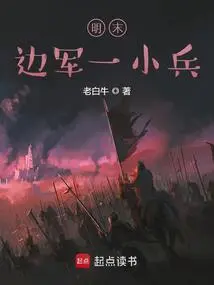
A Small Soldier of the Border Army in the Late Ming Dynasty
About This Novel
In March of the seventh year of Chongzhen, there was a severe drought in Shanxi and Shaanxi. The land was bare for thousands of miles and the people were severely hungry. In April, Li Zicheng entered Henan and joined forces with Zhang Xianzhong to capture Chengcheng. In July, the Hou Jin army besieged Xuanfu and looted Datong. Many castles along the border were lost. The Ming Dynasty was in turmoil due to internal and external troubles! In July of this year, Wang Dou unexpectedly came to the Ming Dynasty and became an ordinary soldier in Shunxiang Fort, Baoan Prefecture, Xuanfu Town... ... The new book "Continuation of Nanming" has been released. You can click on the author's information or the grand recommendation below to find and read it.
Official Sources
What Readers Think
Rating
Community(0)
Official(662)Scraped 2mo ago
as a dog,
If you want soldiers, you have soldiers, and if you want money, you have money. And these are not given by the emperor. You are a modern person. He also has to be a dog for the emperor,
I can't forget Yan Yingyuan of Jiangyin, I can't forget Shi Kefa of Yangzhou, I can't forget the disputes about right and wrong in the late Ming Dynasty, I can't forget that day when the country was destroyed and the family was destroyed, I can't forget that day when I knelt down and humbled myself, I can't forget the 40 million compatriots, I can't forget, really... I can't forget
How can you say that he is helpless? As a small soldier, no matter how great his achievements are, he may be deprived of them. But Xiao Ming may be a humble word. He is not a small soldier. I think it is very possible.
It's a pity that the first part was well written, but the second part ended hastily and anticlimactically. In particular, supporting the crown prince in the end was the biggest failure. The protagonist Wang Dou improved his status as a warrior, and the gentry received food from the same body. He also did many things that were deviant for the feudal class at that time, which had long been dismissed by the feudal gentry and literati of the Ming Dynasty. The class hated it with gnashing of teeth and wished it could be eliminated quickly. Without changing the social class and gentry structure of the Ming Dynasty, a modern person who traveled through time actually imagined that a historical celebrity would support a young prince to ascend the throne. Isn't it a bit ignorant, childish, and funny? But it is certain that it will be a matter of time before they are counterattacked. How many good endings have there been for famous reform officials in Chinese history? For example, Shang Yang in the Qin Dynasty, Wang Anshi and Fan Zhongyan in the Song Dynasty, and Zhang Juzheng in the Ming Dynasty, which one had a good end? Another example is Lu Buwei, who helped King Qin ascend to the throne, and Wu Zixu, etc., None of whom died. The protagonist of this article, Wang Dou, did many things that were more deviant than the famous officials before him. If he could have a good ending, he would definitely end up with everyone in his family being slaughtered and he would die without a burial place.
Rubbish
This is the most rubbish book I have ever read.
The author's writing style is okay, but his conception is very poor.
Writing history in a modern way is like this. The protagonist needs soldiers, territory, territory, and good guns and cannons, but he actually sits back and watches Li Zicheng wreak havoc everywhere, and finally captures Beijing. The reason was just the emperor's guess and he didn't have much food and grass in hand. It's a pity that the conception is several levels worse than that of Qin Li and Tang Zhuan.
...
The Ming Dynasty is immortal and cannot be tolerated by nature. Anyone who writes novels knows that the officials who killed the Tatars will be given credit for killing the Tatars, and there are also those who killed good men and women to take credit. To be honest, I don't know how those soldiers are also poor people. Are they waiting for other soldiers to kill the family members of these soldiers?
Looking annoyed
My brother-in-law stayed up all night, specializing in exploring the enemy's situation. When he saw the enemy's situation, he didn't go back to report it. Because there were few enemies, he went to charge and kill him. Only three people died. He was rewarded when he returned. He ignored military orders. Don't you know what he was doing? A bunch of brainless soldiers still want to fight the Tatars
Manchurian cavalry is invincible
The starting point of this book is wrong. In the late Ming Dynasty, a small soldier was useless no matter how much you held it in your mouth.
So I give it one star and give it a negative review.
Rating
Community(0)
Official(662)Scraped 2mo ago
as a dog,
If you want soldiers, you have soldiers, and if you want money, you have money. And these are not given by the emperor. You are a modern person. He also has to be a dog for the emperor,
I can't forget Yan Yingyuan of Jiangyin, I can't forget Shi Kefa of Yangzhou, I can't forget the disputes about right and wrong in the late Ming Dynasty, I can't forget that day when the country was destroyed and the family was destroyed, I can't forget that day when I knelt down and humbled myself, I can't forget the 40 million compatriots, I can't forget, really... I can't forget
How can you say that he is helpless? As a small soldier, no matter how great his achievements are, he may be deprived of them. But Xiao Ming may be a humble word. He is not a small soldier. I think it is very possible.
It's a pity that the first part was well written, but the second part ended hastily and anticlimactically. In particular, supporting the crown prince in the end was the biggest failure. The protagonist Wang Dou improved his status as a warrior, and the gentry received food from the same body. He also did many things that were deviant for the feudal class at that time, which had long been dismissed by the feudal gentry and literati of the Ming Dynasty. The class hated it with gnashing of teeth and wished it could be eliminated quickly. Without changing the social class and gentry structure of the Ming Dynasty, a modern person who traveled through time actually imagined that a historical celebrity would support a young prince to ascend the throne. Isn't it a bit ignorant, childish, and funny? But it is certain that it will be a matter of time before they are counterattacked. How many good endings have there been for famous reform officials in Chinese history? For example, Shang Yang in the Qin Dynasty, Wang Anshi and Fan Zhongyan in the Song Dynasty, and Zhang Juzheng in the Ming Dynasty, which one had a good end? Another example is Lu Buwei, who helped King Qin ascend to the throne, and Wu Zixu, etc., None of whom died. The protagonist of this article, Wang Dou, did many things that were more deviant than the famous officials before him. If he could have a good ending, he would definitely end up with everyone in his family being slaughtered and he would die without a burial place.
Rubbish
This is the most rubbish book I have ever read.
The author's writing style is okay, but his conception is very poor.
Writing history in a modern way is like this. The protagonist needs soldiers, territory, territory, and good guns and cannons, but he actually sits back and watches Li Zicheng wreak havoc everywhere, and finally captures Beijing. The reason was just the emperor's guess and he didn't have much food and grass in hand. It's a pity that the conception is several levels worse than that of Qin Li and Tang Zhuan.
...
The Ming Dynasty is immortal and cannot be tolerated by nature. Anyone who writes novels knows that the officials who killed the Tatars will be given credit for killing the Tatars, and there are also those who killed good men and women to take credit. To be honest, I don't know how those soldiers are also poor people. Are they waiting for other soldiers to kill the family members of these soldiers?
Looking annoyed
My brother-in-law stayed up all night, specializing in exploring the enemy's situation. When he saw the enemy's situation, he didn't go back to report it. Because there were few enemies, he went to charge and kill him. Only three people died. He was rewarded when he returned. He ignored military orders. Don't you know what he was doing? A bunch of brainless soldiers still want to fight the Tatars
Manchurian cavalry is invincible
The starting point of this book is wrong. In the late Ming Dynasty, a small soldier was useless no matter how much you held it in your mouth.
So I give it one star and give it a negative review.
Featured in 206 Booklists
Official(206)
I have finished the book and don't have to worry about updating it. I recommend it.

Very nice, recommended. There is a lot of military content, but the writing is good


The author is very familiar with the history of the late Ming Dynasty, and his description of cold weapon battles is also excellent. It is a rare historical novel.

Fill out the book form

You Might Also Like
Hanxiang
Jie And 2
Overthrow the Han Dynasty
Grenades Are Afraid Of Water
Reborn Female General
Qianshan Tea Guest
Tomorrow
Jie And 2
Shao Song
Grenades Are Afraid Of Water
Dreaming Back to the Great Spring
Wang Zijun
I
Wang Zijun
Marquis
Gao Yue
Chongzhen and Ming Dynasty: Starting from Meishan
Lonely Swordsman
Guide to Traveling Through the Northern Song Dynasty
Wang Zijun