Violence, Power and Humanity: Truth and Struggle in the Age of Crime
暴力、权力与人性:罪恶时代的真实与抗争
When power is out of control and violence rages, how deep into darkness will human nature sink? What kind of light can burst out in desperate situations? From the individual tragedy of "Okokawa Stalker Murder" to the collective massacre of "Civil War", from the analysis of female oppression in "Caliban and the Witch" to the survival epic of slaves in "White Gold", these works constitute a memory of suffering that spans time and space. The personal records of the Auschwitz doctors, the cruel truth of the Spanish Civil War, the slave trade in the colonial era, and the judicial dilemma in modern society all ask the same question: Can human nature maintain its final dignity in extreme circumstances? These shocking narratives are both historical testimony and a warning to the present.
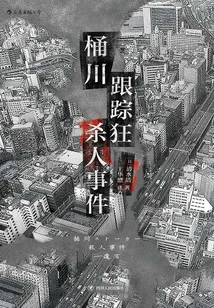 1
1Okekawa Stalker Murder Case
Literature桶川跟踪狂杀人事件
N
On October 26, 1999, a young woman, Shiori Ino, was stabbed to death in front of JR Okekawa Station in Saitama Prefecture, Japan. The victim reported the case to the police many times because he had been stalked and harassed for a long time, but the police did not pay attention to it and ultimately failed to prevent the tragedy. In the process of investigating this incident, reporter Qing Shuijie followed the guidance of the "last words" left by the victim before his death, visited various parties to investigate, and found the culprit as a reporter when the police ignored clues and failed in the investigation. This further exposed the police's indifference and perfunctory to the victim's report before his death, as well as their attempts to discredit the victim and cover up the facts of malfeasance after the incident. The case triggered strong social repercussions and promoted the promulgation of Japan's "Stalking and Harassment Code of Conduct Act." This book is a complete record of the event.
On October 26, 1999, a young woman, Shiori Ino, was stabbed to death in front of JR Okekawa Station in Saitama Prefecture, Japan. The victim reported the case to the police many times because he had been stalked and harassed for a long time, but the police did not pay attention to it and ultimately failed to prevent the tragedy. In the process of investigating this incident, reporter Qing Shuijie followed the guidance of the "last words" left by the victim before his death, visited various parties to investigate, and found the culprit as a reporter when the police ignored clues and failed in the investigation. This further exposed the police's indifference and perfunctory to the victim's report before his death, as well as their attempts to discredit the victim and cover up the facts of malfeasance after the incident. The case triggered strong social repercussions and promoted the promulgation of Japan's "Stalking and Harassment Code of Conduct Act." This book is a complete record of the event.
Who killed a girl three times? The pinnacle work of Japanese documentary literature, the murder case that promoted the introduction of the anti-stalking bill!
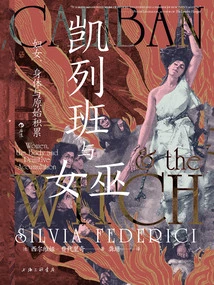
This book revolves around a core question: How to explain the execution of hundreds of thousands of "witches" in Europe in the early modern period? Why did the rise of capitalism coincide with the war on women? A Marxist feminist classic that completes the missing female perspective in Capital.
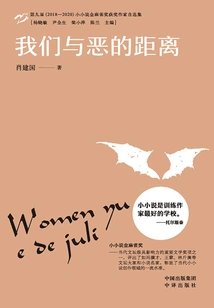 3
3The Distance between Us and Evil
General Fiction我们与恶的距离
Xiao Jianguo
"The Distance between Us and Evil" is a representative collection of works by Xiao Jianguo, winner of the Golden Sparrow Award. The book collects more than 60 excellent short stories by Xiao Jianguo. In the book, the author Xiao Jianguo uses a realistic creative tone to create characters while rejecting conceptualization and facial expression. The overall story is rigorously arranged, the plot progression is clear and layered, and the characters' speech and behavior are very individual. The creative attitude is sincere and touching, the writing rhythm is clear, and the twists and turns of the plot and the strength of the ending are emphasized. The story is suspenseful, meaningful, and burdensome. Between the lines, a high-spirited force of justice rises. The true knowledge of life and the world is expressed through words, which can resonate strongly with readers.
"The Distance between Us and Evil" is a representative collection of works by Xiao Jianguo, winner of the Golden Sparrow Award. The book collects more than 60 excellent short stories by Xiao Jianguo. In the book, the author Xiao Jianguo uses a realistic creative tone to create characters while rejecting conceptualization and facial expression. The overall story is rigorously arranged, the plot progression is clear and layered, and the characters' speech and behavior are very individual. The creative attitude is sincere and touching, the writing rhythm is clear, and the twists and turns of the plot and the strength of the ending are emphasized. The story is suspenseful, meaningful, and burdensome. Between the lines, a high-spirited force of justice rises. The true knowledge of life and the world is expressed through words, which can resonate strongly with readers.
Luo Xiang passionately recommends! When hot searches replace the media, and when "Internet promotion" becomes a daily routine, the distance between us and evil may be only a thoughtless "forward"!
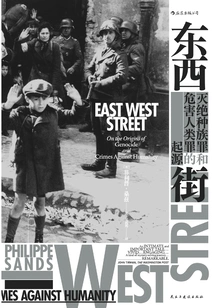 4
4东西街:灭绝种族罪和危害人类罪的起源
(uk) Philip Sands
In the city today known as Lviv, Hirsch Lauterpacht and Raphael Lemkin, two strangers to each other, studied law with the same law professor at the same university. Based on what they saw, heard, personal experiences and family changes, Lauterpacht focused on personal protection and Lemkin proposed crimes against humanity and introduced them into the Nuremberg Charter, which was ultimately used to convict Nazi leader Hans Frank. Lemkin focused on the protection of groups and proposed the crime of genocide. Both of them and their legal ideas have a great influence on the international judicial system and play a positive role to this day. While telling them, the author also traces the mysterious story of his grandfather, Leon Buchholz, as he traveled through Europe in the face of Nazi atrocities. The author uses novel-style writing techniques to narrate around four main characters: his maternal grandfather Leon Buchholz, Nazi leader Hans Frank who served as Governor-General of Poland during World War II, international law professor Hirsch Lauterpacht, and prosecutor and lawyer Raphael Lemkin. He perfectly interweaves the stories of several families with subtle writing and appropriate expressions.
In the city today known as Lviv, Hirsch Lauterpacht and Raphael Lemkin, two strangers to each other, studied law with the same law professor at the same university. Based on what they saw, heard, personal experiences and family changes, Lauterpacht focused on personal protection and Lemkin proposed crimes against humanity and introduced them into the Nuremberg Charter, which was ultimately used to convict Nazi leader Hans Frank. Lemkin focused on the protection of groups and proposed the crime of genocide. Both of them and their legal ideas have a great influence on the international judicial system and play a positive role to this day. While telling them, the author also traces the mysterious story of his grandfather, Leon Buchholz, as he traveled through Europe in the face of Nazi atrocities. The author uses novel-style writing techniques to narrate around four main characters: his maternal grandfather Leon Buchholz, Nazi leader Hans Frank who served as Governor-General of Poland during World War II, international law professor Hirsch Lauterpacht, and prosecutor and lawyer Raphael Lemkin. He perfectly interweaves the stories of several families with subtle writing and appropriate expressions.
Winner of the British Book Award for Non-Fiction and shortlisted for the Cundill History Prize! Uncover the dusty archives and retell the legend of the Nuremberg Trials!
 5
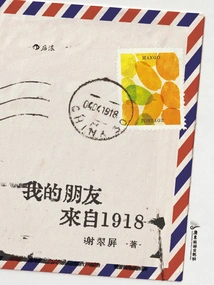
5My Friend from 1918
Literature我的朋友来自1918
Xie Cuiping
There is a leprosy rehabilitation village on Si'an Island in Dongguan, Guangdong. Xie Cuiping came here to work as a volunteer. Her job content was varied: helping the elderly in the village repair their mobile phones (secret: restart), and recharge their phone bills ("Cuiping, the phone bill you recharged is for long-lasting calls, I recharged it myself, and I finished the calls so quickly!" ), Purchasing supplies, etc., Of course, she also had to fend off scams and health product sales calls, take the elderly out for fun, or help the elderly find their long-lost relatives based on vague clues ("There is a slope at the entrance of our village!")... Slowly, she became familiar with everyone. Grandpa Liu Dajian planted a garden of roses; Uncle Zhang Xian is a gourmet and won an award for his glutinous rice recipe; Uncle Peng has no fingers, but he is still a famous painter; the fourth sister's mother-in-law has lived alone in the mountains for the past 50 years; and how come this person, at such an age, is joking all day long without speaking the truth? In the rehabilitation village with inconvenient transportation, the days passed peacefully and peacefully... Later, the elderly people left one by one. People are like mangoes on a tree. When they are ripe and wormy, they will naturally fall off. Cuiping couldn't bear to leave them, and she wanted to work hard to leave some traces for them. Hence, this book was born.
There is a leprosy rehabilitation village on Si'an Island in Dongguan, Guangdong. Xie Cuiping came here to work as a volunteer. Her job content was varied: helping the elderly in the village repair their mobile phones (secret: restart), and recharge their phone bills ("Cuiping, the phone bill you recharged is for long-lasting calls, I recharged it myself, and I finished the calls so quickly!" ), Purchasing supplies, etc., Of course, she also had to fend off scams and health product sales calls, take the elderly out for fun, or help the elderly find their long-lost relatives based on vague clues ("There is a slope at the entrance of our village!")... Slowly, she became familiar with everyone. Grandpa Liu Dajian planted a garden of roses; Uncle Zhang Xian is a gourmet and won an award for his glutinous rice recipe; Uncle Peng has no fingers, but he is still a famous painter; the fourth sister's mother-in-law has lived alone in the mountains for the past 50 years; and how come this person, at such an age, is joking all day long without speaking the truth? In the rehabilitation village with inconvenient transportation, the days passed peacefully and peacefully... Later, the elderly people left one by one. People are like mangoes on a tree. When they are ripe and wormy, they will naturally fall off. Cuiping couldn't bear to leave them, and she wanted to work hard to leave some traces for them. Hence, this book was born.
Write about those isolated lives with a warm and healing touch: in the leprosy rehabilitation village, you can see the cruelty of fate and the dignity of life.
 6
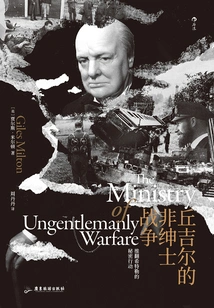
6丘吉尔的非绅士战争
I
During World War II, facing the powerful Nazi war machine, Britain had to find ways to weaken the enemy. The author of this book, Giles Milton, uses vivid descriptions to describe several wonderful sneak attacks and assassinations carried out by the British army outside the main battlefields of World War II. With the support of Churchill, several typical British gentlemen planned and led these completely ungentlemanly actions, despite the opposition of the old-fashioned people in the army and government who insisted on tradition. They invented new weapons, established schools for training guerrillas, and transported explosives to the resistance organizations in the occupied areas... These secret fighters who did not belong to the conventional army made a huge contribution to the final victory of the war.
During World War II, facing the powerful Nazi war machine, Britain had to find ways to weaken the enemy. The author of this book, Giles Milton, uses vivid descriptions to describe several wonderful sneak attacks and assassinations carried out by the British army outside the main battlefields of World War II. With the support of Churchill, several typical British gentlemen planned and led these completely ungentlemanly actions, despite the opposition of the old-fashioned people in the army and government who insisted on tradition. They invented new weapons, established schools for training guerrillas, and transported explosives to the resistance organizations in the occupied areas... These secret fighters who did not belong to the conventional army made a huge contribution to the final victory of the war.
In order to defeat the enemy, whether it is necessary to use any means necessary, the unknown hero brought down Hitler's war machine, opened the dusty archives, and got closer to Churchill's most mysterious meritorious soldier!
 7
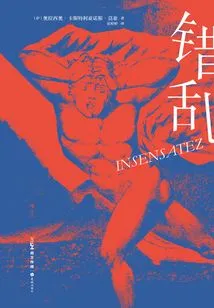
7Confusion
General Fiction错乱
(sa) Horacio Castellanos Moya
A virulent writer flees abroad and inexplicably finds himself hired by a church to edit an 1100-page oral archive. What this file records and reveals is the horrific massacre of local indigenous people by the army ten years ago, and it contains the bloody testimonies of many victims. During the editing process, he continued to be intoxicated by the mellow words in the testimony, which were as mellow as Vallejo poetry. From the victim's self-statement, "I'm missing a piece of my brain," to the lament of relatives, "Those houses, they are sad because there is no one in them...", To the most striking thing, "We all know who the murderer is." His consciousness was gradually swallowed up. Like a lamb heading to the sacrificial site, he fell into delirium due to pathological delusions, until he could no longer distinguish between history and reality, and inevitably identified with both the perpetrator and the victim. Correspondingly, he was also in real danger. After all, the executioners of the Holocaust still rule that nameless Latin American country.
A virulent writer flees abroad and inexplicably finds himself hired by a church to edit an 1100-page oral archive. What this file records and reveals is the horrific massacre of local indigenous people by the army ten years ago, and it contains the bloody testimonies of many victims. During the editing process, he continued to be intoxicated by the mellow words in the testimony, which were as mellow as Vallejo poetry. From the victim's self-statement, "I'm missing a piece of my brain," to the lament of relatives, "Those houses, they are sad because there is no one in them...", To the most striking thing, "We all know who the murderer is." His consciousness was gradually swallowed up. Like a lamb heading to the sacrificial site, he fell into delirium due to pathological delusions, until he could no longer distinguish between history and reality, and inevitably identified with both the perpetrator and the victim. Correspondingly, he was also in real danger. After all, the executioners of the Holocaust still rule that nameless Latin American country.
A masterpiece by a heavyweight writer in the post-"Literary Explosion" era of Latin America, "Kafka on Drugs" invites you to get a crazy and dizzy reading experience between hilarious and disturbing.
 8
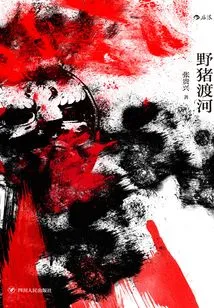
8Wild Boar Crossing the River
General Fiction野猪渡河
Zhang Guixing
A historical fable woven with magnificent, gorgeous and bloody words. On the eve of the Pacific War, the "Committee for the Relief of Refugees from the Motherland" was established in Zhuba Village, a Chinese settlement in Sarawak, a British colony. The whole village, young and old, enthusiastically held fund-raising activities for China's anti-Japanese war. The men and women in the village had mutual affection and had a premonition of the coming disaster. In December 1941, the Japanese army launched a full-scale invasion, and everyone associated with the "Committee for the Relief of Refugees from the Motherland", including women and children, were brutally liquidated. During the three years and eight months of occupation, the distinction between humans and animals was blurred, life disappeared easily in various horrific and cruel ways, and lust and bestiality were nakedly displayed in the Nanyang rainforest.
A historical fable woven with magnificent, gorgeous and bloody words. On the eve of the Pacific War, the "Committee for the Relief of Refugees from the Motherland" was established in Zhuba Village, a Chinese settlement in Sarawak, a British colony. The whole village, young and old, enthusiastically held fund-raising activities for China's anti-Japanese war. The men and women in the village had mutual affection and had a premonition of the coming disaster. In December 1941, the Japanese army launched a full-scale invasion, and everyone associated with the "Committee for the Relief of Refugees from the Motherland", including women and children, were brutally liquidated. During the three years and eight months of occupation, the distinction between humans and animals was blurred, life disappeared easily in various horrific and cruel ways, and lust and bestiality were nakedly displayed in the Nanyang rainforest.
A historical fable woven with magnificent, splendid and bloody words, the first prize winner of the Dream of Red Mansions Award and the United Press Literary Award!
 9
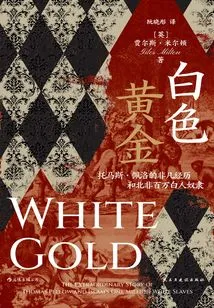
9白色黄金:托马斯·佩洛的非凡经历和北非百万白人奴隶
I
In the two to three hundred years after 1500, millions of white Europeans were kidnapped by Muslims from their homes at sea or along the coast, and then sold in the slave markets of North Africa. The British boy Thomas Pellow was one of the white slaves. In the early 18th century, he was bought by the Moroccan Sultan Moulay Ismail. At that time, the sultan was building a magnificent palace, which was built entirely by white slaves. Because Pelo was younger and more resourceful, he became the Sultan's personal slave. Perrault witnessed both this cruel regime and the spectacular scene of this court. After more than twenty years of servitude, Pelo finally regained his freedom and wrote his own story. This book is mainly based on Perlow's experiences and other relevant documents.
In the two to three hundred years after 1500, millions of white Europeans were kidnapped by Muslims from their homes at sea or along the coast, and then sold in the slave markets of North Africa. The British boy Thomas Pellow was one of the white slaves. In the early 18th century, he was bought by the Moroccan Sultan Moulay Ismail. At that time, the sultan was building a magnificent palace, which was built entirely by white slaves. Because Pelo was younger and more resourceful, he became the Sultan's personal slave. Perrault witnessed both this cruel regime and the spectacular scene of this court. After more than twenty years of servitude, Pelo finally regained his freedom and wrote his own story. This book is mainly based on Perlow's experiences and other relevant documents.
Uncover the little-known historical story of "white slaves" with a novel-like narrative! From the perspective of a British boy, I witnessed the cruel regime and the spectacular scene of this court. After more than twenty years of servitude, Pelo finally regained his freedom and wrote his own story.
 10
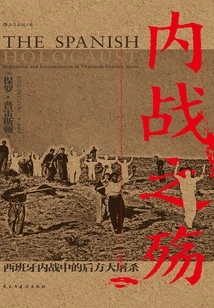
10内战之殇:西班牙内战中的后方大屠杀
(uk) Paul Preston
This book is carefully created by the author based on more than ten years of research results, aiming to reveal the horrific experiences of the Spanish people in their fierce civil war from 1936 to 1945. The horrific events described in the book took place behind the battlefield, in what the author calls the "Spanish Massacre." They have previously escaped the attention of historians, but now the author provides us with the first comprehensive picture: mass extrajudicial murder of some 200,000 victims, summary trials, torture, systematic abuse of women and children, mass incarceration, and horrific exiles. Those responsible for the horrors were named and the victims identified. This was a dark period in modern European history, and the scars it caused are still felt in Spain today.
This book is carefully created by the author based on more than ten years of research results, aiming to reveal the horrific experiences of the Spanish people in their fierce civil war from 1936 to 1945. The horrific events described in the book took place behind the battlefield, in what the author calls the "Spanish Massacre." They have previously escaped the attention of historians, but now the author provides us with the first comprehensive picture: mass extrajudicial murder of some 200,000 victims, summary trials, torture, systematic abuse of women and children, mass incarceration, and horrific exiles. Those responsible for the horrors were named and the victims identified. This was a dark period in modern European history, and the scars it caused are still felt in Spain today.
The Sunday Times History Book of the Year, an authoritative work by Spanish historians of the 20th century that collects more than a decade of research results.