


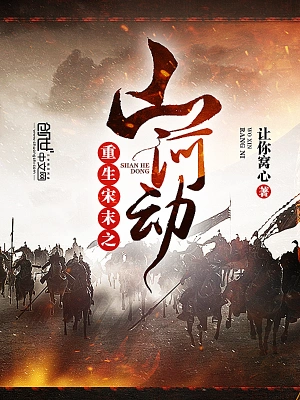
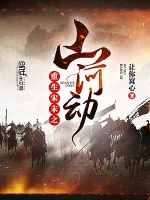
Reborn at the End of the Song: The Fate of the Land Hangs in the Balance
重生宋末之山河动
- Status
- Completed
- Length
- 5.5M Words
- Genre
- Historical
- Subgenre
- Song-Yuan-Ming Dynasties
- Updated
- 4y ago
- Source
- Qidian
Stats
1.8kChapters
0Votes
69.1kRecs
50.3kFans
Tags
Synopsis
More by this author
In booklists 4
Readers also read
 Daming: Asking for the Throne at the Beginning, Lao Zhule Went Crazy
 My Only Method: I Will Add More Points to Become Stronger at the End of Ming Dynasty
 My Father Is Wen Tianxiang, and We Win the Battle of Yashan from the Start
 A Guide to Building Civilization in a Primitive Tribe
 Slaughtering My Way Through the Marvel Universe: Starting with The Boys
 I Want to Become Grand Secretary
 A Life of Wealth and Glory
 The Road Less Traveled
 The World of the Extreme Path: Tempering My Body Through Terror
 Reversing the Ming Dynasty, 1644
 The Ming Dynasty's Chief Minister
 I Am the Carpenter Emperor
 The Struggle of the Reborn Prince
Reader comments 43
Google Translate
I'm afraid it's not that the author has not read the history of the Song Dynasty seriously. Basically, the literati in the Song Dynasty were very strong-minded, unlike the literati in the Ming and Qing Dynasties. The scholars in the sixteen states of Yanyun lost in the Song Dynasty were determined to regain it, and the emperor even shouted the promise of "the king who restores Yanyun". It is conceivable that the Song Dynasty was very shameful from top to bottom, and the backbone of the Han people was not broken. In the Southern Song Dynasty, there were endless generals who served the country loyally. The author was speechless when he beat the scholar-bureaucrat class to death with a stick. There used to be famous generals like Yue Fei in the early Southern Song Dynasty. If Yue Fei had not had emotional intelligence, he would not have been killed by Zhao Gou. Now that the protagonist has regained his homeland in the early stages of the Southern Song Dynasty's demise, the scholar-bureaucrats have long been overjoyed, and are they still holding back? Isn't it stupid? Are all scholar-bureaucrats stupid? Wouldn't you like to take advantage of the protagonist? Still holding back, the ancients were also very smart, okay? In the battle of Yashan, the prime minister carried the emperor and died for his country, and hundreds of thousands of soldiers and civilians jumped into the sea to die for their country. One can imagine the character of the Song people at that time. No wonder Japan says, "There is no China after Yashan." The backbone of the Han people was broken in the Song Dynasty.
Let's talk about some thoughts. The author tried to make the historical online novel real and bring the protagonist close to reality. This is exactly the manifestation of unreality. The protagonist is no longer like a real person, but the author's conjecture of how a virtual character in a virtual environment should engage in real things. The hand has a sharp edge, and the murderous intention arises. The author tried to make the protagonist suppress the murderous intention and become a calm and rational emperor. This is exactly impossible. The hand has a sharp edge, and the murderous intention arises actually refers to the changes in the external objective environment that cause changes in people's subjective psychology. This is the general trend and is irreversible. When the protagonist becomes a precarious little prince and grows into an emperor with thousands of troops, in this cruel killing of flesh and blood , when he stands at the top of human society, holding the top power for more than ten years, his psychology, his living habits, and his behavior will definitely change accordingly. He is not the kind of emperor who grew up in a deep palace or in peaceful times. He is a pioneering lord, not a conservative lord. Do you think that the protagonist, a king who killed millions, will be like the author said, a hello who believes in morality? Kitty? There are no problems with the author's plot writing, but he has a big problem with the characterization of the protagonist, that is, he split the protagonist into two parts. One is the murderous emperor on the battlefield, ruthless. One is a gentle, moral, and even weak ordinary person in life. This gives readers a very big sense of separation and even a sense of disparity. The author tries to make the protagonist more real on the battlefield and in life, but this is precisely untrue. Because these are two completely different personalities, which can even be said to be opposites. If these two personalities exist in reality, then such people are either crazy or schizophrenic. As for the emperor that the author has been touting, he must also be restrained and constrained. The emperor cannot do whatever he wants, so what? In fact, if you read the history books, you will find that the kings who are bound by rules are all lords of preservation, or even lords of cowardice. They are all lords of pioneering and resurgence in the true sense. They are all not bound by rules. Qin Shihuang, Emperor Wu of Han, Emperor Hongwu, and Emperor Yongle , Emperor Kangxi, who is not a stickler for his word and a self-centered person? An emperor who does not abide by the rules will be harmful to the country, but an emperor who abides by the rules is definitely a waste, because the emperor is the one who makes the rules. That is a feudal society, not a modern society. The most incomprehensible thing is the relationship between the protagonist and the Queen Mother. The author can make the protagonist filial, which is understandable, but you can't make the protagonist obey the Queen Mother! Emperor Wu of the Han Dynasty sternly warned the Queen Mother not to try to take power! Another point is the civil servants, the so-called imperial party. The protagonist can be said to have established this dynasty from scratch. So how can it be possible that his only supporters are military generals? He has not cultivated civil servants who fully support him in Qiongzhou for so many years? Is his brain ridiculous? Protagonist, the only civil servants the protagonist has now are his masters Lu Xiufu, Wen Tianxiang, Zhang Shijie and others, and no one else. They are all old ministers. These people, the protagonist has to persuade and convince them whenever a policy is implemented. Are they tired? There are no civil servants who can cooperate with the protagonist in implementing national policies and agree with the protagonist's political thoughts? Or is it that the protagonist naturally likes to be controlled? The author has always emphasized that the literati in the Song Dynasty had old ideas and ideas. So where did the Qingli New Deal and Wang Anshi's reforms come from? There must be a little green among thousands of flowers. In the general environment of the Song Dynasty, there must be a group of doers who were loyal to the people and literati who tried to reform and strengthen themselves. How come they all disappeared when the author came to see them? Even if they didn't, why didn't the protagonist cultivate a large number of civil servants who agreed with his own ideas? Instead, the palace was filled with old ministers who held opposing opinions. Those in power must have their own supporters and power. Where are the loyal supporters of the protagonist's civil servants? How much power and influence does it have? The protagonist has been around for so many years in the late Song Dynasty and is still fighting alone? The latest chapter is a bit funny. The protagonist debates with scholars, trying to convince people with reason and virtue. Isn't it funny? The protagonist is the emperor, the emperor. What he has to do is referee, not debate. He needs his supporters to debate, and then he is the referee to get the results he wants, because the emperor is not wrong and cannot be wrong. The emperor does not need to reason with his subordinates. He only needs to obey. He needs reverence, not virtue. The emperor does not need to explain anything to his ministers. Have you ever seen leaders and subordinates explain why in real life? So, there is nothing wrong with the writing of this book, and the scene description is OK, but the plot is very awkward and tangled. Why does it make readers feel awkward and tangled? It is because some plots are deviant from common sense, deviate from common sense and are inconsistent with reality. Maybe this is the reason why this book has more than 4 million words, but the results are not very good. Of course, if the author just wants to express what he likes, rather than making money, then our comments will be meaningless (┯_┯), because in that case, we are not qualified to comment.
[Comment] Want to stop the wheel of history without a golden finger?
No way! ! ! I don't believe it. Goodbye,,,
Whether he should be tough or not, he obviously has an army that only takes orders from him, but he still upholds the name of righteousness. Even though he has become the emperor legally, he still tries to issue orders in the court through legal actions. Even if the high officials in the court are not of the same mind as him, he still tries to "conquer people with virtue." Just ask, is such a little ant meat walking in the court really that important? Isn't it possible to start a new process and reorganize the court? Again, whether you should be tough or not, you will reduce your ability to directly control the court. Are you writing about hegemony or about officialdom?
I'm really drunk. I keep talking about history. You don't need to talk about history. Kublai Khan, the emperor of the Yuan Dynasty, don't always talk about the United States and the Ming Dynasty. You always talk about a lot of words. One chapter is all about history, and it doesn't feel like reading a novel at all. We don't need to know why the Mongolians are like that. It's just a lot of words to explain so much. Eyes hurt looking at it
I can't stand it anymore after reading chapter 400. No matter how fancy it is at the beginning, it can't change the fact that the author desperately tries to synchronize the protagonist's thinking with that of the ancients, and falls into a quagmire of power struggle. At first I felt that this could be avoided. No, why do you have to go to the imperial court? Why do you have to enter the weird circle of ancient human rights struggles? You finally got out of it. Since you entered the imperial court and became the emperor, you don't even want to use your brain anymore. The writing is so mysterious that you don't even want to use your brain. It's vague. Average IQ per capita. Even if the history is vague and you don't have enough writing skills to write it, then why do you have to write it in such detail? It's completely forced to continue. I have read the book for several years and have never written a review. If it doesn't look good, just don't read it and delete it. The book is gone. This book was good at the beginning, but it insists on writing according to the historical process when you become an emperor. Your basic disk is used as a background decoration for you. Some people have resources and don't use them, so they have to fight for power. Is the protagonist stupid or the thinking of the ancients? I really feel bad about it, it's too difficult to understand the main character's thoughts. Don't criticize me for loving reading but not reading. I'm really sorry that this book is about the main character forcing ancient people's thinking to fight for power, which made me confused. As long as the main character can break out of that weird circle, I won't feel so uncomfortable.
The most destructive point of this book is that an emperor who started turning the tide at the age of five was so severely suppressed in terms of subjective initiative. He was basically the same as the founding emperor after facing such a miserable predicament. He was still a target of casual play in the eyes of the courtiers, and those abilities were ignored. Is this collective insanity?
[Comment] The storm bottle is not accurate, right?
Doesn't the storm bottle only change the temperature? The weather forecast is inaccurate, right?
It's so tiring to watch, the protagonist really likes to throw away his own advantages and make excuses with everyone.
The protagonist traveled through time when the Song Dynasty was about to fall when he was five years old. He was still just a prince. He actually recruited troops and some people surrendered. It's funny to think about it. It's really poisonous.