


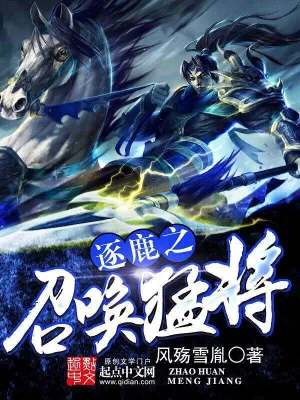
Summoning Mighty Generals to Vie for the Realm
逐鹿之召唤猛将
- Status
- Completed
- Length
- 1.5M Words
- Genre
- Historical
- Subgenre
- Alternate History
- Updated
- 8y ago
- Source
- Qidian
Stats
Tags
Synopsis
More by this author
In booklists 6
Imperial Ambitions
When autumn comes on the eighth day of the ninth month, my flowers will bloom and all others will die. A thousand miles of rivers and mountains, a scene of grandeur: how many heroes have come and gone? Thrones are built on bones, imperial roads on yellow sand. The history books record them all in a few simple strokes. Three Kingdoms: Empire of the Realm, by Xiaoxiao Majia No. 1 Three Kingdoms of Immortals and Warriors, by Baiyin Longma
Books I Like, A Bit of Everything
They're all books I like.
Heavenly Realm Library
All the books I recommend are great! Mostly fantasy, urban, xianxia, alternate history, and gaming.
My Favorite Books of Every Kind
Books that have accompanied me through ten years of reading: infinite-world stories, cultivation, ancient fantasy, wilderness fantasy, apocalypse, and online gaming.
Infinite Flow, System Flow, Built-In Golden Finger
Books I've followed as a ten-year veteran reader.
Books I Like
Good reads
Readers also read
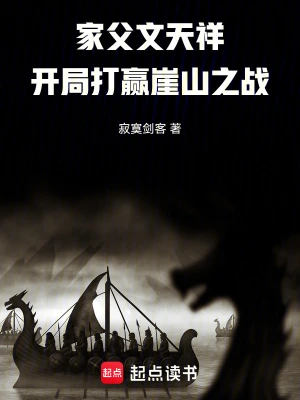 My Father Is Wen Tianxiang, and We Win the Battle of Yashan from the Start
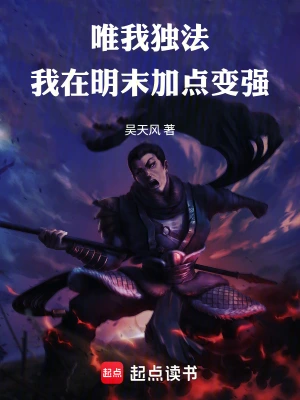 My Only Method: I Will Add More Points to Become Stronger at the End of Ming Dynasty
 A Guide to Building Civilization in a Primitive Tribe
 Daming: Asking for the Throne at the Beginning, Lao Zhule Went Crazy
 Slaughtering My Way Through the Marvel Universe: Starting with The Boys
 The Emperor’s Summoning System
 The Strongest Emperor Across the Myriad Worlds
 The Road Less Traveled
 The World of the Extreme Path: Tempering My Body Through Terror
 Summoning Civil Officials and Fierce Generals in Another World
 Arms and Armor of the Three Kingdoms
 The Strongest Imperial System: Summoning the Gods
 The Three Kingdoms: An Iron-Blooded Campaign in an Online Game
Reader comments 27
Google Translate
Let's be clear, this is a gift for a female, both Yu Ji and Diao Chan are gifted.
Even Wu Qin Xi was written by Zhang Ji, the author is so awesome
After reading a little bit, well, how should I put it, really, I doubted whether the author was a child. The organization gave me the impression that a 7-8 year old child does not look like a modern person who has traveled through the past. I hope the author can go back and revise it. It really gave me the feeling that it was too naive for me to watch at the beginning.
I didn't watch all of it, but I jumped directly to the end. The protagonist had sex with Yu Ji, the Green Overlord, and gave birth to a child, and asked the Overlord to raise it for you. I'm sorry that I was so poisonous that I withdrew it. As a Xiang fan, I can't bear it anymore.
The protagonist really looks like a psychopath, everything is written on his face and actions, regardless of the occasion! Jumping!
The author estimates that he has a primary school education, no historical knowledge at all, and his writing is sloppy.
Final evaluation: 3 characters collapsed
1. These people, Bai Qi, are the commanders described by the author. When faced with a big battle, he actually had no idea. He had to ask Guo Jia and Zhuge Liang to know "how to fight the battle." . . How does this reflect your talents as a commander-in-chief? By the way, from time to time, colleagues call Bai Qi "Gongsun", without even a reason? As for Li Cunxiao being called "Jingsi", are you going to call him his original name "An Jingsi" or the "Li Cunxiao" he was given? 2. Guo Chongtao was an unjustly killed person in history, so you can write about someone who had nothing to do with him in history and persuaded him to rebel. What the author writes like this can only reflect that the protagonist is not qualified as a monarch and does not care enough about his veterans. If it was Lan Yu who wrote it backwards, it would probably be reluctant. At any rate, he was suspected of treason in history.
Final rating 2 The plot is confusing
1. Guo Chongtao's rebellion. He was obviously aware that the other party would react, but he didn't even warn Wu and Song who were going forward? 2. Li Shimin's life experience was exposed, but he didn't have any plans, but he didn't make it public? 3. Yu Ji incident. No worthy king would ever allow such a cuckold. Even Wei Linggong, who is like a faint king, shares Nanzi with others. King Chuzhuang Jueying also asked Tang Qiao because the mistake he committed was sexual harassment, which was not too serious. But by doing this, the protagonist disappoints the readers. In addition, Yu Ji did not have much force, so she actually escaped from the heavily guarded palace alone and fled all the way to Xizhou. Unless the protagonist did it on purpose, how could it be possible?
The author wrote the book without thinking at all
[Comments] Recommended talents
Xie Ai (301-353), a native of Dunhuang, Liangzhou, was a general of the former Liang Dynasty during the Sixteen Kingdoms period. Born as a Confucian scholar, he rose to the rank of Governor of Jiuquan and Marquis of Fulu County. History records that he was both civil and military, and was appreciated by Zhang Chonghua, the king of Qianliang. He defeated more with less on three occasions and defeated Ma Qiu, a famous general from Later Zhao, forcing Shi Hu to give up his attempt to destroy Qian Liang. In the ninth year of Yonghe (353), Zhang Chonghua died of illness, and Xie Ai was executed by Zhang Zuo who had usurped the throne. Author of "Xie Ai Collection". Wei Rui (AD 442-520), courtesy name Huaiwen, was a famous general during the reign of Emperor Wu of Liang in the Southern Dynasties. Han nationality, originally from Duling, Jingzhao (now southeast of Xi'an, Shaanxi Province), moved to Xiangyang (now part of Hubei) when his grandfather was here. His family is a famous family name in the Sanfu area. It did not perform prominently in the Song and Qi Dynasties. In his early years, Wei Rui was appointed as the prefect of Shangyong. At the end of the Qi Dynasty, he followed Xiao Yan and launched an army. In the fourth year of Tianjian (505), he supervised the Northern Expedition and captured Xiaoxian City (east of today's Hefei) in the Northern Wei Dynasty, and then marched into Hefei. At this time, Wei general Yang Lingyin led 50,000 people to come to the rescue. Wei Rui diverted fertilizer and water into the city, defeated the Wei army and captured more than 10,000 people. In the fifth year of Tianjian (506), he solved the siege of Zhongli (Linhuaiguan, northeast of Fengyang County, Anhui Province), was promoted to marquis for his meritorious service, and was appointed as the right guard general. According to historical records, Wei Rui was benevolent to the people and loved things. "The soldiers were unwilling to leave the camp before they were established. They did not eat before the wells and stoves were completed." People in the Northern Wei Dynasty were afraid of him and called him "Wei Hu". He was honest throughout his life and his family had no money left. Wei Xiaokuan (AD 509-AD 580), named Shuyu and given the courtesy name Xiaokuan, lived in the world by his alias. A native of Jingzhao Duling (South of Xi'an, Shaanxi), he was an outstanding military strategist and strategist in the Western Wei and Northern Zhou Dynasties during the Southern and Northern Dynasties. Throughout his life, he fought in the south and north, and made outstanding achievements. He was worshiped as the Great Sikong, Shangzhu Kingdom, and was granted the title of Duke of Yun Kingdom. In November of the second year of the Elephant Year of the Northern Zhou Dynasty (580), Wei Xiaokuan passed away at the age of seventy-two. He was given the posthumous title of Xiang as a gift to the Taifu, the military officers of the twelve states, and the shepherd of Yongzhou. Changsun Sheng (551-609), courtesy name Ji Sheng, was born in Luoyang, Henan (today's Luoyang, Henan Province). He was the great-grandson of Changsun Zhi, the Taishi of the Northern Wei Dynasty and King Wenxuan of Shangdang, and the second son of Sun Si, the third director of Yitong in Kaifu of the Northern Zhou Dynasty. The younger brother of Sun Chi, the Minister of Household Affairs of the Sui Dynasty and the general of Zuohou Wei, the father of Sun Wuji, the famous Prime Minister of the Tang Dynasty, and Sun Shi, the empress of Wende, and a famous general of the Sui Dynasty. [1] Changsun Sheng has a sensitive nature, has a little knowledge of secretarial work, is good at playing and shooting, and is extremely agile. In the Northern Zhou Dynasty, martial arts was advocated, and the children of the nobles praised and respected each other for their martial arts. Every time they shot together, their peers were all inferior to Changsun Sheng. When Changsun Sheng was eighteen years old, he was appointed as a sergeant in the Siwei department. At first, he was not famous, and no one else knew about his talent. Only Yang Jian deeply praised his talent when he saw it. After the establishment of the Sui Dynasty, Changsun Sheng was reused by Yang Jian and sent many envoys to the Turks. He was promoted to the governor of Huaiyang and the general of You Xiaowei. In the fifth year of Daye (609), Changsun Sheng passed away at the age of fifty-eight. Emperor Yang of the Sui Dynasty expressed his deep condolences and gave him generous gifts. During the Zhenguan period of the Tang Dynasty, Emperor Taizong of the Tang Dynasty posthumously awarded Changsun Sheng the title of Sikong, Shangzhuguo, and Duke of Qi, with the posthumous title Xian. His title was inherited by his son Changsun Wuji. Luo Shixin (about 600-622), a native of Licheng, Qizhou (now Jinan, Shandong), was a fierce general in the late Sui and early Tang Dynasties. Luo Shixin was originally a general under Zhang Xutuo, the general guarding Qijun in the Sui Dynasty. He followed him to conquer the peasant uprising army. He later returned to the Wagang Army and was given the post of general manager. He was seriously injured in a battle with Wang Shichong and was captured. Later, because he was not ashamed of Wang Shichong, he led his troops to surrender to the Tang Dynasty. He was worshiped as the military commander of Shaanzhou Road. He assassinated Wang Xuanying and outsmarted Qianjinbao. He followed Li Shimin to pacify Luoyang and was granted the title of commander-in-chief of Jiangzhou and Duke of Yan. In the fifth year of Wude (622), Luo Shixin was captured during the Battle of Mingshui and was killed by Liu Heitai. He was given the posthumous title of Yong and was buried in Beimang Mountain. Shi Wansui (549-November 20, 600), a native of Duling, Jingzhao (now Xi'an, Shaanxi), was a famous general in the Sui Dynasty. He is good at riding and shooting, and is good at reading military books. At the age of 15, he joined the army with his father. During the reign of Emperor Wu of the Northern Zhou Dynasty, his father died in battle. As a loyal minister, he was awarded the title of Kaifu Yitong Sansi and took the title of Taiping County Duke. During the Northern Weekend, Liang Shiyan of the Shangzhu Kingdom attacked Yuchi Jiong, the general manager of Xiangzhou. He ascended first in every battle and worshiped the general for his merit. In the early Sui Dynasty, General Er Zhuji was implicated in his rebellion and was killed, so he was sent to Dunhuang as a garrison soldier. In the third year of Emperor Kaihuang's reign in the Sui Dynasty, Dou Rong, the general manager of Qinzhou, attacked the Turks and went to Yuanmen to ask for help. He was ordered to compete with the Turks alone to determine the outcome, and killed one of the warriors, so that the Turks did not dare to fight anymore and retreated. Every time he marches and fights, he takes the lead, cares for his subordinates well, and the generals are happy to serve. Because of his many military exploits during his campaigns in the north and south, he was framed by Yang Su due to jealousy and was unjustly killed by Emperor Wen of the Sui Dynasty. Wang Yanzhang (863-923), whose courtesy name was Xianming (his first name was Ziming), was born in Shouzhang, Yunzhou (now Liangshan, Shandong).