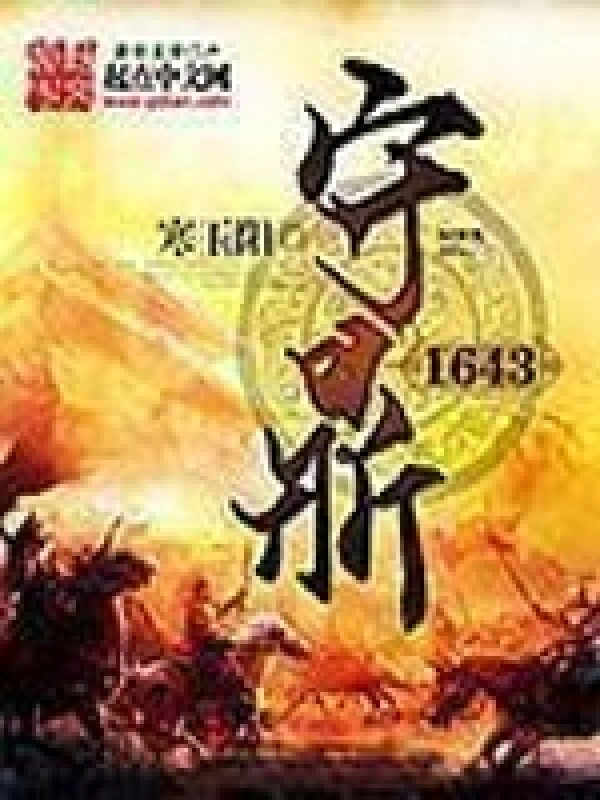
Shouding 1643
守鼎1643
- Status
- Ongoing
- Length
- 25k Words
- Genre
- Historical
- Audience
- Male
- Subgenre
- Song-Yuan-Ming Dynasties
- Updated
- 8y ago
- Source
- Qidian
Stats
0Monthly votes
627Recommends
34Fans
12Chapters
Synopsis
Reader comments
Readers also read
 I Am a Tyrant in Nanming
 At the Beginning, Please Ask Chongzhen to Abdicate!
 Fu Ming 1627
 Red Mansion Xiaoke
 Qingdu Shanshuilang
 Night Without Borders
 Corpse Hunter
 Disciples of Fangcun Mountain, Traveling Westward
 I Have a Dark Secret Martial World
 Sword and Candle Wilderness
 In the Name of Supernatural Power
 Defeat the Entire World with the Power of a Dragon!
[Review] Good book
I hope the author will not stop updating and stick to it
[Comment] The part before time travel and the original god in Chapter 1 is really redundant
Especially the one with this god, it's really a bit poisonous
[Comment]The power of musket bullets
Flintlock bullets are very powerful, and steel shields can protect against bullets, but iron shields should be penetrated. The kinetic energy is also very large. Compared with a bow and arrow that only has a few joules and hits the shield with a buzzing and wagging tail, even if the bullet does not penetrate the thick iron shield, the powerful kinetic energy can knock the opponent over. This is why shields are not used to prevent bullets. Referring to the heavily armored knights in Europe who fell to the ground and were unable to get up, we can see that the armor of the Manchu army was not as bad as imagined. The Ming army could not defeat the Qing army, mainly because of the declining morale caused by physical weakness. If the Qing army had 140,000 troops in 1644 (100,000 entered the customs) and consumed about 45,000 troops, Dorgon would consider withdrawing. He wouldn't bet it all. I saw a book that said that Dorgon had bet everything, which I thought was unreliable. If more than 50,000 are consumed, Dorgon may step down and die.
[Comment] The author please provide some basic information and some opinions on this book.
I just watched it a few times and there are a few things I don't understand. 1. The protagonist writes to Beijing? But it was almost 17 years after the 16th year of Chongzhen, which was less than half a year before the fall of the Ming Dynasty. How far was the protagonist between Guangxi and Beijing Jiuli? To say ten thousand miles is a bit exaggerated, but there are still 5,000 miles. In addition, the world was in chaos at that time, so it was possible for the protagonist to receive a reply so quickly (or could he receive a reply?) 2. The protagonist is training soldiers. If the vassal king was training soldiers at other times in the Ming Dynasty, he would definitely die. However, the world was in chaos at that time, so the protagonist used the name of King Qin from the north to recruit troops. It should not be a problem. Didn't the King of Tang win over thousands of people just by relying on this reputation? Although he was defeated and then imprisoned, the protagonist's time is basically the 17th year of Chongzhen, so it is estimated that there will be no restrictions after the protagonist gathers a team and writes a letter to King Qin in the north. It is estimated that by that time, Beijing will be broken. Then the protagonist has his own team in his hands. This is his capital in troubled times.
[Comment] I hope not to completely repeat the original system of the Ming Dynasty
Turn around the rigid system of the Ming Dynasty.
[Comment] The support of the army in the late Ming Dynasty.
During the Ming Dynasty, the population was 50 to 60 million Ding (Ding: men aged 14-60), and a conservative estimate of the population was 160 million. It can even reach 200 million. According to the population ratio between modern times and the Ming Dynasty, and considering the small number of counties in the Ming Dynasty, it is estimated that a county that has not been affected by war has a population of 100,000. Among these 100,000 people, there are more than a dozen leading gentry people, one or two local rich people in each town, and one small landowner in each village. Ximen Qing's Linqing County ranked first among the top 100 counties in the late Ming Dynasty. His property was 86,000 taels of silver. (I want to laugh when I think about some books doing economics in ancient counties) I once wrote more than 100,000 words. The protagonist Liu Wenxiu in the book, at that time, based on the price of two taels of silver per load of rice [the book believes that one stone is 94.4 Kilograms, but it may actually be 70 kilograms or 153 kilograms] (rice prices have increased, so have the prices of meat). A soldier's meal of meat, vegetables and soup would cost one tael of silver a month. An army of 2,000 men costs 5,400 taels per quarter. The protagonist must have a base area, and the per capita GDP of the base area is estimated to reach 30 taels of silver, so that he can have enough food and clothing and make a difference. The most critical thing in the late Ming Dynasty was the lack of food. Even if the protagonist could make money, if he relied on buying food to survive, it would only cause people in other places to have less food. So we must grow food! According to the technology at that time, the size and yield of Fujian's sweet potatoes and Da'an's potatoes should be much smaller than today (corn was planted in the Yellow River Basin a hundred years ago), which could alleviate hunger somewhat. The protagonist's team should be Li Dingguo and Liu Wenxiu. In fact, the great hero Li Dingguo is not as good as Liu Wenxiu in being able to stand alone. Attached: Zhang Xianzhong's 12 names after 1639: Zhang Keji: On the seventh day of February (end of March) in 1640, he was captured in the Battle of Agate Mountain and his whereabouts are unknown. Zhang Hui'er: This man was the youngest. He was captured in the Battle of Manao Mountain and died in battles in Henan, Xinyang and Wangyunji in 1641. Zhang Guoxing (Guoxing): In 1642, he was ambushed by Sun Yingyuan's troops of the Ming army and died in battle. Zhang Sihu: This is absolutely awesome! In 1643, the Western Army captured Yuezhou, an important town in Hunan Province. Zhang Sihu, the commander-in-chief of the Chinese army, died. Xu Yixian, the prime minister of the left and the minister of the Ministry of Punishment, fell into the water and drowned. Zhang Hualong and Zhang Guangcai: After occupying Sichuan, they died in the counterattack with the Ming army. Zhang Nengdi: He Zhen, the famous general of the Dashun Army, led his troops to help Hanzhong, quickly defeated and captured the Great Western Huwei General Zhang Nengdi alive in Baocheng, and then released him. Zhang Junyong: Zhang Junyong, the commander-in-chief of Shence Camp, was responsible for the internal suppression of rebellion. (Of the 110 counties in Sichuan, Zhang Xianzhong occupied 36. It is absolutely false to say that he massacred Sichuan, otherwise he would not have been able to resist for 13 years. Judging from the fact that Zhang Xianzhong cut off one of the right arms of the Ming army, he does not look like a killer of the poor. But he did kill people in Sichuan, and Ziyang County has a small population. Nearly 40%. It is estimated that the killings in Sichuan accounted for more than 10%. Taking into account the war with the Ming army in Sichuan, it is estimated that Zhang Xianzhong cannot be blamed entirely.) [Sichuan has a population of 3.1 Million, an estimated population of 10 million. In line with Sichuan and Chongqing's national proportion]
[Comment] A rare good book, already collected.
It is a very incisive literary expression and another masterpiece. I hope the author can continue to update it and make persistent efforts to reach the top. Collect more beauties, and ask for more beautiful SHU wives. Ren wives and beautiful SHAO wives are the favorites. Learn from the peerless hero Cao Cao. In troubled times, beauties are trophies and have nothing to do with morals. The world is like my own generation, and the country is beautiful and fragrant. The king loves her. 🌹🌹🌹
[Comment] Found a small problem
5,000 Taels, one tael is equivalent to 300 RMB, it should be 1.5 Million, not 3 million. . In addition, soap is not allowed to be sold, so you can find an agent.
[Comment] Firearms in the late Ming Dynasty (blind writing)
The quality of firearms during the Ming Dynasty was definitely not high. The barrels were rotten, the explosives + powder + rotten... The metallurgy and refining were not up to standard. If you want to improve the metallurgical level, you must first increase the furnace temperature, then refine coke (which contains low sulfur and phosphorus), and other things. There was a kind of firearm in the Ming Dynasty called the three-eyed gun. The front end was three 40cm tubes, plus a long handle of more than one meter. The effective range is thirty to forty meters. The revolver is loaded with paper-cased bullets. Due to technical problems, more than half a liang of lead bullets are required. It is estimated that there are less than 6 bullets, and only 3-4 bullets can be loaded. The effective range is more than ten meters. So, if I wrote a novel, *** wouldn't use it. If it is a long-tube gun and the sealing problem is not solved, the range is estimated to be about the same as a three-eyed gun. The effective range of the long-barreled flintlock gun in the 17th century was only 60 meters. A single soldier cannot hit a cow from 50 meters away. The range of the array can be farther, but not more than 100 meters. (Until more than 100 years later, due to improvements in various technologies in Europe, the killing range was only 150 meters) A bayonet must be attached, but a front-loaded flintlock musket can reach shoulder height at most (if it is longer, the soldiers will have to bring stools to load things into the barrel), and with the bayonet it is only a little over 2 meters. I have always believed that muskets with bayonets can only be used to deal with enemy infantry, and cavalry must be arrayed with three- or four-meter-long spears (the best formation should be a hollow formation. But the Manchu and Qing cavalry will definitely avoid the spear array when they see it, so the spear array must be placed, but it will not go on the battlefield. If not, the cavalry will rush over!) [Bow and arrow range: Ji Ling in The Romance of the Three Kingdoms believed that Lu Bu could not hit a halberd branch 150 steps away (i. E. 180 Meters), so the range of the strong bow was estimated to be 150 meters at most, and the range of the weak bow was estimated to be about 50 meters. Crossbows are not as powerful as bows and arrows and are not considered. Regarding the Minigun: Rifling is a difficult problem. The protagonist has just traveled back in time, so rifled guns are not considered. (Even if rifling can be drawn, it is uneconomical. Similarly, ten thousand taels of silver can convert combat effectiveness, but compared to a smoothbore flintlock gun, a rifled gun is much worse. Therefore, it can only be a four-stage or five-stage array, firing a salvo from 80 to 90 meters away. I mentioned the 50-50 system in another post. Compared with the Ming Dynasty's 25-50 system (derived from the Mongolian 10-10 system and the half-10-10 system), the 55-50 system can be converted into a half-50-50 system. You only need to add a deputy battalion commander, deputy brigade commander... Or staff officer. As for artillery, it is naturally made from iron molds, but the metallurgical industry must keep up. There is a better type of cast iron called ductile iron, which is not inferior to No. 45 Steel. Maybe consider getting it out. The artillery can also be directly made of bronze, or the inside can be covered with wrought iron and covered with a layer of brass. Written blindly, for reference only.