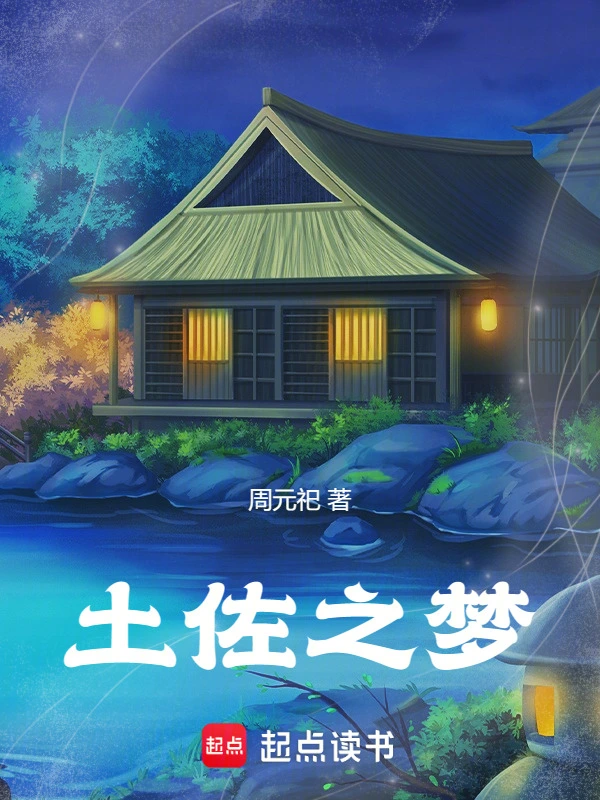
Tosa's Dream
土佐之梦
- Status
- Completed
- Length
- 1.4M Words
- Genre
- Historical
- Audience
- Male
- Subgenre
- Foreign History
- Updated
- 14y ago
- Source
- Qidian
Stats
Tags
Synopsis
Reader comments
In booklists 38
Explore more →
Servant's Main House
Personally, it is fully booked. Feeling slowly sliding towards hy~
Hobby Complaints
It's been a while since I saw a book I particularly liked.
Old Antique, Whatever
Work
Classified History Book List
Works I've seen and are currently watching
Works of Personal Interest (Mainly Completed Works)
People are lazy, so I write reviews according to my mood. If I am lazy, I will write less... Well, these are just my personal favorite works. No matter whether you read them or not, I read them anyway.
Moonlight over the Sea
Personally I think this is a very good novel and I hope to share it with everyone!
Fang Tangzhai
The owner of the restaurant is Fang Tang. I will listen to it. A single owner driven by interest A book list that represents only personal taste 5 candies: an absolute classic 4 candies: rare 3 candies: you can read it Below 3: Would not recommend Reject stupid articles, we won't give in! (Advertising veterans will take a look at it and support new authors, and obsessive-compulsive disorder will delete it from time to time)
A Book List for Old Readers Who Can't Stand Mainstream Fantasy Literature
Partially history, science fiction, fantasy
Good Book About Past, Present and Future
An experienced driver whose experience is older than his starting point. Some books disappear as soon as you chase them; Some books are forgotten as soon as you keep them. Scoring criteria: ★★★★★, a masterpiece, highly recommended; ★★★★, excellent work, well worth the trip; ★★★, good work, still worth a look. ========================== List of five-star masterpieces (sorted by entry time): 1. Lord of Mysteries 2. Patrol the sky with a sincere heart Four and a half star quasi-masterpiece: 1. F
A Personal List of Good Books to Relieve the Book Shortage
Some history, game, and other good books
Those Addictive Books That You Can't Stop Reading (The Book List Is Being Updated Slowly)
Most of the books you like are completed and a few are unfinished. When I read a book, it doesn't matter what genre it is, as long as it has good creativity and good writing skills. The books in the book list are basically guaranteed to have these two things. However, some old books were very creative back then, but now they may be copied and clichéd. I hope you understand. Also, please pay attention. If you get food from the book list, please give me another flower.
Lingyan Pavilion (Mainly Recommends History)
Most of the books collected here are historical and cultural books with real backgrounds, detailed content, interesting content, in-depth plot development and more logical development. However, reading the same type of books all the time will inevitably lead to aesthetic fatigue, so some classic books from other categories are also included. In line with the principle of erring on the side of lack rather than excess, there are not too many books included here. Of course, this does not mean that
What a Unique Style
The novel has a unique style, smooth writing, fascinating and novel material selection.
Historical Texts That Restore the Characteristics of the Times (Static Book List, Updated Indefinitely)
Food and grass are poisonous.
I Like Words, Interesting Stories, and Good-Looking Novels.
There is a story
The Clouds Follow the Dragon and the Wind Follows the Tiger
I thought it looked good after reading it

I Am a Veteran Who Has Been Reading Books for 11 Years and Has Been a VV for 7 Years. I Comment on My Personal Senses and Have No Responsibility to Recommend This Book.
Friends who like history, cities, martial arts, infinity, and two dimensions should come here
A List of Recommended Books on Foreign History and the Japanese War That Cannot Be Said to Be High-Quality but Are Small Enough.
It should only introduce the books before the first battle at the beginning
Imprisoned Soul
An old-school and sophisticated book list
Cold Weapon War, Horseback Riding and Slashing Mixed with Magic
Real disgusting smell of blood
Book That Leaves an Impression
Book that leaves an impression
Brother Black Bear's 2017 Recommendation.
There are currently 1,653 books on the bookshelf, 37 of which are being updated, and 1,081 of which have been collected. This book list contains the best works from the collection of books that I have read, as well as the fairy grass that Brother Xiong is currently reading. It supports genuine editions! Support the author's creation!
Books You Like to Read
Personally like it, not a novice
The Books I Have Read Are Mainly About the Second Dimension of History
History, 2D, fantasy
Readers also read
 Fu Ming 1627
 I Am a Tyrant in Nanming
 At the Beginning, Please Ask Chongzhen to Abdicate!
 Red Mansion Xiaoke
 Qingdu Shanshuilang
 Japan's Warring States Period: the Rise of the Wakasa Tiger
 I Am a Daimyo in Japan
 Disciples of Fangcun Mountain, Traveling Westward
 I Have a Dark Secret Martial World
 Japan's Warring States Period: the People of the World in Ise
 1422: Restoration of Eastern Rome
 Start in the Middle Ages, on the Crusades
Alas, I read the article. It is heartbreaking that the author no longer writes books.
Each and every one of them spoke of Japan's expansion as justifiable, as if the two-hundred-year ban on the Tokugawa Sea was false. Japan is very large and has a lot of developable areas. There is no such thing as "people will starve to death if they don't invade". At the end of the book, the development of Hokkaido has just begun, which shows that the demand for territory is not large. Invading North Korea, for the upper class, is a desire for luxury caused by pride and arrogance, while for the lower class, it is the habit of expanding territory by relying on military merit. This is caused by the traditional education of the Wu family, because they can do nothing but beat and kill them. It is not a rigid requirement by any means. During World War II, we had to fight even if our families were ruined and we had no food to eat. This was called a necessity. There was no such rigid need during the Warring States Period. The real situation is that after Toyotomi lost power, the Tokugawa shogunate carried forward the family characteristics and locked the country for a while. It was always fun to lock the country. Without the black ships, it might have been locked for hundreds of years. During this period, the civilians were affected by the samurai, the samurai were affected by the feudal lord, and everyone was affected by the shogunate. Without expanding externally, we still live a nourishing life.
To be honest, the writing is good, but writing about Japan is doomed to hit the streets, I understand. I can only die in Japan. Don't think about anything else. If you dare to write about invading the mainland, you will get 404 immediately.
Someone who has been recommended to read this book can tell you whether you can continue reading it. First, there is a plot of giving away a girl in the book. Xiaoxia has been following him and confessing to him, but the protagonist is indifferent. However, it is very surprising that in just one chapter, he falls in love with a girl he has just met and has a child with him. Woman, and fell in love with her. Note that he fell in love with this woman and then fell in love with her. It was all solved in one chapter, and he also asked Sawaki and others to chase Xiaoxia. Oh, Xiaoxia died later Secondly, just like the name of this book, the protagonist cares about y. The ending of this book says that all this is his dream.
I love this book so much that I read it again every year. I hope the author can write another book
The writing is okay, but sometimes a little too indecisive. And why in all the novels about Japan's rebirth, the protagonist clearly knows that the only way for Japan to develop is to expand outwards. However, the protagonist always comes up with various ways to prevent the development of Japan ruled by him because of his Chinese soul. I don't understand. Even if you can't attack Korea and the Ming Dynasty, you can always attack Southeast Asia. As a result, the protagonist treats expansion as a scourge and calls it militarism.
The ending is so good. After reading it, I felt disappointed. I felt regretful because of the dream but tender because of the dream. Although it is explained as a dream, I think that with the magic of Haiyue, we might as well regard the past experience as real, just another timeline, another parallel world. When the false becomes true, the true is also false, and the inaction exists and returns to nothingness. Although I dream about the vicissitudes of life, I also have a long journey home. In the end, Xiao Xia's story about fate and the male protagonist's relief were also well written. Those people and things just flowed away, leaving them alone and undisturbed. Only the clever girl in the cabin was waiting for him. They can play games in the mountains and forests, hunt and fish, return to the countryside, open a vegetable house, and give birth to a bunch of fat babies... The pain is gone.
Hahaha, it's always like a dream, it's always like a dream! The most regrettable thing is that the nights are short and the dreams are long, the storms are ups and downs, and the heroes and heroines and the love between their children are long, and they finally wake up when the rice is ripe. Who can know how much regret and how much obsession there is? 😭
Alas, I just want to say that after reading this book, all other Japanese war literature will taste the same.
This book is a big failure
After reading more than seventy chapters, the most impressive thing is that the characters in the book change their names at every turn. A promoted minister who is born as a commoner will change his name once to suit his status, and the relationship is complicated. After the family is separated, the branches change their names. After defeating the enemy, the son is forced to adopt the enemy and the son changes his name. After defeating the enemy, he forcibly marries the enemy's daughter and gives birth to a son, and then adopts the enemy to inherit the family business. If he becomes a monk, he changes his name. Changing the names is not the most important thing. The important thing is that the author wrote these in too detail and too verbose. There are a lot of basic chapters describing the relationship between the characters in the book, and some people changed their names several times so that their heads hurt. You must know that I came here to read the story and not to see the relationship between Japanese historical figures. Did the author not consider that the readers are all Chinese? Generally, most authors who have many names like this will choose the most famous one to write about. For example, Picasso, how many of them know the full name?
Author's NoteThe book was written fourteen years ago...
Some plot designs, some writing methods, and even paragraph divisions may not be in line with the current public taste. What's more, this book was considered a niche at the time. Some harmonized chapters cannot be modified or restored due to the completion of the book. Let's just take a look. Thank you ~
The protagonist's own children are also in a mess. They don't discuss any foreign policy decisions with their families, and they don't even take the initiative to report them afterwards. What's the use of such a separation? Drag yourself into the water or give him something to do? If such an important thing as participating in the war is not reported, I am afraid that it will not be as good as those external names and genealogy. Is this how the Gouchi family behaves? The protagonist doesn't think about education at all.
Toyotomi and Tokugawa's attitude toward Catholicism was not unreasonable. It developed much more harshly than it had always been, and it was extremely exclusive. After causing domestic ideological confusion, it was extremely troublesome to deal with. Japan is a Shinto country, and the emperor has divine status. It is impossible to convert to God in any case. The sooner it is dealt with, the better.
"Dream of Tosa" and "Sengoku Fuxing Chronicles" are my two favorite Japanese online novels about the Warring States Period. After reading these two novels, other online novels with the same theme are hard to read. Of course, writing style is one thing, but it is not impossible that there are better writing styles than theirs. These two books are still better than the core content of the articles. Speaking of which, the two books have the same plot. Both the protagonists become Oda Nobunaga's retainers, follow the trend, and raise the banner to unify Japan after Nobunaga's death. However, the narrative methods of these two books have their own advantages and even different styles. Lucky Star is relaxed and joyful, just like watching the Dahe drama "Le Family and Pine". The plot is just like when we open "The Legend of Taiko Rise" on the computer, but it is by no means a simple game process guide. In the relaxed writing style, the author gradually opened up a picture scroll of Japan's Warring States period, and I could see vivid and lifelike characters one by one - they may not conform to the real history, but in the world of Fuxing, they are living people that I can understand, understand, and even resonate with. Tosa Katsu is rigorous in details, allowing us to jump out of the game frame and understand the real social background and martial arts inheritance of Japan's Warring States Period. And after understanding this, many events in history that seemed unbelievable to me had reasonable cause and effect, which made me suddenly realize. By the way, there are two online novels about the Three Kingdoms that I like very much in recent years. One is "The Rise of the Internet Addicted Boy Liu Chan" and "The Overthrow of the Han Dynasty". If we want to make an analogy, "Dream of Tosa" is highly similar to "The Overthrow of Han". I even thought that the two were written by the same author. Although "The Rise of the Internet Addicted Boy Liu Chan" is far from "The Chronicles of Lucky Stars of the Warring States" in terms of writing style and characterization, they are somewhat similar in artistic conception.
What a masterpiece! I was a little uncomfortable reading it with my name at first, but after reading it several times, I found it quite interesting. The biggest feature of this book is that it is full of emotions. There are so many touching places, especially the relationship with Xiaoxia, which is really sad. What a rare divine text!
In the end, I tortured for the sake of torture, which is considered a bad ending. Although it is still better than many other Japanese war stories, I don't know where it is.
The writing is really good, especially the protagonist. From a samurai to a daimyo, from a minister to a monarch, he is very outstanding in Japanese justice and culture. I have read the history of the Warring States, and I prefer this kind of article because the protagonist is very exciting, especially the protagonist's thoughts about the author. It can be said that without the last few chapters, this is just a fast movie. A passionate article, the thoughts in the last few chapters have sublimated this book. This can be regarded as a pseudo-classic online article. Digression Recommend the history of the Warring States Period in Japan Oda Nobunaga, who aspired to the world, Toyotomi Hideyoshi, who wrote the counterattack of civilians and Tokugawa Ieyasu, who finally caught the fish, use the stories and legends of the three monarchs It has written a majestic history of the Warring States Period in Japan. This is a wonderful Warring States Period full of contradictions about loyalty to the secular world, righteousness, status, and counterattack. Although it is not particularly powerful, it is particularly wonderful. Through the complicated stories, we see the general trend behind it, the rise of all the heroes in the world, and the competition for local names. , The struggle between the shogunate and the royal family The ambition and righteousness of the ministers, the master's strategy and unique magnanimity are bloody This story about ambition and law, confrontation and subjugation was paved with the lives of countless ignorant people, and this illustrious history book (Japanese Warring States Period) was written with an eclectic attitude
The ending of Meng Xing is a bit beautiful, and it has a Buddhist meaning. It's just that the bastard Xing Jing didn't explain the ending and it's a bit unpleasant.
Spoiler warning I used to hate that the novel ended with everything being a dream, but this time I was very happy that the protagonist was finally able to "wake up" and live happily and carefree with Xiaoxia, who also woke up from the dream. Everything goes back to the source of the story, the cabin in Tosa Country, the beginning of the Tosa Dream. I originally thought that the protagonist would return to modern times, but for him and Xiaoxia who experienced the "dream", maybe this is the best ending...
The Japanese Warring States Period is an old book, but it has two major shortcomings that are fatal. First of all, it relies on the big tree of the Oda family. It has no new ideas at all and cannot attract the audience who are familiar with Japan's Warring States history. Secondly, what's more terrible is that the literary youth traveled through the Warring States Period. Is the author serious? 🤭 Normal logic cannot survive three episodes.
The only historical novel of the Warring States Period that I have read, short and concise with a perfect ending.
After reading two chapters, the characters are dull, the narrative is streamlined, and the story is lacking. Although the subject matter is very good, I can't stand it anymore.
Author's words
1. Thank you for your reading, support and likes! 2. This book has been bought out and can no longer be operated. Broken chapters cannot be adjusted. Everyone can just subscribe and there is no need to reward. 3. I have some free time recently and wrote a new book. This is the account. Support is welcome. 4. Thank you all again!
It took almost 10 years to write this book! !
Nan Ke Yimeng, reading the whole book is boring, it's really just rice and radish
The Oda Nobunaga described by the author really feels like a "Nobunaga"
Personality and family members are similar to Ashikaga Takauji
I recommend The Immortal of Aztec, the writing is good, you can give it a try.
An old book from before 2013
I gave up after reading Chapter 23. I came to watch a generation of heroes rise to prominence and achieve great things in the world, not to watch the delicate emotional entanglements between an indecisive Asasi hero who is not clear-headed and several women.