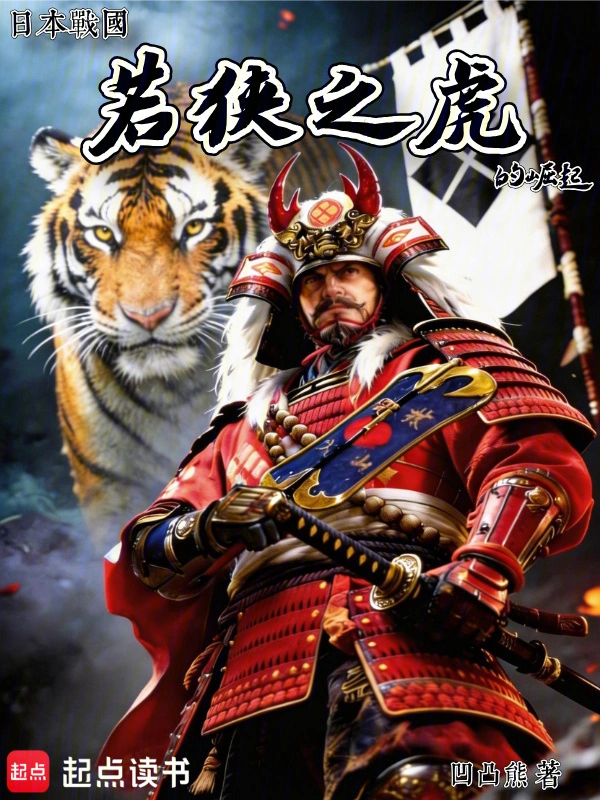
Japan's Warring States Period: the Rise of the Wakasa Tiger
日本战国:若狭之虎的崛起
- Status
- Ongoing
- Length
- 1.4M Words
- Genre
- Historical
- Audience
- Male
- Subgenre
- Foreign History
- Updated
- 2d ago
- Source
- Qidian
Stats
573Monthly votes
13.8kRecommends
36.9kFans
553Chapters
Tags
Synopsis
Reader comments
Readers also read
 Fu Ming 1627
 Northern Qi, Sage Khan
 Red Mansion: Start Escaping and Farming from the Equipment Bar
 After Lying in Bed for Three Years, He Was Forced to Help the Han Dynasty
 Only I Can See Romance Game Announcements
 I Am a Daimyo in Japan
 Japan's Warring States Period: the People of the World in Ise
 Starting from the Second Generation of Immortals
 After Being Made Angry by the Anti-Fans and Crying, Tianxian Found Out That the Real Murderer Was at the Bedside
 British Overlord
 Make Habsburg Great Again!
 Game of Thrones: the Red Lion
 Toyotomi's Wet Dream
I definitely didn't mean to pull it off.
First of all, I don't mean to criticize other authors' novels. Secondly, I think this book is a very excellent Japanese Warring States novel. It does not indulge in love and love. The protagonist is more focused on the development of his career. His hands are dark enough and his heart is cruel enough. He will kill when he needs to. In terms of strategy, there may be some aspects that are idealistic, but they are acceptable. The writing style is not top-notch, but it can convey the meaning that the author wants to express.
The author's use of punctuation is incredibly low. Basically, there is only one period in each paragraph, and there is no period between paragraphs. There is not even a period in this long paragraph. It is too tiring to read. Don't cram too many things into one sentence. Be restrained. When it's time to divide sentences, you should do so decisively. How can there be so much space for the use of ";"? Proper segmentation will not only make your writing smooth, but also maintain the reader's reading rhythm. Otherwise, if you read a large section, you will have to gasp for breath after reading each section, which will be too tiring. I hope the author can improve it. {"NickName":"Glory of the Royal Family","UserId":133579276}
Liangcao, the creativity is good, the Warring States period is a plus, the characters are stereotyped
The author has started a new work and has read 50 chapters. My personal impression is that it was a spark in this era of declining Warring States literature. Advantages: detailed research, pictures and facts 😁, good creativity, and the plot is carefully designed. Disadvantages: The characterization is superficial and lacks personality. For example, Yi Jian, who plays a negative role, performed poorly and was like a gangster. The important supporting characters Yamamoto and Sotechi have no outstanding characters. After reading the text, they can only remember their personal names and lack flesh and blood. I hope the author will continue to make progress and write fairy grass. Comprehensive evaluation, there is a certain gap with the story of the draw. It is still difficult to say whether it can reach or surpass the Sengoku Fuxing
Very nice, keep updating
Give me some support
Laughing to death, someone in the building said that it would be too disgusting to surrender to Ming Dynasty in the end. Doesn't one write about Chinese theme awareness in China? What to write? Seeing Daming makes you feel sick? It's better to see if there is a saint in your family. Too many people in our country are really full, especially picky eaters who eat squid every day.
Talking about Toyotomi's last dream, the one-eyed dragon of Bitchu, the Eagle of the Warring States Period, Fuxing Chronicles, the Tsugawa family, and Tosa's Dream, a half-step god of Japanese war literature, including Sister Shangshan, these are all memories of the past.
I've read Chapter 58 and found that this pig's foot has no talent at all. It's just like a mascot. In terms of force, force is not good. All wars are fought by the generals below. In terms of strategy, it can be regarded as the people below giving the ideas. It can be done with or without him?
I just want to know, is this book going to flatter Ming Dynasty again? If so, don't watch it to avoid nausea later.
The early stage was pretty good, but since it gained a foothold, I feel that the protagonist's character has dropped a level. Originally, he could be said to be courageous, resourceful, and heroic, but after the early stage, the rest of the plot relies entirely on others to push the protagonist, without any personal vision or strategic positioning. The reason why so many people are complaining in the chapter is because the current protagonist relies entirely on others to propose strategies, has no force at all, and has a soft ear for decision-making (whoever speaks later will listen to whoever has the final say). He has no arrogance, no ambition, and no courage. In today's novels about troubled times, such as the Three Kingdoms and Japan's Warring States Period, whether your protagonist has superhuman vision, extraordinary martial arts, or an "outstanding" strategy (the author's IQ test project), you must always have one that stands out. Why, because you want to give the reader a feeling that his success is well-founded, logical and logical. If a protagonist wants nothing, then why can he succeed? What's the difference between that and Ding Zhen? Even Ding Zhen has a 70% good looks and good luck with the times. In this case, the heroes of the same period were defeated, then these heroes and the background of these times have all become clowns, and the protagonist is just the biggest clown among them. Only by depicting the outstanding abilities of contemporary heroes can the protagonist's own "characteristics" be highlighted, and in this way a sense of grand epic can be born. You have to write about the gradual growth of the protagonist so that readers can see that the protagonist is improving instead of getting worse. Most people can tell whether the protagonist is getting better or worse. I hope the author can think about it and clarify his ideas. (PS: If the growth cycle is too long, you will definitely be abandoned by some readers, because if you are not particularly well-written, no one will follow hundreds or thousands of chapters to see the protagonist make little progress)
I just found it so difficult
I haven't played Shinno for a long time. I opened Wakasa Takeda in 1943 and played it in 1967. Takeda Motoaki became the head of the family. There were only half a Tajima plus Kuchiki Valley and Otani Castle than in the novel. It was too difficult. In the early stage, I conquered Kabuyama Castle, followed by Kuroi Castle. As soon as I hit Kuroi, Asakura came over. After a few years of back and forth, I finally won a Tajima after Miyoshi rose up and acted as Miyoshi's dog. After taking down Kanazaki, Kotani, and Mount Sawa in succession, Guanyin Temple could not be held down. Until Nobunaga's rise, he couldn't hold it anymore, he surrendered, and even stole a Kuchiki Valley from me. By the way, I want to complain about the 16 siege battle. I couldn't beat 5w against 8k. I'm really convinced.
Oda Nobunaga even made marriages here and there to consolidate relationships. When it comes to these authors, they wish the protagonist was a eunuch and have no desires or desires.
If Murato doesn't have time to read Japanese literature, he might as well look at himself. Can I be understood as having a crooked butt?
It's a pity that I have another eunuch book. You are just like Sosuke Kira. You can write well, but you are good at eunuchs.
Japanese Warring States novel F4 recommended!
The Chronicles of the Swordsman General Taikaku: Starting from the Replacement of Toyotomi Hideyoshi The Wind Rises by Kariha Japan's Warring States Period: Hosokawa's Ambition
Wakasa direction map
The red part is Wakasa
Japan's Warring States Period might as well be called the Hundred Villages War
Discuss it
The author should not make the protagonist so indecisive. The protagonist is not afraid of his shortcomings. Only when the protagonist has no obvious characteristics can he become a facial expression. Why I have posted several times about making the protagonist unparalleled in strength or more resourceful and decisive? The main reason is that the Japanese were too short during the Warring States Period. People with 160cm are rare men recorded in history. The protagonist is a modern person, and the readers are also modern people. Nowadays, men across the country are generally very tall. I don't know about the south, but heights above 180 are extremely common in the north. From a reader's perspective, it is extremely contemptuous of Japan's Warring States Period. The villagers are a group of young people. No matter how high you think, how high can you get? The protagonist himself is a modern person, and his knowledge is a dimensionality reduction attack. It is unnecessary for your protagonist to be so cautious. Another thing is that readers now have no patience to watch the protagonist grow up. If it is a world of high martial arts, it would be fine. Warring States Japan? From the beginning, the plot of the protagonist being single and trying to sow discord was pretty good. As long as you don't cause trouble, it's okay if it's even slightly reasonable. I don't have the Japanese Warring States filter. The famous generals of the Warring States Period, the little boy who came out of the village war, or the village chief put it bluntly. The protagonist is a modern person, so he should be beaten by famous generals. If you don't beat famous Warring States generals to get pregnant, you will be hung up and beaten. You will be considered a time traveler. You will be embarrassed and the pleasure will be gone.
Oda Nobunaga started on a hellish difficulty level and then had a smooth road, so he was very lucky.
If he couldn't successfully attack Imagawa Yoshimoto, he would just kill him. If his brother-in-law Saito Yoshiryu hadn't died, he would have had to fight fiercely with his brother-in-law for decades and he might have become like Takeda and Uesugi. But he was just lucky, and Imagawa was successfully attacked. My brother-in-law was burped by smallpox. All the powerful names in Gyeonggi fell into decline. The boss of the Sanhao family is mentally disturbed, and so are the other local gangsters. What a blessing. . So he started to seek death, probably because he thought he could do whatever he wanted. Wanting to replace the emperor, the general felt that it was not enough, so he challenged tradition and finally wasted his life.
Turns out to be the author of Toyotomi's Lost Dreams, now I have to read it
I read Toyotomi's Lost Dreams in 2023, and I didn't look at the release date of the book at all. Except for the clichéd beginning and some tolerable minor irritations, I didn't feel at all that it was a book released in 2012. After reading it in one sitting, I just felt full and hearty. To be honest, this kind of foreign historical novel can only have such a serious flavor if it is written by such an early author. Nowadays, many new authors who write European and Japanese historical novels got their start from PlayStation games and Koei games. The novels have no sense of seriousness of historical novels at all.
At present, this book is one of the better ones among the Japanese Warring States novels of the same period. It has no poisonous points. It is recommended to read.
After t j, I was not even happy to write a postscript. I didn't pay attention to the work I wrote with my heart, let alone the readers.
I read it from the Sanada Family's Ambition. Your book is quite good. It was discontinued in 24 years and continued in 26 years 😅😅😅. If you can persist in writing this, I respect you as a hero.
If you want to write a long story, it is best to have a larger format. If it is easier to write about the Ming Dynasty, then you can write about Southeast Asia, or even directly mention India and travel to Europe. If you write about surrendering to the Ming Dynasty, you will probably abandon it because you are not a human being. If you write about the invasion of the Ming Dynasty, the book is probably gone. Therefore, I suggest you either write it as a fiction and not mention the Ming Dynasty, or downplay it and do business with the Ming Dynasty noble merchants and don't write anything else. I still hope to write more. There are really not many books about Japanese history that I can read. The last one I read was the Japanese fantasy of the interface card 😅
Grain and Grass and Warring States Period
At first, the author stopped writing for such a long time, which made me have some doubts about the book. However, after reading it carefully, I found that the author was still writing it seriously, conducted a lot of research, planned the plot, and listened to the opinions of book friends. But probably because of writing problems, many textual researches are not well applied to the plot. An allegorical incident often pops up out of nowhere and makes people confused about what they want to say. The war scenes are also very idealized. Peasants and soldiers are regarded as standing envoys. One war leads to a country, and internal affairs are automated. But the author still has to verify the characters, events and war terrain. In fact, with the continuous development of Japanese war literature, general refreshing literature can no longer meet the needs of readers (General Hunan). People prefer to read books with their minds in mind, and want to see a more vivid and vivid Warring States period. The "Self-cultivation of the Warring States Samurai" next door (Luo Mu Silent) feels like it is the pinnacle of researching details. The plot is interesting and it also gave me a lot of knowledge about the Japanese War. Kira's Sanada is more inclined to restore history, keeping it close to reality while adding more cool literary elements, including tea-drinking sisters, wives and girls, and the plot is more dramatic. The timeline of this article is too far forward, and there is no chance of tea drinking in the market. The heroine's portrayal is also average, but the plot of the hegemony is unexpectedly okay. (Attached is the Wakasa map seen next door)
The writing is okay
The sense of immersion is superior compared to other Japanese Warring States novels on the site. It's not embarrassing or unbearable to read, and there are no weird mistakes. The relationship between men and women is smooth, and there is no plot just for the sake of pleasure. It's good, but if the children of the protagonist can be described later, it will be more immersive.
Resurrected!
When was it resurrected? Today I saw someone liked my previous comment, and I realized that it was resurrected! 😥
It's too early for the protagonist to wear this. The two famous things of the Warring States Period - going public and drinking tea are not easy to do 🤤
The author should polish the description of the protagonist. The character has become more familiar.
A little suggestion, I recommend a book written more than ten years ago, "The Takeda Samurai of the Ming Dynasty". This book has many unreasonable things, but everyone describes it with flesh and blood, even the supporting characters. The protagonist in your book feels like an NPC, let alone the supporting characters. The story is good and has a good setting, but the characters have no flesh and blood.
A fake corpse?
You are committing suicide. It has been more than a year.
Judging from the current map, it is no longer convenient to use troops against the Western Kingdom based on Wakasa. Waiting for Hosokawa Miyoshi to face off, why not move to this city to show off the western expedition and avoid chaos?