Stats
0Monthly votes
164Recommends
0Fans
84Chapters
Synopsis
Reader comments
Readers also read
 China Entertainment: This Top-Notch Character Is Too Stable
 A Book of Eternal Movies: Rewriting the Script from Inheriting a Billion
 Rebirth in 87, Starting from Selling Sesame Seed Cakes and Vegetables
 Evil Gourmet: This Person Has a Very High Food Quotient!
 The Rise of Great Powers Starts with New Energy Vehicle Manufacturing
 China Entertainment: Starting from Looking for Qin Ji
 1987: Started by Borrowing People from the Liao Zhai Crew
 Who Will Work for Capital After Being Reborn?
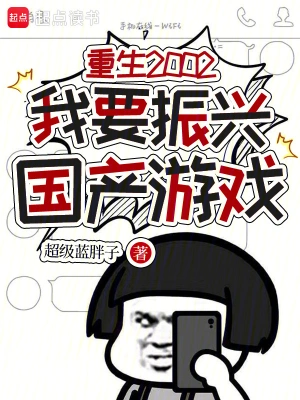 Rebirth 2002: I Want to Revitalize Domestic Games
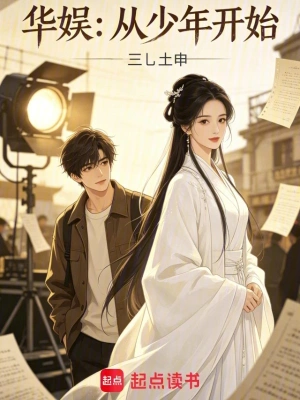 China Entertainment: Starting from a Young Age
 When Nao's Flowers Fall
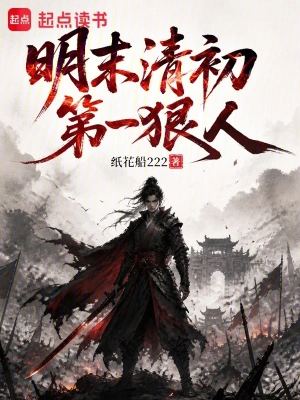 The Most Ruthless Person in the Late Ming and Early Qing Dynasties
 Immortal Castle: Human Race Watcher
 Spark: Travel Is Prohibited During Class Hours
 Nantianmen: the Final Chapter of Civilization
 Douluo: Shrek Becomes a God
 Wen Yizai Said: My Wife Is from the Earth
The most profitable thing for Golden Harvest is the theater chain. You can't make a lot of money by making movies. Jackie Chan is the only one who has always made money by making movies in Hong Kong. Others can't guarantee that they will make money.
Hong Kong female stars in the 1980s
In the 1980s in Hong Kong, female celebrities were dazzling and the stars were bright. They were a generation with numerous talents!
Hong Kong from 1980 to 1985
Overview of Hong Kong's literary and entertainment circles from 1980 to 1985 The early 1980s was the golden stage of the full-scale explosion of Hong Kong's cultural and entertainment industry. Economic prosperity drove film and television, music, newspapers and popular literature to go hand in hand. The works were not only popular locally, but also radiated to Southeast Asia. At the same time, they began to be introduced to the mainland in large quantities, shaping the cultural memory of a generation. The film and television industry is facing fierce business competition. In the television field, after the collapse of Jiayi TV, a confrontation between TVB and Li's (renamed Asia Television ATV in 1982) formed. In 1980, TVB's "Shanghai" detonated the whole Hong Kong, and Chow Yun-fat and Zhao Yazhi became an instant star; in 1983, Huang Rihua's version of "The Legend of the Condor Heroes" became a milestone in Jin Yong's martial arts dramas. Subsequently, a large number of martial arts and fashion dramas were exported, and the "Wireless Five" of Andy Lau, Tony Leung, Huang Rihua, and Miao Qiaowei gradually emerged; in 1985, the Taiwanese celebration drama "The Yang Family General" gathered all the stars in Taiwan, with an unprecedented lineup. ATV has gone through several shareholding changes, and although there are occasional hits, it has always been difficult to break TVB's inertial ratings advantage. The box office record of the movie market has been broken year after year. New Arts City was born with a collective creative model. In 1982, "The Best Partner" broke the box office ceiling, and the series continued to rise thereafter; Golden Harvest relied on Jackie Chan and Sammo Hung, and the "Plan A" and "Five Lucky Stars" series became popular. In 1985, "Lucky Star" became the first Hong Kong film to exceed the box office of 30 million Hong Kong dollars. Hong Kong-style comedies, action films, and fantasy zombie films blossomed, and production and commercial influence reached their peak. The aftermath of the New Wave of Hong Kong films is still there. Directors such as Ann Hui and Tsui Hark continue to produce works that are both artistic and commercial. Hong Kong films are exported to Southeast Asia, forming a huge industrial scale. The Cantonese music scene has officially entered its heyday. Anita Mui was discovered in the Rookie Singing Contest in 1982; Alan Tam continued to become popular after his solo career; Leslie Cheung became popular with "Monica" in 1984, kicking off what would later be called the "Tan-Chang Hegemony", and Cantonese pop music completely became the mainstream of society. Chen Baiqiang and Lin Zixiang each took the lead. At the same time, underground bands sprouted, and Beyond and Tai Chi bands began to take the stage, paving the way for the later band trend. The two major award ceremonies, the Top Ten Chinese Golden Songs and the Top Ten Golden Songs, have become the most important trendsetters in the music industry. In the literary world, serialization in newspapers and periodicals is still the mainstream carrier. Jin Yong has completed all martial arts novels, and old works have been continuously revised and republished, and martial arts IPs have been continuously provided for film and television adaptations; Ni Kuang's Wesleyan science fiction series has been serialized, and his imagination is unconstrained; Yi Shu has produced a large number of urban romance novels, such as "Xibao" and "My First Half of Life", which have shaped the image of urban women and been serialized in newspapers and compiled into books, which have a huge readership. Huang Zhan, Cai Lam, and Ni Kuang's columns were popular in newspapers, making them laugh and curse. Market taste and literati style coexisted. Popular literature was highly commercialized, and street books, weekly magazines, and entertainment newspapers were everywhere. The influence of Fengxin Film Company, the head of a left-wing literary and art organization, has gradually weakened, but it still maintains cultural output; various current affairs and entertainment tabloids are booming, and entertainment gossip and literary comments fill the pages of newspapers and periodicals. Hong Kong's entertainment during this period had a strong commercial nature. It not only produced a large number of popular works, but also retained the creative space of literati. At the same time, it was influenced by the social economy and foreign popular culture. It was not only rooted in the local market, but also faced the entire Chinese world, laying a complete foundation for the heyday of the 1980s and 1990s.
Xiangjiang context, a billion-dollar empire
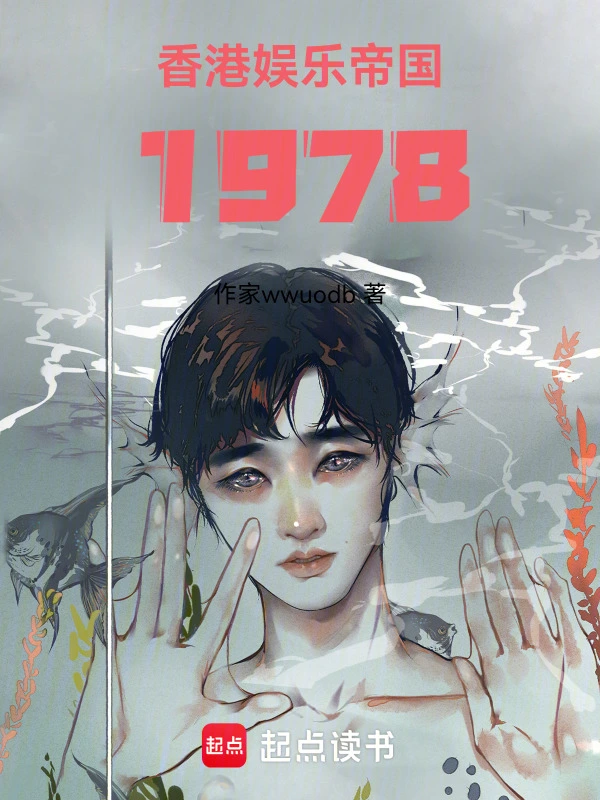
Promotional copy of "Hong Kong Culture: A Billion Empire" In the late 1970s, in the turbulent Hong Kong, Lin Yue, a young stowaway, set foot in the fireworks world of tenement buildings. With the literary and historical accumulation from later generations, he knocked on the door of the newspaper office with a pen, starting from a young man at the bottom writing articles on the balcony, and blazing a trail between the pages. While serializing popular novels to gain thousands of readers, he also described all living beings in the market with short articles and explored his own literary soul in the type ink. He met the struggling Stephen Chow and the tenacious and enterprising Andy Lau, and an iron triangle was formed. The three of them are based in Hong Kong in the troubled times, fighting against the hidden rules of the industry that are dominated by capital, and building a business landscape spanning publishing, entertainment, industry, and investment worth hundreds of billions. But wealth is never the ultimate pursuit, money is just a tool, and context is the true heart. Researched ancient myths on the pages, compiled "A Study of Zhuxia Culture", cleared up the fog of myths, and interpreted the core of the Chinese spirit of "the world is for the common good, and man can conquer nature"; build an ideal red star town in reality, protect the ideal with systems, and practice the belief of sharing and common prosperity. Here are not only lively business games and the ups and downs of the Hong Kong circle, but also literary discussions and academic confrontations; the ups and downs of ordinary people in the tide of the times, and the persistence of young people's ideals across the ages. There are no brainless cool counterattacks, the grayscale of human nature is everywhere, and ideals are repeatedly tested by interests and reality. From the small balcony of a tenement house in Yau Ma Tei to the cultural grand plan spanning both sides of the Taiwan Strait. A generation of people, caught in the cracks of the times, adhere to the cultural context, develop industry, and find their way back. When business empires rise from the ground, what they really want is to spread the spiritual fire of China to a wider distance.
Thanks for posting!
Thanks for the recommendation vote/6 for A Fresh Salted Fish, thank you again!
Thanks for posting!
Thanks for the recommendation vote/6 for A Fresh Salted Fish, thank you again!
Hong Kong characters
What did Yau Ma Tei, Hong Kong, look like in 1978?
Hong Kong entertainment industry in the 1980s
The pattern of music, television and movies in Hong Kong's entertainment industry, there should be only two TV channels! That Radio 3 seemed to have closed down in 1978
Hong Kong map in the 1980s
Hong Kong's Wan Chai, Yau Ma Tei, Kowloon, Lantau Island, Tsim Sha Tsui East, Sham Shui Po