


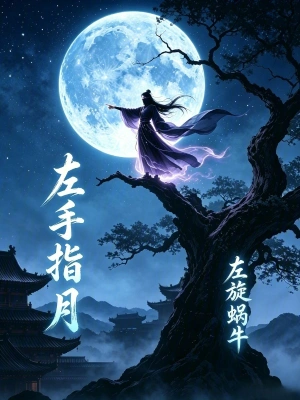
The Moon at My Fingertips
左手指月
- Status
- Ongoing
- Length
- 74k Words
- Genre
- Martial Arts
- Subgenre
- Traditional Wuxia
- Updated
- 2d ago
- Source
- Qidian
Stats
29Chapters
0Votes
1.5kRecs
0Fans
Tags
Honours
Synopsis
Readers also read
 From Chopping Wood to Sainthood Through Strength
 A Madman in the Gu Long Universe
 Martial Arts Adventures Begin with The Heaven Sword and Dragon Saber
 Growing People, Starting with The Heaven Sword and Dragon Saber
 Dating My Manager Is Forbidden
 I Won't Bow to Immortals!
 Bodyguard: Building a Factory in Africa with My Beautiful Boss
 Yu-Gi-Oh!: The Boss Is Actually Me
 Martial Saint: My Hard Work Has Paid Off
 Tracking Strange Cases, Starting as a County Police Detective!
 Tales of Han Street
 A First-Rank Noble from a Humble Family
Reader comments 3
Google Translate
@Left-hand snail, why is it called the finger on the left hand instead of the right hand?
I was almost persuaded to quit in the first five chapters, but it feels so good to push through.
Let me tell you the truth at the beginning. The first few chapters of this book were slow in pace and there were too many characters, so I almost gave up. But after getting through the fifth chapter, the more I read, the more I couldn't put it down. The text is a half-literate and half-white traditional martial arts approach, not oily, but with an ancient meaning. The nursery rhyme at the beginning of the poem, "Watch the south wind and pick the stars in the north tower. The stars are divided into twenty-eight and the land is divided into nine states. With the moon in your left hand, you can point to the thousand years." At first glance, it seemed to be a child singing indiscriminately, but later I found out that it was all foreshadowing. The characters are full of fireworks. The white steamed buns carry an iron pot on their backs on the ring, a frying spoon and a kitchen knife serve as weapons, and Kung Pao chicken serves as a hidden weapon. It is simply the martial arts version of "Xiong Er". But he's not just being funny. In Chapter 7, he was really chivalrous when he used a pot to block the water. Light comedy and drama mix well. In the front, I watched Bai Mantou, Xichu Riyue, and Song Laosi bickering, and I couldn't stop laughing; in the back, I was extremely nervous when Tanglin was attacked, Yaowang Temple, and Chu Luo fought with kangaroos. This sense of relaxation is rare in martial arts nowadays. The fighting has a visual feel. Liu Mengren "couldn't even touch the corner of Wang Hu's clothes", Chu Luo drilled into the kangaroo's belly bag, and Shi Tiexin recognized the master of the two swords - it was not a pile of moves, but imaginative. The details also have a cultural foundation. Yuan Liaofan, Yaowang Ye's Birthday, Longxiang Yumo, Dingnaisi, and Changxiatang are not forced, but are embedded in the story. The suspense is buried deep. The left hand refers to Yue, Erbasu, Xishuai, and Tuyang Liuyao. They are laid out line by line, and they are not in a hurry to uncover. When I read Chapter 23, Shuai Nan showed up, I realized that everything was going wrong. The shortcomings are also clearly stated: the pace of the first few chapters is slow and there are many characters, so it requires a little patience. But after surviving Chapter 5, the rest is really good. It is suitable for readers who like traditional martial arts, can accept slow-burning, and like group portraits and foreshadowing. If you want to see an invincible start and a more enjoyable three chapters, don't come here. The author's updates are quite steady, but the first few chapters require patience.
The main style is the traditional martial arts style, and the characters are clearly depicted, such as the cumin-flavored warrior.