The thirty-two years of the last years of the Northern Wei Dynasty, from the death of Emperor Xuanwu Yuan Ke in 515 AD to the death of Gao Huan of illness in 547 AD, were a turning point in history. Emperor Xuanwu died in Luoyang Palace, and the five-year-old prince succeeded to the throne. Empress Dowager Hu came to rule the court. The dynasty has since declined out of control. Gao Huan died of illness in Jinyang. These years laid the foundation for the Sui and Tang Dynasties: the Eastern Wei Dynasty became the Northern Qi Dynasty, the Western Wei Dynasty became the Northern Zhou Dynasty, and Yang Jian, a relative of the Northern Zhou Dynasty, founded the Sui Dynasty. The country's name came from the duke Sui of his father Yang Zhong, who was the young man in the white robe and defeated the army. The Guanlong Group, the Fu Army System, and the Eight Pillar Kingdom were all forged in thirty-two years of war. During these more than thirty years, the dynasty split and powerful officials emerged one after another, eventually paving the way for the unification of the Sui and Tang Dynasties.
This book focuses on four people: Gao Huan, the envoy of Huaishuo, the son of a criminal household. He once moved bricks on the city wall, and finally climbed to the Prime Minister's Mansion. He suffered few defeats in his life, but only lost to the jade city. Yu Wentai, the fourth son of Wuchuan, his father and brother died in troubled times, starting from the death of Ge Rong. In the first step, Sui Ji of the Northern Zhou Dynasty was established in Guanzhong; Er Zhurong, the chief of Qihu, the wolf of troubled times, was devoured by everything he started; He Bayue, the hero of Wuchuan and the lord of Guanzhong, although he died the earliest, he gathered his tribesmen to rewrite the territory of the Northern Kingdom.
There is another emperor in the book: Emperor Xiaozhuang, Yuan Ziyou, was supported by Er Zhurong. The country is given to others, and the life is taken away from others. Only the knife in Mingguang Palace was sharpened by himself. That knife and the death at the age of twenty-four were the loudest thunder in thirty-two years. Major events such as the Yulin Incident, the Six Towns Beacon Fire, the Heyin Disaster, the White Robe Entering Luo, the Mingguang Palace Incident, Hanling, Shayuan, Mangshan, and Yubi are all recorded in the official history; the details, dialogues, and psychology are all the work of the novelist. The skeleton of history and the flesh and blood of poetry are the symbols of this book, blending historical facts and imagination, making historical bends become eternal coordinates marking overturns and foundations.
 What's Wrong with Me, Zhu Changluo, Being a Bit Shabby?
 1914 Begins with the Rejection of the Schlieffen Plan
 Traveling Through the Ming Dynasty, I, Zhu Gaoxu, Am Not a Chicken in a Crock Pot
 Seizing the Direct Descendant in the Prosperous Tang Dynasty
 Lao Ji, Help Me Become an Immortal
 Green Hills
 Xuanjian Immortal Clan
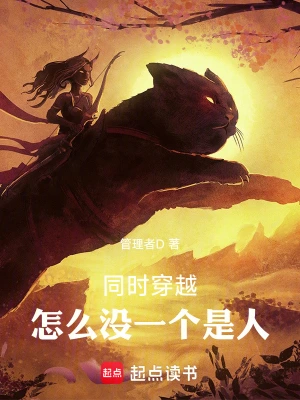 Traveling Through Time at the Same Time, How Come No One Is Human?
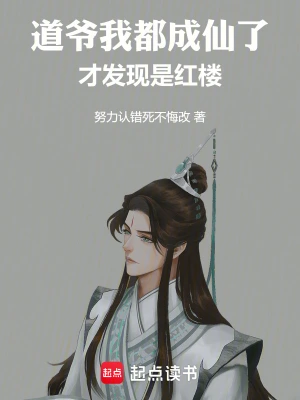 Master Tao, I Became an Immortal, Only Then Did I Realize It Was the Red Mansion
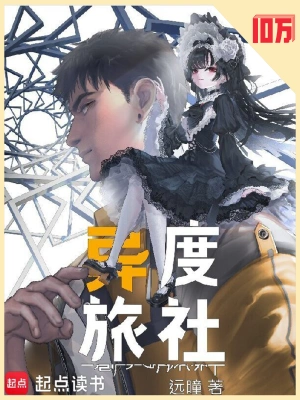 Alien Hotel
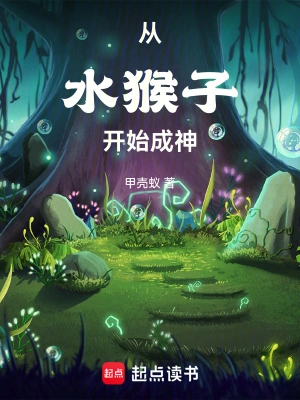 Become a God from Water Monkey
 In the Name of Supernatural Power