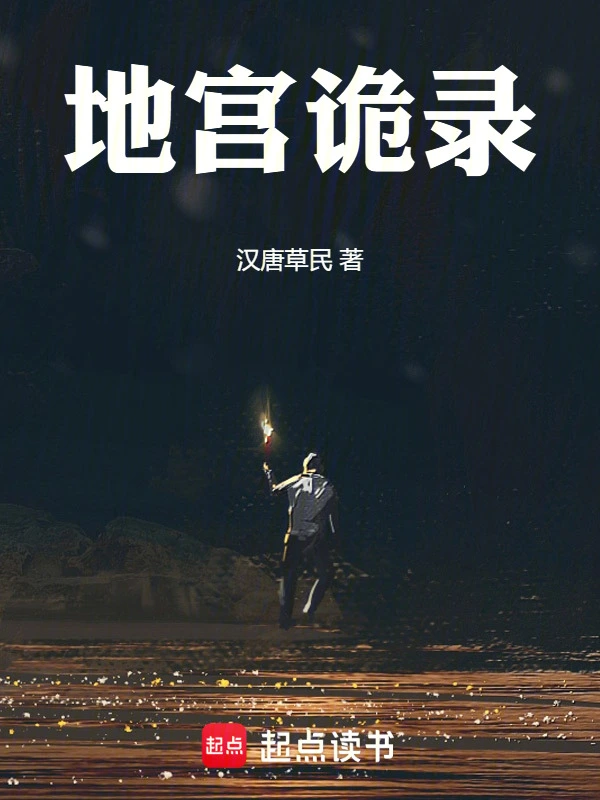
Secrets of the Underground Palace
地宫诡录
- Status
- Completed
- Length
- 100k Words
- Audience
- Male
- Subgenre
- Rules Horror
- Updated
- 2mo ago
- Source
- Qidian
Stats
0Monthly votes
1Recommends
0Fans
44Chapters
Synopsis
Reader comments
Readers also read
 The Hidden Treasure of All Ghosts
 I, Weird, Join the Human Chat Group
 After I Died, I Became a Spirit Attractor
 Am I the Only Living Person Among This Group of Writers?
 Lao Ji, Help Me Become an Immortal
 Night Without Borders
 How Can You Become an Immortal If You Don't Have Money?
 Traveling Through Time at the Same Time, How Come No One Is Human?
 Master Tao, I Became an Immortal, Only Then Did I Realize It Was the Red Mansion
 Corpse Hunter
 Green Hills
 Xuanjian Immortal Clan
 The Red Rabbit Treads Through the Mountains and Rivers of Han - the Heroic Biography of Lu Bu
Secrets of the Underground Palace
This article is different from other tomb robbing stories. It mainly talks about the passwords and rules of the underground palace. Readers who like it are welcome to support it.
Secret Records of the Underground Palace: When academic rationality collides with the secret banquet of the Warring States Period
1. The invitation has arrived, and there is nowhere to escape A black invitation without a sender, with a line of gold font written on it: "Mr. Wu Si is waiting for you. The banquet is held in the Central Plains, deep in the underground palace. There are nine banquets, and there are three people. Those who are late will be beheaded; those who are absent will be swallowed; those who are attending the banquet will be eaten." -2 The story begins. There is no foreshadowing, no prelude, as soon as the invitation arrives, the three selected people must attend the banquet - if one person is absent, the remaining two will be trapped at the underground palace entrance-2 forever. This is not an invitation, this is a mandatory summons. The opening chapter of "The Secrets of the Underground Palace" is clean and neat. It does not spend a lot of space explaining the world view, but directly drags the readers into the damp, cold and stale thief's cave. This kind of "getting in the game right from the start" rhythm is quite rare in the current online writing environment. 2. When the folklore graduate student broke into the underground palace of the Warring States Period The core setting of this book is to stitch together the "weird stories about rules" and the "culture of pre-Qin alchemists". The identity of the protagonist Shen Mo is a graduate student in folklore. This setting is not a decoration. He carries a notebook with him to record rules, analyze logic, and find loopholes. 2. He is not Long Aotian who can fight and kill in the traditional sense, but an ordinary person who uses academic thinking to fight against supernatural forces. The core plot of the story is the "Feast of Nine Apertures Underground Palace" built by the Warring States alchemist Wu Si. Wusi uploaded his consciousness into the body of the "Meat Bodhisattva" and found that it could not carry all the personalities, so he built an underground palace and planned to reconstruct the body-2 with the organs of nine living people. When he couldn't gather enough willing sacrificers, he turned the underground palace into a trap - entrants had to attend a banquet, and each dish corresponded to one of the nine orifices of the eye, ear, nose, mouth, tongue, body, mind, navel, and heart. If you don't eat it, you will die, and if you eat it, you will lose -2 of the corresponding organ. This setting has both the mystery of classical Chinese alchemy and the unique cruel logic of strange rules. Nine dishes, three people, nine organs - the symmetry and asymmetry of numbers provide natural tension to the story. Readers will unconsciously think along with Shen Mo: How can three people finish nine dishes? How long can a person live after the organ corresponding to each dish is taken away? Is there a third way? 3. The Trial Ground of Humanity Deep in the Underground Palace In the chapters currently published, the author has shown good ability to create atmosphere. The description of the interior of the underground palace is detailed and restrained - "the calcified atmosphere of the bones sealed in the stone walls" -, the copper lamps of corpse oil that are still burning for two thousand years -9, and the dry and empty shells of those "once human beings" on the stone chairs -9 - these images stack up to create an underground world that sends chills down the spine. But this book is not just about horror. Judging from the author's creative style as a "grassroots man of the Han and Tang Dynasties", humorous elements are often interspersed in his works. The existence of the character Hong Gu (swearing, eating melon seeds, and complaining about rules-2-10) provides the necessary breathing space for the depressing atmosphere of the underground palace. If this combination of "horror + humor" is handled properly, it can prevent readers from aesthetic fatigue in a long-term tense atmosphere. What is even more noteworthy is that there is an emotional undercurrent buried in the book. Shen Mo's mother has forgotten that he is her son, but still remembers the name "Xiao Mo" -2. Before entering the underground palace, Jian Qiu asked him to call his mother, "even just to listen to her say a few words" -2. This moment of looking back at the tenderness of the world on the edge of life and death gives the story a depth that goes beyond "passing the test". 4. The "Third Way" of Strange Rule Talk The charm of this type of rule strange talk is that the rules are absolute, but the ideas for solving problems are open. -The design of "The Secrets of the Underground Palace" is quite ingenious at this level. When Tongmen asked to "dedicate the most precious moment in your memory" -9, Shen Mo donated not organs or property, but the memory of a seven-year-old summer - his brother saved a fish -9. This choice hints at the core setting of the book: what the underground palace demands is "existence itself", not just things on the material level. Even more subtle is the "reverse utilization of rules" -10. Shen Mo discovered that after losing the organ on the left side, the corresponding organ on the right side would be strengthened by -10. After Jian Qiu lost sight in her left eye, her right eye could "see the breath of flowing air" -10; after Honggu lost her smell in her left nostril, her right nostril was so sensitive that she could smell the salty smell of water deep in the underground palace -10. This setting makes "loss" no longer a one-way deprivation, but a cruel exchange-whatever is taken away from you will be gained in another dimension. This "compensation mechanism" provides a logical basis for subsequent cracking, and also allows readers to have expectations for the cost and benefits of each "dish". 5. Controversies and hidden worries Of course, as a serialized work, "The Secrets of the Underground Palace" is not without its hidden worries. One is the controversy over character creation. Some readers commented that the protagonist is "bloody, but inhumane". He ignores human life for the so-called "performance" and does not save people even if he has the ability - 1. This kind of "extremely pragmatic" protagonist setting is not uncommon in online articles, but it will directly affect the reader's sense of involvement and emotional investment. If the protagonist's behavioral logic remains at the level of "just looking after yourself to clear the level" for a long time and lacks a growth arc, it will easily make readers feel tired. The second is rhythm control. Some readers reported that in some plots, "you have to wait until the people arranged by the state are almost dead before the protagonist slowly appears" -1. This writing method of "sacrifice the supporting characters to set off the protagonist", if repeated, will weaken the credibility and emotional weight of the story. The third is the pressure of serialization. The current work has a word count of 35,000 words and is still in the early stages of story development. There is Gui Xu -10 under the underground palace, and Wu Si's consciousness has not really dissipated -10. Whether the follow-up can maintain the novelty of the setting while avoiding falling into the routine cycle of "changing maps to fight monsters" is the key to determining the final height of this work. 6. Conclusion In general, "The Secrets of the Underground Palace" is a work of rules and ghost stories with a brilliant setting, a good atmosphere, and a certain depth of thought. It combines the pre-Qin alchemy culture with modern rules and strange stories, creating an underground world that is both culturally rich and full of suspense. The protagonist Shen Mo uses academic thinking to fight against supernatural forces, which also provides fresh narrative possibilities for this type of subject matter. But this work is still at the stage where "potential outweighs actual performance". The controversy over the character design, the control of the rhythm, and the unfolding of the subsequent plot - these all require more chapters to verify.