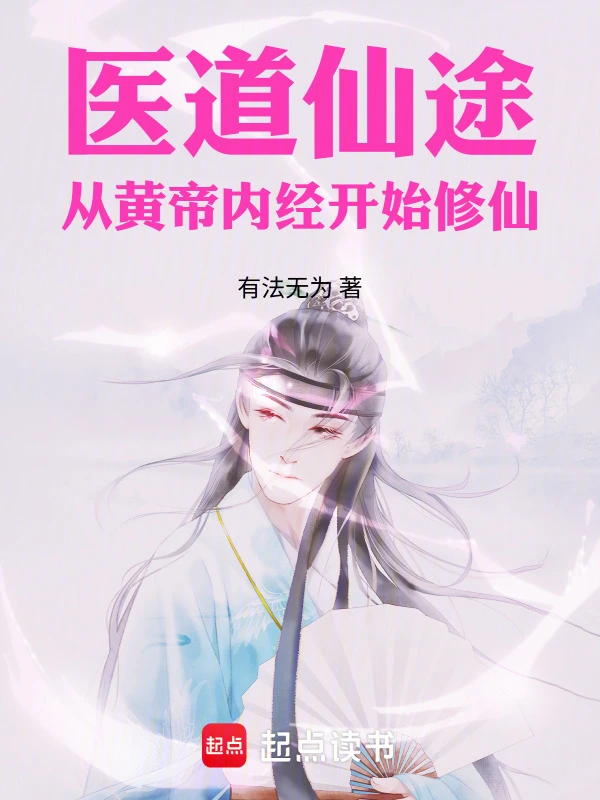
The Path to Immortality in Medicine: Cultivation of Immortality from the Yellow Emperor's Inner Canon
医道仙途:从黄帝内经开始修仙
- Status
- Ongoing
- Length
- 224k Words
- Genre
- Cultivation
- Audience
- Male
- Subgenre
- Classical Xianxia
- Updated
- 2mo ago
- Source
- Qidian
Stats
0Monthly votes
24Recommends
0Fans
71Chapters
Synopsis
Reader comments
Readers also read
 Mortals: Start with the Heavenly Bones
 Become a Dragon King from West Lake
 Qingfeng Daojun
 Mortals: as Mortals, the System Is Broken!
 Criminal Investigation Notes 2: Buried Corpse in Songhu
 Gou Cultivates Immortality and Attains Fruition in Two Realms
 Nanming Swordsman
 Leader
 The Black Witch's Journey to Another World
 Li Lin's Warhammer Journey
 Weird Things in the Tang Dynasty: from Corpse Collector to Judge of All Industries
 Datang: I Deceived Li Longji at the Beginning, and I Became the National Master
 The Only Way to Practice Meditation at the End of the Dharma: I Rely on My Imagination to Become a God
 Red Oil Mystery
Rhythm reset
The plot rhythm has been reset, welcome to follow up!
Wish you an early signing
Explosion😁😁😁
Persistence, persistence is victory
Keep writing, keep writing and you will win.
Open the book and realize the truth
The diseased bones were torn apart in the nineteenth autumn, and half of the remaining scriptures were in search of a feudal lord. Who knew that the character in the Suwen chapter was not a medical prescription but a Taoist prescription. The cinnabar point breaks through the thousand-year barrier, The silver needle guides the flow of energy. From now on, I don't ask about the elixir of longevity, I just take the elixir from my heart.
Keep following up! I wrote it from my heart!
Some thoughts on the first six chapters of "The Immortal Path of Medicine: Cultivation of Immortality from the Yellow Emperor's Inner Canon" - the advantages and disadvantages are equally prominent
(This article was completed in cooperation with AI, and I wrote and polished the framework AI.) As a book lover who has read countless books, and an "investor" who invested in books for the first time at Qidian. After reading through the first six chapters of "The Immortal Path of Medicine: Cultivation of Immortality from the Yellow Emperor's Inner Canon", I must point out that this work does show a certain writing skills in the creation of ancient charm, but there is a serious "self-impressed" writing tendency in the core logic, rhythm control and character construction. This kind of writing may have won with rhetoric ten years ago, but in the current online article market, it is very easy to lose readers due to excessive "reading threshold" and "logic breakdown". Investing in books at Qidian is just for fun. The return I expect is not the few Qidian coins, but the final proof that I have a good vision and the mutual support of the author and readers along the way. The following are all personal opinions. It is inevitable that there will be mistakes. They are only for communication and do not force anyone to agree. We apologize for any bias. A. The core selling point (the advantage) Solid writing skills: The novel's environmental description and character psychological portrayal are very delicate, such as "Muyu in Suzhou" and the scene where the protagonist coughs up blood, which has a strong visual sense and has a "ancient fairy tale" heritage. Novel entry point: Using the "Huangdi Neijing" and Chinese medicine theory to enter into the cultivation of immortality is different from the traditional "qi training and meditation", which is a good differentiated selling point (hook). Emotional preparation is in place: The description of the "illness" of the protagonist Su Jingxing is very specific and can make readers empathize. This is the basis for the accumulation of expectations in the early stage. B. Thinking and Analysis The following I will conduct an in-depth dismantling of this book from the four dimensions of life logic, narrative rhythm, emotional shaping and detail processing. 1. The core logic is broken: the "March of Misery" of the son of a wealthy businessman is unconvincing The biggest logical flaw in this book is the extreme separation between the protagonist's travel method and his family background. The protagonist in the book, Su Jingxing, is from the Su family, the richest man in Suzhou. His father, Su Wanguan, was able to "dissipate all the family wealth" due to his son's illness and sell off 3,000 acres of fertile land and 12 prosperous shops. This should have been a huge sum of money. However, the Su family, with such financial resources, allowed their only son, who was terminally ill and running out of money, to go on a dangerous hike like a "budget tour". Under ancient transportation conditions, for a wealthy family, this huge sum of money was enough to hire a top escort agency to escort them throughout the journey, and even bribed the government to issue the safest route. However, in the book, the protagonist and a servant (Ah Fu) are asked to hike through the dangerous Zhongnan Mountains, which is completely unreasonable in terms of human feelings and resource allocation. Unless the author assumes that Su's father is a "foolishly filial" and "stingy" miser, this kind of "enduring hardship for the sake of enduring hardship" plot will only make readers feel that the protagonist team's IQ is offline, thereby destroying the sense of immersion. In addition, the position of the follower Ah Fu is also extremely embarrassing. He appeared in a hurry in Chapter 5 and immediately went offline. The author tried to exaggerate the tragedy through his death, but due to insufficient early preparation, the readers had no time to establish an emotional connection with this character. Afu, a toolman who immediately receives a box lunch when he appears, actually has a deep love between master and servant, and the scene where he stares at each other before his death makes people laugh in seconds. Not only is his death not a pity, but it seems abrupt and a waste of pen and ink. It is recommended that you either put Ah Fu's appearance in front of him and establish a deep bond before sacrificing it; or you can delete it directly and let the protagonist walk alone, which can highlight his bravery and determination. 2. The rhythm is slow: there are too many ineffective descriptions, and the cool points are seriously lagging behind The narrative rhythm of the first six chapters can be called a "slow" crisis. The author spends a lot of words on the description of the scenery and the rendering of the atmosphere. For example, nearly half of the first chapter is used to describe the misty rain in Suzhou and the pain of the hospital bed. Although the writing is delicate, the amount of information is extremely low, which seriously slows down the start of the plot. What online readers need is high-density "effective information": the protagonist's desperate situation, the appearance of the golden finger, and the outbreak of conflict. Too much rhetoric actually wears down the reader's patience. What is even more fatal is the lag of Shuangdian. Until Chapter 6, the protagonist is still relying on mortal ingenuity (such as forging footprints) to avoid bandits, which is seriously inconsistent with the theme of "cultivating immortality". Since it is a book about cultivating immortals, a near-death awakening should be arranged at the early stage of entering the mountain (such as Chapter 3), so that the protagonist can initially grasp the power of the "Huangdi Neijing" (such as the flow of true energy and internal vision of the meridians), and use this to resolve a crisis. The feedback of this kind of power must be fast, accurate and ruthless in order to give readers a "hope" to continue reading. The current way of writing is to change the "survival essay" into a "suffering essay", which lacks the sense of transcendence that a cultivator should have. 3. Detail BUG: "Forcibly reducing intelligence" due to lack of common sense in life There are also obvious logical loopholes in the handling of details in the book, which further weakens the reality of the story. For example, I have been ill for nineteen years, but my father and son have a deep love for each other. It is unreasonable to ask my son to find Qingxu Guan until he is about to die. Parents love their children and always do everything possible to pursue the best. How can they wait so long? Another example: the protagonist prepares for a month-long journey, but "runs out of dry food" just three days after entering the mountain. Unless there is a special explanation for this setting (such as the dry food being soaked in rain or robbed by wild animals), it can only be regarded as the author's forced wisdom in order to create a "near-death enlightenment" plot. This kind of description, which lacks common sense of life, will make readers instantly confused. If the plot of a novel moves very quickly and the story is attractive, many detailed issues will be ignored. However, if the plot develops slowly, various detailed issues will be particularly prominent. To sum up, "The Immortal Path of Medicine: Cultivation of Immortality from the Yellow Emperor's Inner Canon" has good literary qualities and excellent creative ideas... If it wants to develop better in the future, in addition to the blessing of the commercial thinking of online articles, it also needs a drastic operation: compressing the foreshadowing, strengthening the logic, speeding up the pace, and giving the protagonist a "brutal strength" that is more in line with the laws of the world of cultivating immortals. Otherwise, no matter how good your writing is, it will be difficult to break through in a highly competitive market. It is for reference only by the author and book friends. I only express my personal opinions here. Friendly exchanges are welcome. I hope the novel will get better and better. 😁😁😁😁🙏🙏🙏🙏🙏
Some thoughts and discussions after the overhaul of this book
First of all, I would like to express my sincere admiration and praise to the author. After I put forward some ideas for this book yesterday, the author has been very active. Today's update is not a patchwork based on the original, but an overhaul from beginning to end. This spirit makes me very admire and sigh. The author takes his work very seriously and deserves praise. This is something that readers like me love and recognize very much. Authors and readers stay with each other all the way, relying on mutual support. The content after the overhaul basically covers the opinions raised yesterday. It not only strengthens the rhythm, but also removes some complicated and fancy writing passages, making the entire work more lively, the plot advancement smoother, and the reading experience of the work significantly improved. The above praises the author in all aspects without any blind spots, and it takes 10 minutes. (The author makes up his own mind 😁) Secondly, the main problem in the previous works was the lack of plot advancement. Now that it has been solved, other problems have surfaced. The following are some of my ideas, I hope the author will adopt them as appropriate. 1. The writing vision is a bit monotonous, especially the word "he" is used too much. The author particularly prefers to use the word "he". You can count them. There are several in each chapter. 2. The protagonist particularly likes self-enlightenment, which is also the reason why the above writing is visually monotonous. The article has many paragraphs about self-study and self-enlightenment, and it is very long. None of us study Chinese medicine, so it is boring to read. The arrangement here is particularly unreasonable. The plot of the novel can be driven by bamboo slips, Qingxu Guan, Xuan Mingzi, etc. However, after entering Qingxu Guan, the protagonist begins to realize himself. After so long preparations, there was a terminal illness, a thousand-mile search, and encounters with thieves, and finally entered the Qingxu Temple. These elements were no longer needed, and the protagonist began to realize himself. The Yellow Emperor's Internal Classic has been read countless times before, and then there were more than 10 versions. This time the blood was sprinkled on the scroll, and he realized the truth. Why? At this time, there is no need to push the bamboo slips. The protagonist begins to realize himself? ? ? It feels like ordering a table at the best restaurant in the world, a banquet that many people will never be able to enjoy in their lifetime, and then you suddenly take out the lunch box you brought with you from your bag. Everything you write should have a purpose. Once you write it, it must have a purpose. Han Li made a fire dragon spell and ended up using it to warm the fire. Do you think it's okay? Thirdly, the path to immortality and upgrade is a bit vague. It's not explained clearly what's different about the Huangdi Neijing? Since there are more than 10 different versions of the Yellow Emperor's Inner Canon, which means that mortals can also read it, then why can you cultivate immortality after reading it, while he can only maintain health after reading it? Is it because the protagonist has better understanding? You have to have something to differentiate the two. For example, warriors in the mortal world also have congenital and acquired skills, and they can also practice Qi, while cultivating immortals relies on spiritual energy. How can the same Huangdi Neijing show different results? The upgrade path is not clear yet. Is the Golden Finger an immortal medical skill? Or are there benefits to seeing a doctor and saving people? Will have to look again. Fourth, and also related to the previous three, the contextual connection, including the beginning and the end, is particularly unclear. When I read it, I felt like: The bamboo slips may be the key, but it turned out not to be the case. The protagonist began to realize himself. Qingxu Guan may be the key, but the result is not. The protagonist begins to realize himself. Xuan Mingzi's old way may be the key, right? The result is not yet, the protagonist is still realizing himself. If this continues, why bother? Find two books and go home to enlighten yourself. I think this kind of daily novel must arouse readers' curiosity and desire to read in every chapter, so that they can read it chapter by chapter. What we want to see more is What is the secret of the bamboo slips? Is it the key? Is it a voucher or a ticket to immortality? What is the secret of Qingxu Guan? Why can't mortals find it? Why are Taoist temples incomplete? Why is there only one blind man? What secret does Xuan Mingzi have? Is it good or evil? How does it help the protagonist? What does it add to the plot? It's not that the author realized himself by reading the Huangdi Inner Canon, then he read the Huangdi Inner Canon, and he became enlightened again, and he read the Huangdi Inner Canon again, and he became enlightened again... It's not that I don't want you to read the Huangdi Inner Canon, the key is that you have to be able to upgrade. Every time you enlighten to the next level or improve your physical fitness, that's okay. Ah, the key is that you have to point out the path to us. Readers like to take on the role of the protagonist, and everyone wants to make progress... In short, the work has undergone a major transformation after an overhaul. The whole story has a completely new look, but the shortcomings of the internal logic are still there and need further adjustment. The most important thing in reading a novel is to read it in. If you want readers to read it, there should be no obvious bugs. Secondly, it must be attractive and use hooks to hook readers to continue reading. This requires the author to throw out new information, new content, and new characters in an appropriate and timely manner to promote the changes and development of the entire plot. ps: The above are some of my thoughts after reading today, for reference only. 😁😁😁😁