


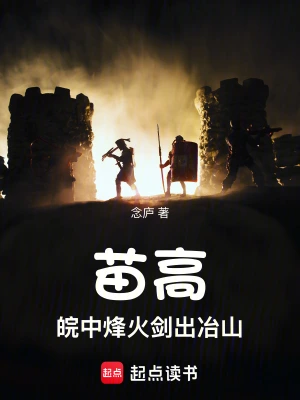
Miao Gao: Swords Forged at Yeshan Amid the Flames of War in Central Anhui
苗高:皖中烽火剑出冶山
- Status
- Completed
- Length
- 232k Words
- Genre
- Military
- Subgenre
- War of Resistance
- Updated
- 2mo ago
- Source
- Qidian
Stats
65Chapters
0Votes
90Recs
0Fans
Tags
Honours
Synopsis
Readers also read
 Bright Sword: Starting with a Wielded Broadsword
 War of Resistance: I Have a Military and Agricultural System
 Espionage: The Agent Who Can Leave His Body
 My War of Resistance Began at Gubeikou
 What Do You Mean the Streamer Really Is Shirona?
 The Legend of the Condor Heroes: The Immortal Hermit
 Being a Proper Daoist Priest in The Return of the Condor Heroes
 Late Ming: I Pose as a Descendant of the Jianwen Emperor
 Born to Be an Immortal Seed, Starting to Grow Spirit Plants in a Demonic Sect
 The Sword Rises in the Laughing, Proud Wanderer, Martial Might Shakes All Worlds!
 Surviving at the Fuwei Escort Agency in The Smiling, Proud Wanderer
 The Smiling, Proud Wanderer: Roaming the World
Reader comments 2
Google Translate
Using the pen as a sword and thoughts as a house - A discussion on the creation of "Miao Gao"
I was born in a small mountain village in Lujiang County, Anhui Province. It is a piece of land surrounded by mountains and rivers in the hinterland of Anhui Province. It is also the starting point and destination of my entire novel. Writing "Miao Gao: The War in Anhui and the Sword Out of the Mountain", for me, is not a simple literary creation, but a look back across eighty years, a reunion with my hometown and my fathers. This year marks the 40th anniversary of my father's death. This long-lasting longing has become the simplest and most determined force for me to write. I grew up listening to the stories of the Anti-Japanese War in my hometown. Those tunnels hidden underground, those secret messages passed down by word of mouth, and those ordinary people who silently guarded their homes planted a seed of writing in my heart. Miao Funong, Miao Zaiqing, Kong Yulan, etc. In the book do not correspond to a certain person in reality, but are a fusion of the spiritual temperament of generations of fathers in their hometown, and are the literary incarnations of countless silent people, perseverants, and devotees. Although the story of "Miao Gao" is fictional, it is rooted in the real historical background of the Anti-Japanese War in central Anhui. Lujiang, Miaogao, Yefu Mountain, Shengjiaqiao, Xiali Mountain, Tashan... Every place name is real and tangible; New Fourth Army underground transportation station, tunnel warfare, code secrets, civilian anti-Japanese armed forces... Every plot relies on local historical materials and folk memory. I have no intention of writing a grand war epic, and would rather focus on the little people who have been ignored by history: the villagers who keep secrets, the people who deliver messages, the farmers who dig tunnels, and the craftsmen who hide hidden secrets. They have no military ranks, no medals, and even no names, but they use the simplest way to protect their homeland, justice, and the last backbone of the nation. The structure of the dual-line narrative is not only a literary arrangement, but also a true reflection of my heart. The historical line is written to stick to it, and the modern line is written to search for it; people in the past kept secrets with their lives, and people today use their hearts to decipher them. The two clues are intertwined and ultimately point to the same proposition: how should ordinary people face the world and get along with themselves in the face of major historical changes. What I want to write is not a legend, but human nature. It is courage under fear, kindness in suffering, dignity in the face of despair, and the light that refuses to be extinguished in ordinary life. As a writer who came from Lujiang, I always cherish the deepest nostalgia for my hometown. This land has carried the smoke of gunfire, but also given birth to hope; it has experienced suffering, but it has always maintained warmth. I hope that through the work "Miao Gao", more people will know the history of the Anti-Japanese War in central Anhui and the stories that happened in the land of Lujiang, so that the silent history can be heard and the unknown heroes can be seen. This is my feedback to my hometown, and it is also a small but sincere thing that I, as a writer, can do for my hometown. The name "Nianlu" is perfect for me: I think about my hometown, I think about the Lujiang River, and I think about the relatives and history that are never far away in my heart. "Miao Gao" writes about war, but also about people's hearts; it writes about history, but also about emotions; it writes about our fathers, and more importantly, each of us. I hope that this memory awakened by the words can comfort the people who have passed away, warm the living people, and help more people understand that there is strength in the ordinary, there is strength in silence, and there is light in perseverance. Nianlu
Thanks to the following book friends for their continued attention and support:
● Lucky Science Fiction Tweet ● Enlightened mck ● 20260528202815963 ● 20260528151121374 ● 20260213232718275 ● 20260528202723029 ● chen8822