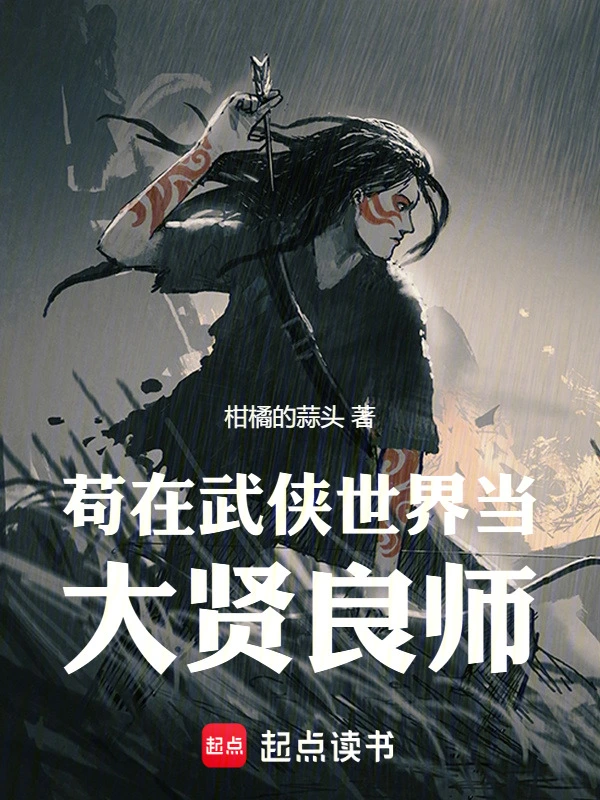
Gou Becomes a Great Master in the Martial Arts World
苟在武侠世界当大贤良师
- Status
- Ongoing
- Length
- 485k Words
- Audience
- Male
- Subgenre
- Myriad Worlds
- Updated
- 3d ago
- Source
- Qidian
Stats
117Monthly votes
3.2kRecommends
4.9kFans
133Chapters
Tags
Synopsis
Reader comments
Readers also read
 Hong Kong Variety Show: You Are All Reborn, Who Is Still in the Club?
 Travel Through the Baolian Golden Crow and Kill Through the Terrifying Heavens!
 The Holy Lord of Mixed Stars Devouring the Starry Sky
 People Are in the Heavens, Are You a Serious Heaven?
 I Was a Demon in the Northern Song Dynasty
 People Are in the Heavens, Swords Come Out of Wudang
 Yue Buqun: My Huashan Has Traveled Through
 Anti-Qing: Start by Kidnapping Shi Dakai!
 Datang: They Force Me to Be Emperor, Right?
 Something's Wrong with My Yuan Mo
 I Feel Like I Have Divine Help in the Heavens
 Holy Ancestor Jiajing
 China Entertainment: I Really Don't Want to Live with the Queen
What conditions were needed for the success of the agricultural movement at the end of the Yuan Dynasty?
Combining the background of the late Yuan era + the organization, route, strategy, and construction experience of China's modern revolution, we distinguish the shortcomings of ancient uprisings from the success factors of modern revolutions, and sort out the core conditions that must be completed in order to achieve complete success of the peasant movement (peasant uprising), complete regime change, and stabilize rule in the late Yuan environment. At the same time, we provide implementation paths and risk avoidance based on the reality of the late Yuan Dynasty. Let's first clarify the premise: At the end of the Yuan Dynasty, there were natural rebellious masses, social conflicts, and civil organizations. However, traditional peasant uprisings generally had fatal problems such as banditism, lack of program, disorganized teams, weak base areas, failure of united front, and incompetent governance. The essence of learning from modern revolutionary ideas is to use systematic organization, clear program, base area construction, united front, armed construction, and mass line to transform the old uprising in the late Yuan Dynasty. 1. General program and ideological banner (corresponding to modern revolution: revolutionary program, ideology) The traditional uprising at the end of the Yuan Dynasty only had a vague slogan of "the birth of King Ming and overthrow the Yuan Dynasty" and no benefit distribution plan. The team was easily divided and lost popular support. This was the primary shortcoming. Necessary conditions 1. Propose a realistic political + economic program that suits the grassroots Abandon simple religious prophecies, and implement implementable policies under the cloak of folk beliefs such as the White Lotus Sect: ◦ Land program: Land to the tiller. In response to the core pain points of land annexation, noble enclosures, and the oppression of tenant farmers at the end of the Yuan Dynasty, it was clarified that "the illegal farmland of Mongolian nobles, wealthy businessmen, and large landowners was confiscated and distributed to landless refugees and tenant farmers"; it distinguished ordinary landlords from evil gentry, refrained from indiscriminate killing, and avoided making too many enemies. ◦ Tax program: reduce corvee and reduce taxes, and abolish exorbitant taxes and miscellaneous taxes. The ethnically discriminatory tax items, tax rates, and temporary assessments of the Yuan Dynasty were cancelled, the simplified tax system was unified, and tax exemptions were fully provided for disaster relief in disaster years. ◦ Equality program: Abolish the four-class system of the Yuan Dynasty, and make laws, corvee services, and rights independent of ethnic groups, integrate Han people and southerners, and at the same time win over the lower-class people of northern ethnic minorities, weaken ethnic antagonisms, and focus conflicts on "rotten Yuan Dynasty rule" rather than ethnic antagonisms. 2. Unify thoughts and transform folk religion The White Lotus Sect and Mingjiao Sect in the late Yuan Dynasty are natural organizational carriers, but traditional religions only talk about "eschatological salvation" and lack the logic of governance in this world. Reform direction: Bind religious beliefs to people's livelihood, upgrade the slogan from simply "resistance" to "overthrow tyranny, equalize land and stabilize the people, and rebuild peace"; put an end to the theocratic overriding of the political power, and avoid the occurrence of religious leaders taking vacuous command and intra-sectarian strife and divisions. 3. Establish long-term goals Clear phased goals: the first step is to overthrow the rule of the Yuan Dynasty, the second step is to unify the country, the third step is to recuperate and rebuild order; put an end to the rogue mentality of "grabbing a handful and leaving, separatism and enjoyment". 2. Mass line and grassroots mobilization (corresponding to modern revolution: mass line, grassroots organizations) In the late Yuan Dynasty, the number of refugees and farmers was huge, but traditional uprisings were "instantly recruited and dispersed", without the ability to take root at the grassroots level. Victory relied on large numbers of people, and defeats would break up. Necessary conditions 1. Go down to the grassroots level and establish village/township-level organizations Relying on the original clan, community, and congregation network in the village, establish grassroots contact points: Each village establishes a liaison person responsible for counting refugees, accepting hungry people, delivering news, and organizing production. It is no longer the remote control of high-level leaders, but "direct command reaches the grassroots". 2. Distinguish the core masses and mobilize accurately ◦ Core reliance: landless farmers, famine refugees, low-level tenant farmers, and handicraftsmen (the basic base of the revolution); ◦ League Target targets: small and medium-sized landowners, rural gentry, down-and-out Confucian scholars, and low-level officials (to reduce resistance); ◦ Isolated attack: Mongolian upper-class nobles, corrupt officials, bullies and powerful men (precise attack, without expanding the attack area). 3. Gather people's hearts with people's livelihood instead of simply coercing Famine-stricken areas will give priority to opening warehouses to release grain and organize production for self-rescue; garrisoned areas will help people farm and build water conservancy projects. The logic of modern revolutions "for the benefit of the masses" also applies in the late Yuan Dynasty: only when the people see real hope of survival will they follow to the death, rather than relying on coercion and coercion. 3. Construction of base areas (corresponding to modern revolution: construction of rural base areas and Soviet areas) This is the fatal flaw of most of the rebel armies in the late Yuan Dynasty: the Red Scarf Army units have been mobile for long periods of time, without a stable rear area, and no supplies, troops, or families are guaranteed. Once defeated, they will completely collapse. Necessary conditions 1. Give priority to solid base areas and reject banditism Site selection logic (combined with the geography of the late Yuan Dynasty): ◦ First choice: Jianghuai, Lianghuai, Jingxiang and other areas ruled by the Yuan Dynasty Areas that are weak, densely populated, have acceptable products, and are intertwined with water networks and mountains are easy to defend and difficult to attack. They are also areas hit hardest by famines and have the strongest mass base; ◦ Principle: First take root in one county or one prefecture, then expand outwards, and do not rush to attack core towns such as Dadu in the Yuan Dynasty. 2. Systematic management of base areas ◦ Economy: allocate land, restore agriculture, set up markets, control food (core wartime supplies), achieve self-sufficiency, and no longer rely on looting for supplies; ◦ Separation of military and political affairs: administrative divisions are divided according to the territory, with civilians in charge of civil affairs, production, and justice, and military attachés in charge of the army and defense, to prevent the army from disturbing the people; ◦ Logistics system: establish fixed granaries, ordnance workshops, and wounded settlement points to form a complete rear chain. 3. Base area mutual aid and partitioned defense Establish multiple connected base areas. If one area is attacked, the other areas will provide support to avoid being surrounded and annihilated at a single point. 4. Construction of armed forces (corresponding to modern revolution: people's army, principles of army building, tactical system) The rebel armies in the late Yuan Dynasty were mostly composed of refugees, with loose military discipline, primitive tactics, and no distinction between officers and soldiers. Victory relied on a sea of people. They collapsed when encountering elite Yuan troops and local regiments. Necessary conditions 1. Establish the principles of founding the army and strictly enforce military discipline Formulate strict military regulations: it is prohibited to rob civilians, commit adultery, kill innocent people indiscriminately, and force civilian women. Different from the Yuan army and other rebel soldiers, establishing a reputation with military discipline is the key to winning the hearts and minds of the people. Hiered organizational structure: distinguish between regular main forces, local self-defense forces, and logistics civilians. The main force is responsible for attacking in the field, while the local teams stay at the base area, maintain public order, and perform their respective duties. 2. Soldier source transformation and training ◦ Soldier source: Prioritize recruitment of young and middle-aged farmers and refugees, and select those with strong will as the backbone; recruit down-and-out soldiers and martial arts masters as instructors; ◦ Training Training: Abandon the simple gathering of people to charge, train infantry combat, position defense, mountain/water network guerrilla tactics, adapt to the battlefield environment of the late Yuan Dynasty; ◦ Family placement: Place the families of soldiers in the base area to solve the "worries" and significantly reduce the desertion rate. 3. Combination of tactics: guerrilla warfare + mobile warfare + positional warfare In the early stage, the Yuan army still has combat strength, so avoid a head-on confrontation with the main Yuan army: rely on mountains and water networks to fight guerrillas, harass grain and grass, and small groups of enemy troops; when it grows, concentrate its superior forces to fight mobile warfare and annihilate isolated enemy forces; and finally attack fortified cities. Draw lessons from the guerrilla thinking of "when the enemy advances, we retreat, when the enemy is stationed, we harass, when the enemy is tired, we attack, and when the enemy retreats, we pursue" to restrain the Yuan army's cavalry advantage. 4. Divide the enemy and instigate internal rebellion There are also a large number of Han and Southern soldiers and low-level officers in the Yuan army, who have been oppressed by the upper class for a long time. Actively instigate rebellion against lower-level officers and soldiers of the Yuan army and border defense troops to reduce losses in frontal combat. 5. United Front (corresponding to modern revolution: united front, uniting all forces that can be united) At the end of the Yuan Dynasty, there were many factions in the uprising: the Red Scarf Army was divided and the heroes went their own way (Zhang Shicheng, Fang Guozhen, Chen Youliang, etc. Attacked each other). The rulers of the Yuan Dynasty reaped profits. This was the core reason why the uprising was unable to unify the country. Necessary conditions 1. Integrate various anti-Yuan forces and establish an alliance Short-term goal: put aside internal fighting, form a unified anti-Yuan alliance, agree to jointly attack the Yuan Dynasty, divide combat areas, and avoid fighting with the same room; Long-term goal: gradually absorb and integrate small and medium-sized forces. For powerful warlords who are separatist, unite if they can, and gradually resolve stubborn enemies. 2. Unite the intellectuals and the scholar class At the end of the Yuan Dynasty, most Confucian scholars and gentry were dissatisfied with the rule of the Yuan Dynasty, but they were prejudiced against the refugee uprising. Actively recruit literati, officials, and counselors to be responsible for documents, governance, planning, and publicity, so as to make up for the shortcomings of the insurgents who "only know how to fight but cannot govern the country." The role of intellectuals in modern revolutions was reflected in the supply of talents for governing the country in ancient times. 3. External relations/united front work by fringe forces Adopt a strategy of appeasement and exchange of needs with fringe forces such as the northern grassland tribes and southwestern chieftains, avoid multi-front operations, and concentrate the main force against Yuan Ting. 6. Intelligence, public opinion and confidentiality system (corresponding to modern revolution: underground work, intelligence front) At the end of the Yuan Dynasty, various forces penetrated each other. The Yuan court would also use spies and rumors to divide the rebels. Traditional uprisings lacked professional intelligence networks. Necessary conditions 1. Establish an underground intelligence network Place secret lines in the cities, government offices, and military camps controlled by the Yuan Dynasty to collect military intelligence, government orders, and information on food and grass mobilization, so as to "know yourself and the enemy." 2. Guide public opinion and fight back against slander Yuan Tinghui slandered the rebels as "rogue bandits and traitors". Relying on folk songs, storytelling, and religious dissemination, we promoted the tyranny of the Yuan Dynasty and our own policies to calm the people, and seized the high ground of public opinion; at the same time, we shattered the rumors spread by the enemy. 3. Strict confidentiality system Military plans, base layout, and high-level decisions are strictly confidential to prevent spies from infiltrating and selling intelligence. 7. Cadre team and power structure (corresponding to modern revolution: leadership core, organizational construction) Traditional peasant uprisings are prone to leader corruption, infighting for power, and confusion among successors (such as the Taiping Heavenly Kingdom and the internal strife among the various heroes in the late Yuan Dynasty). Necessary conditions 1. Establish a stable leadership core Form a core team with unified command to prevent multiple leaders and factions fighting for power; the core leader sets an example and does not seek pleasure in advance, overhaul the palace, and recruit concubines to avoid deterioration of the team's original intention. 2. Cultivate grass-roots cadres Select talents from soldiers and rural liaisons who are brave in combat, fair in dealing with affairs, and popular among the people, and conduct short-term training to enrich them into military and civil affairs positions to solve the problem of "no one available". 3. Checks and balances of power Military affairs, civil affairs, and supervision check and balance each other to prevent personal monopoly and power officials from causing chaos; plan the inheritance system in advance to avoid the division of the team after the death of the leader. 8. Phased implementation strategy (combined with the situation at the end of the Yuan Dynasty, replicating the staged advancement logic of the revolution) The first stage: dormant and taking root (defense + accumulating strength) Use of natural disasters, To deal with the public complaints caused by river management, we rely on existing networks such as the White Lotus Sect to gather the refugees; we choose remote areas where the Yuan army is weak to establish small base areas; we develop in a low-key manner and do not take the initiative to attack important towns. We prioritize solving the problems of people's food and survival and consolidating their basic base. The second stage: local uprising (guerrilla + territory expansion) When the time is ripe, launch a local uprising, harass the Yuan army with guerrilla warfare, and gradually expand the base area; establish unified armed forces and strictly enforce military discipline; contact surrounding anti-Yuan forces and form an alliance. The third stage: strategic expansion (mobile warfare + fortification) Concentrate the main force to remove the Yuan army's strongholds in the Central Plains and Jianghuai River; control grain-producing areas and transportation arteries; improve the management of base areas and achieve economic and military self-sufficiency; begin to absorb forces from all parties and strengthen alliances. The fourth stage: Decisive battle to destroy the Yuan Dynasty (main battle + capture of the capital) Integrate all forces, divide the troops into multiple routes for the Northern Expedition, and encircle the capital of the Yuan Dynasty; at the same time, appease the northern ethnic groups and officials in various places and reduce resistance; after overthrowing the Yuan Dynasty, quickly take over the national power. The fifth stage: building a stable country (recuperation + system reconstruction) Promote established land and tax policies, resume production; rectify official administration, integrate various ethnic groups; eliminate the remaining forces of separatism, and complete the unification of the country. 9. Focus on avoiding the fatal traps of traditional uprisings (compare historical lessons) 1. Reject banditism: never give up base areas and plunder everywhere, which is the core reason for the defeat of the Red Turban Army in the late Yuan Dynasty; 2. Reject excessive killing: do not engage in ethnic vendettas or indiscriminate massacres, otherwise it will arouse national resistance; 3. Refuse premature corruption: after the power grows, leaders and senior officials will not indulge in pleasure and fight for power; 4. Refuse to fight alone: we must adhere to a united front and not be enemies of all separatist forces; 5. Reject pure religious governance: religion is only used as a mobilization tool, and the political power dominates everything to prevent the integration of politics and religion from causing civil strife. 10. Summary Under the objective environment of the late Yuan Dynasty, the revolution naturally had the "mass foundation, contradiction foundation, and civil organization foundation". However, the old-style peasant uprising lacked the five cores of program, base area, regular army, united front, and grassroots organization. After learning from the experience of modern revolutions, the core logic of success can be summarized as follows: Use "equalize land and stabilize the people" as the program to unite people's hearts, use solid base areas as the rear, use disciplined armed forces as the fist, use the united front to reduce resistance, use grassroots organizations to take root in the countryside, and abandon the four bad habits of rogue bandits, internal strife, indiscriminate killing, and corruption. Only when all the above conditions are met can the movement transform from a "peasant uprising" to a successful peasant movement that ultimately changes the dynasty and establishes a stable new dynasty.
Nuclear-powered battleships were written about the plane of little butterflies many years ago. At the beginning, they farmed in the sky and bombarded most of the capital to establish a republic.
The core is too bad. You don't have to go back to Wudang to talk about Zhang Laodao. I don't know whether you want to write about martial arts or peasant uprisings. You use this paragraph indiscriminately. What do readers think?
In the late Yuan Dynasty, you really deserved to be a member of the civil society.
I feel like this person is the kind of person who is anti-Yuan on the surface, but is actually a fan of Yuan. His protagonist uses any means necessary to successfully use the enemy's kindness and brotherhood to kill people. He often comes to Luoshui to swear, but the enemy would rather be killed by him for the health of his senior brother.
To be honest, your main character's name has been changing so slowly and so slowly that I even forgot what the main character's original name was.
I think it's well written
I think it's very interesting. I don't know why everyone is criticizing it. Isn't it good to be friendly to new authors? The protagonist's character is my favorite type. I hope the author can continue writing it. Come on!
This is not a world of cultivation. The peach blossom forest has not been repaired for decades. It has long been overgrown with weeds and bushes, and most of the formations have been destroyed. Finding the island is the problem, right?
Each person's meridian system can be viewed as a 3D chip. Internal force can be regarded as electricity. If internal force martial arts is not developed in the direction of force, but in the direction of computing power. Then learn how to use the synaptic condensing machine, everyone's palms to palms, connect all the internal forces from the same source in series, run in multiple 3D chips, and combine everyone's computing power, then science will develop rapidly, and then feed back to martial arts, realize the use of scientific methodology to guide martial arts, and find a higher way out! After all, the human meridian system and internal force system are actually equivalent to technological engineering. Opening up the eight extraordinary meridians and the two Rendu meridians is equivalent to opening up the canal, and it belongs to ergonomics!
Brother, it's so hard to wait for your new book. I click on the starting point every day to see if you have any new books. One of them said that my favorite is the one from the 1970s and 1980s. It's a pity. Come on.
Congratulations to the boss for opening the book. In addition, the author doesn't write about China Entertainment, so anything original will do. Although I have only read half of the previous book, I still remember Zhou Tao from Tongzilou and the literary girl Gao Yuanyuan. It is rare to see someone portray the characters with such care 🙂
I have been waiting for the author for so long, but the new book is not Huayu, but a fantasy. I really say this to the author, ****************
If you are virtuous, have you developed and improved your life?
What is this word? How to read?
Flaws do not cover up strengths. Very good, keep at it 👍
Brother, next time the author writes about Huayu Aite, please let me know. Thank you.
The Yuan Dynasty had a system of entitlement, which meant that most of the people who were bullied at that time were the bad things done by local landlords 🤐
Let me tell you, if you want to be a good person, you must have better martial arts than them. The truth is in your own hands
When will I continue writing about Huayu? I have no more books to read.
It is not advisable to reach the goal in one step. If you act by force, the whole world will rebel. First, unify the mountains and rivers, open up the people's wisdom, and then gradually break away from the feudal society. However, in the world of martial arts, if the protagonist can conquer the world by himself, the process can be accelerated. However, the speed of information dissemination is slow, transportation is inconvenient, the people's wisdom is not developed, the people at the bottom do not know the characters, and the government orders are incomprehensible, so it is inevitable to deceive the superiors and conceal the inferiors.